Castell Castle: A Historicist Castle Complex in Switzerland
Site at a Glance
- Popularity
- Medium
- Country
- Switzerland
- Primary era
- Early Modern
- Eras represented
- Medieval, Early Modern, Modern
- Civilizations
- Holy Roman Empire, Swiss
- Site type
- Domestic
- Remains
- Castle
On this page10 sections
History
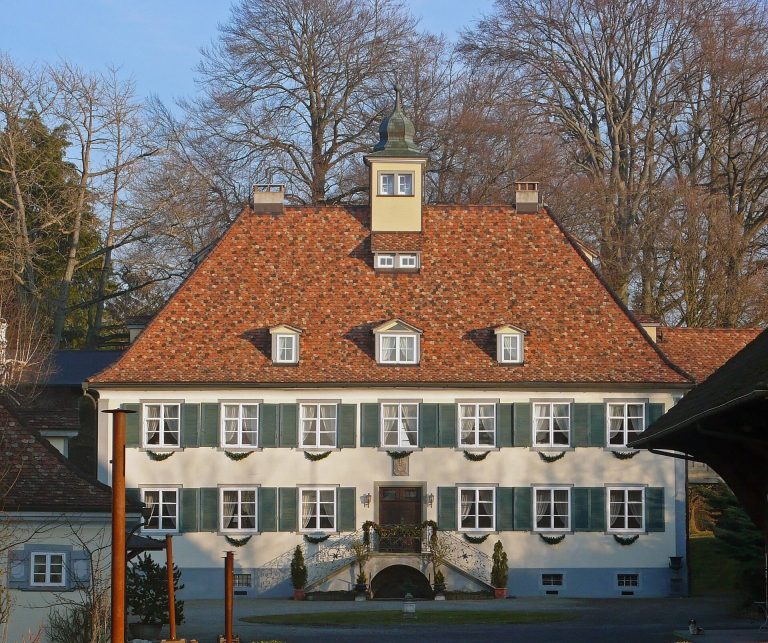
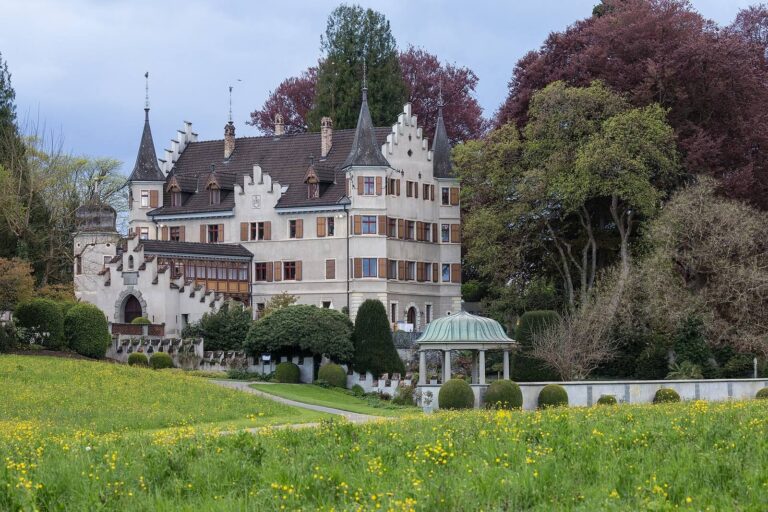
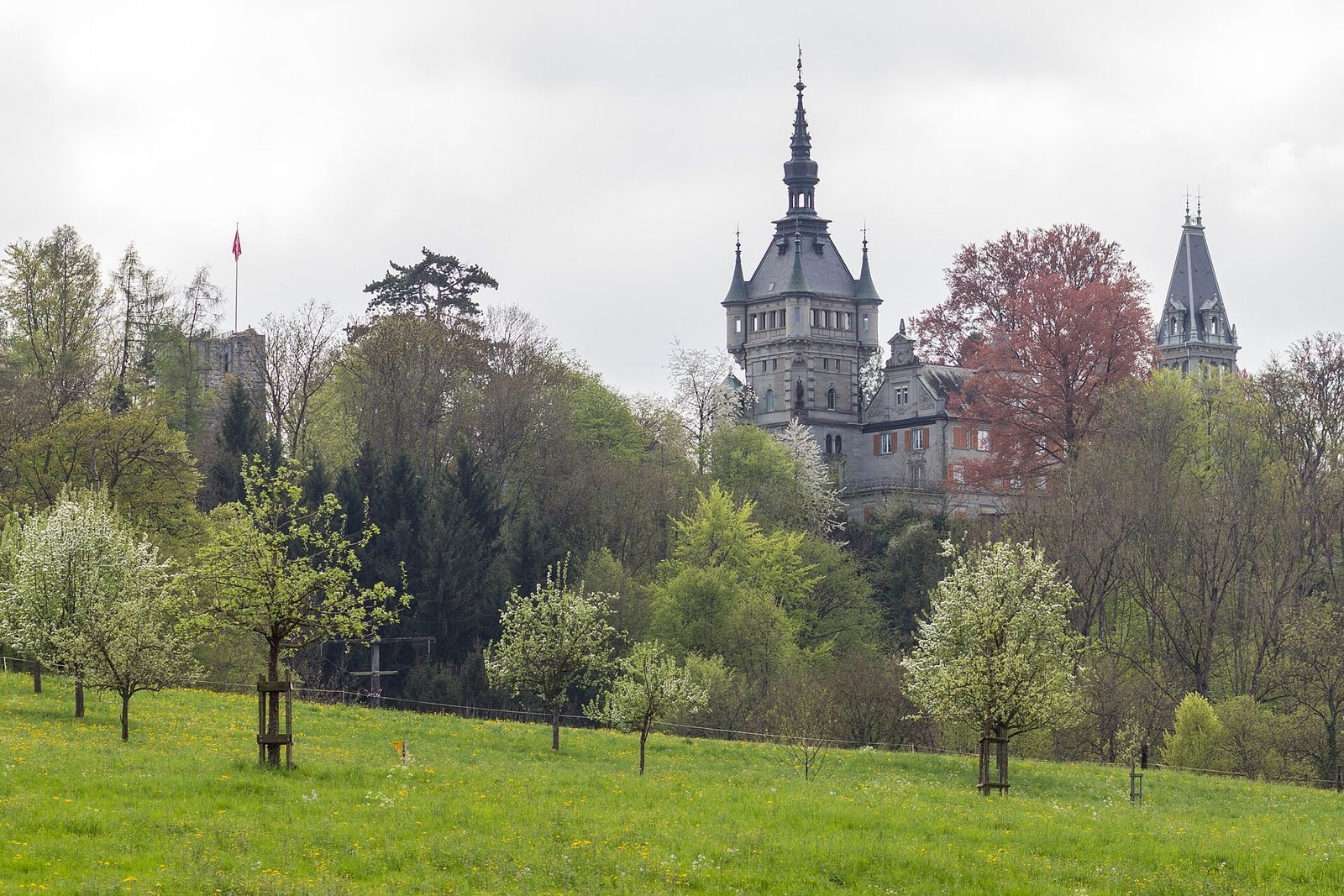
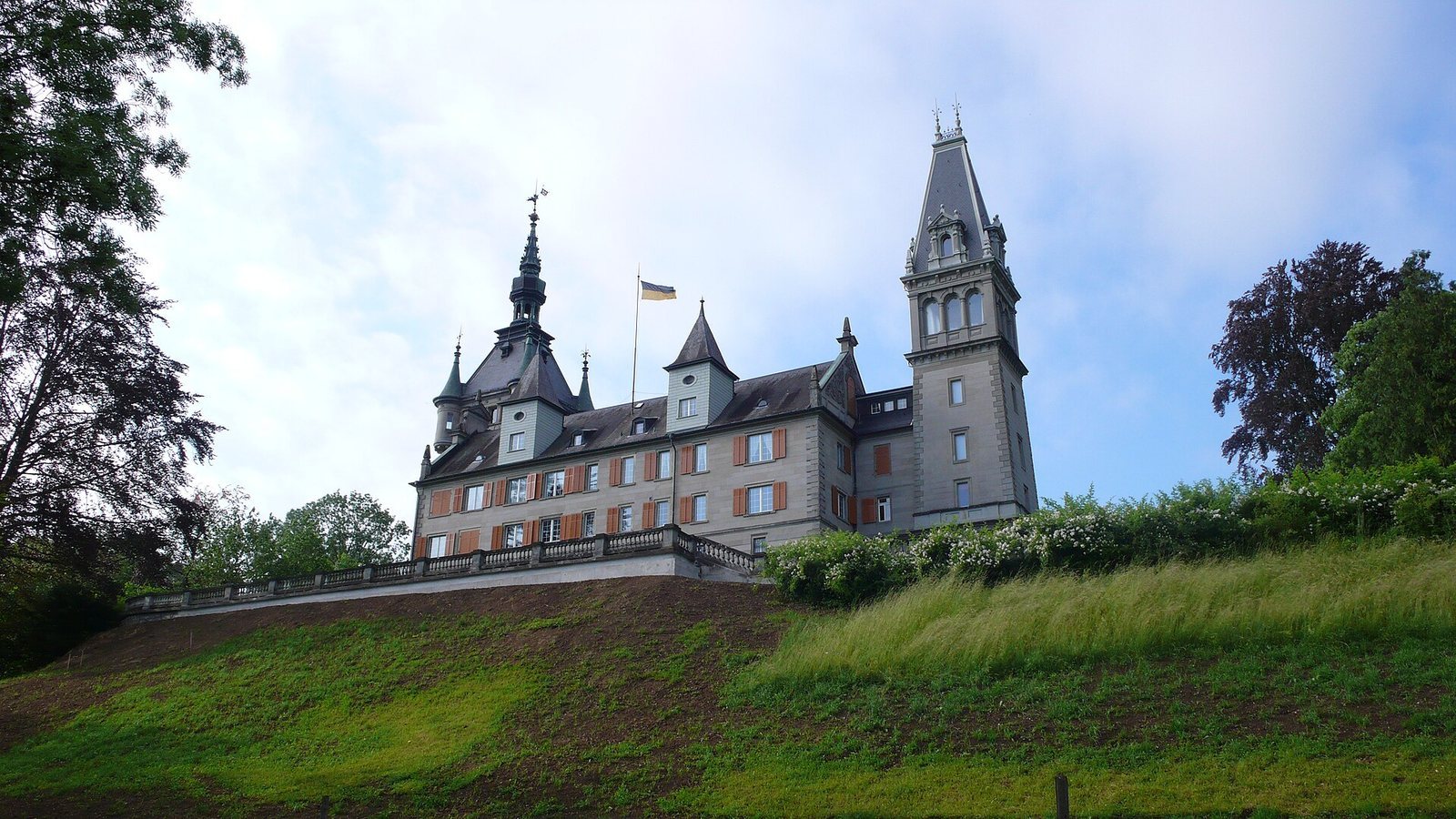
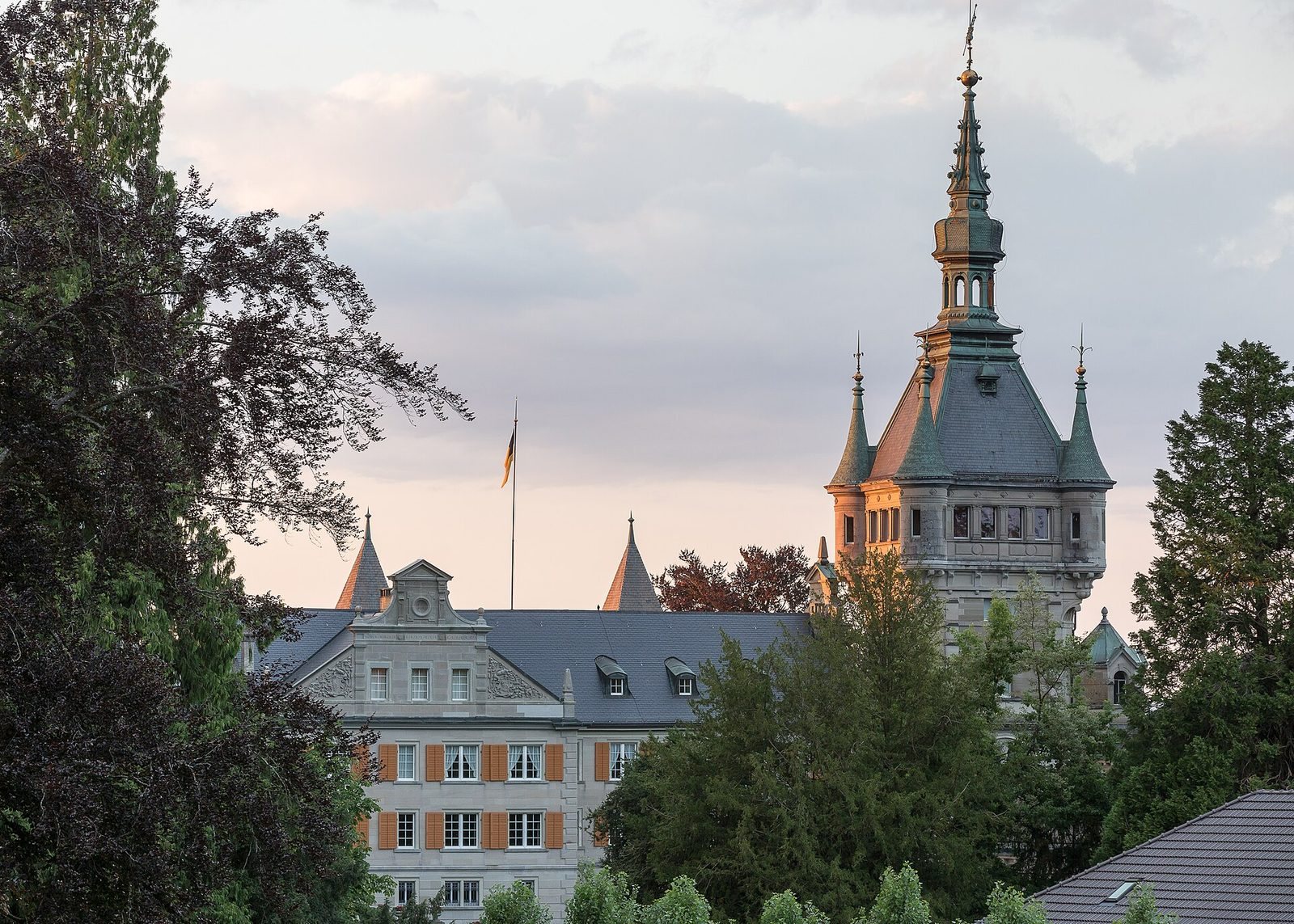
Castell Castle, also known as Upper Castell, is a historic castle complex on a ridge above Tägerwilen in the Swiss canton of Thurgau. Its core is a manor house built in 1585 in the late Renaissance period. The complex later took on a historicist character, an approach that draws on earlier architectural styles, and is considered one of Switzerland’s most significant historicist castle complexes.
Manor house and changing ownership
In 1585, Konrad Vogt von Wartenfels, a nobleman from Konstanz and bailiff of Wartenfels, had the manor house built where a farmhouse had stood. Before 1635, the estate passed to Beat Jakob Segesser von Brunegg, chief bailiff for Klingnau and Arbon in the Prince-Bishopric of Constance, an ecclesiastical principality ruled by the bishop of Constance. The Zollikofer von Altenklingen brothers of St. Gallen acquired the property in 1661 and commissioned alterations in 1725. Daniel von Scherer, also of St. Gallen, became its owner in 1790.
War and architectural transformation
For four weeks in 1871, during the Franco-Prussian War, the castle housed 506 members of the French Army of the East, a force associated with General Charles-Denis Bourbaki. Daniel von Scherer’s descendant, Baron Maximilian (Max) von Scherer-Scherburg, engaged architect Emil Otto Tafel to transform the building between 1878 and 1894.
Inheritance and estate
The von Stockar-Scherer-Castell family inherited the castle in 1901. By 2010, it had remained in the family for four generations; the family is a branch of the Stokar family. Agriculture and forestry across the 160-hectare estate provide its economic basis. The castle is designated a Swiss heritage site of national significance.
Remains
The present castle and grounds
Manor house and later design
The late-Renaissance manor house forms the core of the present complex. It was transformed into a representative Neo-Renaissance building, a style that revives forms associated with Renaissance architecture.
Interior and painted decoration
The interior includes a replica of a Moorish hall modelled on a hall in the Alhambra, a historic palace and fortress complex in Granada, Spain, known for its Islamic-era architecture. Stained-glass windows in a Moorish revival style were created by Swiss artist Adolf Kreuzer. The castle’s frescoes, wall paintings made on wet plaster, depict episodes from its history. Carl von Häberlin painted them between 1892 and 1894.
Park and landscape
The grounds include a landscaped park and pond, with woods surrounding the estate.
Medieval defensive remains
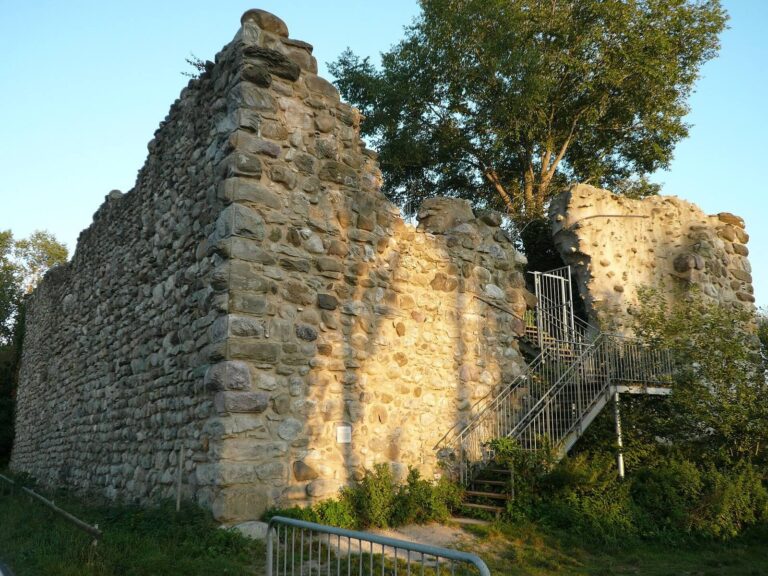
Separate ruins of a 12th-century Castell Castle stand east of the present castle. They are among the largest medieval defensive structures in the Lake Constance region.