Boisy Castle: A Medieval Fortified House in France
Site at a Glance
- Popularity
- Very Low
- Country
- France
- Primary era
- Medieval
- Eras represented
- Medieval
- Civilizations
- Duchy of Savoy, Holy Roman Empire
- Site type
- Domestic
- Remains
- Castle
On this page5 sections
History
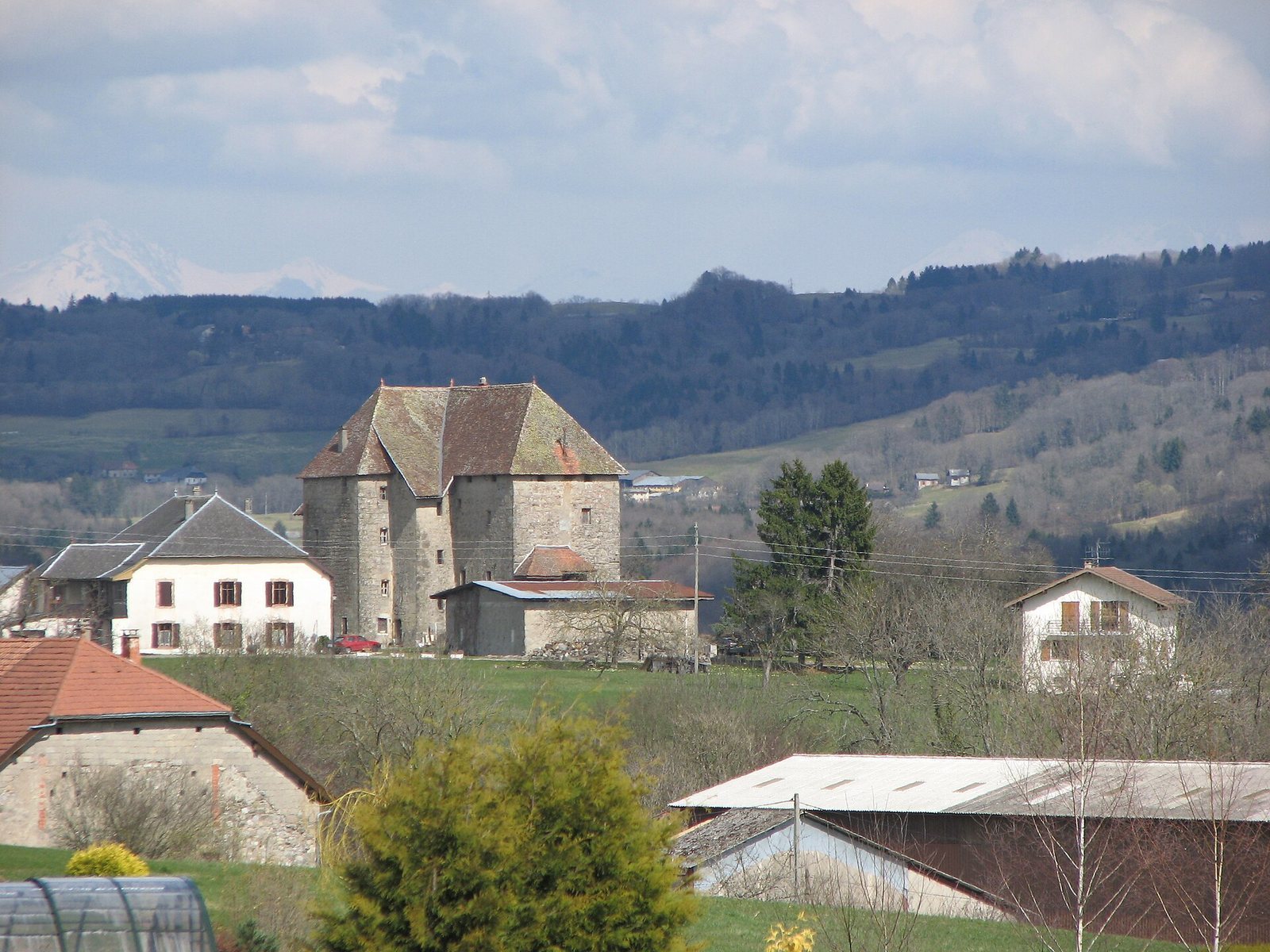
Boisy Castle is a fortified house, a defensible residence generally smaller and less heavily fortified than a castle, in France. It originated in the thirteenth century and was first held by the Pinart family.
Changing lordships
A marriage in 1362 connected the Pinarts with the Montfort family, which gradually acquired the lands of Boisy. In 1470, the fortified house and the title of lord of Boisy passed to the Allinges family when Guillemette de Montfort married Jean d’Allinges. The Allinges held the property until 1601.
Religious change and the Budé family
In 1536, during the conquest of Chablais by forces from the city-state of Bern, the lord of Boisy adopted Protestantism, a sixteenth-century movement that led to the formation of Protestant churches. Chablais is a historic region on the southern shore of Lake Geneva. In 1601, Esther d’Allinges married Jean Budé, lord of Vérace in France. A Protestant and former secretary to King Charles IX of France, who reigned from 1560 to 1574, Budé had gone into exile in Geneva after the 1572 St. Bartholomew’s Day massacre, a major outbreak of violence against French Protestants. In Geneva, he became a friend of the Protestant theologian and reformer Théodore de Bèze. The Budé family held Boisy until 1796, when Isaac Budé transferred it to Madeleine Lullin.
Later owners
Madeleine Lullin sold Boisy to the Monachon family in 1801. The Monachons sold it in 1803 to Édouard de Maupeou, who had married a member of the Budé family. The de Boigne family owned the property from 1818 until 1911, when Raoul de Boigne transferred it to Albert Turrettini. By the late twentieth century, it belonged to Robert Turrettini, a lawyer at the Geneva bar. The property is privately owned.
Remains
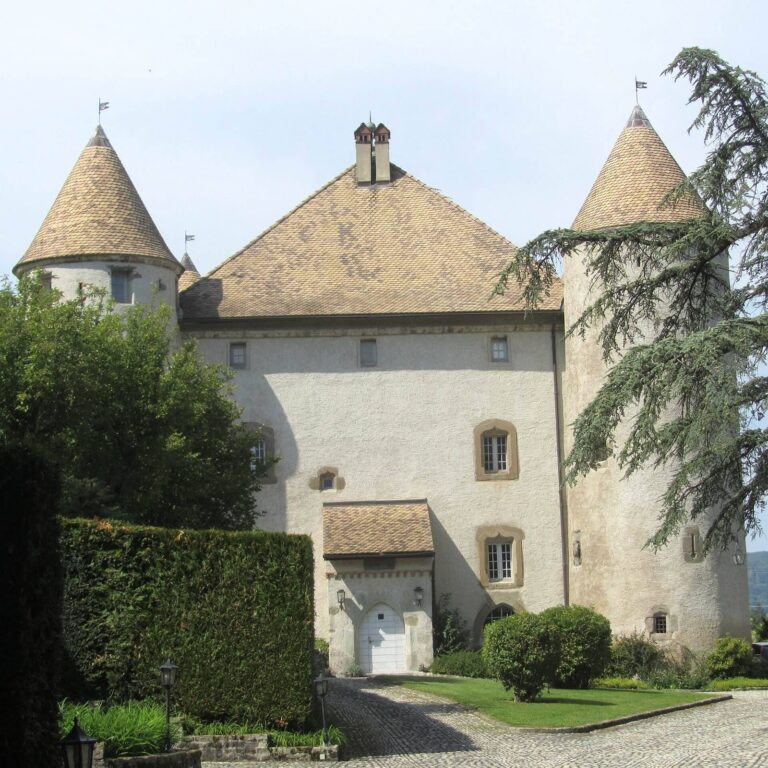
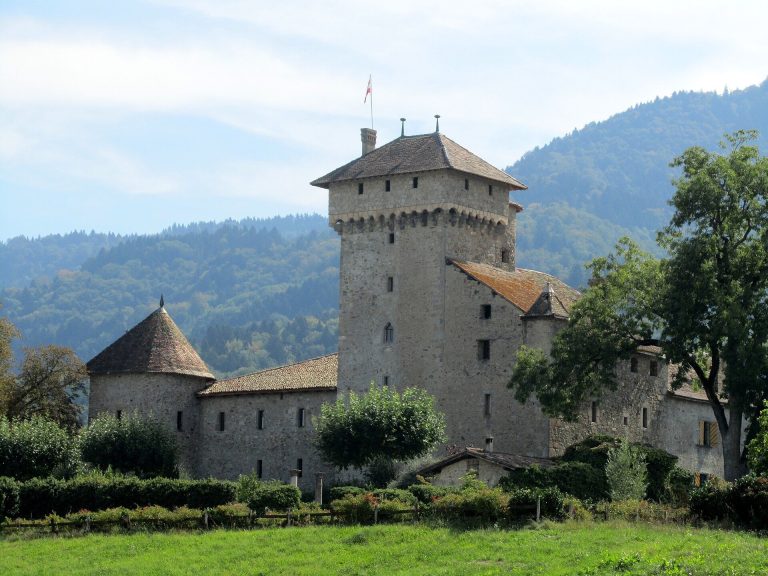
Boisy Castle stands on the southern slope of Mont de Boisy. The large square tower is the sole surviving part of the original fortified house, and a beam in the tower bears the date 1430. A building was attached to the tower. In the early twentieth century, the Turrettinis demolished several buildings dating to different periods. Albert Turrettini’s son Maurice, an architect, renovated the château, giving it its present appearance.