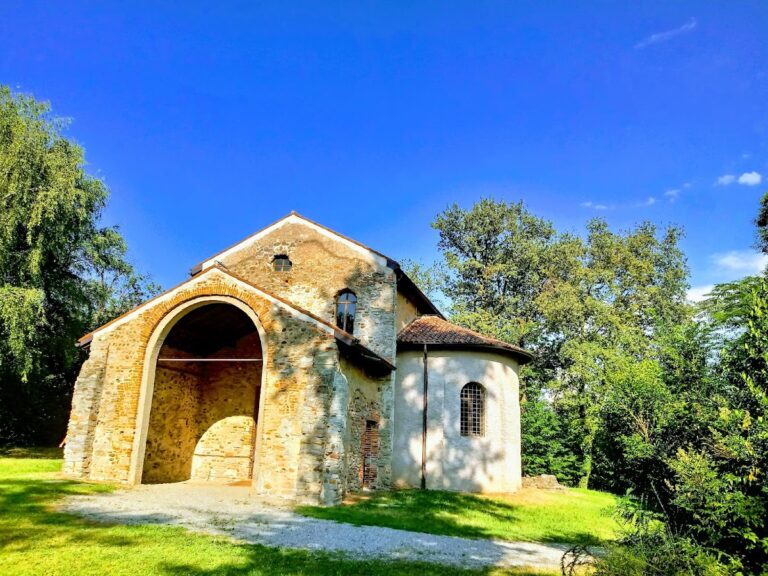
Visconti Castle in Crenna: A Medieval Hilltop Stronghold in Italy
Site at a Glance
- Popularity
- Very Low
- Country
- Italy
- Primary era
- Medieval
- Eras represented
- Medieval
- Civilizations
- Unclassified
- Site type
- Military
- Remains
- Castle
On this page5 sections
History
Visconti Castle in Crenna is a medieval hilltop castle in Italy, first mentioned in records from the 12th century. Its original builder is unknown.
Medieval origins and Visconti conflict
The castle became part of a division of Visconti family holdings at the end of the 13th century, when Pietro Visconti received it along with castles at Besnate, Orago, and Jerago. The division involved Matteo Visconti and Uberto, sons of Teobaldo Visconti. In 1276, supporters of the Della Torre, a rival family in Milanese politics, captured Teobaldo and executed him at nearby Gallarate.
Pietro’s heir, Lodrisio Visconti, greatly enlarged the castle. After Lodrisio’s cousin Matteo became Lord of Milan, Matteo’s death in 1322 led to conflict between Lodrisio and Matteo’s sons. Lodrisio was forced out of Crenna, and the castle was destroyed.
Restoration and the Visconti di Crenna
In 1339, Lodrisio formed the Company of Saint George, a mercenary force, but an army led by Azzone Visconti, Matteo’s grandson and a ruler of Milan, defeated him at the Battle of Parabiago. Lodrisio later made peace with his cousins, and the castle was restored. It subsequently passed to the Visconti di Crenna, a separate family branch founded by Lodrisio and named for Crenna.
Family divisions and later development
Divisions among the Visconti di Crenna fragmented the surrounding territory. Further disputes within the family brought changes and adaptations to the building during the 16th and 17th centuries. The branch ended in 1722, and its buildings passed to other families. From the 19th century, private estates, including buildings in a castle-revival style, were built near the original castle. Changes in the late 19th and early 20th centuries shaped the area’s present built-up setting.
Remains
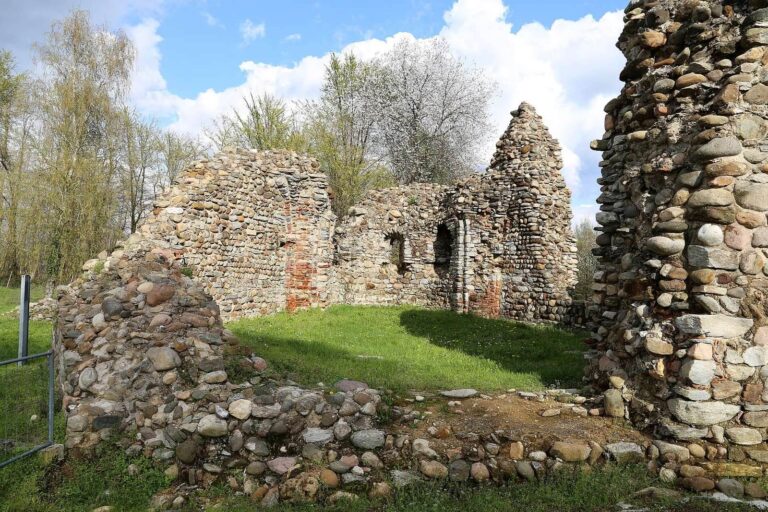
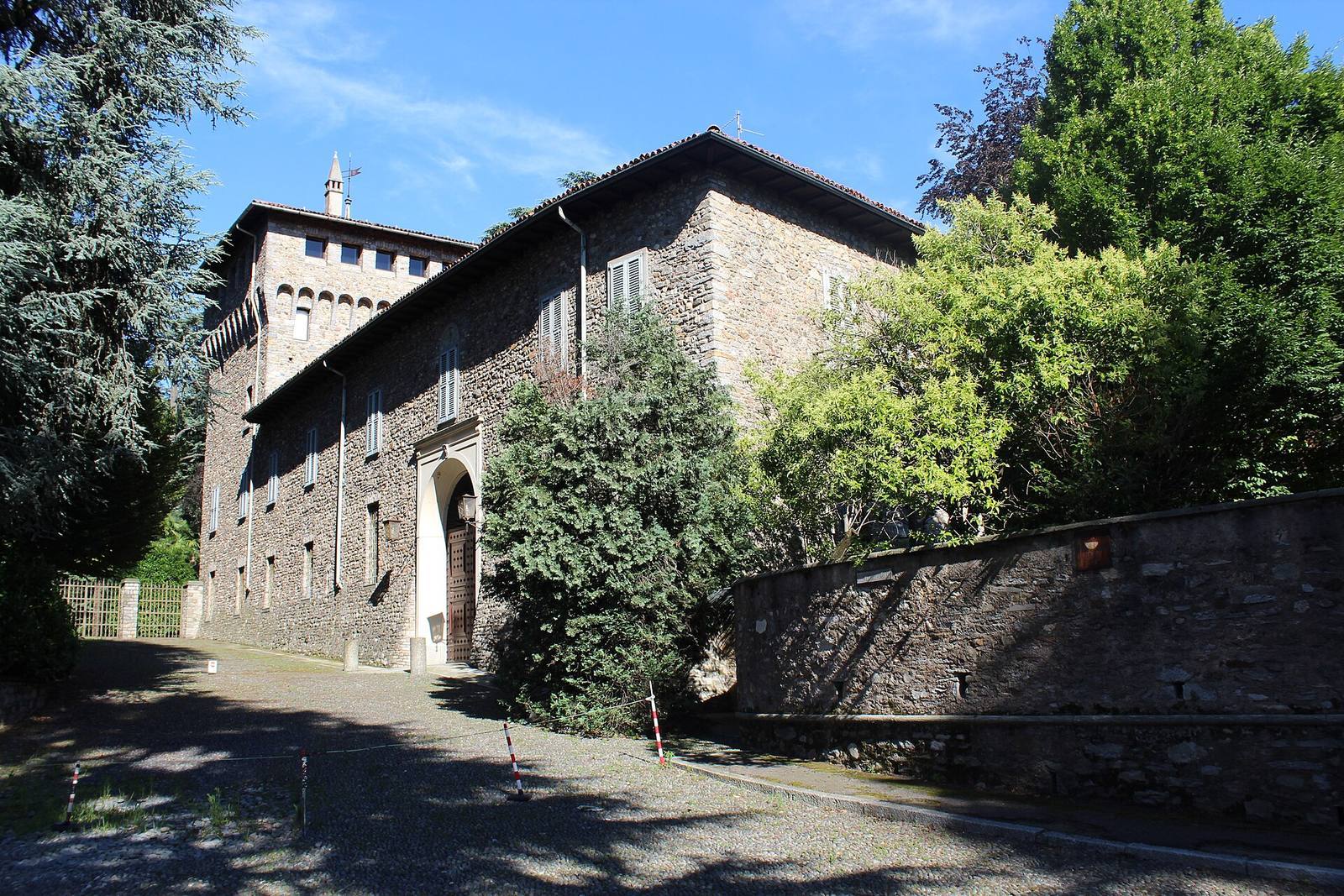
The castle occupies the top of a hill above the valley of the Arno stream. Its position allowed control of territory to the east, toward Milan. The castle is in good condition, and its area is surrounded by more recent buildings. From the center of Crenna, a tower and other castle-revival buildings can be seen. The castle’s eastern facade, facing Gallarate, is visible from a distance at the hilltop.