Cloghan Castle: A Defensive Castle and Estate in County Offaly
Site at a Glance
- Popularity
- Very Low
- Country
- Ireland
- Primary era
- Medieval
- Eras represented
- Medieval, Early Modern
- Civilizations
- English, Norman
- Site type
- Military
- Remains
- Castle
On this page6 sections
History
Cloghan Castle is a partly surviving castle in Cloghan Demesne, Lusmagh, County Offaly, Ireland. Its origins lie in a monastery established around AD 600, before the site was converted into a defensive castle in 1203. Founded in the name of St Cronan, an Irish Christian saint, the monastery remained active until that conversion.
Monastery and castle
During the Christian period, the surrounding lands were known by a name meaning “church of a saint.” The name Lusmagh has been interpreted by O’Kelly as “Plain of Healing Herbs,” and the lands returned to the name Lusmagh in 1810. Cloghan’s parish was the only parish of the Diocese of Clonfert east of the River Shannon.
After the Anglo-Norman conquest, the expansion of Anglo-Norman power in Ireland beginning in the late twelfth century, Anglo-Norman lords seized the monastery and its lands. They converted the monastery into a castle in 1203. The lands legally belonged to the medieval Kingdom of Connacht until 1373.
O’Madden and English control
In 1336, Eoghan O’Madden, chief of the Gaelic Irish O’Madden clan, captured the castle and recovered the surrounding lands. The clan’s territory stretched east to west across areas now in Offaly and Galway, including Loughrea, and its members regarded their domain as an independent kingdom.
English forces led by Sir William Russell, the English Crown’s chief representative in Ireland, attacked Cloghan in 1595, captured it, and destroyed the castle. The Crown confiscated the castle and lands. In 1601, it granted the property, including 6,000 acres, to Sir John Moore for his service to the English queen. Moore rebuilt the castle, but lost his offices after he was discovered to be a secret Catholic. The property remained with his family.
Conflict and the Moore family
After the suppression of the 1641 Irish rebellion, Catholic-owned estates and castles were confiscated, including Moore property, whether or not their owners had supported the uprising. Oliver Cromwell’s soldiers occupied Cloghan in 1654, and an English garrison stayed there until 1683. Charles II then returned the castle to the Moore family, and Garrett Moore became its owner.
The castle was fought over in 1689 and 1690 during the Williamite and Jacobite wars. Jacobite garrisons held it in support of the Catholic King James II, who had been deposed by the Protestant William III.
Famine, sale, and land redistribution
During the Great Famine of 1845–1847, the Moore family tried to help tenants suffering from the famine. The effort left the family bankrupt, and they had to sell the castle and lands. Dublin physician Robert Graves bought the property and died a year later. His widow evicted more than 100 tenants. Graves’s grandson sold the estate in 1908 and emigrated to Australia.
Around 1910, the Irish Land Commission, a government body involved in land redistribution, took over the lands of Cloghan-Lusmagh and divided them among local farmers.
Remains
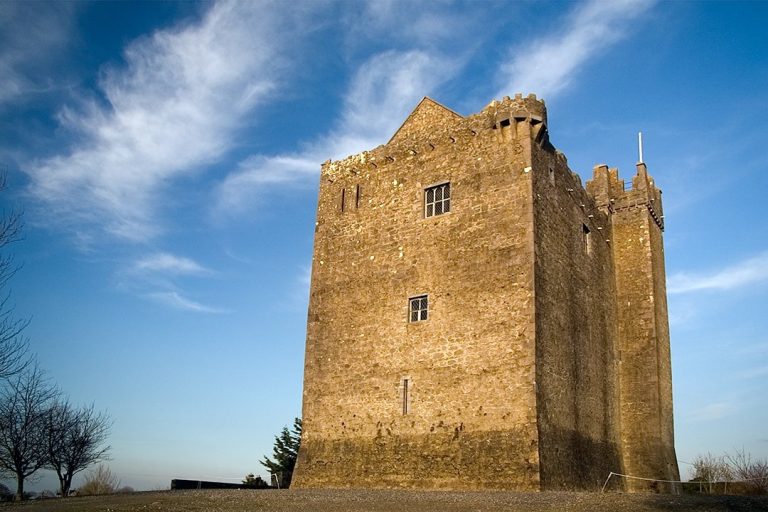
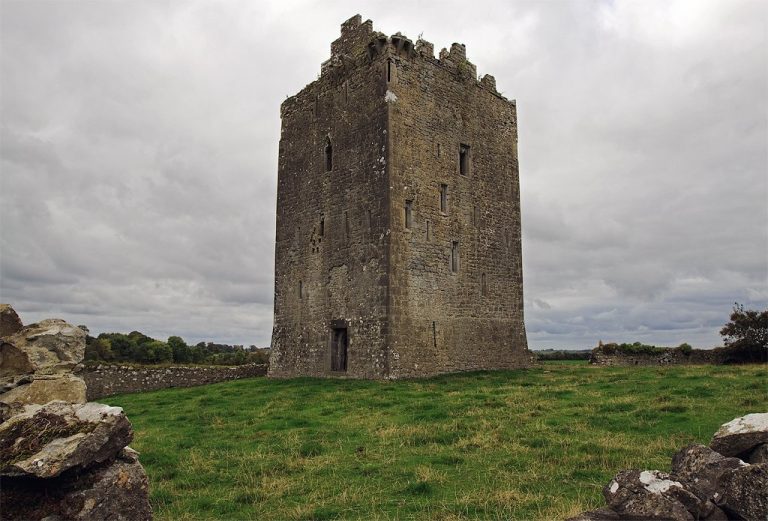
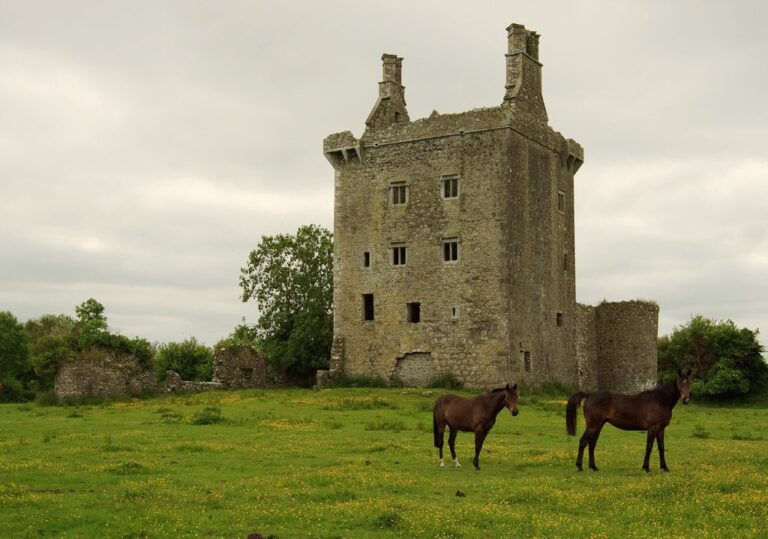
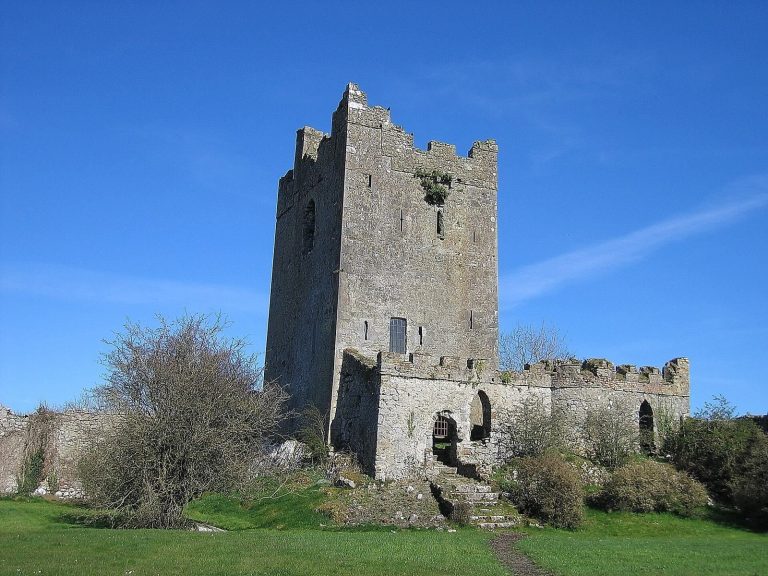
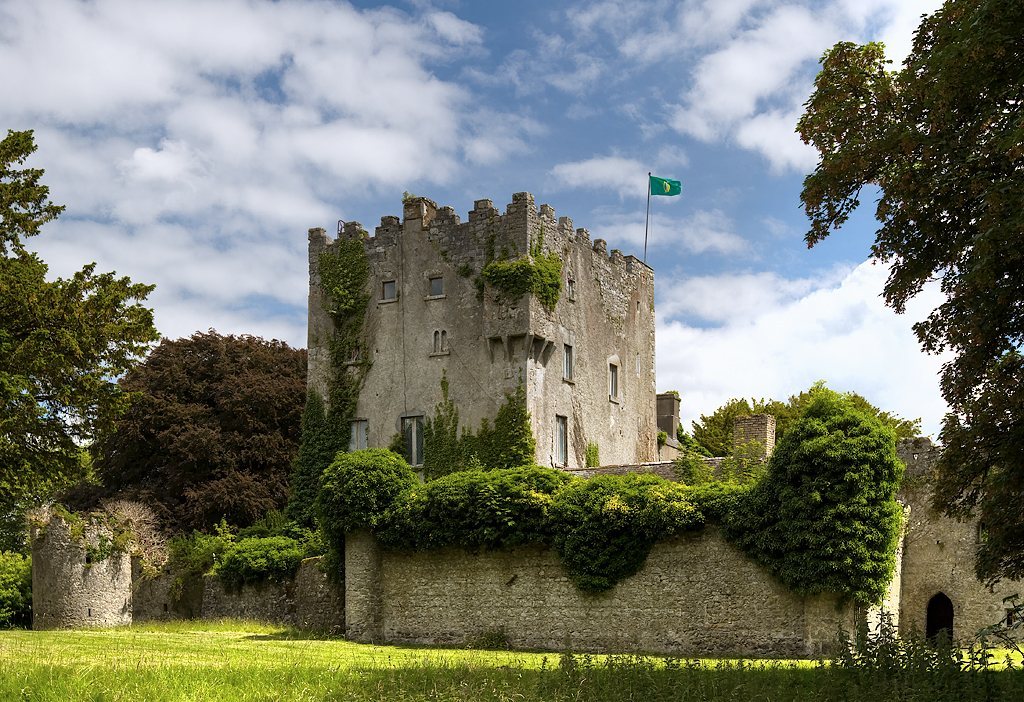
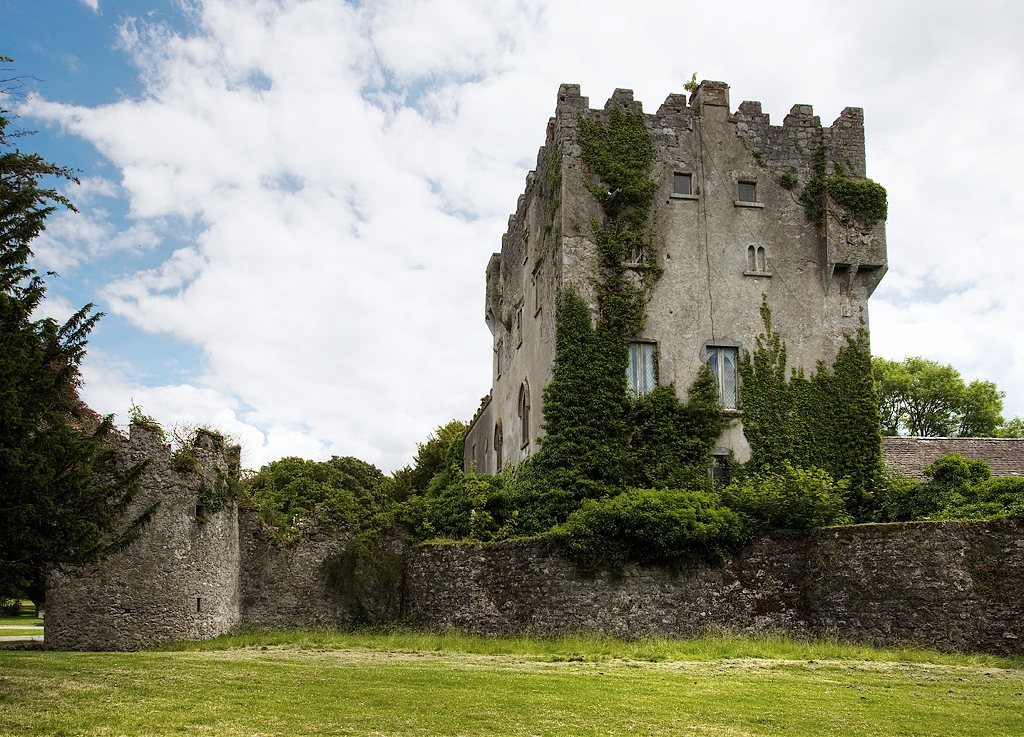
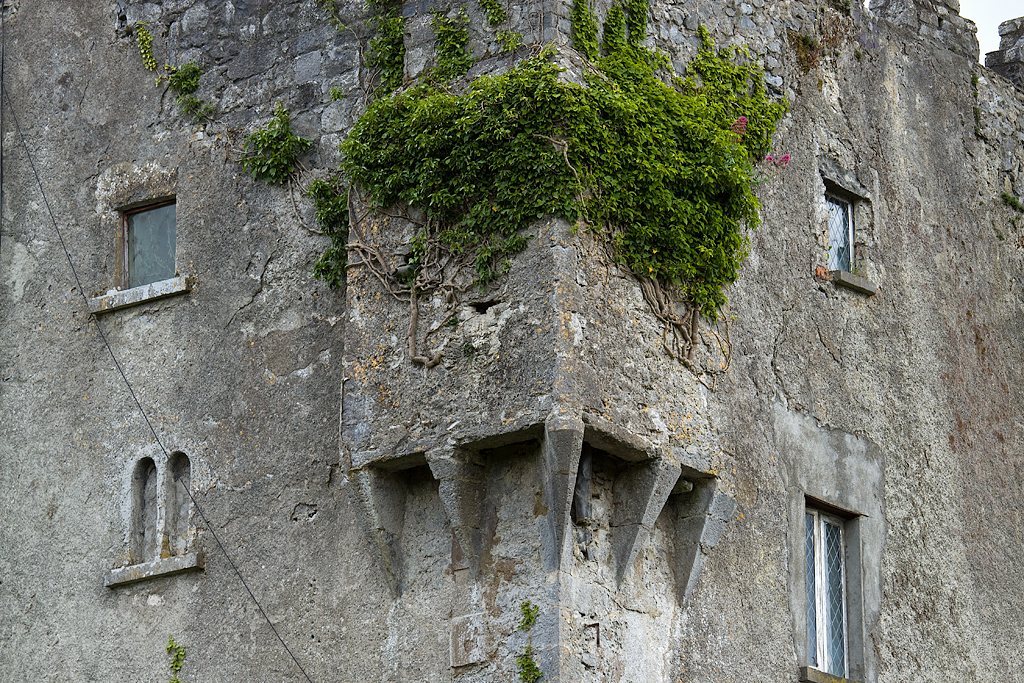
The castle site lies on Lusmagh, near the Shannon, Lusmagh, and Little Brosna rivers. The castle and its towers were enclosed by a defensive wall. Part of the castle survives, with visible marks on its walls from the fighting of 1689 and 1690.
The 1601 rebuilding included a new roof made from oak boards. The site is described as both a castle and a stately home, reflecting its defensive and residential use.