Palace of the Counts of Benavente: A Renaissance Palace in Valladolid
Site at a Glance
- Popularity
- Medium
- Country
- Spain
- Primary era
- Early Modern
- Eras represented
- Early Modern, Modern
- Civilizations
- Crown of Castile, Spanish
- Site type
- Civic
- Remains
- Palace
On this page6 sections
History
Royal Court and Government
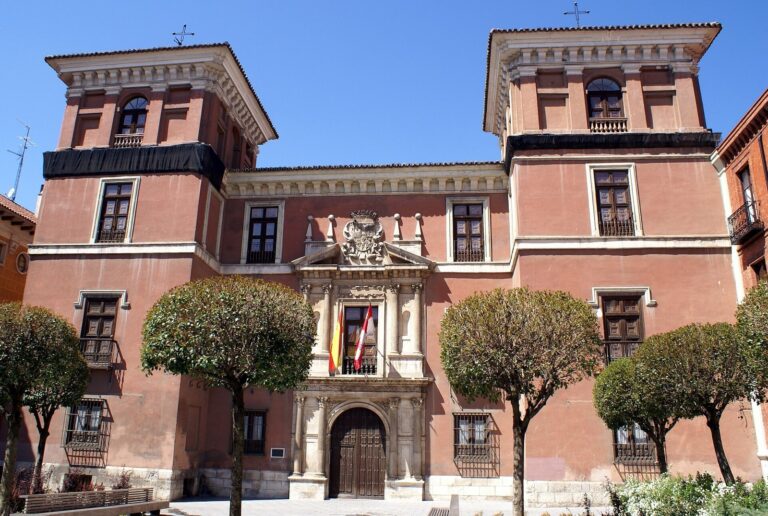
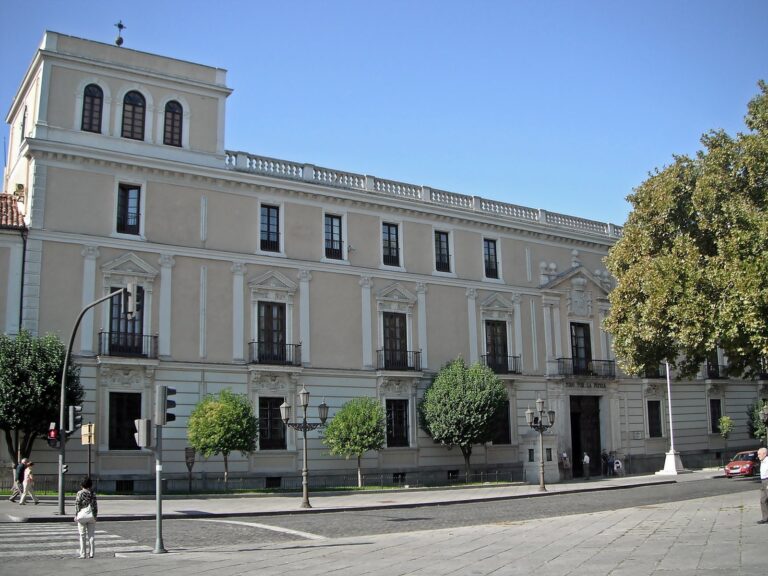
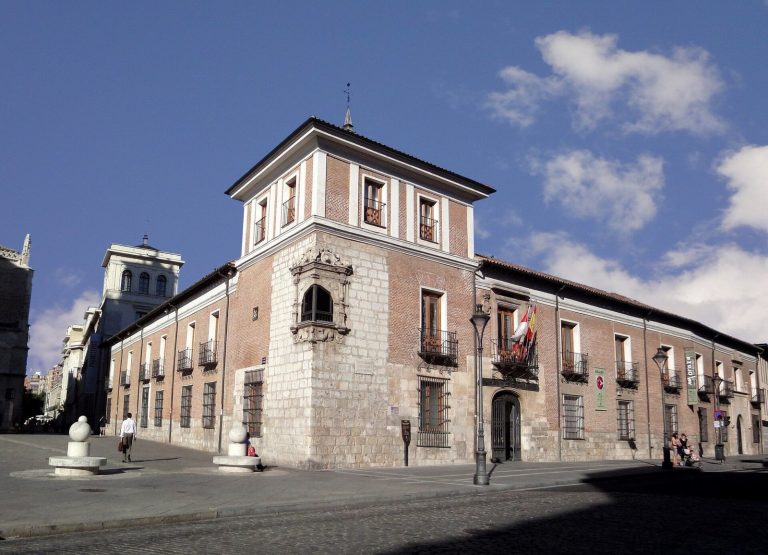
The Palace of the Counts of Benavente, in Valladolid, Spain, began construction in 1515 as a Renaissance residence. It became one of the city’s most important palaces and served as a setting for the royal court. Philip II, king of Spain, stayed there in 1559, followed by his successor Philip III in 1601. The palace was the birthplace of Ana Mauricia, who later became queen consort of France. In 1603, Infanta María, a daughter of Philip III and his queen, Margarita of Austria, was also born there.
The palace also served as the seat of the Cortes, representative assemblies convened by the monarch, and of the royal councils, which advised and administered the monarchy. Under Juan Francisco Alonso Pimentel, a nobleman of the Pimentel family, it housed the finest private art collection ever assembled in Valladolid.
Fires and Later Uses
Severe fires damaged the palace in 1667 and again in 1716. In 1801, the Valladolid Provincial Council acquired the building and converted it into a poorhouse, a role it retained until the 1970s. The palace received Spain’s formal Asset of Cultural Interest designation on 3 June 1931.
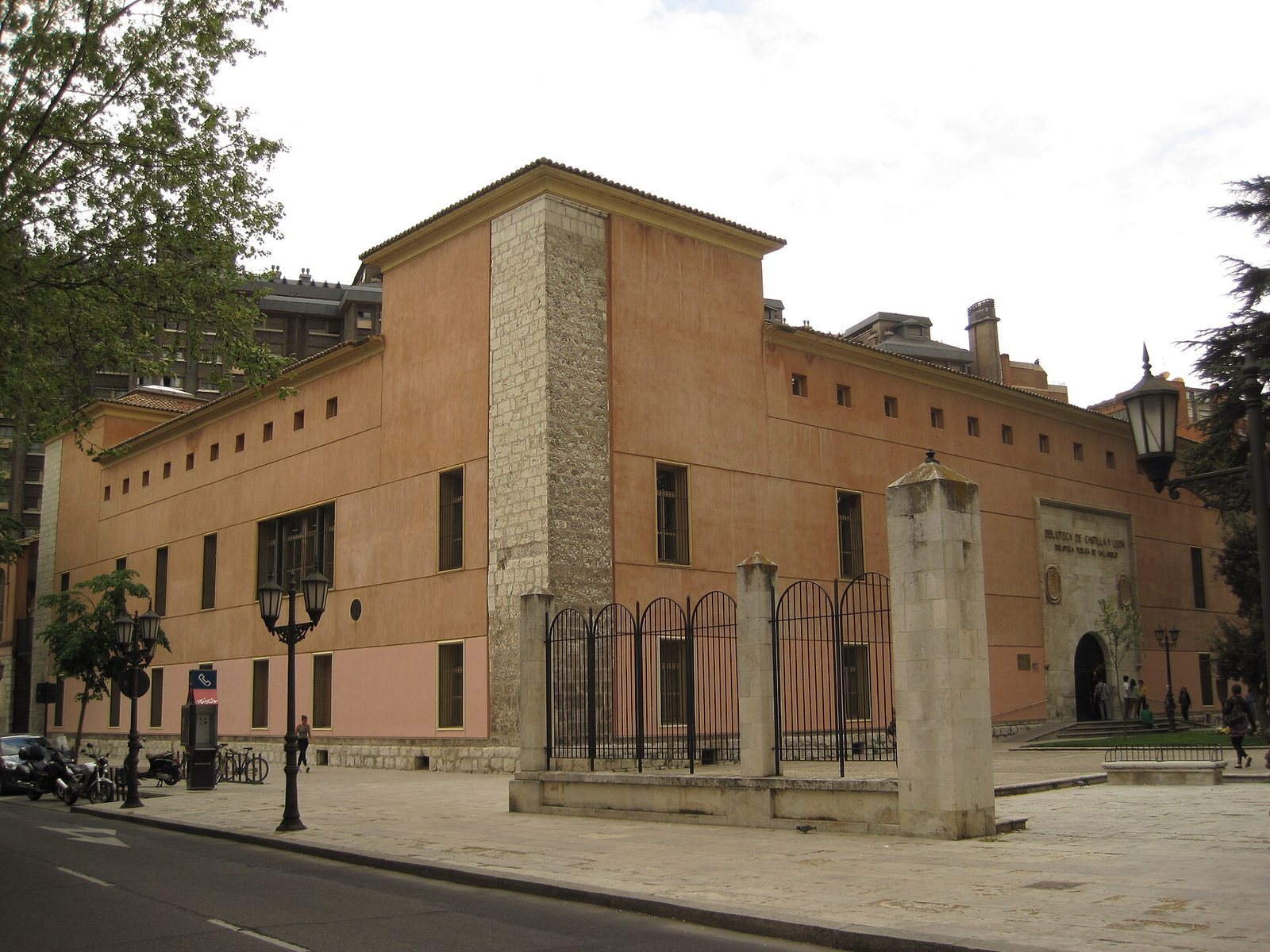
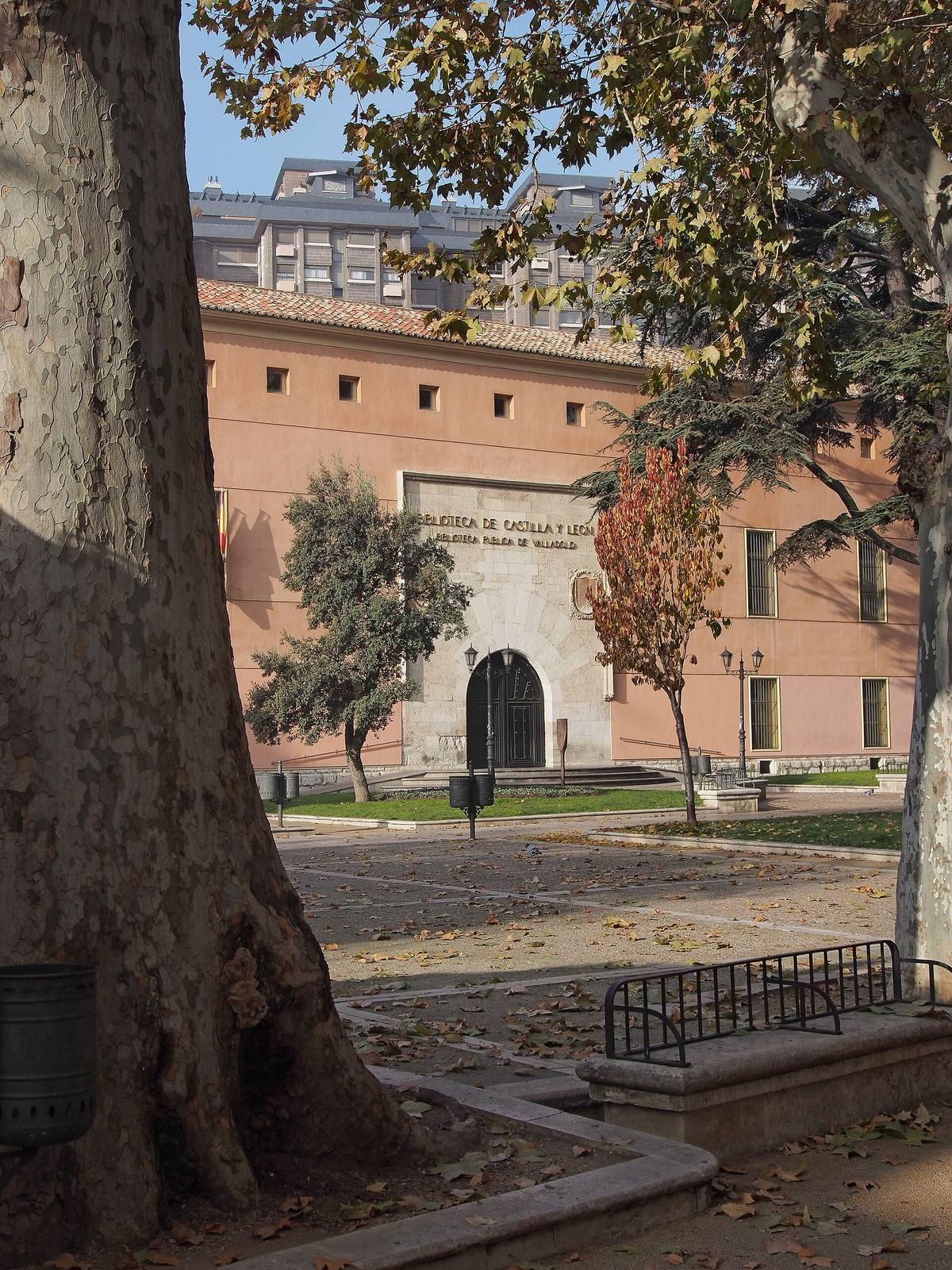
After a period of ruin, reconstruction and rehabilitation aimed to recover and enhance the building’s original architectural form. In 1982, the Provincial Council ceded the palace to the Ministry of Culture for use as a public library.
Remains
Courtyards and Interior
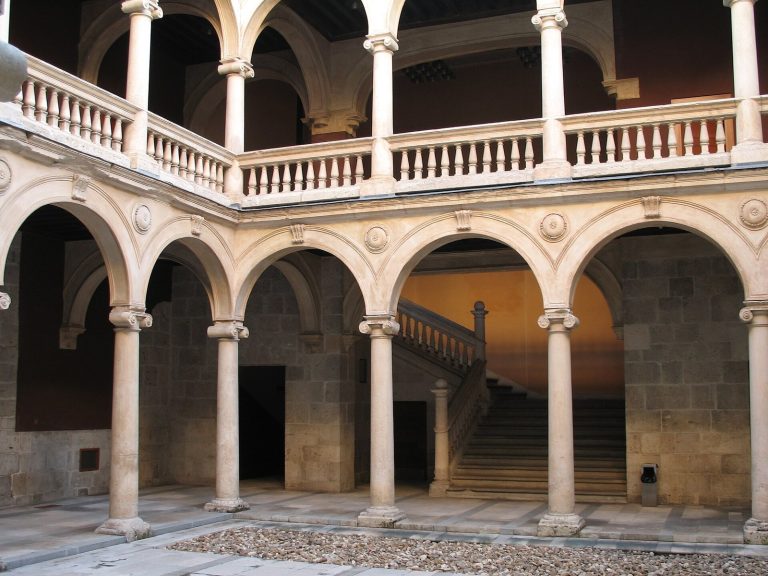
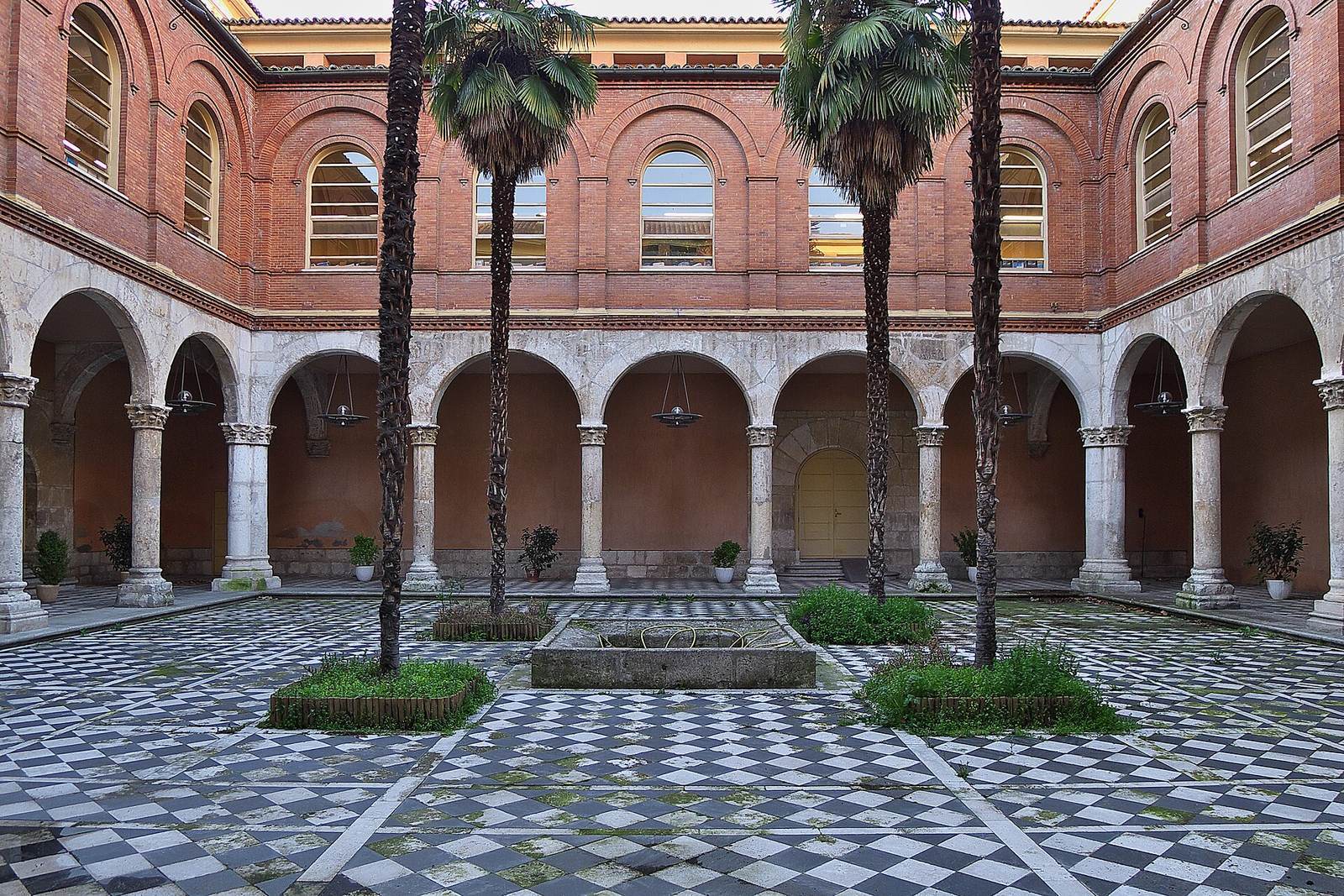
The ground floor is arranged around two courtyards. One, a Renaissance courtyard, survives intact; the other is circular and has a hemispherical roof. The main staircase occupies the central range. Adaptation for later uses introduced modern materials and elements, including prefabricated concrete, glass roofs and metal components.
Main Façade
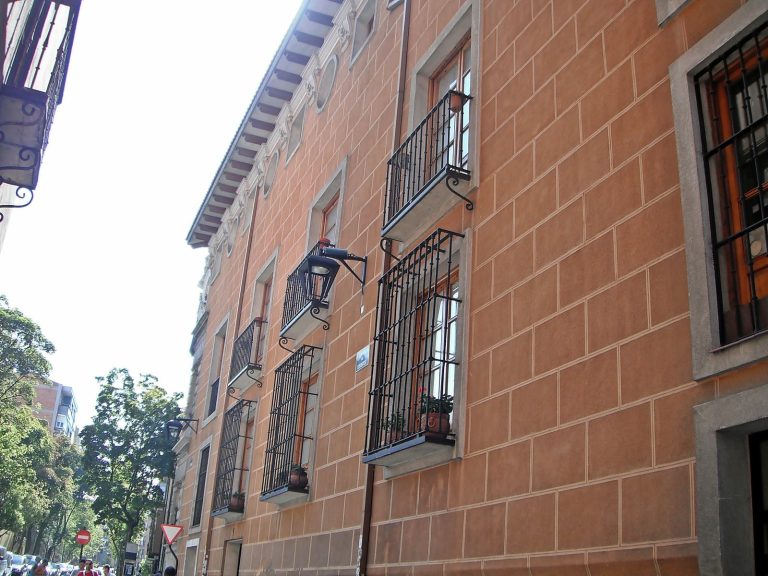
The main façade retains its original stone entrance portal. A semicircular arch is flanked by the Pimentel family coats of arms and enclosed by an alfiz, a rectangular frame surrounding an arch.