Samuel Johnson Birthplace Museum: A Literary Museum and Bookshop in Lichfield
Site at a Glance
- Popularity
- Medium
- Country
- United Kingdom
- Primary era
- Early Modern
- Eras represented
- Early Modern, Modern
- Civilizations
- British
- Site type
- Domestic
- Remains
- House
On this page5 sections
History
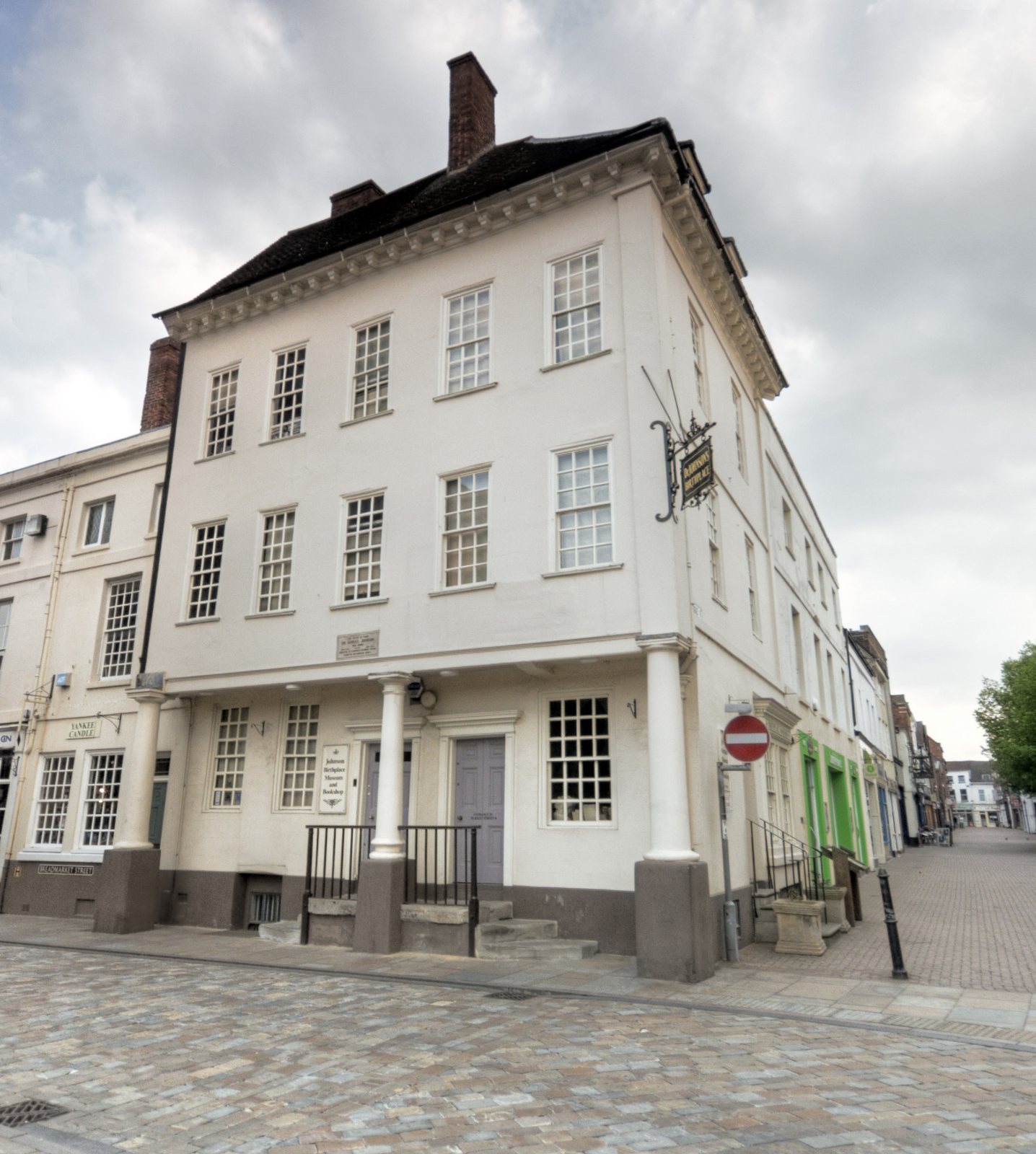
Samuel Johnson Birthplace Museum is a house in Lichfield, United Kingdom, built in 1707 in the Palladian style, which draws on the work of Italian Renaissance architect Andrea Palladio. Michael Johnson built it as his residence and bookshop. His son Samuel, an English writer and lexicographer (a compiler of dictionaries) known for an influential English dictionary, was born there on 18 September 1709.
The Johnson family and the house
Samuel Johnson spent much of his first 27 years in the house. On 2 March 1737, he left for London with David Garrick, a prominent English actor and theatre manager. His mother, Sarah, continued to live there. On 31 January 1739, she and Samuel mortgaged the property to Theophilus Levett, Lichfield’s town clerk and a longtime family friend, for £80. Their correspondence with Levett and his son continued over several years, and Johnson eventually repaid the debt in full.
After Sarah’s death in 1759, Johnson asked his stepdaughter Lucy Porter and his parents’ servant Catherine Chambers to maintain the house and its business. When the family gave up ownership is uncertain; the property may have remained Johnson’s until his death in 1784. It was sold at auction in 1785 for £235 to bookseller Major Morgan, who continued to run a bookshop there.
Changing uses and the museum
From 1817 to 1835, the building housed the offices of the Lichfield Mercury. It is thought to have stood empty for several years afterward, with occasional use by grocers, dentists and ironmongers. James Johnson of Stockport bought the property in 1887 to preserve Samuel Johnson’s birthplace. In 1900, the city acquired the house under James Johnson’s will, with the purchase money provided by John Gilbert. The museum, devoted to Johnson’s life and work, opened on 27 May 1901.
The city council managed the museum until 1974, when responsibility passed to the Dr Johnson Birthplace Trust. Lichfield City Council has served as trustee since 1982. The house is a Grade I listed building, England’s highest listed-building category, reserved for buildings of exceptional interest. The widow of Peter Hay Hunter, an eighteenth-century Scottish clergyman and book collector, gave the museum more than 1,000 books in 1911. The building also serves as the postal address of the Johnson Society, founded in 1910, and continues to operate as a museum and bookshop.
Remains
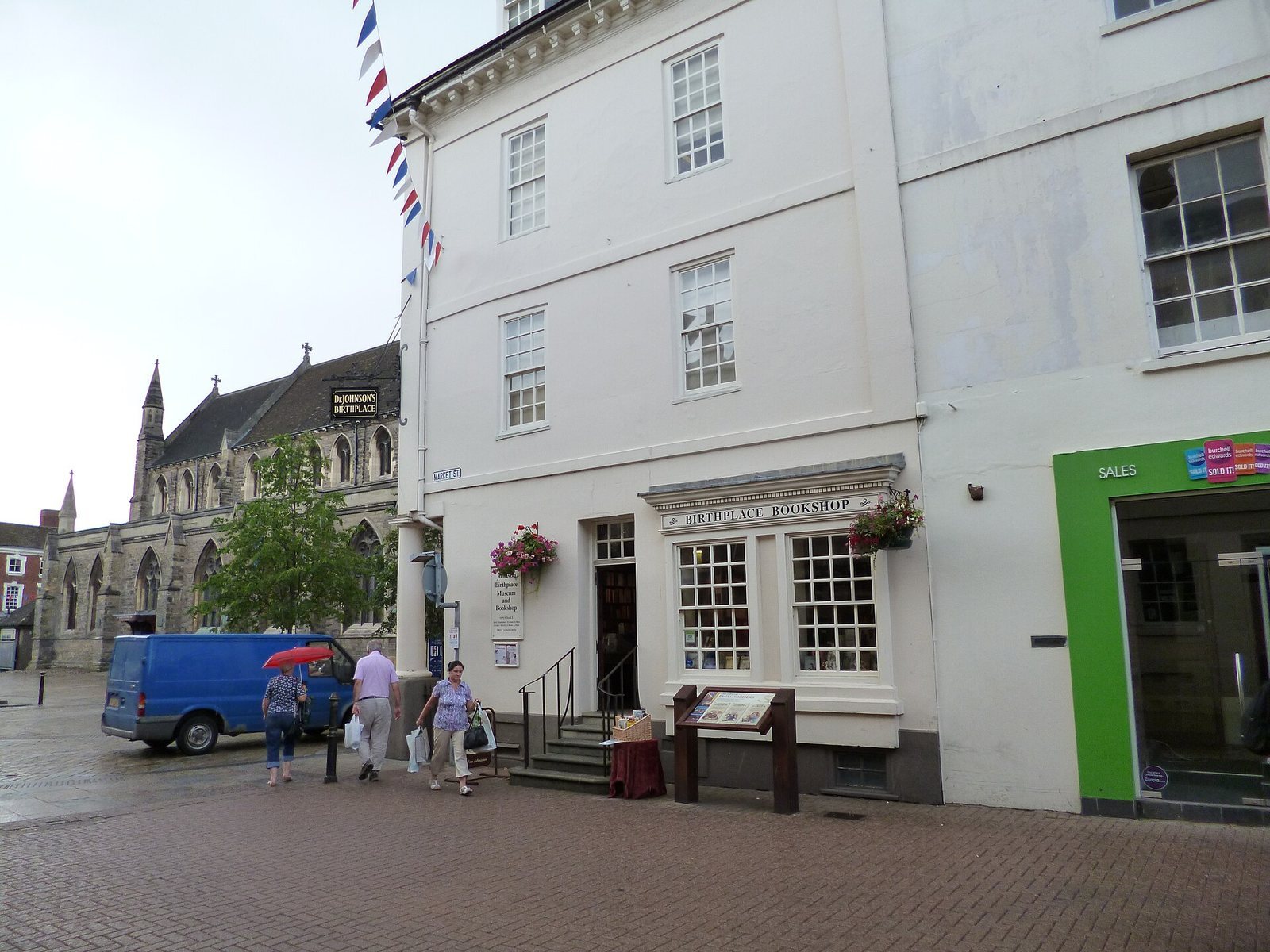
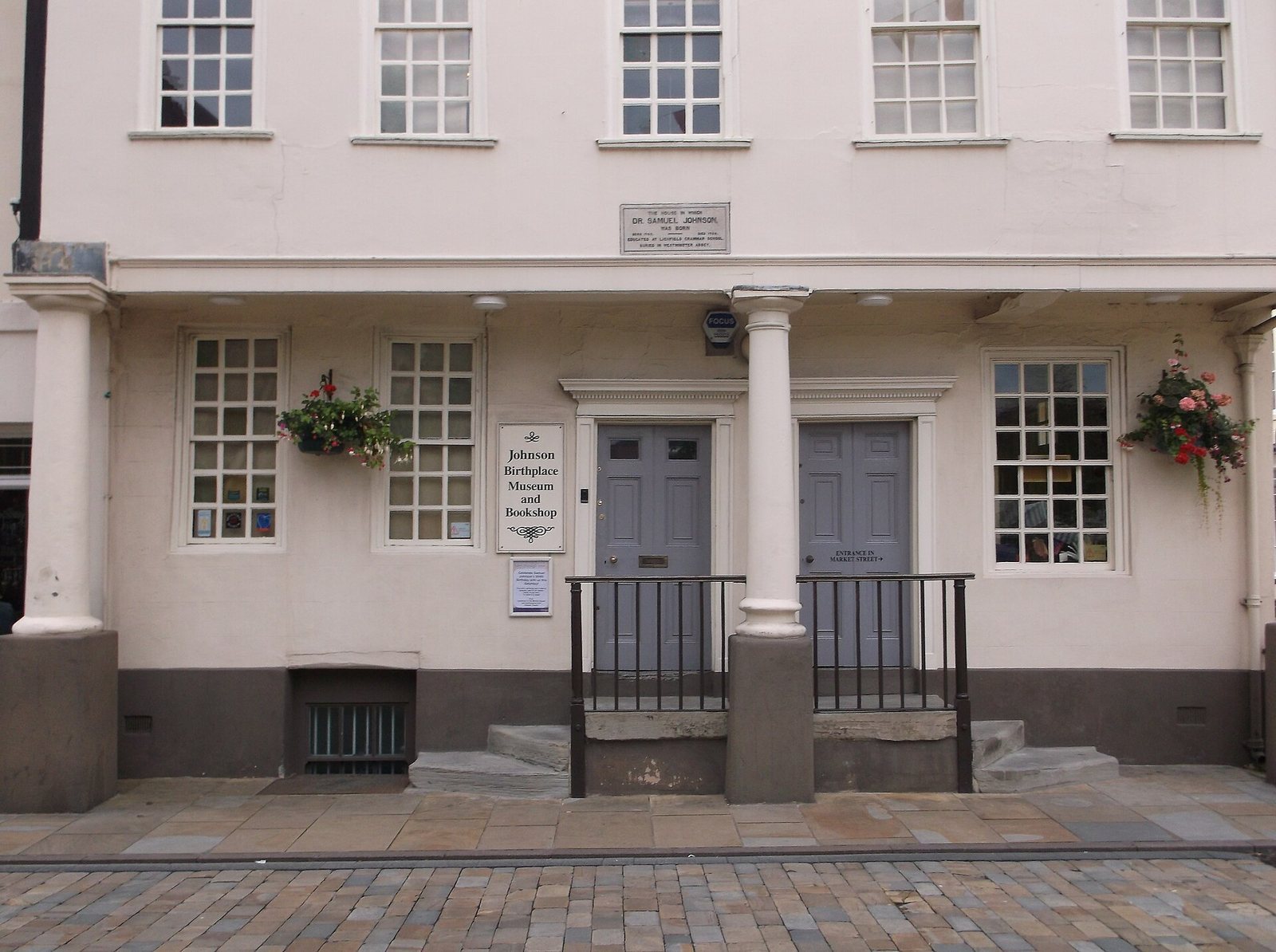
The four-storey house stands at the corner of Breadmarket Street and Market Street, facing Market Square. Its timber frame has brick infill and is now covered with stucco. The Market Square frontage has upper floors that project beyond the ground floor. When built, the projecting front rested on plain pillars at either end, with shallow, column-like projections in the Ionic classical style at the upper corners. Two central pillars were added in the eighteenth century, and one was removed in the late nineteenth century. The original facing was red-brown brick, and the roof was tiled in blue-black. The upper floor is lit by dormer windows, which project from a sloping roof; removed in the eighteenth century, they were restored in the 1970s. The exterior was stuccoed and the pilasters removed in the nineteenth century. The bookshop entrance facing Market Street was restored in 1990.
Museum rooms and collections
The museum contains reconstructed rooms, audio-visual displays and a collection of 8,000 items, including prints, paintings, sculpture, furniture, manuscripts and books. Its books include early and rare editions of Johnson’s works. The book collection was formed largely through two major donations and is housed in the Hay Hunter and Blum Libraries; the Wood Library holds a further 2,000 volumes. Personal objects include Johnson’s armchair, tea set, breakfast table and portable writing desk, as well as Garrick’s walking stick and a bookcase that belonged to James Boswell, the Scottish writer and Johnson biographer. A carved figure of Johnson is attributed to Denis Parsons.