Verdant Works Museum: A Dundee Textile Mill and Museum
Site at a Glance
- Popularity
- Medium
- Country
- United Kingdom
- Primary era
- Modern
- Eras represented
- Modern
- Civilizations
- British
- Site type
- Economic
- Remains
- Production Complex
On this page11 sections
History
The mill and Dundee’s textile economy
Verdant Works Museum occupies a former textile mill in Dundee, Scotland, United Kingdom, built in 1833 for David Lindsay, a flax spinner and merchant. Its name reflected the natural surroundings. The mill is associated with the textile industry that once formed a major part of Dundee’s economy.
The works expanded during the nineteenth century. By 1863, additions included warehouses, areas for preparing fibres for processing, and offices. In 1864, 500 people worked at the mill, which ranked sixteenth among Dundee’s textile mills by size. Across the city, the textile industry directly employed about 50,000 people by the late nineteenth century, roughly half the working population. Around two-thirds of textile-mill workers were women, while many thousands more worked in related trades such as shipbuilding, transport, and engineering. Dundee supplied most of the world’s demand for jute products. Jute is a plant fibre used to make textiles and other goods; flax is used to make linen.
Changes in production and use
In 1884, three steam engines powered 70 power looms, mechanical machines for weaving fabric, and 2,800 spindles, which twist fibres into yarn. The engines drew power from the Scouring Burn, a small stream. Production of flax fibre at the mill ended in 1889. From 1893, Alexander Thomson & Sons used the works to process waste from jute manufacture, including material for mattress filling. The business later passed to Ewan & Young and then to Alexander Thomson. The mill was eventually abandoned.
Preservation as a museum
Dundee Heritage Trust purchased the former mill in 1991 and restored its buildings for use as a textile museum. The museum focuses chiefly on Dundee’s jute and linen industries, interpreting manufacturing, research and development, finished products, quality control, textile engineering, links with India, and workers’ lives.
The mill received Category A listed-building status in 1987, Scotland’s highest listing grade for buildings of national architectural importance. In 2008, the museum’s Jute Collection received Recognised Collection of National Significance status, a formal recognition of its national importance.
Remains
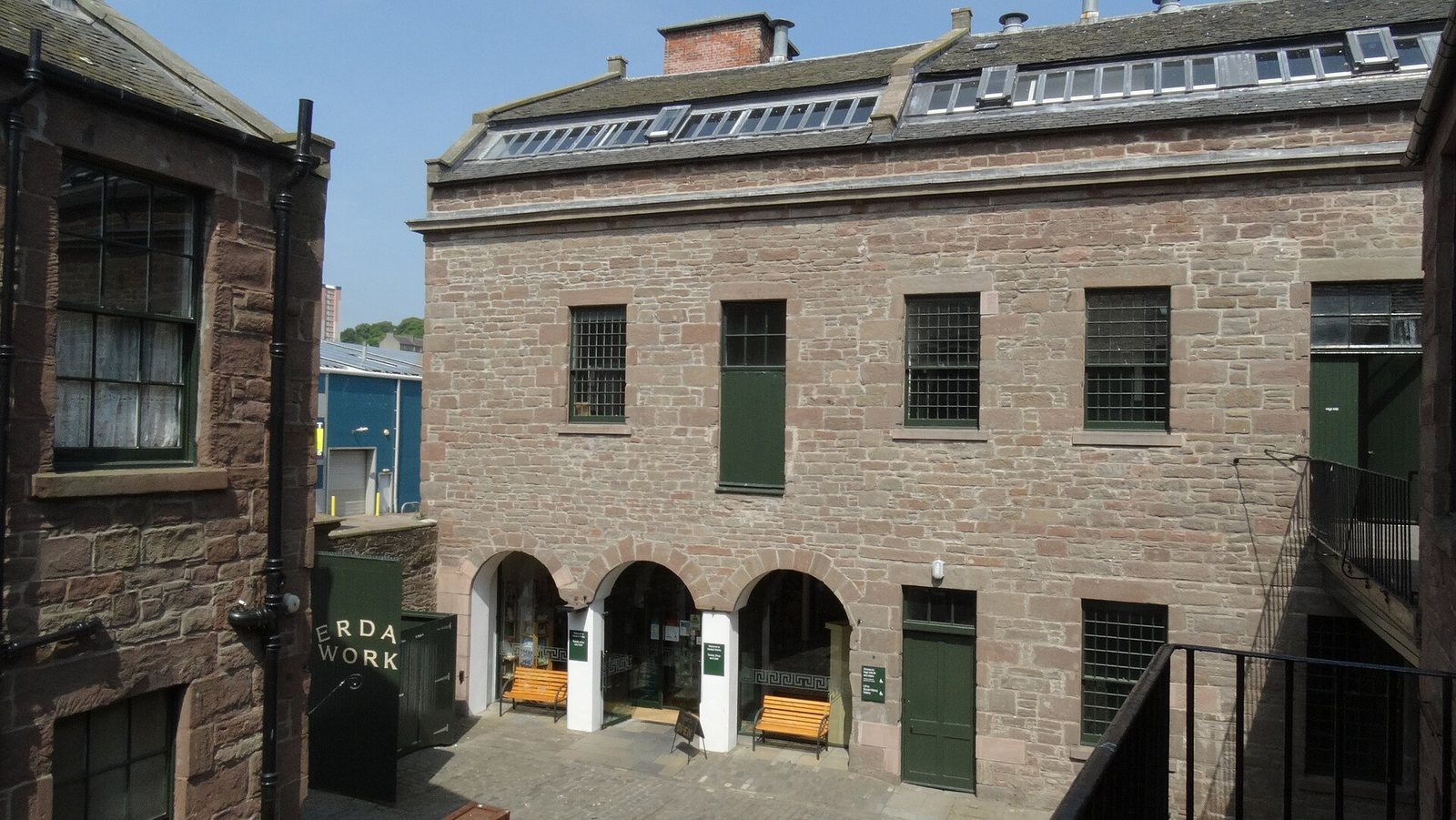
Verdant Works survives as a courtyard-type industrial complex, with buildings arranged around a central yard. Its original layout and many original features remain. The site stands where Miln Street meets West Henderson’s Wynd, at the western edge of Dundee city centre, near Tay Works and South Mills.
Buildings and layout
Courtyard and service buildings
The complex’s buildings include the warehouses, fibre-preparation areas, and offices associated with the mill. Together they preserve the layout of a working industrial site organized around a yard.
High Mill
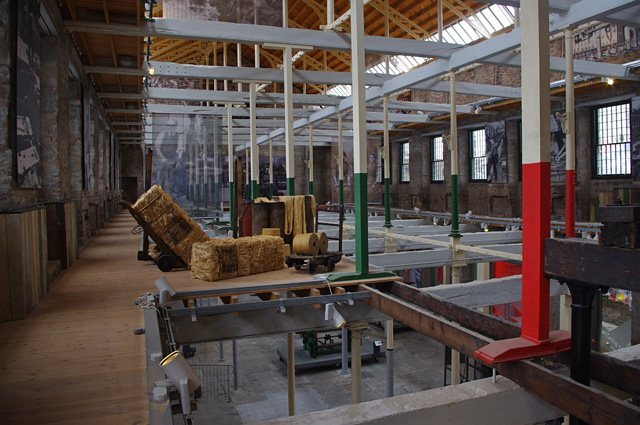
The High Mill is the oldest part of the complex and was built to accommodate hundreds of workers at a time. It has undergone extensive restoration and has been converted into an open gallery.
Construction and collections
Exterior construction
The walls are made of irregular stone blocks laid in rows. Along Miln Street, the two-storey north front is divided into 18 structural sections. A chimney rises at the north-west corner, with a brick upper section, and the complex has slate roofs.
Museum collections
The collections include machinery and large industrial equipment, machinery patterns, jute and flax products, small tools, technical drawings and plans, and equipment used for quality control and testing. Archival and photographic material relates to mills and their workers. Other holdings include material on industrial and social history, fine art, business records, costumes, and coins and currency.