Valperga Castle: A Medieval Fortress and Noble Residence in Italy
Site at a Glance
- Popularity
- Low
- Country
- Italy
- Primary era
- Medieval
- Eras represented
- Medieval, Early Modern, Modern
- Civilizations
- Duchy of Savoy, French
- Site type
- Domestic
- Remains
- Castle
On this page8 sections
History
Valperga Castle is a medieval fortified complex in Italy whose early history is tied to noble families in the Cuorgnè area. Its exact foundation date is uncertain. The castle probably began as a stronghold built by local noble families, including the lords Silvesco and Droengo. Local tradition instead credits its construction to Ardicione, Count of Canavese, also called Arduino, and connects him with a descent from King Arduin of Italy and his sons. This genealogy belongs to tradition rather than established history.
Medieval origins and lordship
Around the 11th century, Guido became the castle’s sole owner. His nephews, Guido V and Arduino, were the founders of the Counts of Valperga. By the early 12th century, the De Canavise family, later known as the Counts of Valperga, held the castle. On 9 June 1309, Philip of Achaea, a prince of the Savoy-Achaia dynasty, granted the counts the castle and castellany of Valperga and Valpergato. A castellany was a territory and jurisdiction administered from a castle. The grant also included jurisdiction over Cuorgnè and its dependencies, a quarter of the Rivarolo district, half of the castle of Pont and Valli, and other fiefs.
War and rebuilding
The 14th-century Canavese wars, conflicts in the Canavese region, severely damaged the castle’s defensive walls. In the 15th century, major rebuilding renewed its towers and fortifications and added residential buildings to the complex.
Inheritance and residential conversion
In 1600, the castle was divided between the Valperga of Valperga and Valperga of Masino branches. When Gerolamo Valperga of Masino died without a male heir, his share passed to his daughter Marianna, wife of Arduino Valperga of Rivara. Their daughter Francesca later inherited the entire castle and brought it as her dowry to her husband, Federico Valperga of San Giorgio.
During the 17th century, the castle began its transformation into a noble residence. In 1776, the branch associated with Guido Francesco Aldobrandino del Carretto di Castellargento became extinct, and the castle and its possessions passed to his closest female relative, Anna Vittoria San Giorgio di Balangero, wife of Paolo Coardi di Carpenetto, Marquis of Bagnasco. From 1807, enlargement and remodeling continued the residential transformation, with a Neoclassical addition completed during the 19th century. Since the second half of the 20th century, the property has belonged to the Daughters of Wisdom, a Catholic religious congregation.
Remains
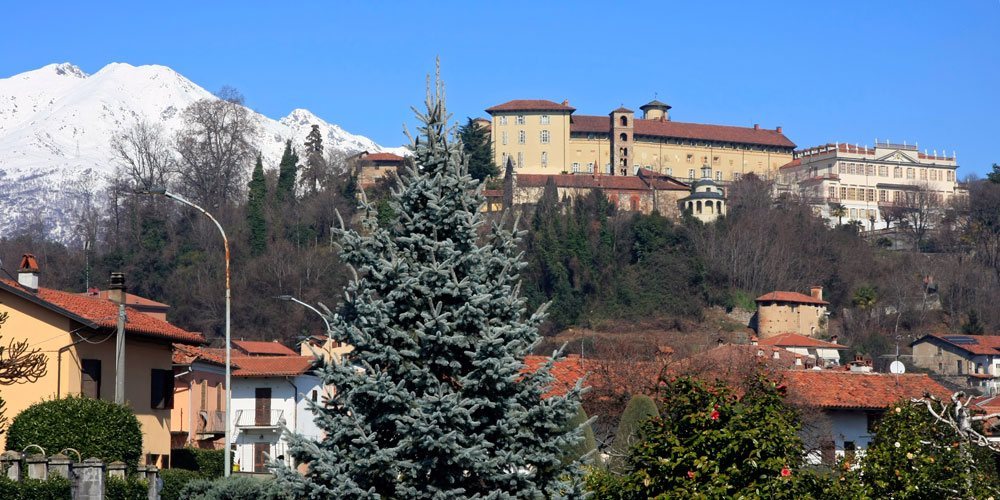
The complex combines an older defensive core in its northern section with a later residence extending across the southern slope of the hill. Its surviving forms reflect the shift from fortified stronghold to noble dwelling.
Defensive core and medieval buildings
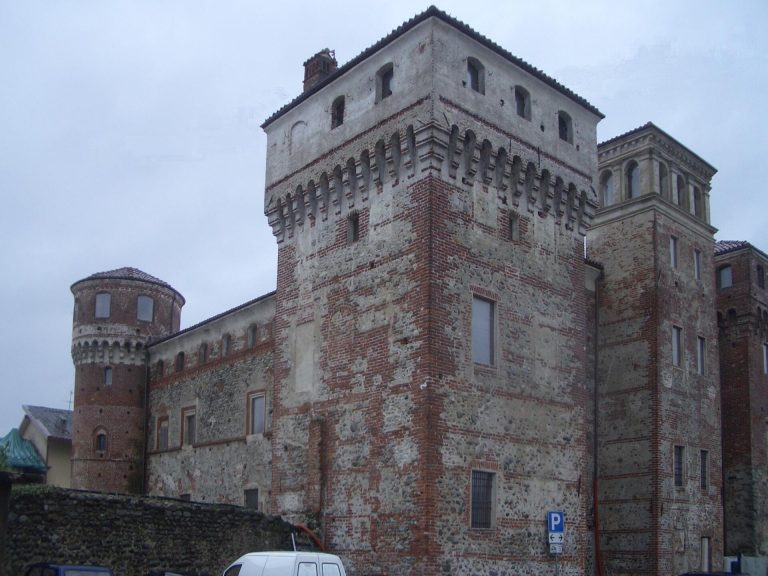
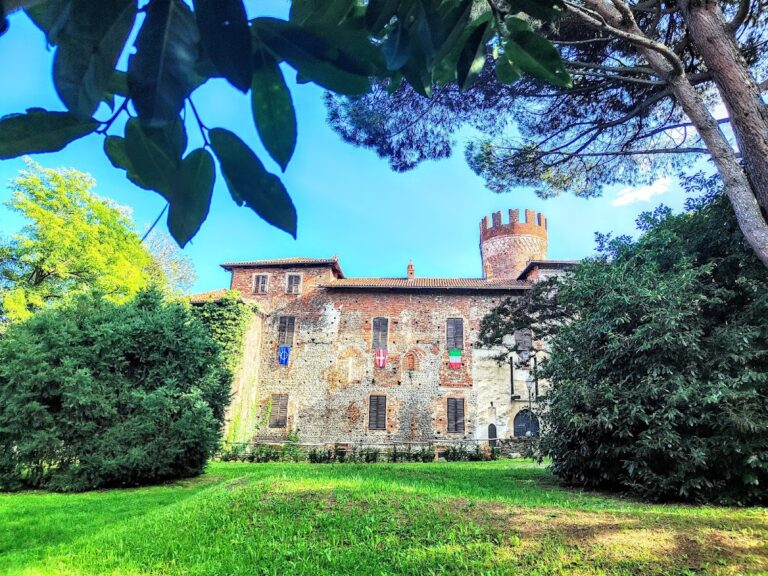
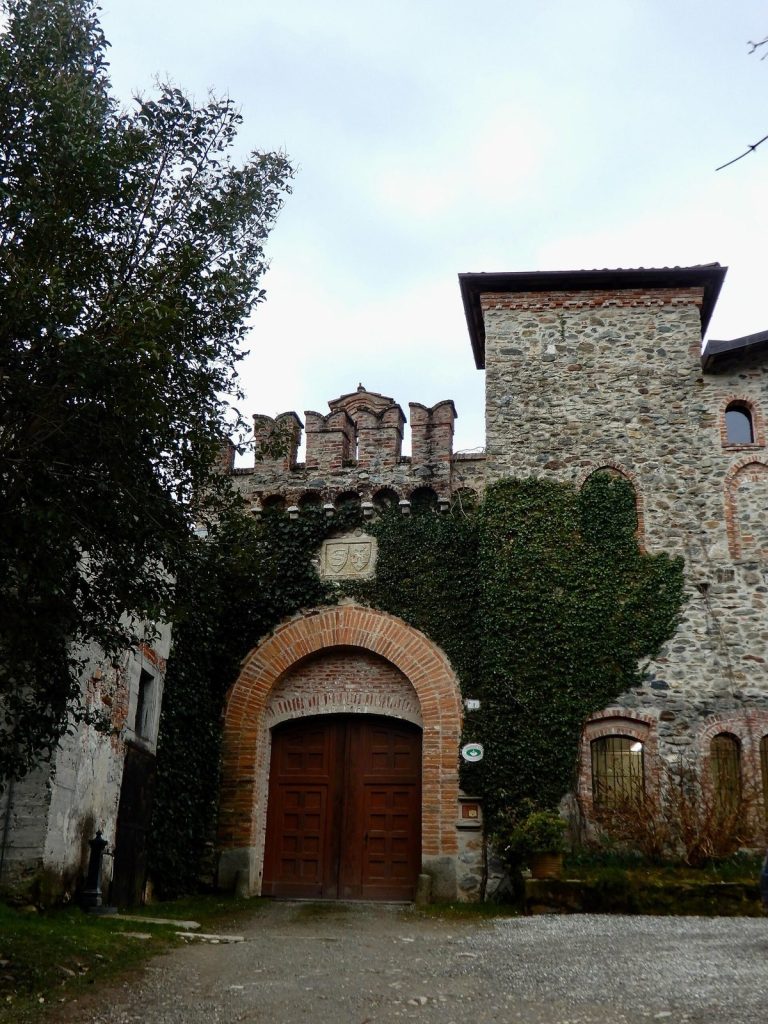
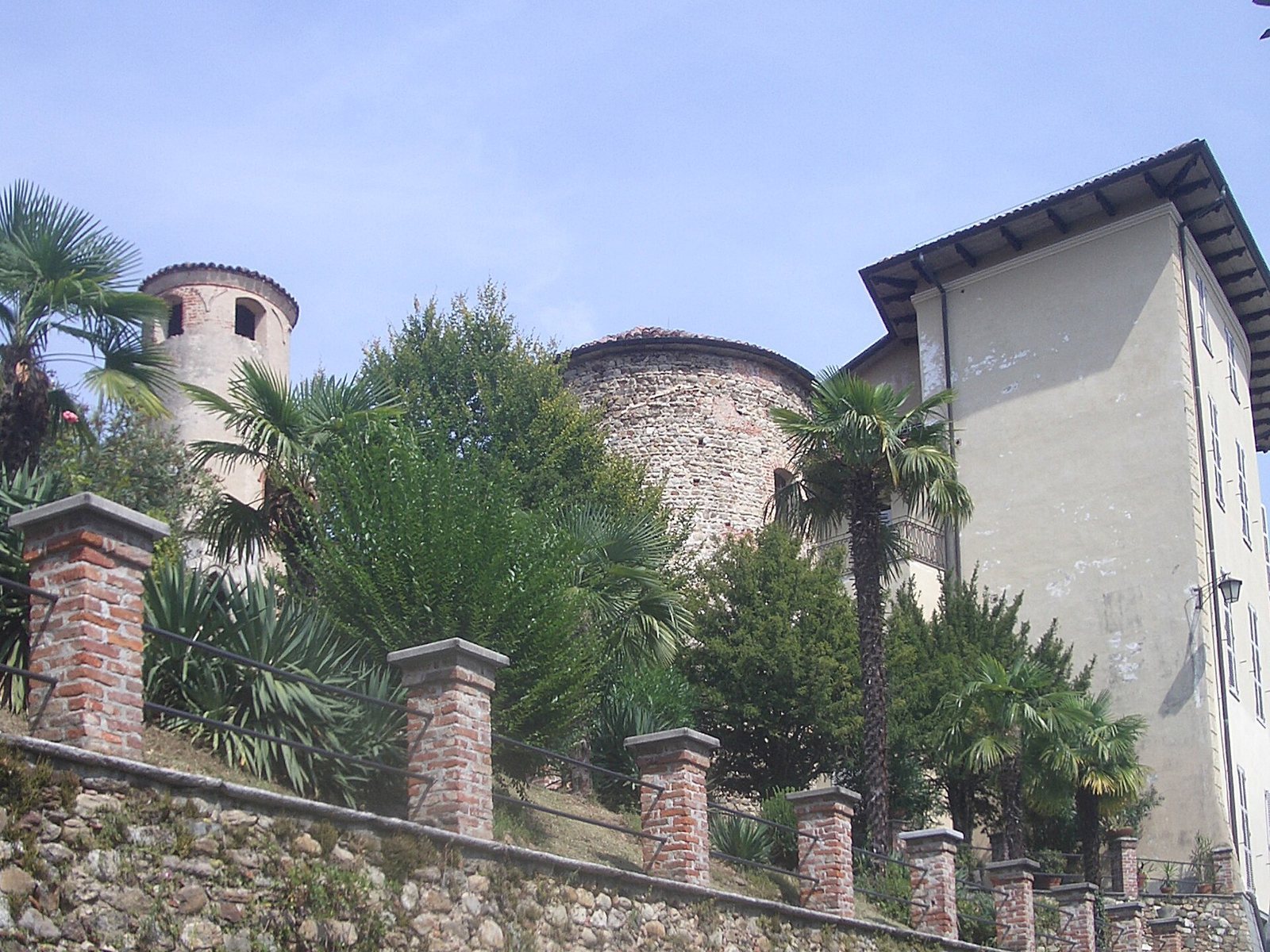
The northern section was originally a defensive enclosure with several towers and a surrounding ditch. The oldest surviving core includes a rectangular tower that forms the entrance, while circular towers stand in the central body. Towers also surround buildings added over time. The 15th-century work included central residential buildings decorated with late Gothic brickwork, a style also found at the nearby Church of San Giorgio.
Residential villa
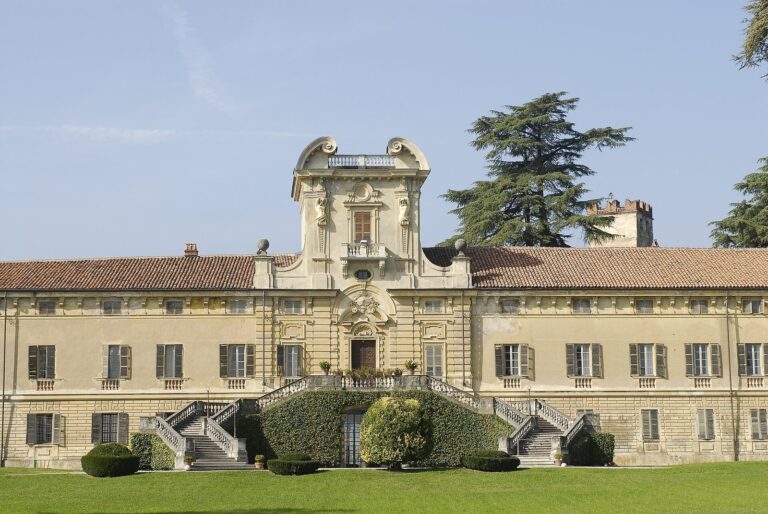
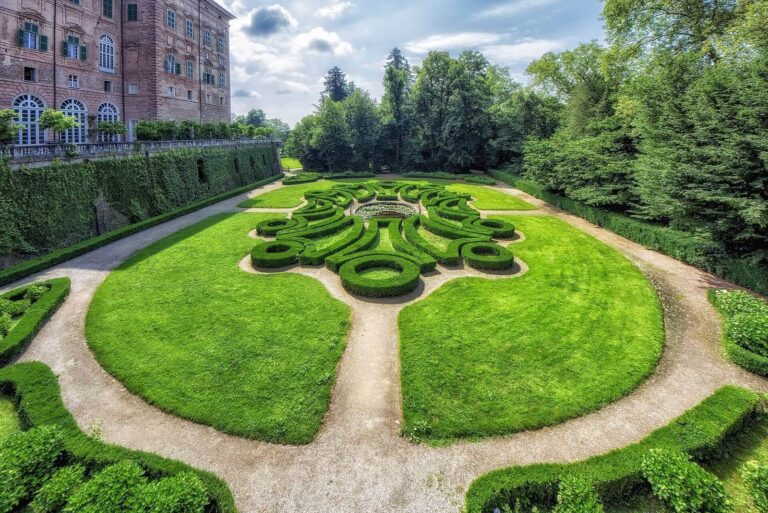
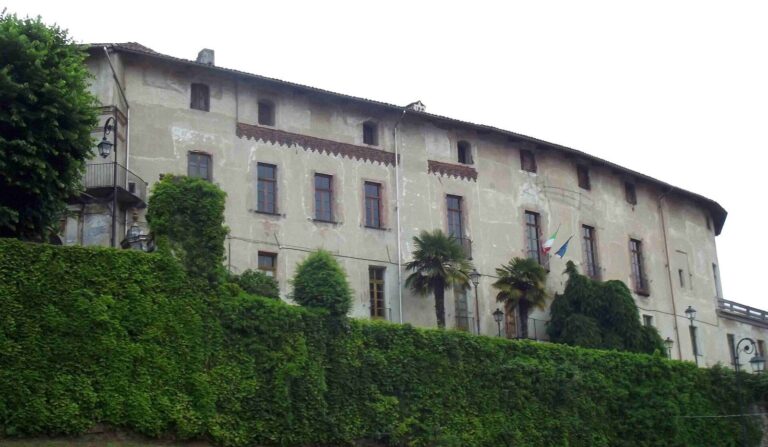
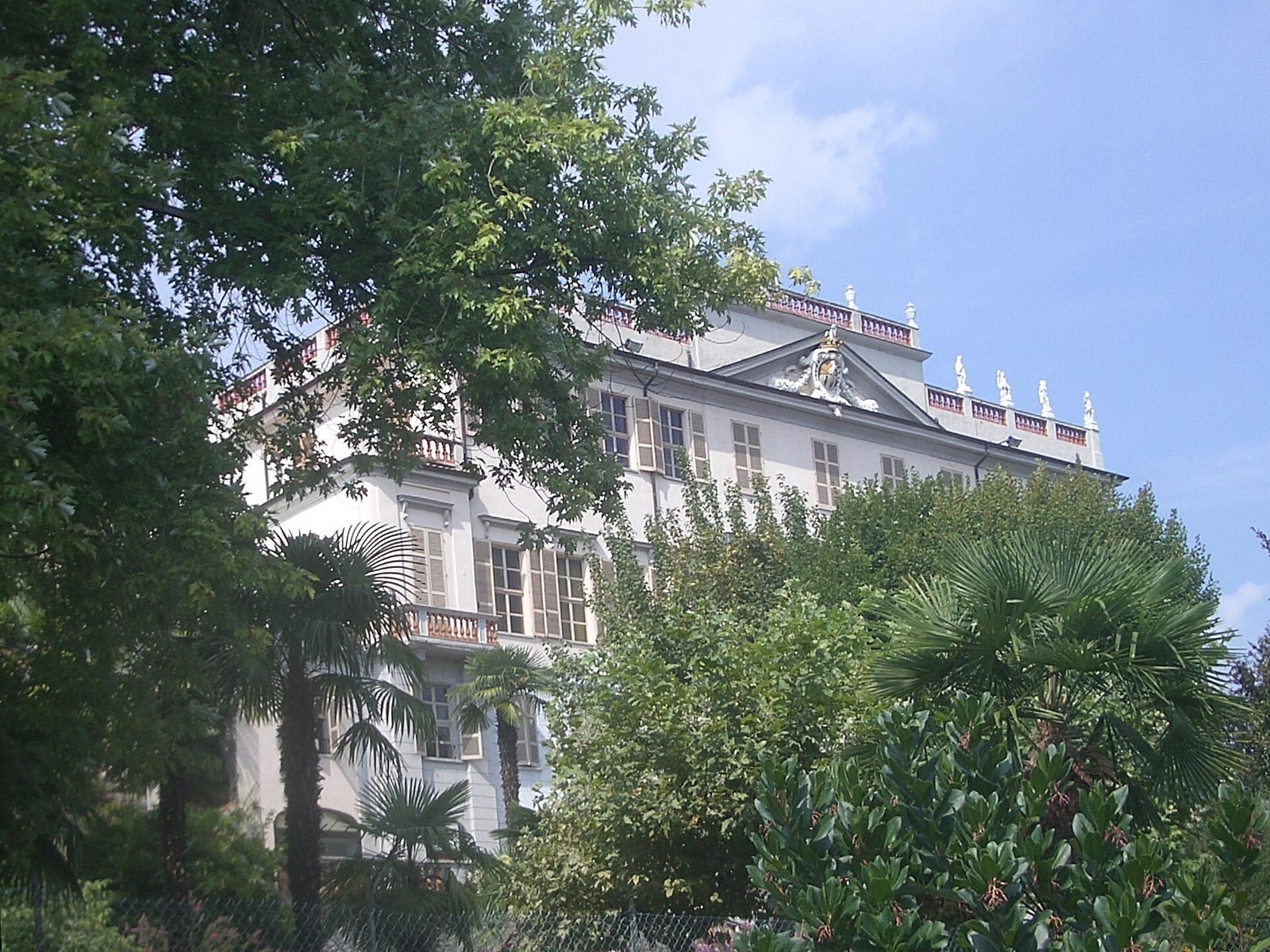
The later residential structure stretches along the hill’s southern slope. The 19th-century Neoclassical work gave the villa its facade, garden, and park.
Church of San Giorgio
The nearby Church of San Giorgio is contemporary with the castle. Pietro de Scotis and artists associated with Giacomo Jaquerio, a prominent late-medieval painter in Piedmont, frescoed its interior and exterior. The church also contains a 15th-century Passion of Christ, depicting Jesus’s suffering and death, regarded as an example of the medieval painting cycles of the Upper Canavese.