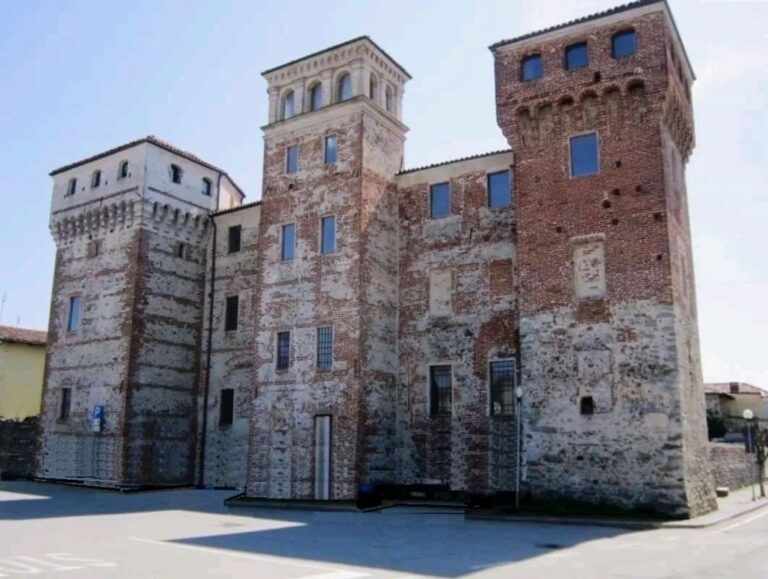
Foglizzo Castle: A Medieval Fortress and Municipal Seat in Italy


Site at a Glance
- Rating
- 4.4
- Popularity
- Very Low
- Country
- Italy
- Primary era
- Medieval
- Eras represented
- Medieval, Early Modern
- Civilizations
- Holy Roman Empire
- Site type
- Domestic
- Remains
- Castle
On this page9 sections
History
Foglizzo Castle is a historic fortress and later country residence in Foglizzo, Italy. It probably originated in late antiquity, while its elevated position above the town and the surrounding plain gave it a defensive role during the Middle Ages. The castle also served as a place of refuge in times of danger.
Medieval stronghold
In 1140, Conrad III, a twelfth-century German king within the Holy Roman Empire, granted possession of Foglizzo to Guido III Biandrate, a captain of the imperial forces in Novara. In 1234, Guido’s grandson Pietro I established the Foglizzo branch of the Biandrate family. The Marquis of Montferrat, the ruler of a historic frontier territory in northwestern Italy, then granted Pietro authority over Foglizzo, Balangero, and Mathi. The Biandrate family subsequently began reconstructing the castle.
The rebuilding created an imposing fortified enclosure. Houses were later attached to its walls, forming a ricetto, a protected settlement where villagers could seek safety. This fortified shelter remained associated with the castle until the eighteenth century.
Renaissance residence
During the sixteenth century, Guido Biandrate, known as “the Senior,” and his nephew transformed the fortress into an elaborate Renaissance residence. By the eighteenth century, the castle no longer served a military purpose. The Biandrate family had permanently settled in Turin, and the fortified shelter for villagers was demolished and replaced by a garden as the complex became a country residence.
After the Biandrate family sold the castle to a merchant family from Turin, the municipality of Foglizzo acquired it during the nineteenth century. The building then became a center of municipal administration and community life. It housed schools until 1970 and remains the seat of the municipal offices, town library, and medical facilities. Foglizzo Castle is recognized as Italian national heritage.
Remains
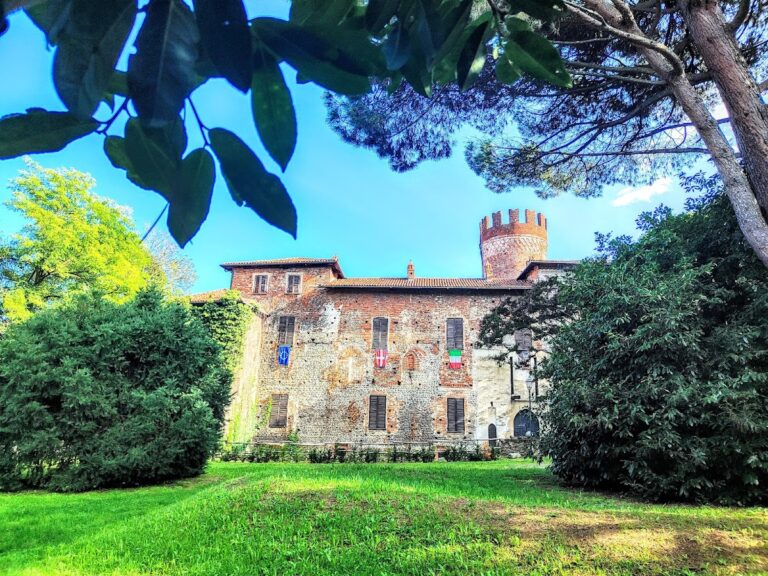
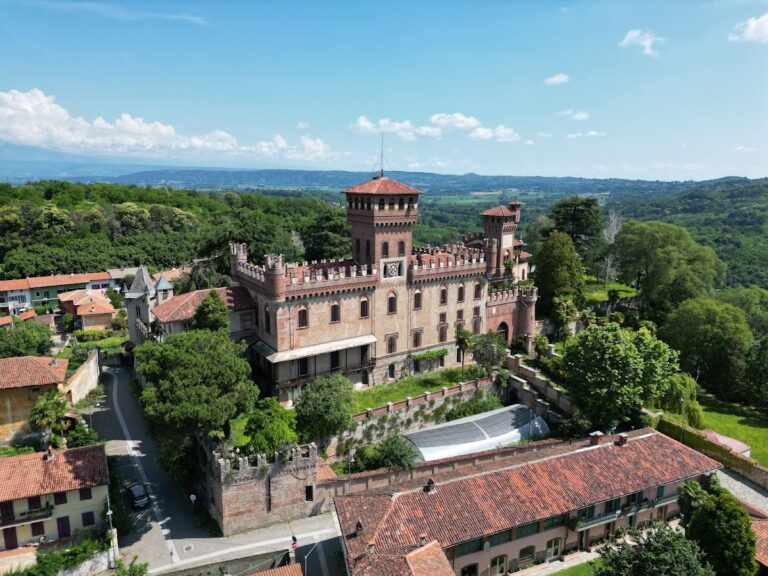
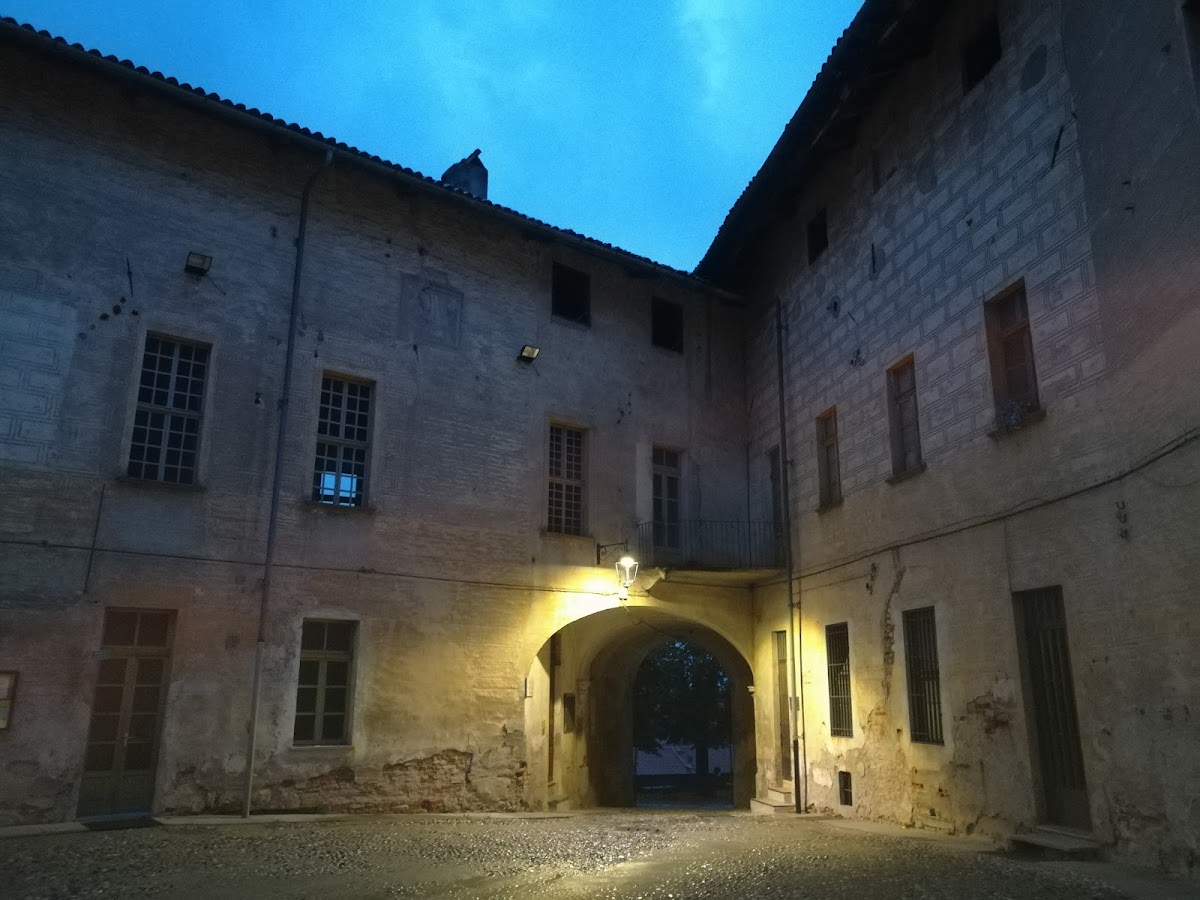
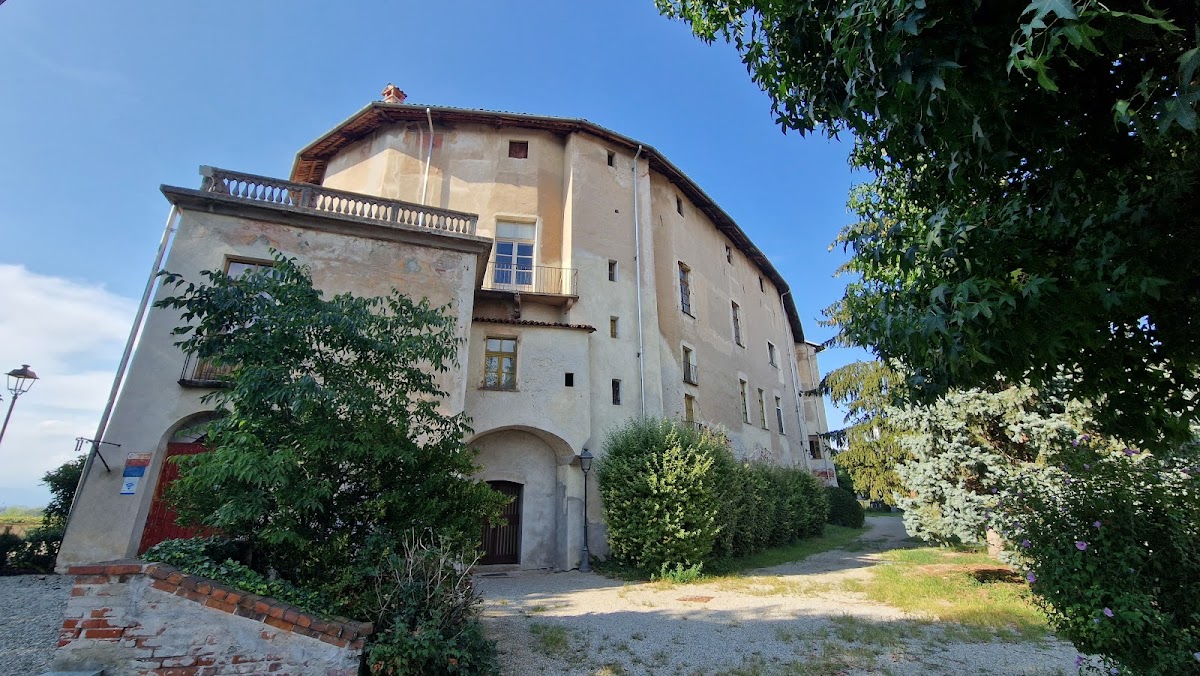
The castle occupies an elevated position overlooking Foglizzo and the plain. Its surviving fabric brings together the perimeter defenses of the medieval complex, later wings, and interiors altered as the fortress became a residence and civic building.
Surviving wings
Northwest wing
The northwest wing, distinguished by brick corbels, is the principal surviving structure from the fourteenth century. It forms part of the castle’s older built fabric and remains integrated into the later complex.
Northeast building
A three-story building was added on the northeast side during the fifteenth century. It originally contained a loggia, a roofed gallery open along the sides, which was enclosed during the nineteenth century.
Southern wing
The southern wing dates from the seventeenth century and incorporates two earlier towers. Its construction reflects the continued adaptation of the fortified complex after its military function had declined.
Interior decoration and civic hall
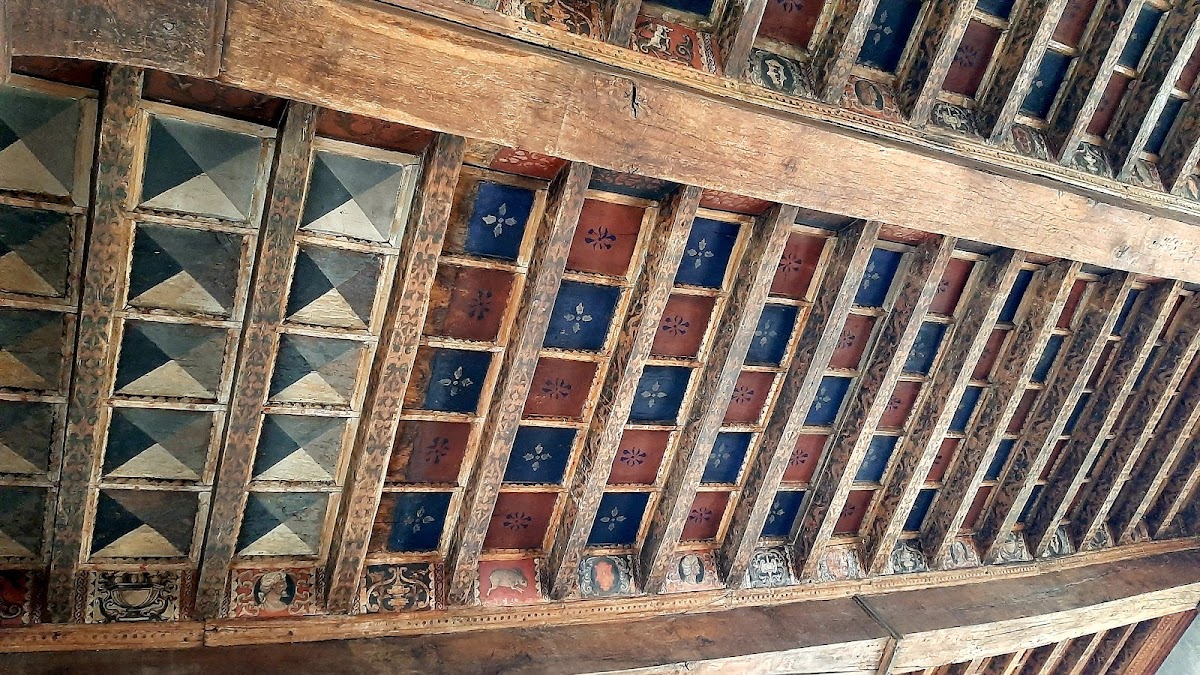
The sixteenth-century alterations included a large hall that is now used for meetings of the municipal council. The interiors contain frescoes, emblems, heraldic coats of arms, and coffered ceilings. Other rooms have sail vaults, vaulted ceilings whose curved surfaces rise between supporting points, decorated with frescoes. The former fortified shelter was replaced by a garden during the conversion of the castle into a noble residence.