Church of the Visitation of the Virgin Mary, Liptovský Hrádok: A Roman Catholic Parish Church
Site at a Glance
- Popularity
- Very Low
- Country
- Slovakia
- Primary era
- Early Modern
- Eras represented
- Early Modern, Modern
- Civilizations
- Austria-Hungary, Habsburg, Hungarian
- Site type
- Religious
- Remains
- Church
On this page11 sections
History
Building and early worship
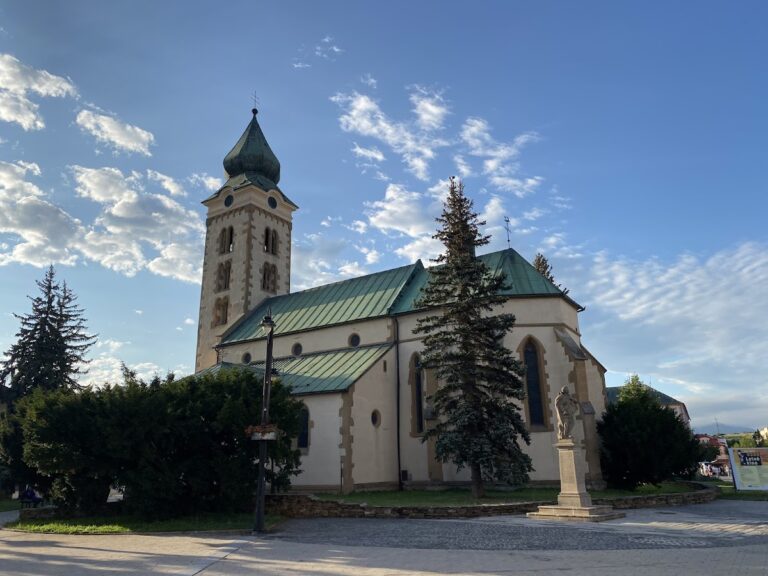
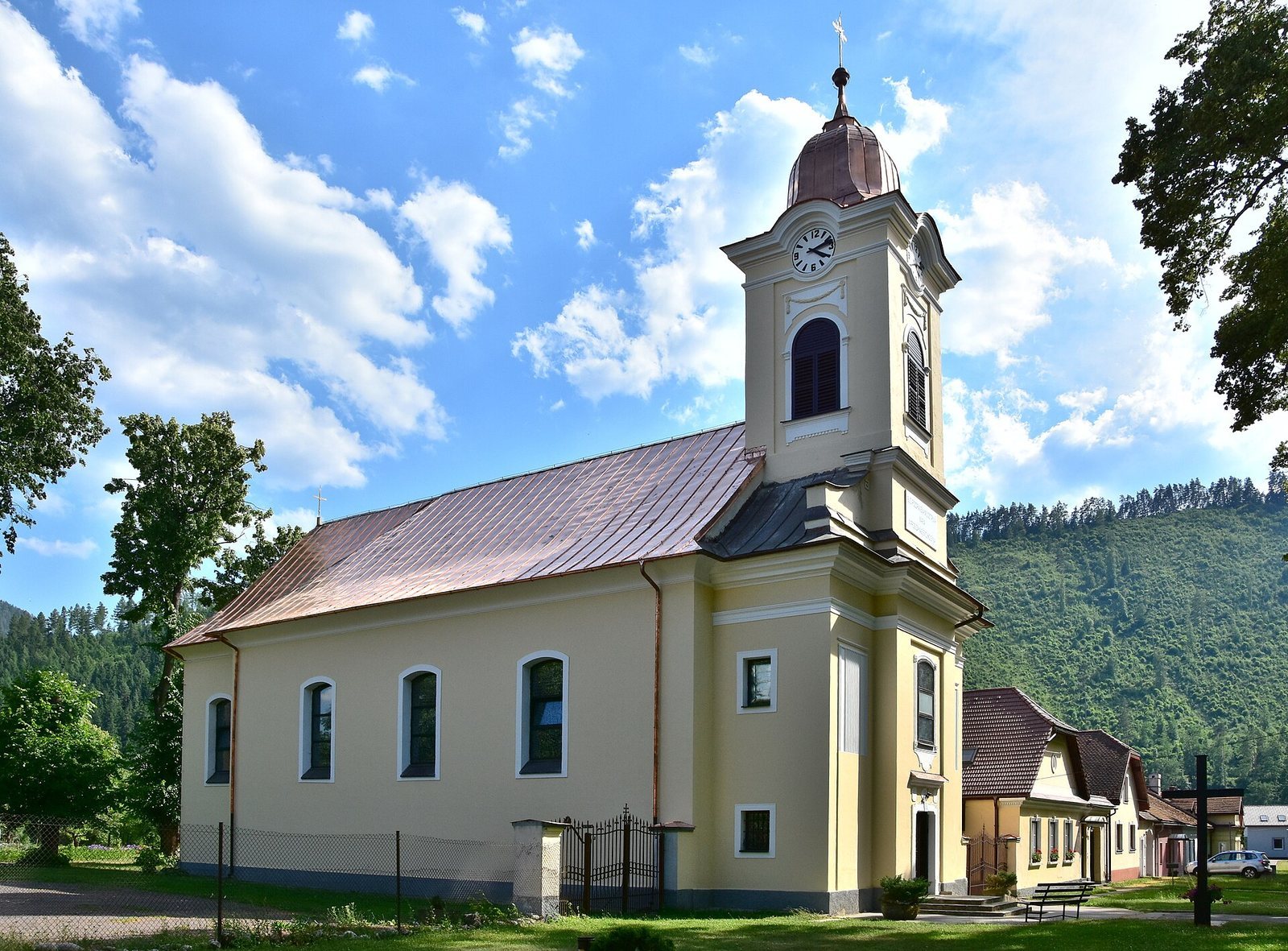
The Church of the Visitation of the Virgin Mary is a Roman Catholic church in Liptovský Hrádok, Slovakia, completed in 1790 in the Neoclassical style. Before its construction, local worshippers attended services in a wooden chapel near Linden Avenue. Two other bells were kept at a wooden chapel in a nearby cemetery.
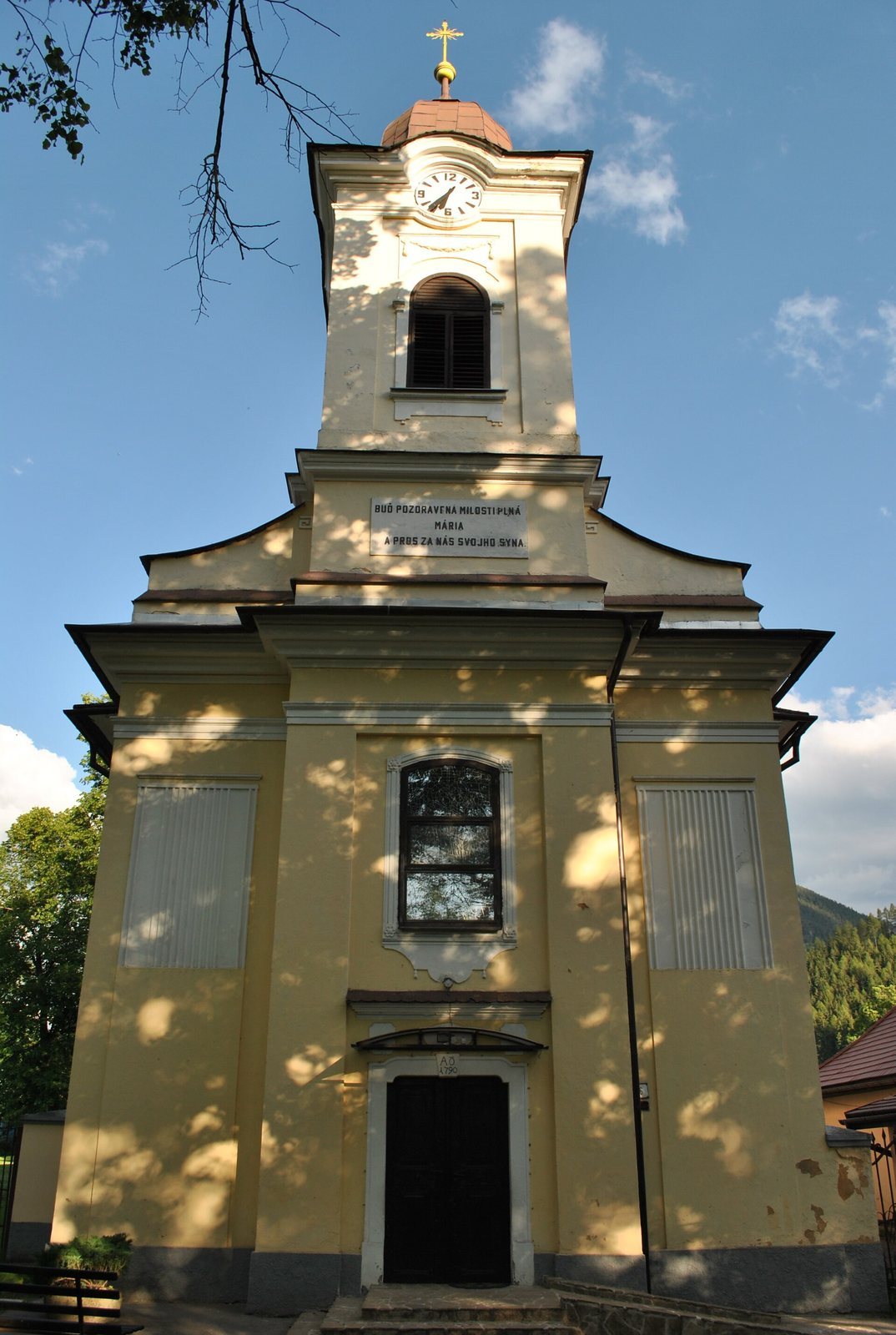
Work on the church was under way around 1789. Its entrance portal bears the carved date 1790, the year the building was completed.
Nineteenth-century furnishings and records
In 1795, the church received a new organ, installed on 7 July. Its earlier organ had been lent to Ružomberok after a fire destroyed that town’s instrument. A canonical visitation, a formal ecclesiastical inspection, held on 2 and 5 June 1825 recorded four bells in the church tower and two at the cemetery chapel.
War and renovation
Five bells were requisitioned during the First World War. The church was renovated in 1999–2001 under parish priest Štefan Piták. Its stated ecclesiastical affiliations are the Eastern Province, the Diocese of Spišské Podhradie, the Liptovský Mikuláš Deanery, and Liptovský Hrádok Parish.
Remains
The church is a single-nave stone building with one tower. Its entrance portal bears a carved date of 1790.
Church furnishings
Bells
The historic tower bells include one cast in 1744 by Jozef Zechentner, one made in 1790 by Ján Knobloch of Banská Bystrica, and two cast in 1804 by František Litman of the same city. The church bell that survived the First World War requisitions is one of Litman’s 1804 pair. A smaller bell dated 1796 is also in the tower; it was originally housed in a small turret on the neighboring building of the first forestry school.
Organ
The decorated case of the organ installed in 1795 survives. In 1902, the Rieger firm removed the original instrument and installed a pneumatic organ, whose mechanism operates through air pressure. The replacement had 14 stops and was identified as Opus 896.
Former chapel site and cemetery
Chapel site and stone cross
A stone cross dated 1807 marks the site of the former wooden chapel near Linden Avenue. The chapel had served local worshippers before the church was built. Two bells cast in 1799 were kept at the wooden chapel in the nearby cemetery; one was made by F. Litman.
Crypt
An underground crypt lies near the cross. Forestry officials were buried there during the eighteenth century.