Episcopal Palace, Porto: A Residence of the Bishops
Site at a Glance
- Popularity
- Medium
- Country
- Portugal
- Primary era
- Early Modern
- Eras represented
- Medieval, Early Modern, Modern
- Civilizations
- Portuguese
- Site type
- Religious
- Remains
- Palace
On this page10 sections
History
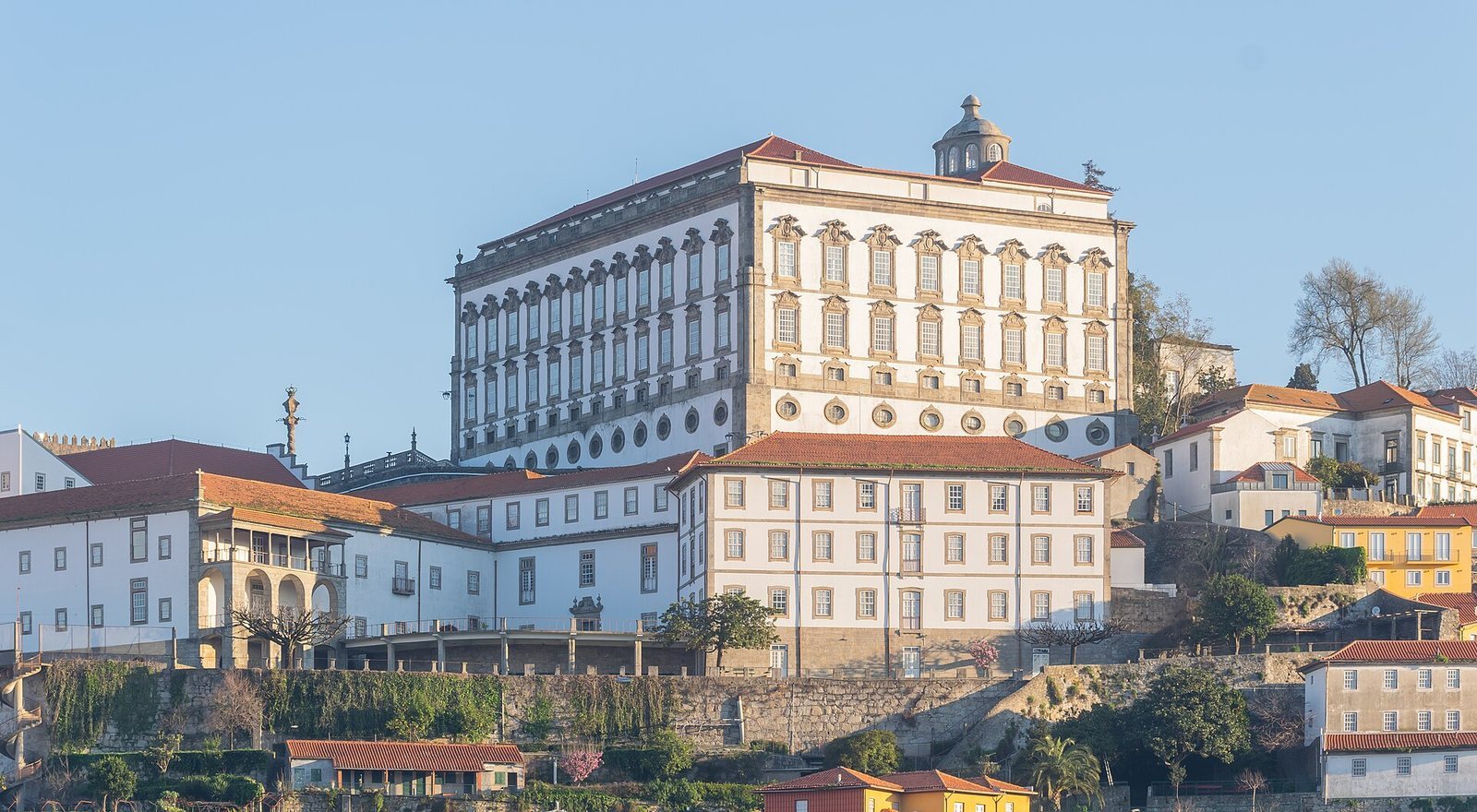
The Episcopal Palace is a former residence of Porto’s bishops beside the city’s cathedral in Portugal. Its origins date to the twelfth or thirteenth century, and eighteenth-century rebuilding gave it a late Baroque character, an elaborate style of the seventeenth and eighteenth centuries, alongside Rococo, a lighter ornamental style developed from Baroque.
Medieval palace and expansion
In 1387, the medieval palace was the setting for the marriage of King John I of Portugal and Philippa of Lancaster, his queen consort. The building was greatly enlarged during the sixteenth and seventeenth centuries.
Rebuilding in the eighteenth century
Several campaigns reshaped the palace. Bishop Luís Pires enlarged and reorganized its library, while the Cathedral Chapter, the body of clergy attached to the cathedral, initiated the deepest remodeling during the Baroque period. The drive to replace the earlier palace is often associated with Bishop João Rafael de Mendonça and the commissioning of a new design.
Italian architect Nicolau Nasoni is believed to have drawn up a project in 1734. Construction began in 1737 under architect Miguel Francisco da Silva and advanced slowly. Porto’s bishop’s office remained vacant from 1716 to 1741 because the pope had not confirmed its nominee. Financial limits forced a reduction of the original scheme; altered plans and hastily completed work weakened the building’s architectural unity. Completion came in the closing decades of the eighteenth century under Bishop Rafael de Mendonça.
Siege, civic use, and heritage status
The palace remained the bishops’ residence until the nineteenth century. During the Siege of Porto in 1832, the bishop fled the city, and troops of Pedro IV used the building as a stronghold in their conflict with Miguel I, the opposing Portuguese monarch.
From 1916 to 1956, the palace housed Porto’s municipal government while Praça da Liberdade was renovated and a new city hall was built. It became a Portuguese National Monument in 1910 and is part of the Historic Centre of Porto, inscribed on the UNESCO World Heritage List in 1996 under criterion iv, which recognizes buildings or ensembles that exemplify an important stage in history. The palace is now state-owned and has undergone restoration in recent years.
Remains
Architecture and interior
Plan and earlier fabric
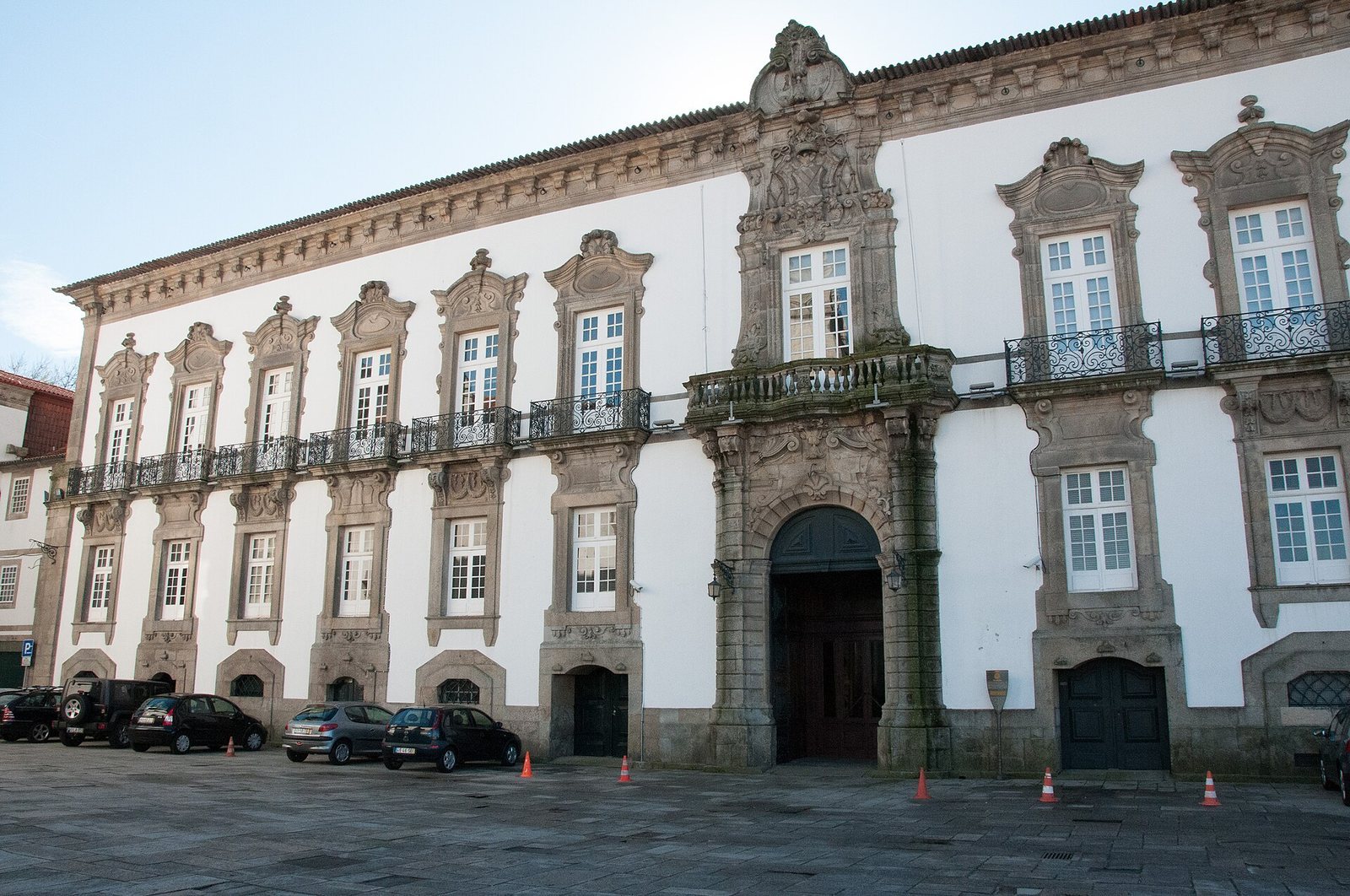
Set on high ground near Porto Cathedral, the rectangular palace overlooks the city skyline and is arranged around a central courtyard. Its layout and design reflect Porto’s late Baroque and Rococo civil architecture. Romanesque window remains, from a medieval European architectural style, survive within the present building. A drawing of the sixteenth- or seventeenth-century complex shows several towered buildings, a form characteristic of Portuguese manor houses of that period.
Façades and entrance
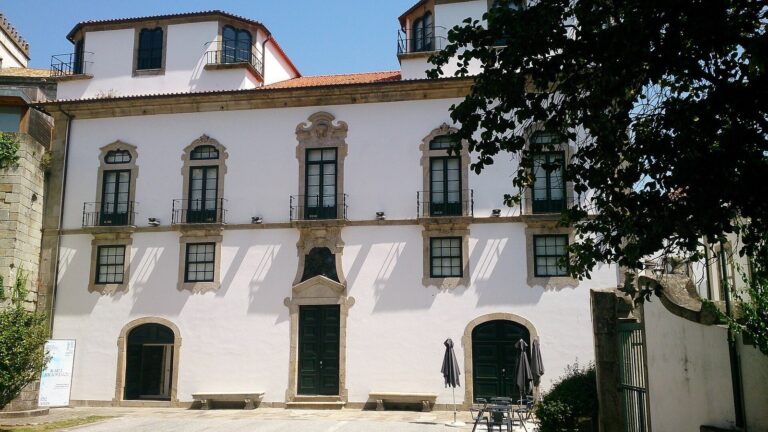
Nasoni’s influence is recognized on the west and south façades of the front block. The white main façade has three rows of windows, with 24 Baroque windows, 12 on each side; the upper windows have Rococo frames. At its centre, a dark-granite portal supports a balcony topped by the coat of arms of Bishop Rafael de Mendonça.
Staircase and hall
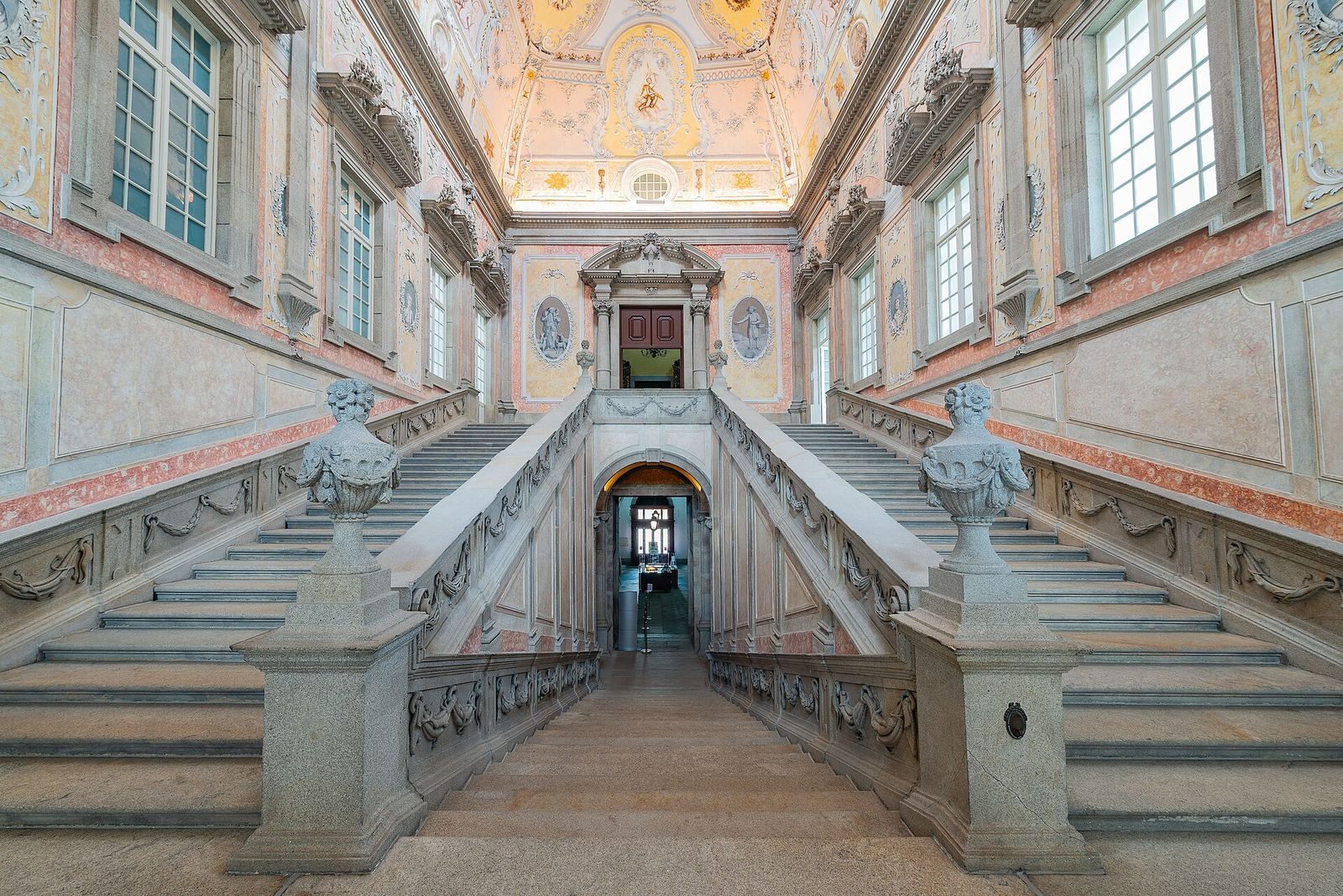
A long entrance hall leads to a monumental staircase attributed to Nasoni. It begins with a straight flight and continues as a U-shaped stair, reaching another Baroque portal bearing Mendonça’s arms. The staircase hall has wall paintings and stucco in Neoclassical style, drawing on classical Greek and Roman forms. Executed between the eighteenth and nineteenth centuries, this decoration postdates the palace project’s beginning but forms a coherent whole. A skylight was later added to the dome, bringing light into the interior.
Rooms
The palace contains spacious rooms, some with imposing furnishings. Many of these furnishings reflect the period before the palace’s expropriation.