Adada: A Hellenistic and Roman City in Pisidia
Site at a Glance
- Popularity
- Medium
- Country
- Turkey
- Primary era
- Classical
- Eras represented
- Classical, Medieval
- Civilizations
- Ancient Greek, Byzantine, Roman
- Site type
- City
On this page10 sections
History
Adada is an ancient city in Pisidia near Sağrak, in Türkiye. Its foundation date is unknown, but it became an important Hellenistic settlement, later issuing coins under Roman rule and serving as a Byzantine bishopric.
Hellenistic settlement
The name Adada is probably Pisidian in origin. Ancient writings also give the forms Adadare and Odada, likely altered versions of the name. The earliest literary notice comes from Artemidorus’s list of Pisidian cities, preserved by Strabo. Ptolemy also mentions Adada, as does the sixth-century geographer Hierocles.
Adada flourished during the Hellenistic period, which followed Alexander the Great’s conquests and preceded Roman rule in the region. An inscription from the second century BCE records a treaty of friendship and alliance with Termessos. Tombstones found in Cyprus and Phoenicia, identified with mercenaries from Adada, indicate that its soldiers served for pay in Hellenistic kingdoms. The city began minting coins as an independent settlement in the first century BCE.
Roman and Byzantine periods
Under Roman rule, Adada issued imperial coinage from the reign of Trajan (98–117) through that of Valerian and Gallienus (253–268). Coin imagery attests to the worship of Zeus, the chief Greek god; Dionysus, associated with wine and festivity; Artemis Pergaia, associated with hunting; Athena, linked with wisdom and warfare; and Hygieia, associated with health. The coins also indicate heroic cults of Heracles, the Dioscuri (divine twin brothers), and Asclepius, associated with healing. They further reflect the imperial cult, the religious honoring of Roman emperors.
In the Byzantine period, the history of the eastern Roman Empire, Adada became an episcopal see, the jurisdiction associated with a bishop, within the Patriarchate of Antioch. It remains a titular see of the Roman Catholic Church, retaining the name of a historic bishopric without a resident bishop.
Abandonment and rediscovery
Adada was abandoned in 1422. A. Schönborn visited the site in 1842, and John Robert Sitlington Sterrett rediscovered it in 1884. Gustav Hirschfeld and William M. Ramsay described the settlement in 1887.
Remains
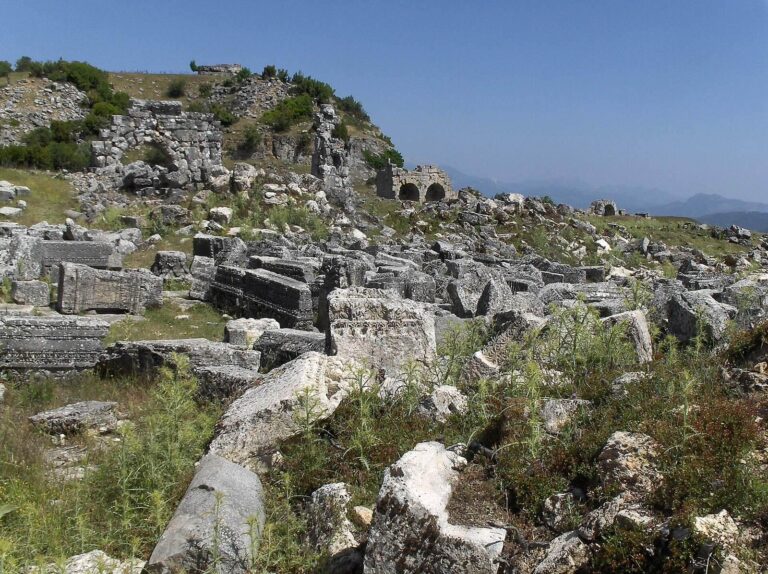
Adada occupies a broad, relatively level upland valley in Pisidia, north of Selge and east of the Kestros River. An ancient route ran along the western shore of Lake Caralis, now called Beyşehir, through Antioch, Neapolis, and Timbriada, then continued by Adada toward Pednelissos and Perge. The surviving areas include an elevated acropolis, civic spaces, a theater, temples, and churches.
Acropolis and public spaces
The acropolis, the city’s elevated fortified area, stands on rocky ground rising between the valley floor and the flatter part of the site. Its defenses include walls and watchtowers. An open-air gathering place lies to its west. A monumental staircase leads from the agora, a public civic space, toward a tower and other buildings possibly associated with the acropolis.
Forum and civic center
The forum, a Roman civic center, measures 32 by 45 metres and has a carefully laid stone surface with a large cistern at its center. A street runs along its western side, while covered walkways lined with columns border two other sides. The basilica, a large public hall, stands north of the forum on an east-to-west axis, and a monumental fountain occupies the southeast corner. This forum-and-basilica complex was built in front of the open-air gathering place and became the city’s center for commercial and administrative activity.
Temples associated with emperors
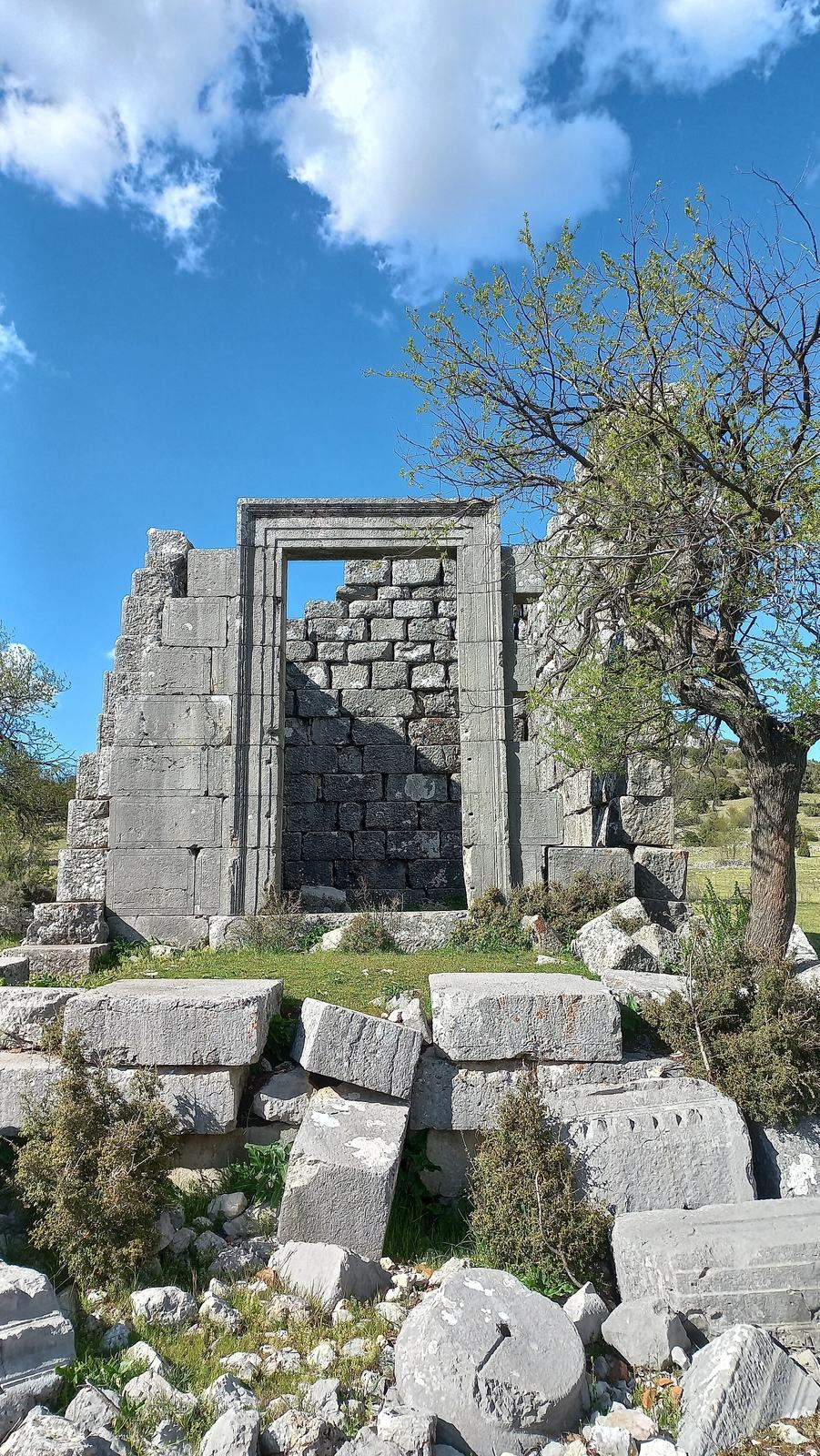
Four temples associated with emperors date to the second or third centuries. An inscription links one with the emperors and Zeus Sarapis, a Greco-Egyptian deity identified with Zeus; another inscription connects a temple with the emperors and Aphrodite, a goddess associated with love. A third temple was dedicated to the emperors, while coins associate the fourth with Trajan.
Theater
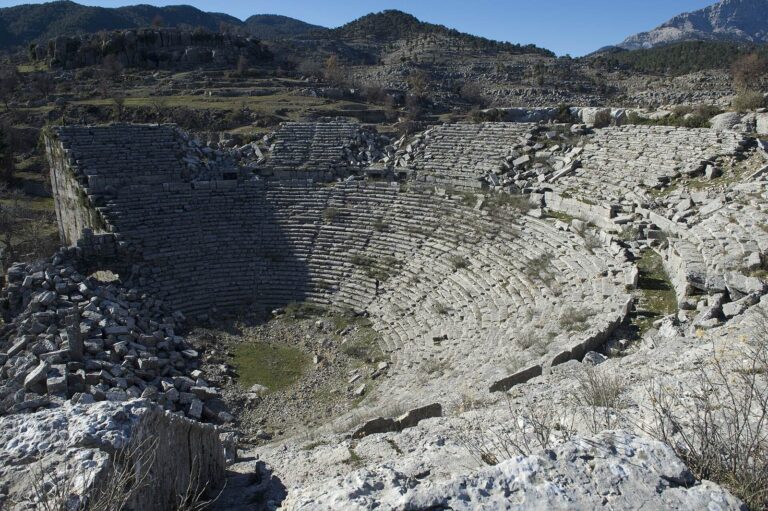
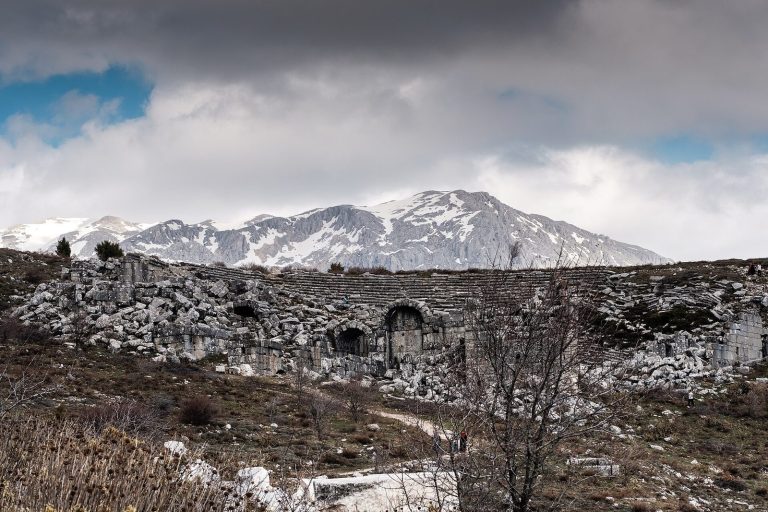
The theater lies against a hillside on the western side of the city plain and held about 1,000 people. Rescue excavations uncovered its seating area. The stage building and the performance space in front of it remain buried.
Churches
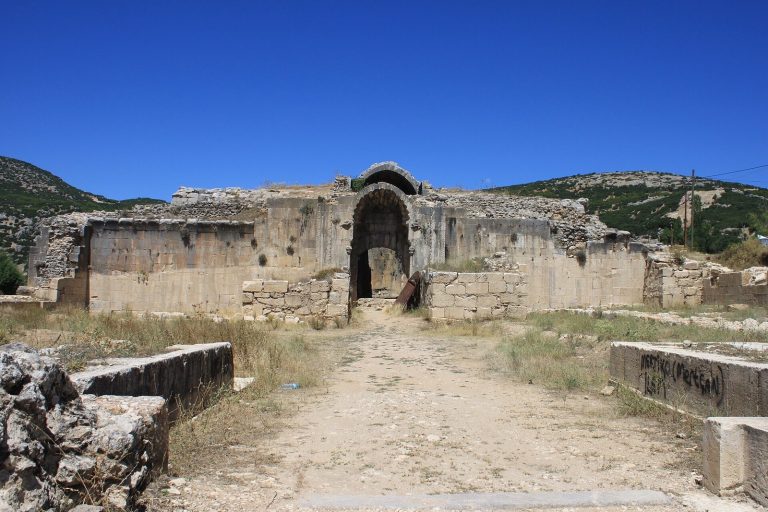
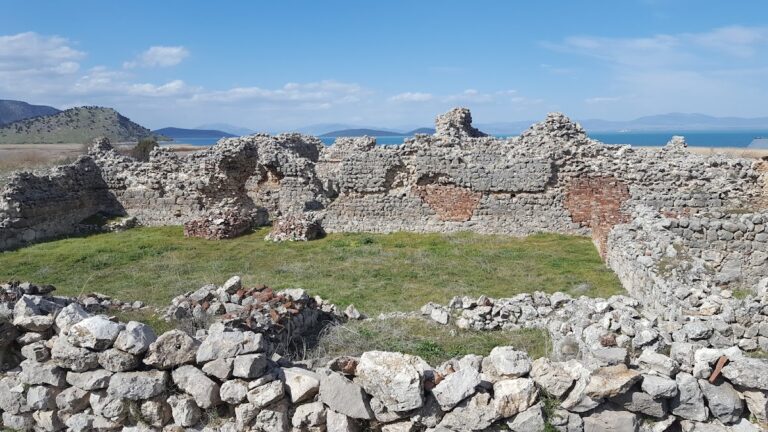
Two churches with three lengthwise aisles belong to Late Antiquity, the later centuries of Roman rule and the transition toward the medieval period. The largest stands on the western side of the valley and was built during the Byzantine period. Its foundations incorporate the terraces and interior walls of an earlier structure.