Henchir-Ed-Douamès: The Archaeological Site of Uchi Maius in Tunisia
Site at a Glance
- Popularity
- Low
- Country
- Tunisia
- Primary era
- Classical
- Eras represented
- Classical, Medieval
- Civilizations
- Numidian, Roman, Vandal Kingdom
- Site type
- City
On this page13 sections
History
Henchir-Ed-Douamès, identified with the ancient city of Uchi Maius, is an archaeological site near Dougga in Tunisia’s Béja Governorate. Founded under Numidian rule in the fifth century BC, the city later became part of Africa Proconsularis, a Roman province in North Africa.
Numidian foundation and Roman rule
Roman settlement began after Rome defeated Jugurtha, king of Numidia, in 103 BC. Veterans of the Roman general Gaius Marius settled at the city, beginning its Roman colonization. In AD 230, Emperor Severus Alexander granted Uchi Maius the status of a Roman colony.
Late antique and medieval phases
By the fifth century, Uchi Maius had become the seat of a bishopric. The city remained active under the Vandals, a Germanic people who established a kingdom in North Africa, and later under Byzantine rule, which followed theirs in the region. An Arab settlement was present at the site between the ninth and twelfth centuries.
The ancient bishopric’s title continues as a titular see in the Roman Catholic Church. A titular see is the title of a former diocese assigned to a bishop, without implying that the ancient diocese still operates locally.
Rediscovery and archaeological work
The ruins were identified in 1882 and first studied by the French scholar Charles Tissot. René Cagnat investigated the site in 1885, and Alfred Merlin and Louis Poinssot published a major study of Uchi Maius in the early twentieth century. Research later turned toward nearby Dougga.
Partial excavation began in the nineteenth century. Fieldwork resumed in 1994 through cooperation between Tunisia’s National Institute of Heritage and the University of Sassari in Italy. The site has so far been excavated only on a limited scale.
Remains
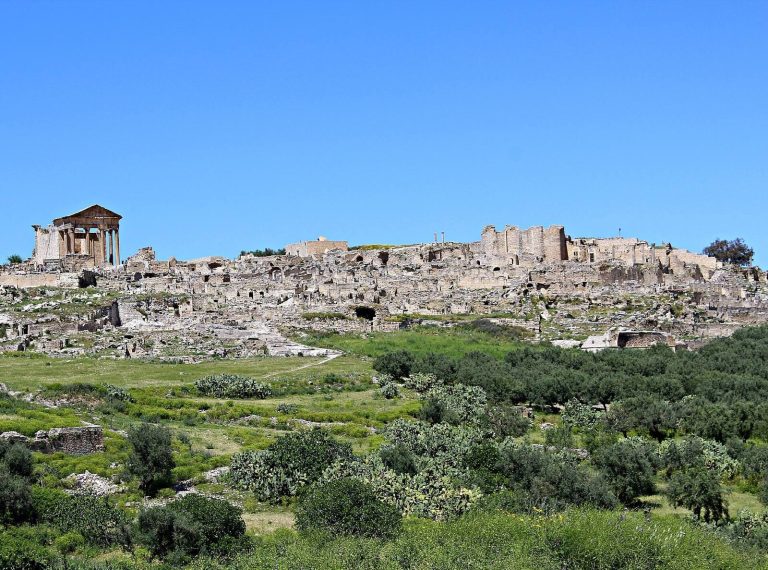
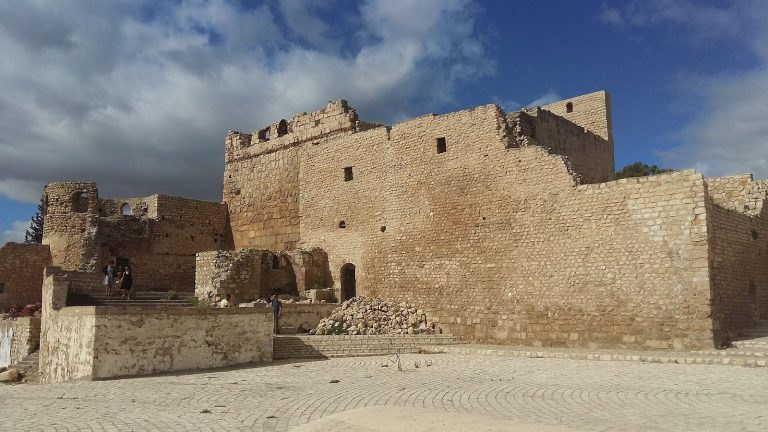
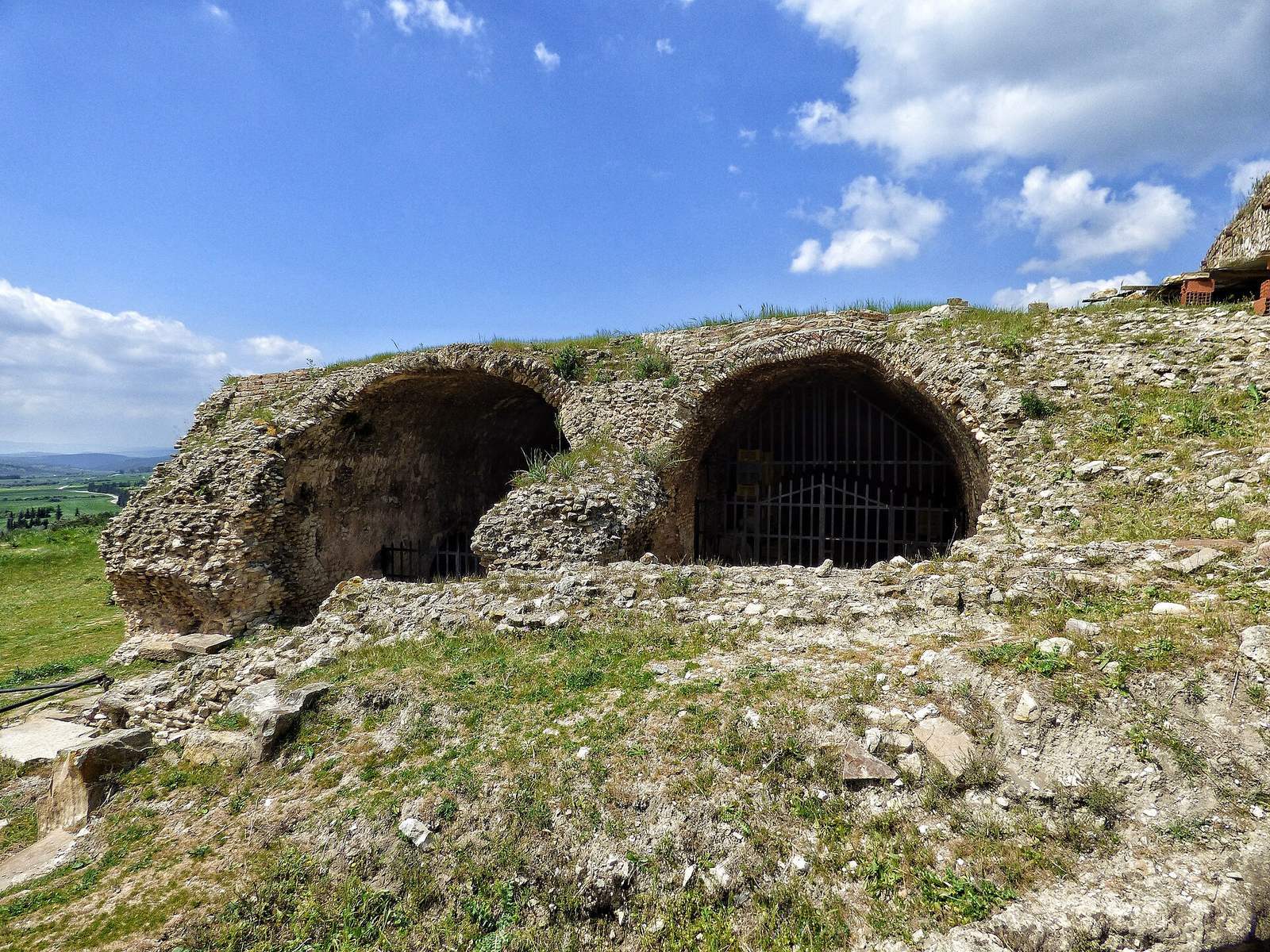
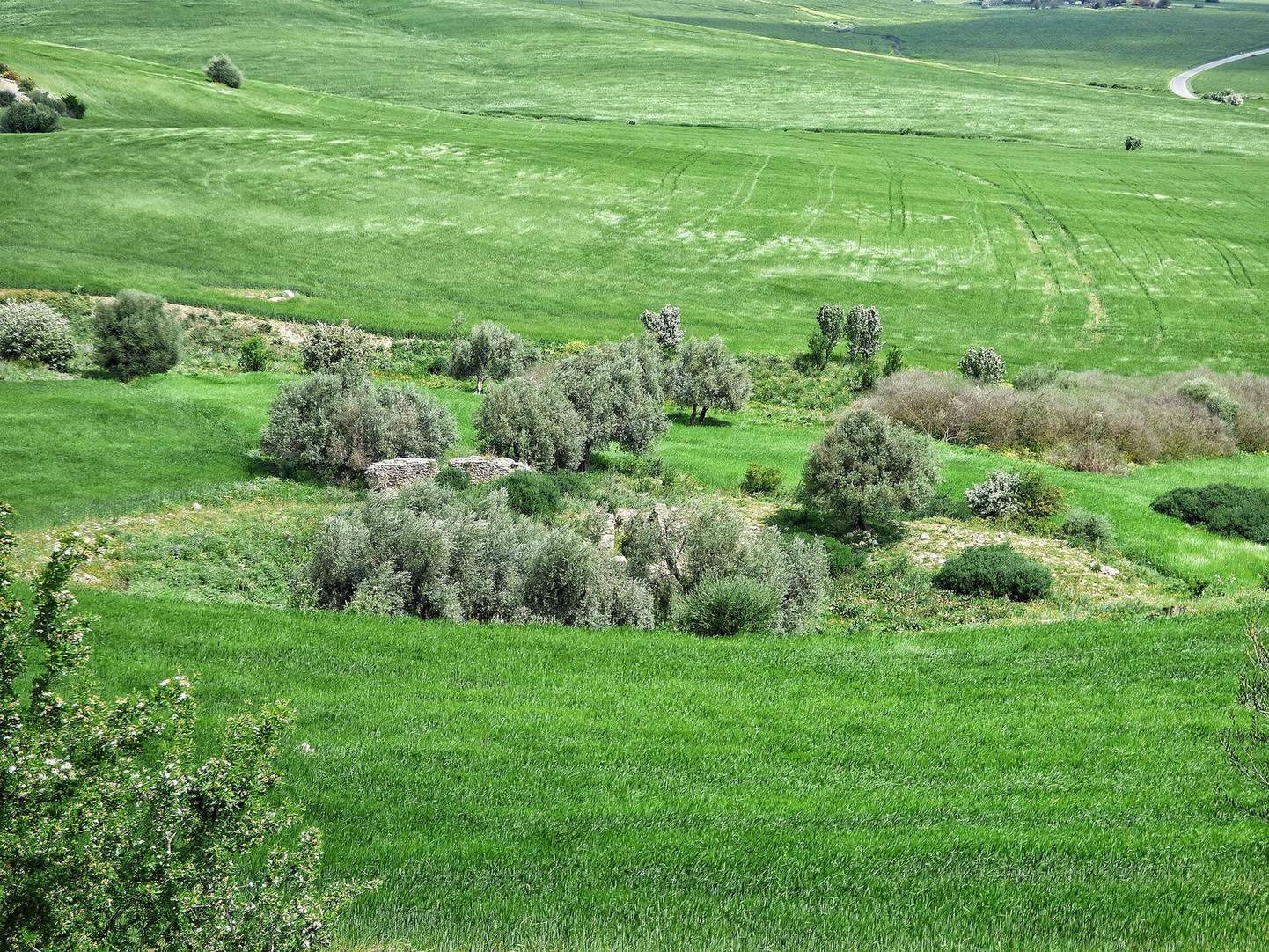
The archaeological site covers about 20 hectares near Dougga. Its remains include a forum, imperial arches, religious buildings, baths, an amphitheater, and features connected with the city’s water supply.
Civic remains
Forum and olive-oil press
The site includes a forum, where an olive-oil press was found. The press provides evidence for an oil-production center that operated from the latter part of the fifth century until the end of the Vandal period.
Arches and inscriptions
The arch of Severus Alexander is dated to 239, while the arch of Gordian III dates to 241. Several inscriptions are also associated with the remains. One honors Emperor Constantine and calls him “our restorer.”
Religious buildings
A temple at Uchi Maius was dedicated to the Capitoline Triad, the principal gods of Rome’s state religion: Jupiter, Juno, and Minerva. The remains also include a Paleo-Christian basilica, an early Christian church built in basilica form.
Baths, amphitheater, and water supply
Baths
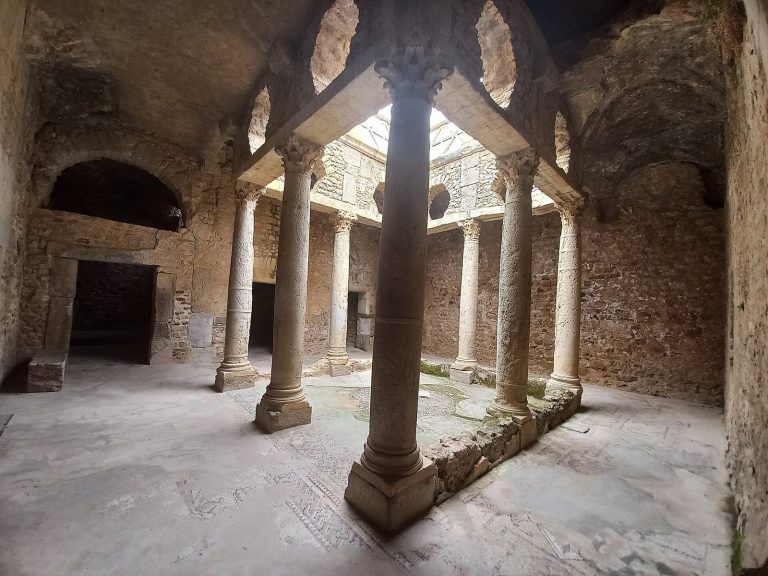
The baths date to the first half of the fourth century and were excavated during later archaeological work.
Amphitheater
The amphitheater is a prominent feature of the ruins and is being excavated. Its date is traditionally placed in the third century.
Water-supply system
The city’s water-supply system has also been a subject of archaeological investigation.