Veľká lúka: A Roman-Period Archaeological Site in Slovakia
Site at a Glance
- Popularity
- Low
- Country
- Slovakia
- Primary era
- Classical
- Eras represented
- Classical
- Civilizations
- Roman
- Site type
- Sanitation
- Remains
- Baths
On this page8 sections
History
Veľká lúka is an archaeological site in a wooded basin between Dúbravka and Devínska Nová Ves, on the western edge of Bratislava in Slovakia. Its central stone building probably dates to the 3rd century and may have been a private bathhouse connected with a larger estate.
Germanic settlement and the Roman-period building
Germanic peoples, groups associated with related languages, entered what is now southwestern Slovakia shortly after the beginning of the Common Era. They crossed the Bratislava Gate, a geographic passage through the Bratislava area, and established a settlement at Veľká lúka. The settlement is thought to have remained occupied until the second half of the 1st century.
The later stone building may have been a bath within a rural estate containing a residence, shrine, and farm buildings. Another possibility is that it was an unfinished Roman rural estate. Roman and Germanic finds from the site have also prompted the suggestion that a Germanic nobleman influenced by Roman culture owned the bath. Veľká lúka is regarded as one of the important archaeological sites of this type in the Middle Danube region. During the building’s probable 3rd-century period, the territories now occupied by Rusovce, Jarovce, Čunovo, and Petržalka, together with an adjoining border strip, belonged to Pannonia, a province of the Roman Empire.
The estate ceased to exist in the second third of the 3rd century. Germanic groups later returned to the area and remained until the beginning of the 5th century. During the Migration Period, an era of population movements and political change in Europe, Slavs settled among the Roman ruins. A manor, a rural estate centered on a lord’s residence and associated land, stood here in the 11th–13th centuries.
Discovery and protection
The Roman building was discovered in 1982, and archaeological investigations continued until 1993. The site entered Slovakia’s central monument register on 2 December 1986 and was declared a national cultural monument in 1990. By 2016, restoration of the monument and care of its surroundings were seriously neglected.
Remains
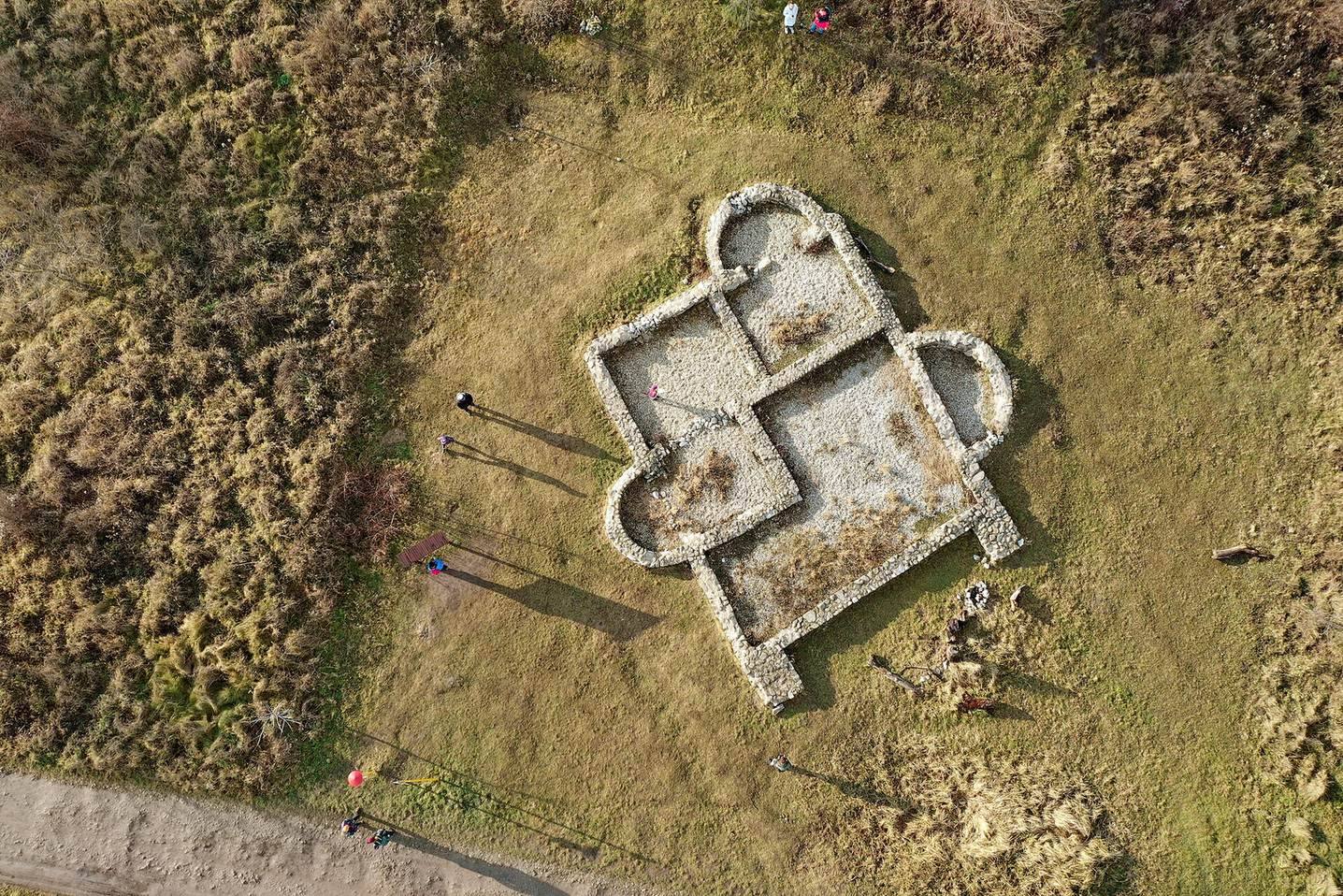
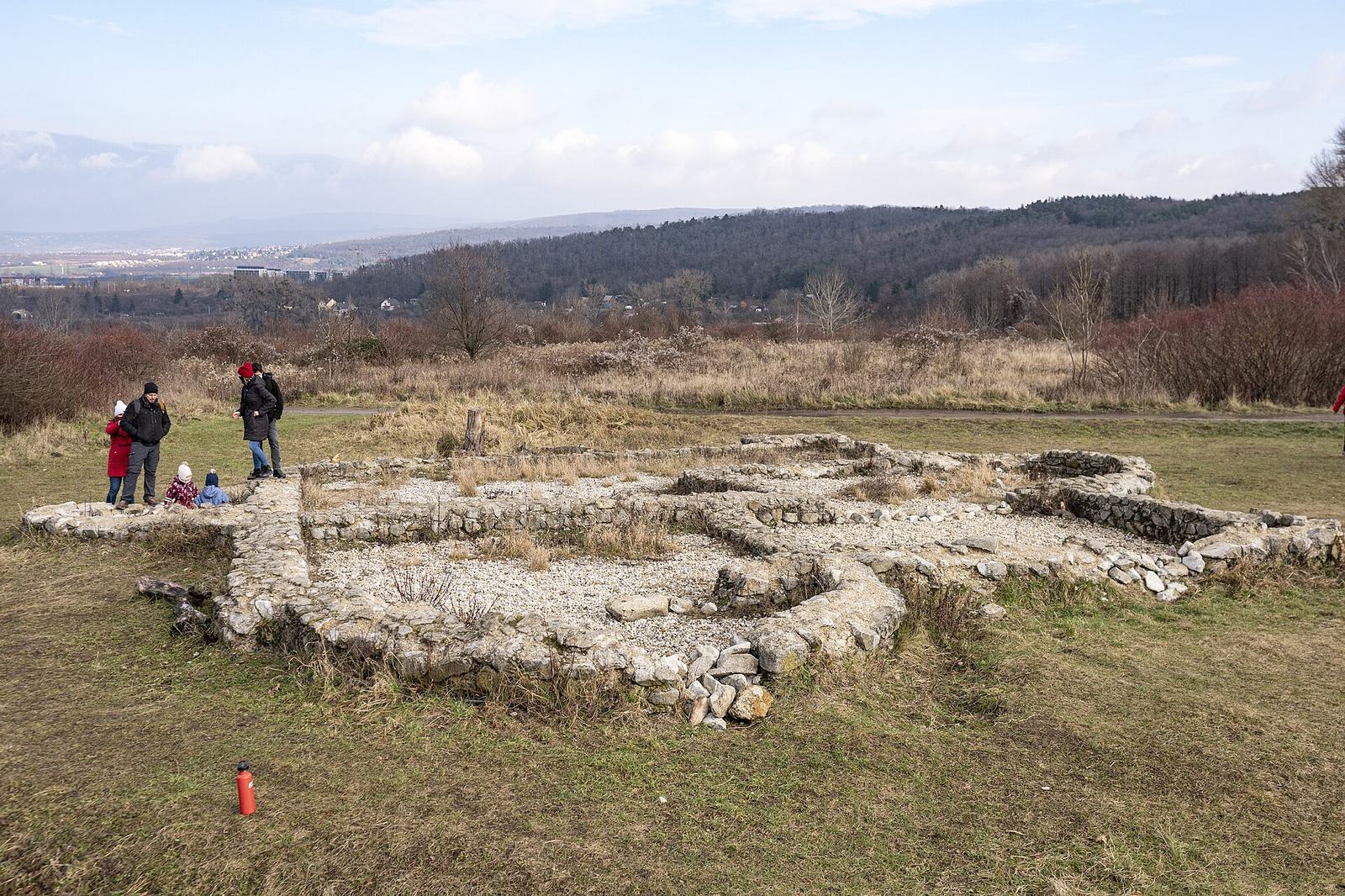
The remains occupy a basin at about 210 metres above sea level, with spurs of the Little Carpathians enclosing it on three sides. The site centers on a six-room stone building measuring about 13.2 by 11.2 metres.
Stone building
Plan and masonry
The masonry is about 60 centimetres thick. The foundations and surviving portions above ground together reach roughly 1.5 metres in height, and the foundations have been conserved.
Rooms and bathing spaces
Three semicircular projections of different sizes extend from three sides of the building. They are thought to have held pools for cold, warm, and hot water. The original plan may have provided both cold- and warm-water bathing, although only a cold-water bath appears to have been completed; another use for the building is also possible. The largest room has an L-shaped plan and probably served as a changing room.
Earlier settlement and finds
Remains of partly sunken dwellings and ironworking furnaces provide evidence of the earlier settlement. Investigations of the building recovered Roman pottery, multicolored mosaic glass, bronze brooches, and Roman coins. A small bronze statuette found in the area depicts Priapus, a Greek fertility deity.