Roman Amphitheatre of Trier: A Roman Arena and Civic Gathering Place
Site at a Glance
- Popularity
- High
- Country
- Germany
- Primary era
- Classical
- Eras represented
- Classical
- Civilizations
- Roman
- Site type
- Entertainment
- Remains
- Amphitheatre
On this page10 sections
History
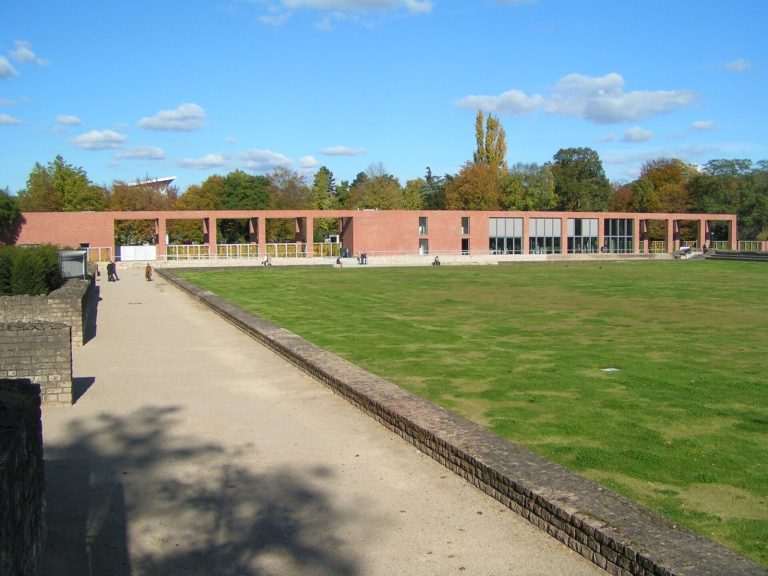
The Roman amphitheatre of Trier is an ancient Roman arena in Trier, Germany, completed around AD 100, when the city was known as Augusta Treverorum. It became one of the city’s main gathering places and is Trier’s oldest surviving ancient Roman building.
Roman-period arena
Local dignitaries and imperial officials provided public spectacles and food for the people of Trier. In Late Antiquity, emperors sometimes attended in person. Events included gladiatorial combat, hunts of wild animals, executions, and announcements of important public decisions. The annual Frankish Games were a high point of the ancient spectacle season.
Around AD 293, Constantius Chlorus renovated the amphitheatre after moving to Trier.
Dismantling and later reuse
From the fifth century, the amphitheatre was dismantled and its stone reused in other building work. In the Middle Ages, it served as a quarry, and much of its structure above ground was taken apart.
Heritage and modern use
In 1986, the amphitheatre became part of the UNESCO World Heritage property “Roman Monuments, Cathedral of St Peter and Church of Our Lady in Trier.” The listing recognizes Trier’s importance as a major Roman city north of the Alps. Each August, the amphitheatre hosts Brot & Spiele (“Bread and Games”), a festival featuring reenacted gladiatorial combat. It is Germany’s largest historical reenactment festival devoted to gladiatorial battles.
Remains
Setting and overall plan
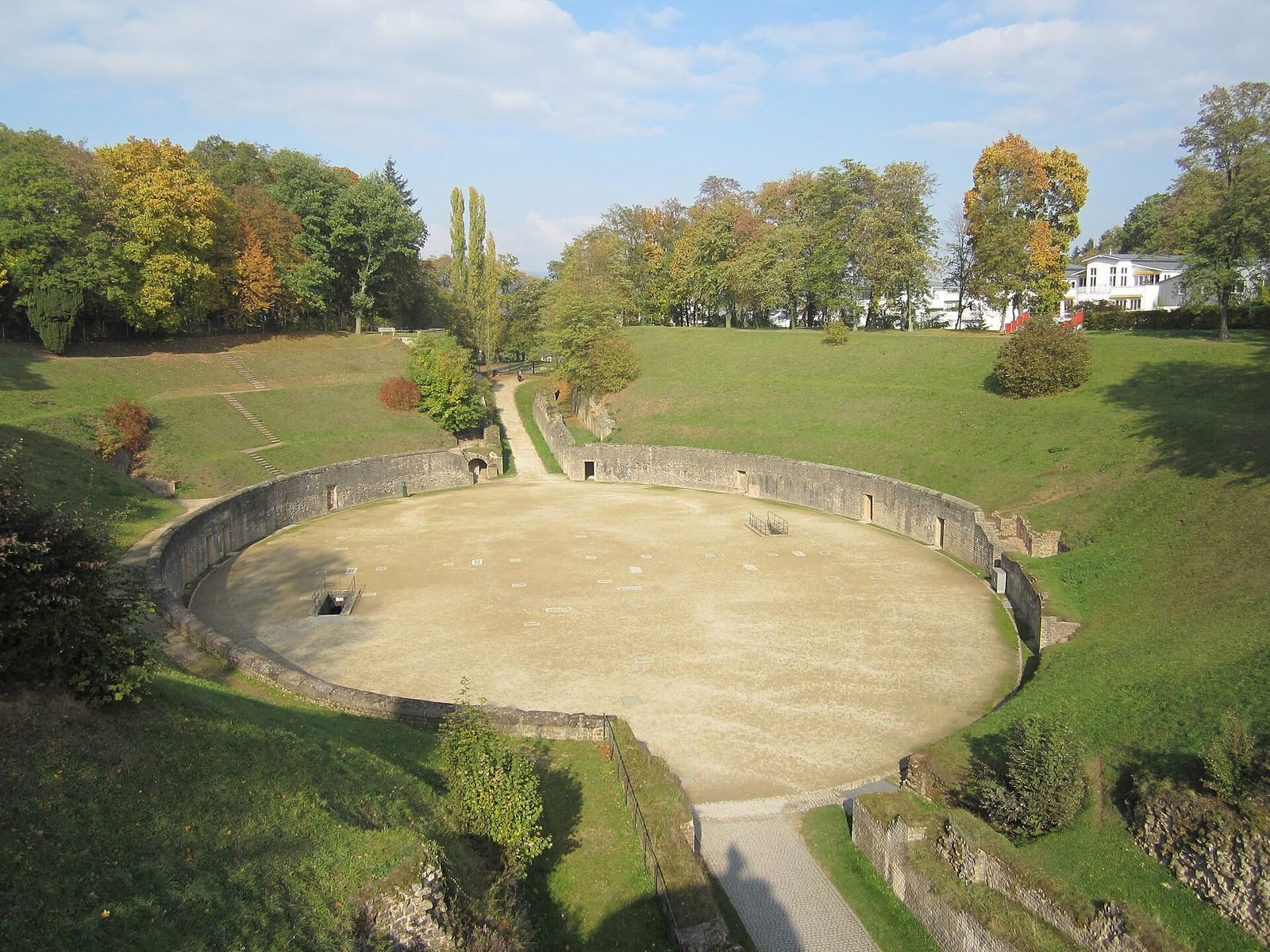
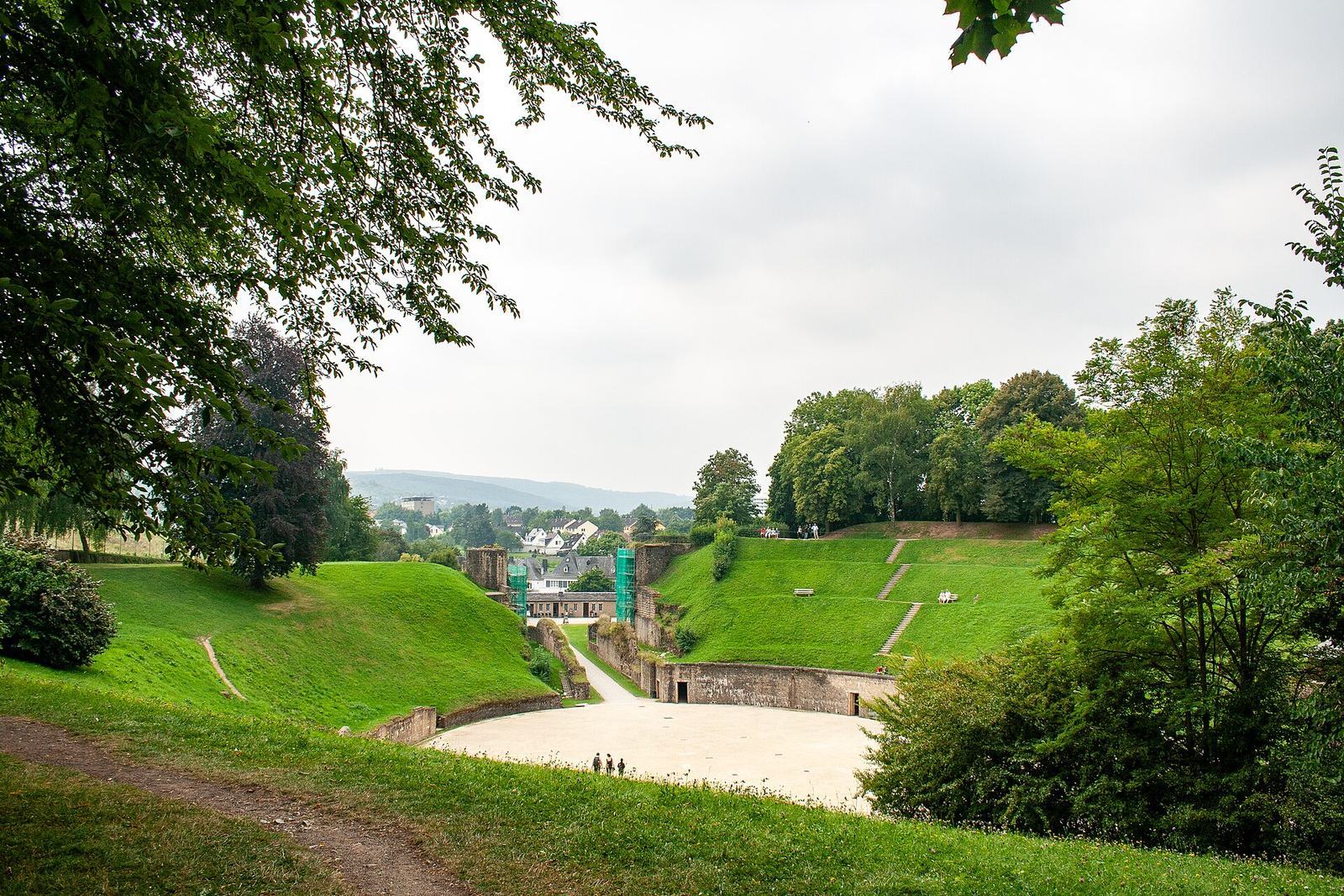
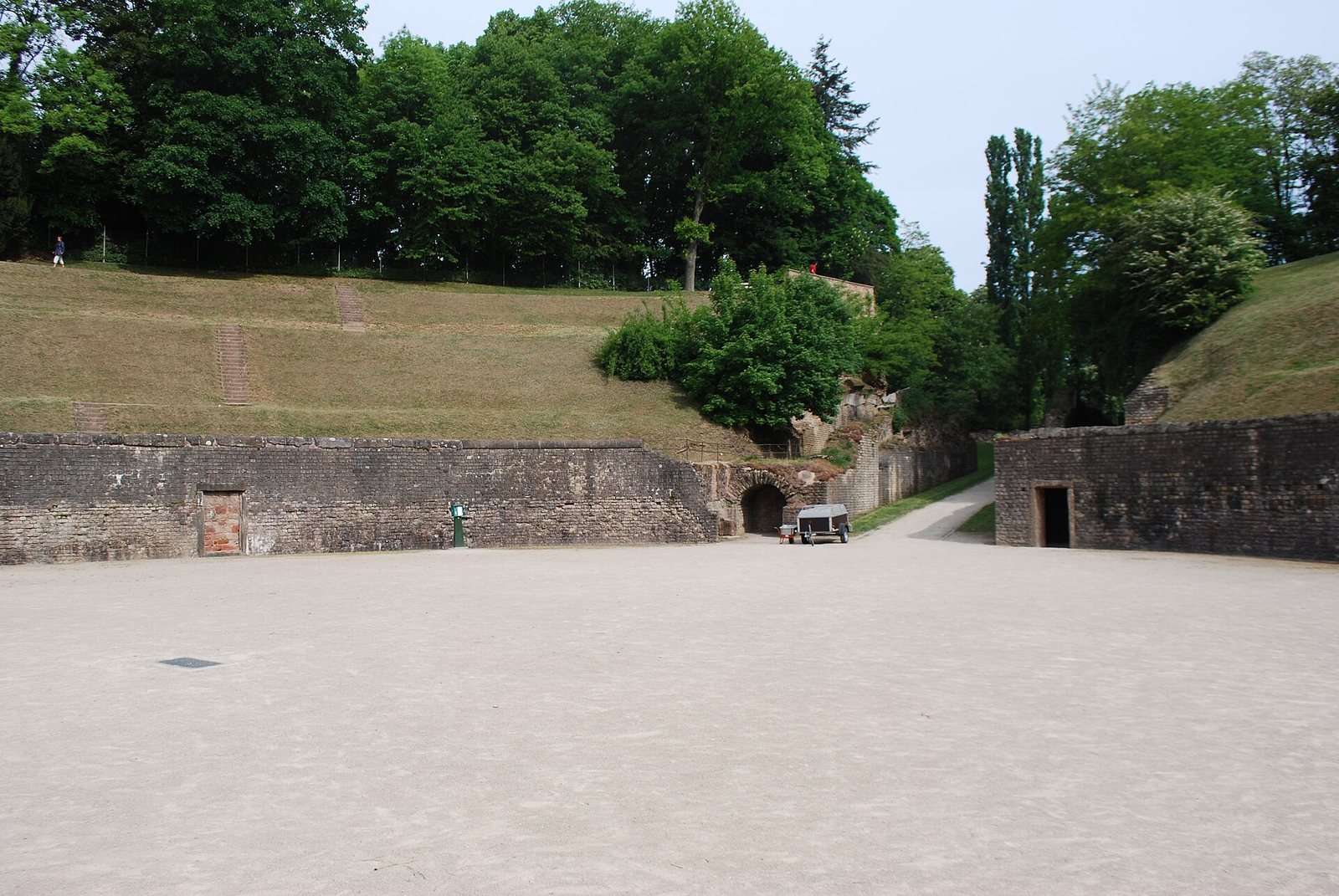
The amphitheatre was built into the natural slope of Petrisberg hill, which reduced the need for an artificial embankment and lowered construction costs. It formed part of Trier’s Roman city wall and also served as the city’s eastern gate. The structure faced north, with entrances to the north and south and semicircular towers near both. Modeled on Rome’s Colosseum, it was designed for about 20,000 spectators. Its seating had 26 rows arranged in three tiers. The amphitheatre lies near the Imperial Baths, about 1.4 km southeast of Trier’s Main Market Square.
Arena and underground installations
Arena
Water could be brought onto the arena to cool it in hot weather. The lifting mechanisms beneath the floor meant that the arena could not be flooded.
Cellar and lifting system
A cellar and service rooms lay below the arena, and the cellar survives. The cellar and other underground galleries were added after the original amphitheatre was built. The cellar held animals, while platforms and hoists raised gladiators, performers, and wild animals into the arena, including through a concealed lift at its centre. Finds in the cellar include wood remains and 1,200 coins dating from the late third century onward.
Burial ground
A small burial ground on the amphitheatre’s eastern side was discovered in 1996. It contained 46 graves.