Obelisk of Montecitorio: An Egyptian Monument and Roman Sundial
Site at a Glance
- Popularity
- High
- Country
- Italy
- Primary era
- Iron Age
- Eras represented
- Iron Age, Classical, Modern
- Civilizations
- Egyptian, Italian, Roman
- Site type
- Civic
- Remains
- Obelisk
On this page11 sections
History
The Obelisk of Montecitorio is an ancient Egyptian monument standing in Piazza di Monte Citorio in Rome, Italy. Quarried at Aswan and erected at Heliopolis around 595–589 BCE during the reign of Psamtik II, it was dedicated to Ra, the Egyptian sun god. Psamtik II ruled the Twenty-Sixth Dynasty, a Saite dynasty centered at Sais.
From Heliopolis to Augustus’ Rome
In 10 BCE, Augustus, Rome’s first emperor, brought the obelisk to Rome with the Flaminio Obelisk. He installed it as the gnomon, the upright element whose shadow indicates the sun’s position, in the Solarium Augusti, or sundial of Augustus. The installation stood in the Campus Martius, an ancient district of Rome.
The sundial was also intended to test the Julian calendar, the reform introduced under Julius Caesar. From 46 to 9 BCE, Rome had applied an intercalary adjustment every three years rather than every four. An intercalary adjustment adds time to a calendar to keep it aligned with the solar year.
Proposed alignments and decline
The obelisk’s alignments have prompted different interpretations. One proposal held that its shadow reached the Ara Pacis, an altar associated with peace, on 23 September, both Augustus’ birthday and the autumnal equinox. This reading connected the alignment with peace and, more tentatively, with Augustus’ authority and the establishment of his dynasty. Another proposal suggests that, from the Via Flaminia opposite the altar, the sun appeared above the obelisk on 9 October, the annual festival of Apollo Palatinus. The meaning of these alignments remains uncertain.
Pliny the Elder, a Roman author and naturalist, wrote that the solar installation stopped working about thirty years after it was built, around AD 47. Between the ninth and eleventh centuries, the obelisk fell and became gradually buried. Possible causes include fire, an earthquake that may have occurred in 849, or warfare, including the 1084 sack of Rome by the Norman military leader Robert Guiscard.
Recovery and re-erection
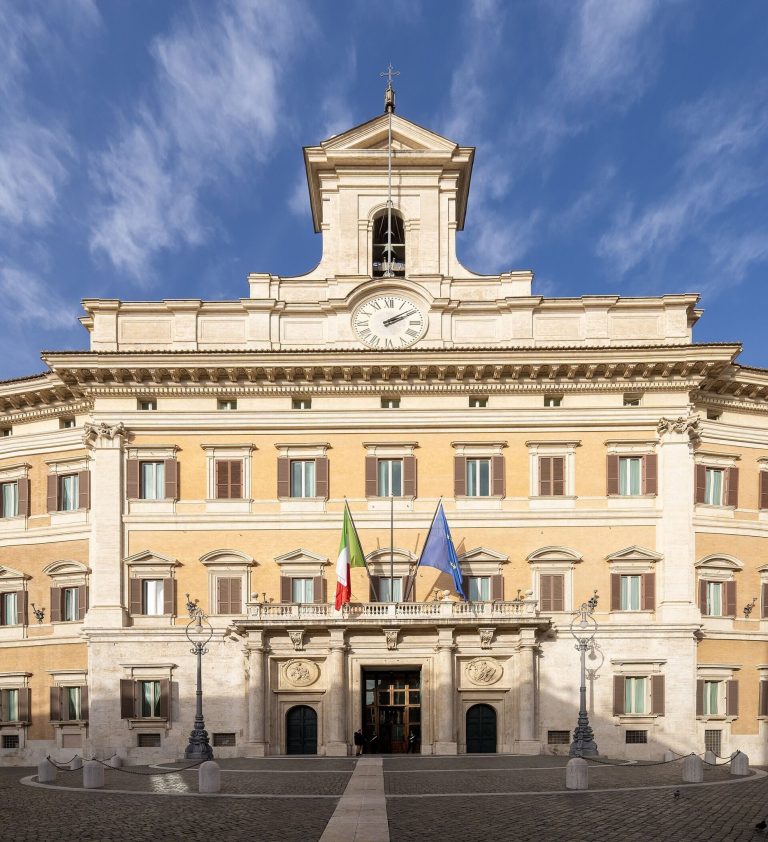
Pieces recovered in 1502 from a cellar near Largo dell’Impresa were assembled during Pope Sixtus V’s unsuccessful effort to repair and raise the monument. In 1748, traces of the meridian were found beneath the main entrance at Piazza del Parlamento 3. The obelisk and meridian had originally stood behind the Curia Innocenziana, now Palazzo Montecitorio, rather than at the later site of the re-erected obelisk.
Between 1789 and 1792, during Pope Pius VI’s pontificate, the obelisk was repaired and raised again as a sundial. Architect Giovanni Antinori led the work, which used granite taken from the Column of Antoninus Pius. A new meridian was laid in the paving of Piazza Montecitorio in 1998 to commemorate Augustus’ installation.
Remains
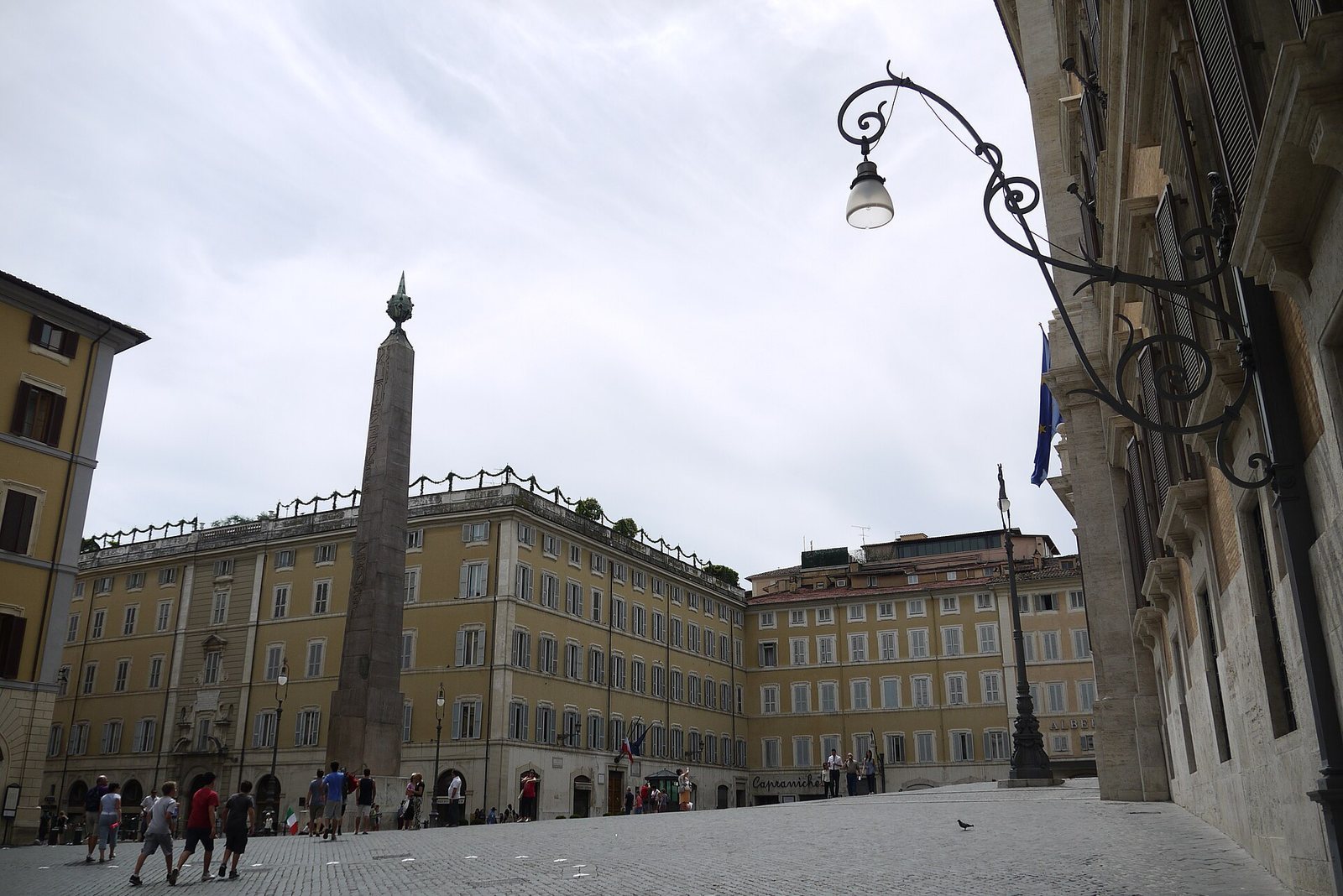
The piazza contains the upright obelisk and a marked meridian in its paving. In antiquity, the solar installation extended across a much larger paved area in the Campus Martius, with the obelisk serving as its pointer.
The obelisk and its inscriptions
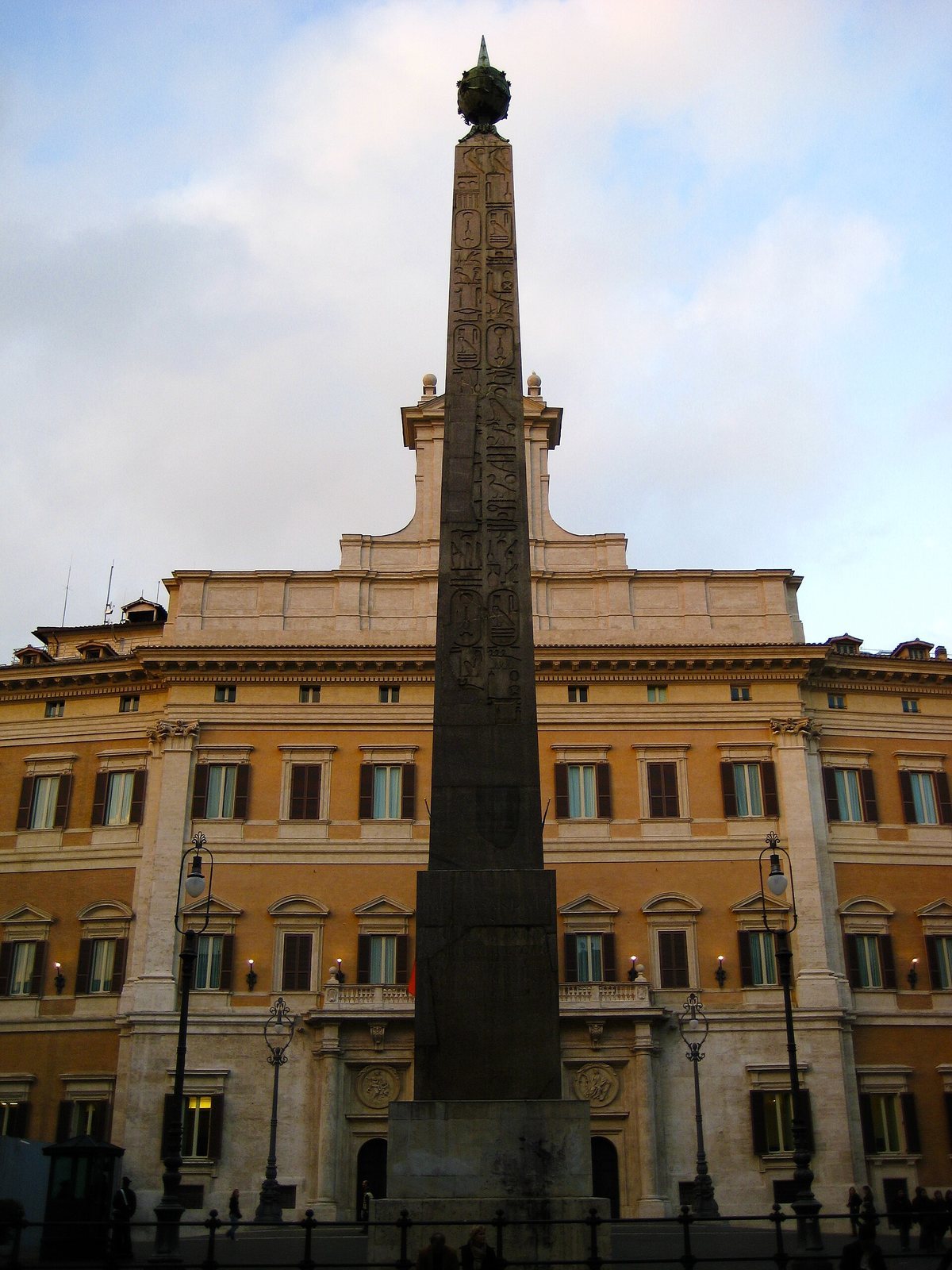
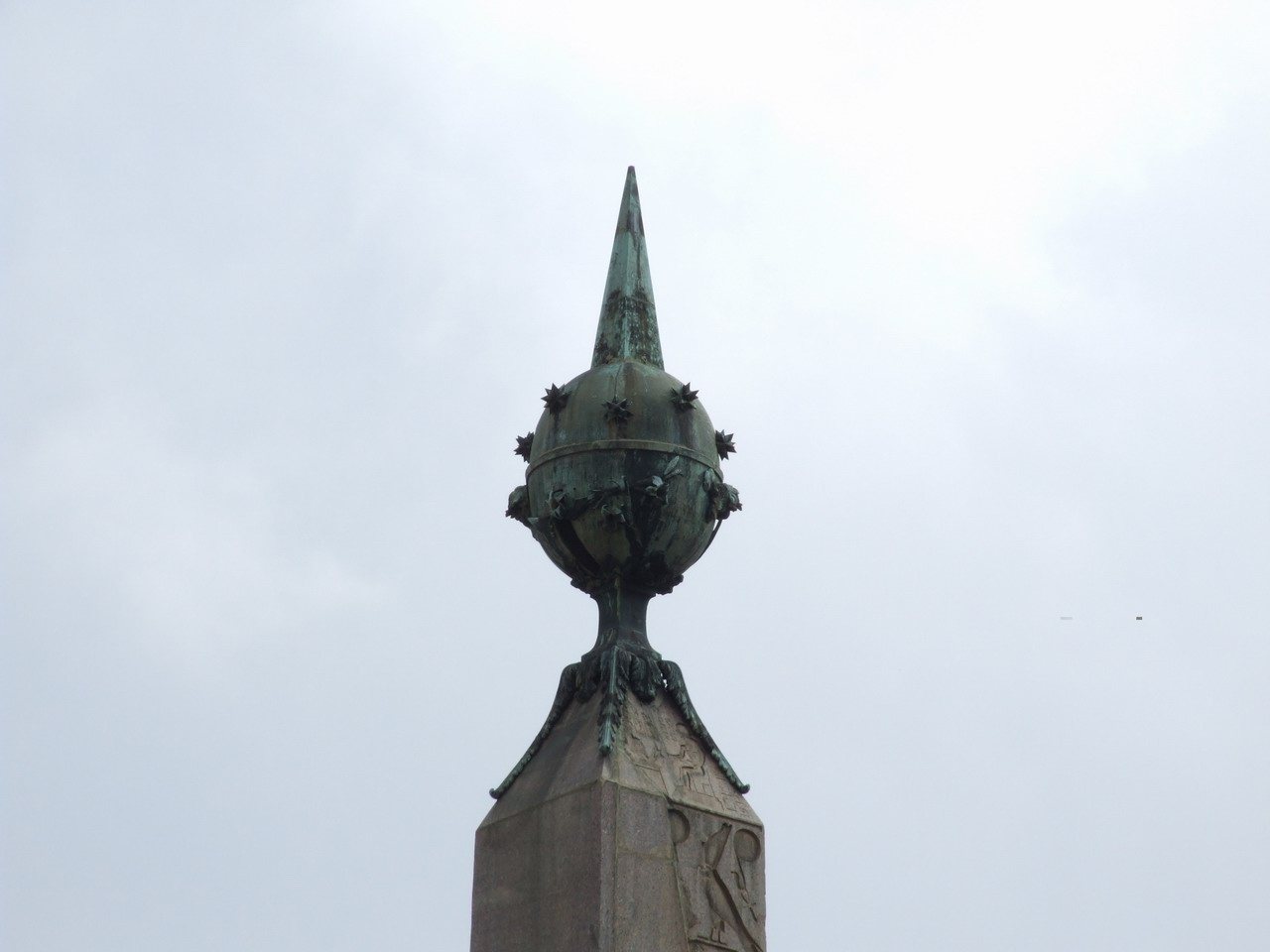
Made of red granite, the obelisk stands 21.79 metres high. With its pedestal and crowning globe, it reaches 33.97 metres and weighs approximately 217 metric tonnes. It is one of Rome’s thirteen ancient obelisks. Hieroglyphs, the writing system of ancient Egypt, praise Psamtik II, give his royal titles, and associate him with Atum, Re-Harakhti, and the divine powers of Heliopolis. The pyramidion, the small pyramidal capstone, invokes Re-Harakhti and asks for life, health, dominion, and joy for the king. Inscriptions on two sides of the Roman base identify Augustus by his titles, state that Egypt had come under Roman authority, and describe the obelisk as a gift to the Sun.
The Augustan sundial
Meridian surface
The ancient meridian crossed a surface measuring 160 by 75 metres, paved with travertine, a form of limestone used as building stone. Bronze letters marked the hours, months, seasons, and signs of the zodiac, while additional markings indicated the days. The mathematician Facondius Novus calculated the meridian.
Recovered fragments
A surviving fragment of the meridian is made of travertine and bears month markings in Greek letters. It was excavated beneath the cellar of a stable in the Campus Martius. Another fragment was tentatively linked to the foundation mosaic of San Lorenzo in Lucina, but that identification remains uncertain.
The present meridian
The line in the piazza’s paving points toward the main entrance of Palazzo Montecitorio. The obelisk’s shadow does not fall precisely along it, and the monument no longer functions as a gnomon.
A Roman image of the obelisk
The base of the Column of Antoninus Pius, now preserved in the Vatican Museums, carries a relief of a personification of the Campus Martius holding the obelisk as an emblem of the district.