Holy Mother of God Church: An Armenian Apostolic Church in Vanadzor
Site at a Glance
- Popularity
- Medium
- Country
- Armenia
- Primary era
- Medieval
- Eras represented
- Classical, Medieval, Modern
- Civilizations
- Armenian
- Site type
- Religious
- Remains
- Church
On this page14 sections
History
The earlier church and its rebuilding
The Holy Mother of God Church, an Armenian Apostolic church in the Oriental Orthodox tradition, stands on a hill in central Vanadzor, Armenia. The present building was constructed in 1828–30 as a domed church with one main hall and was consecrated in 1831. It replaced an earlier Armenian church dedicated to the same figure, destroyed in an earthquake in 1826.
The predecessor was standing in the early 19th century, although by 1826 it was described as dilapidated. Travelers wrote about it in 1812 and 1817, and the Armenian writer and educator Khachatur Abovyan described it in 1826. Its date of construction is uncertain. Tombstones and carved cross-stones called khachkars point most strongly to the 13th century, when the Armenian Zakarid princes ruled parts of the region, while other proposed dates range from the 5th to the 13th century.
The area was known as Gharakilisa, a Turkic name meaning “black church.” One explanation links the name to the earlier building’s dark stone. A local legend instead tells that Armenian youths killed soldiers quartered in the church, prompting a pasha, a high-ranking Ottoman official, to declare that it had blackened his army. Hasan Khan is sometimes proposed as the pasha, but that identification is uncertain, and similar versions of the tale are linked to other places called Gharakilisa.
After the 1828 Treaty of Turkmenchay ended the Russo-Persian War and the 1829 Treaty of Adrianople ended the Russo-Ottoman War, about 3,000 people from Western Armenia, especially Erzurum and Mush, moved to Eastern Armenia around 1830. Before the earthquake, Gharakilisa had about 500–600 inhabitants. Piluman Tayiryants, an immigrant from Erzurum and a captain in the Russian imperial military, initiated and financed the replacement church with help from local residents.
The church’s foundation inscription places its construction during the reign of Russian emperor Nicholas I and the tenure of Catholicos John VIII, the senior head of an Armenian Church jurisdiction. It names Harutyun as the diocesan leader and credits Piluman and the community with rebuilding after the earthquake. John VIII probably consecrated the church in 1831.
Parish and community life
The church became a focus of local religious life. After schools came under church authority in 1836, it also served as a center for the community, and a parish school opened in its yard in 1853. Worshippers made pilgrimages to nearby sanctuaries; the church’s main pilgrimage drew large crowds for the Feast of the Assumption, which commemorates the Virgin Mary’s taking into heaven.
The Tayiryants family arranged a full renovation in 1900. Later, local benefactor Borik Mkhitaryan contributed substantially to the church’s exterior facing. The cemetery became a place of burial for prominent local families, including families who had migrated from Western Armenia, and for clergy who served the church.
Soviet-era survival and later changes
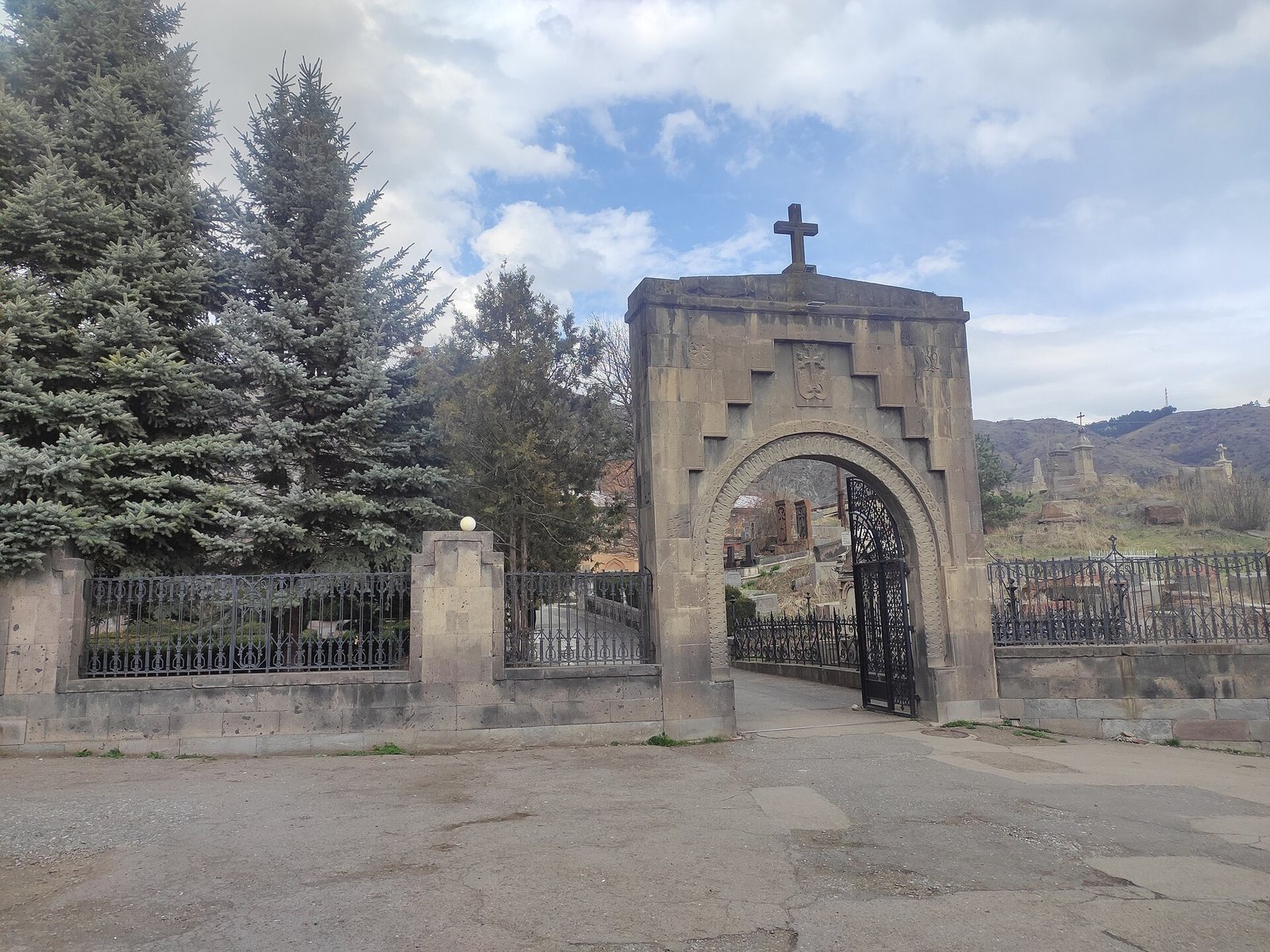
During Soviet rule, when church property was confiscated and religious institutions faced restrictions, the Holy Mother of God Church remained one of only two churches operating in Lori Province. Regular activity resumed in the mid-1950s. In 1964, the community paid for altar repairs, followed by the altar’s consecration on 18 October by Bishop Mashtots Tadjirian. The altar was painted in 1973; an entrance arch was built in 1985–86, a heating system installed in 1988–90, and a khachkar commemorating migrants from their ancestral homeland erected in 1989.
In 1990 Catholicos Vazgen I established the Diocese of Gougark, an ecclesiastical district overseen by a bishop that included Tavush Province and the former Tumanyan district. Its seat was in Dilijan. The church was affiliated with the diocese and served as its diocesan church before St. Gregory of Narek Church was built. In 1997 Bishop Sepuh Chuljian rebuilt a southern service building for use as the diocesan residence until 2000.
Work in the late 1990s improved the church grounds and restored Piluman’s grave. Extensive repairs and decoration followed from 2004 to 2011, and the wooden icon screen was restored in 2005. In 2006 a memorial to victims of the Armenian Genocide, the mass deportation and killing of Armenians by the Ottoman government during World War I, replaced a smaller khachkar erected in 1997. Three bells, one large and two small, were donated and consecrated in 2014.
Remains
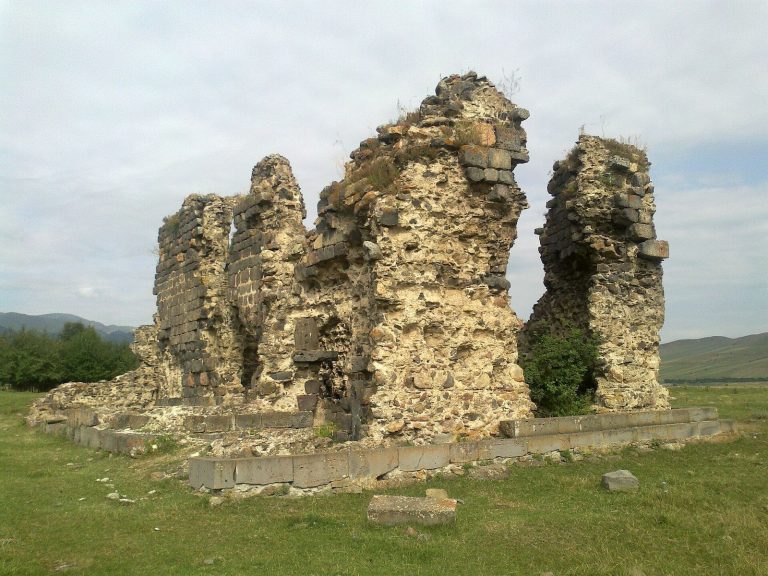
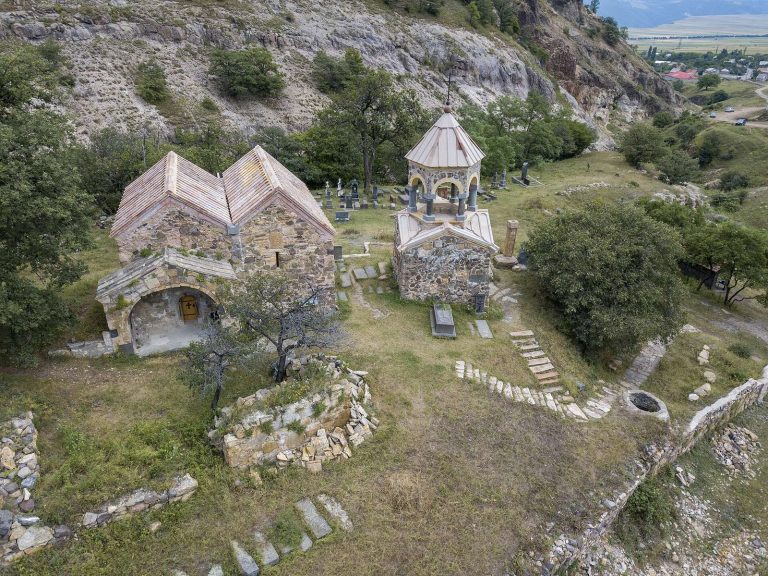
The complex occupies a hill near the meeting of two rivers. Its church and associated structures stand within a cemetery courtyard. Khachkars now mark part of the area where the earlier church is thought to have stood; the present church is about 10–15 metres to its north.
Church and associated buildings
Main church
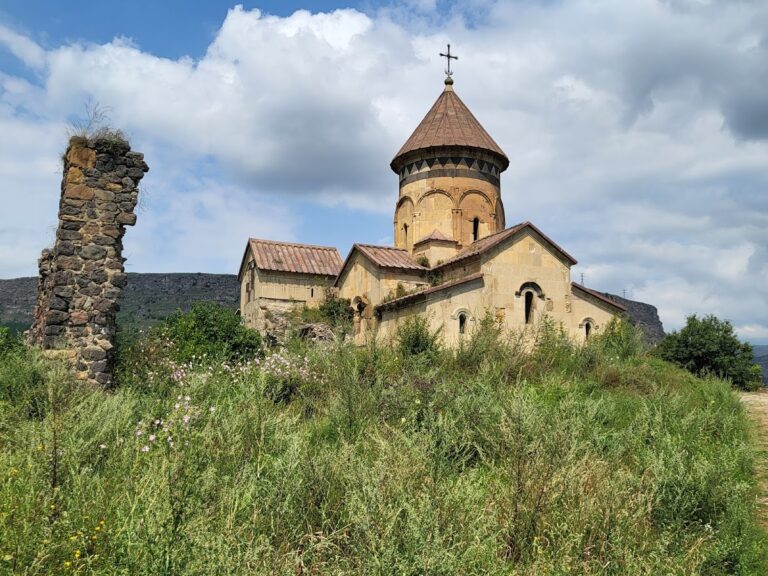
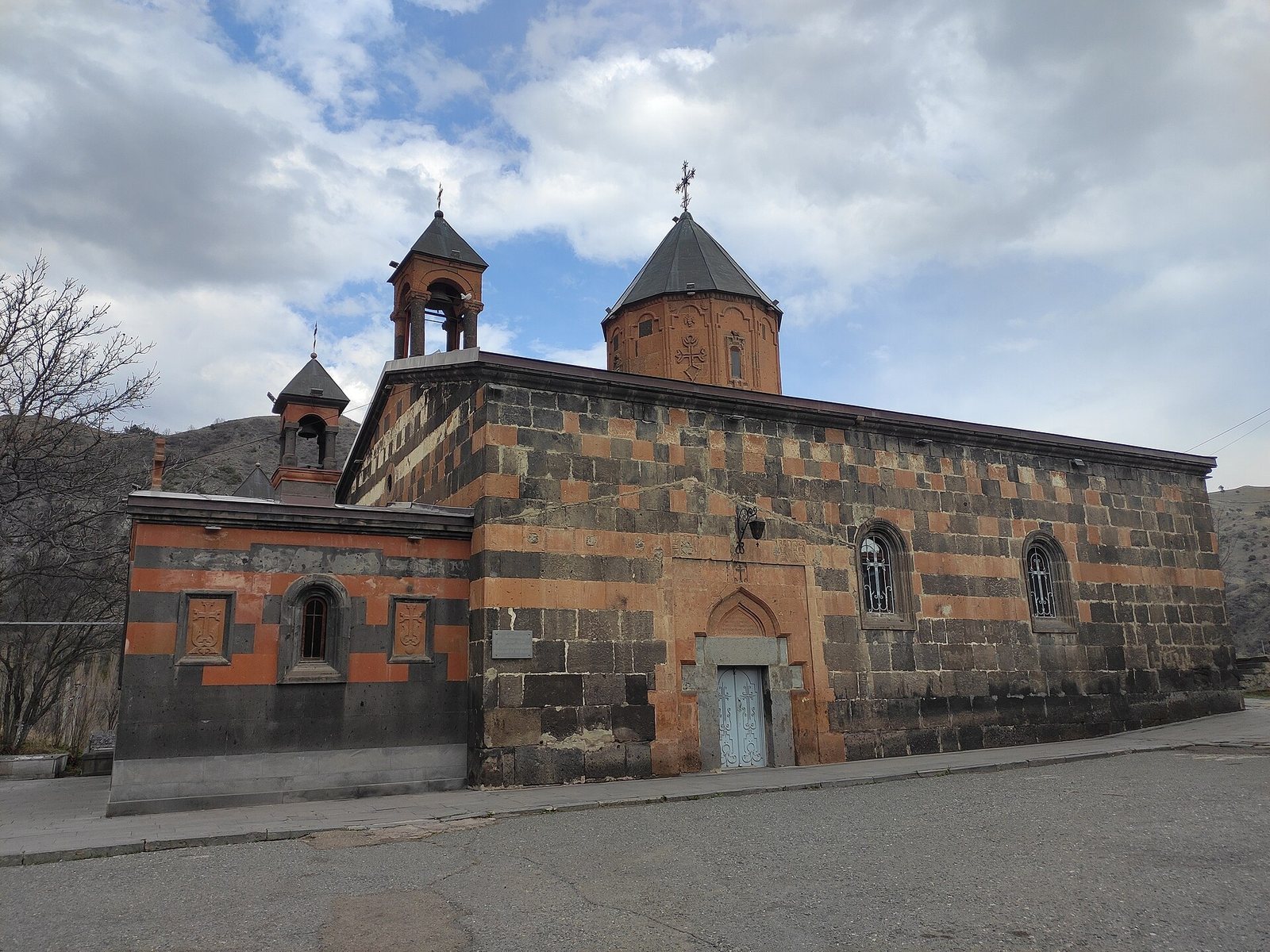
The church has a rectangular plan measuring about 10 by 15 metres, with a single long interior space beneath a dome. Its sanctuary end projects eastward, while a circular bell tower supported by four columns rises at the west end. The plain, unornamented walls combine black volcanic-ash stone with yellow or orange stone. Stones from the earlier church were reused, supplemented by black stone from nearby quarry areas and yellow stone brought from Ani-Pemza.
Entrance and ancillary buildings
An entrance vestibule was added on the west side in 1966. Two small candle chapels, dedicated to St. John the Baptist and St. Stephen the Protomartyr, stand on either side of it; each has a bell tower. They were built around 2011–12. The southern service building, partly rebuilt, serves as a residence for clergy. The church has three bells, one large and two small.
Cemetery and commemorative features
Cemetery and tombs
The churchyard cemetery contains tombstones from the 13th–14th and 19th–20th centuries, alongside numerous khachkars, carved stones bearing crosses and often ornamental designs. The Abovyan family tomb is to the right of the courtyard entrance. Piluman Tayiryants is also buried in the cemetery; his tombstone gives his death year as 1847. Clergy graves received new tombstones in 2005.
Memorials and khachkars
The courtyard includes khachkars commemorating the victims of the 1988 earthquake and the Nagorno-Karabakh conflict, as well as migrants from their ancestral homeland. The Martyrs’ Park contains the memorial to victims of the Armenian Genocide.
Sculptures
The Abovyan family donated a marble angel and two other statues. The marble came from Italy, and the sculptures were assembled in Vanadzor; their donation date is unknown.
Interior and furnishings
Altar, paving, and decoration
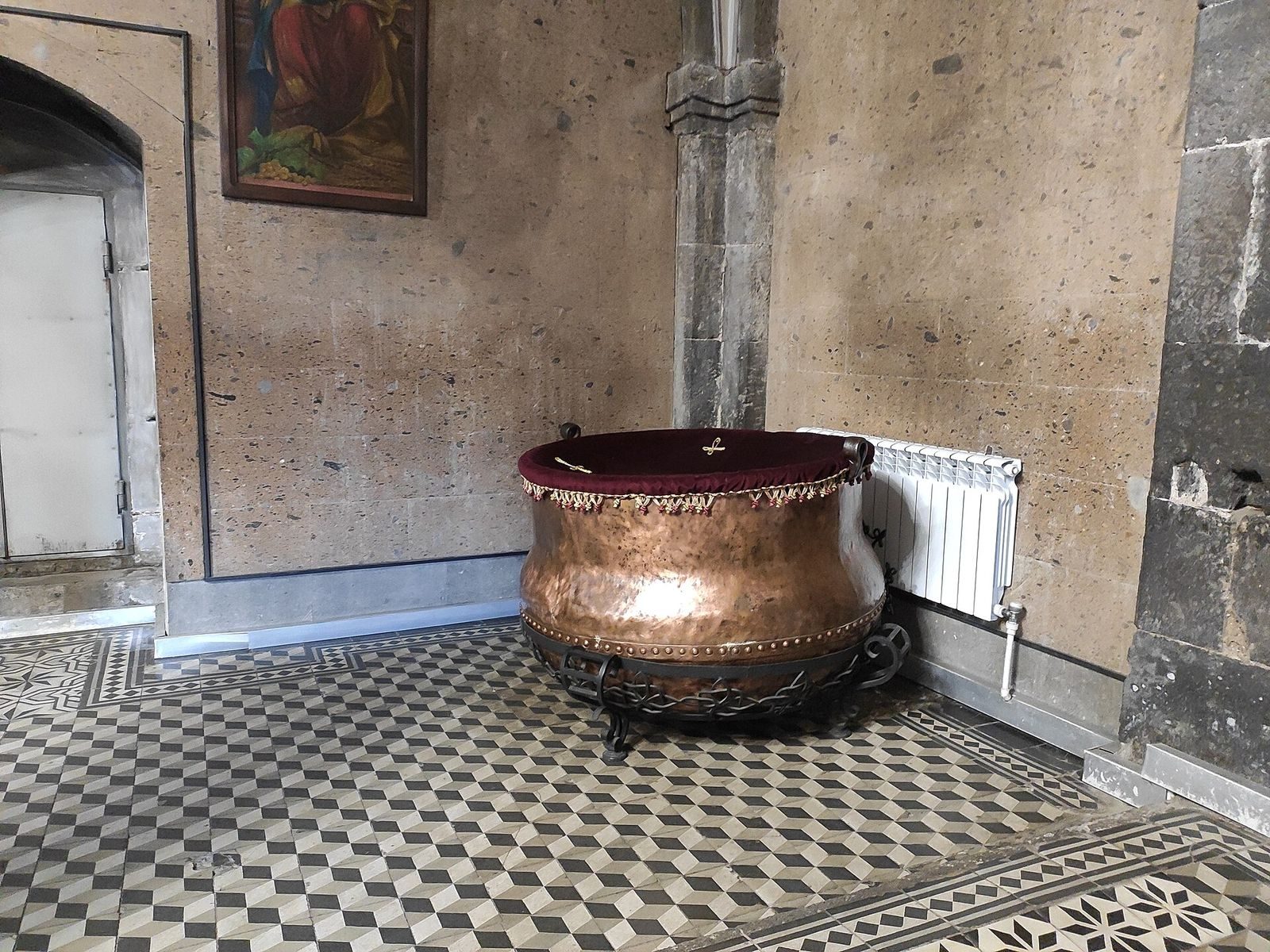
The altar was repaired with phyllite, a fine-grained metamorphic rock. An open altar has a frame containing an image of the Virgin Mary; a written note was found when the frame was opened. Local craftsmen in Gyumri made the church’s floor paving, which was given to the church in 1912.
A wooden iconostasis, an image-bearing screen separating the sanctuary from the main church, dates to 1900 and carries an image of the Virgin Mary. Murals added in 2011 depict Christ enthroned at the altar with the Virgin Mary, John the Baptist, and the archangels Michael and Gabriel. Ornamental bands cover the stone arches, with biblical symbols painted below them. The historic cross on the dome was repaired, new metal crosses were placed on four bell towers, and copper sheeting was added to the large dome and smaller bell-tower roofs.