Balatlar Church: A Byzantine Church and Former Roman Bath in Sinop, Turkey
Site at a Glance
- Popularity
- Medium
- Country
- Turkey
- Primary era
- Medieval
- Eras represented
- Classical, Medieval
- Civilizations
- Byzantine, Roman
- Site type
- Religious
- Remains
- Church
On this page13 sections
History
Roman bath and Byzantine church
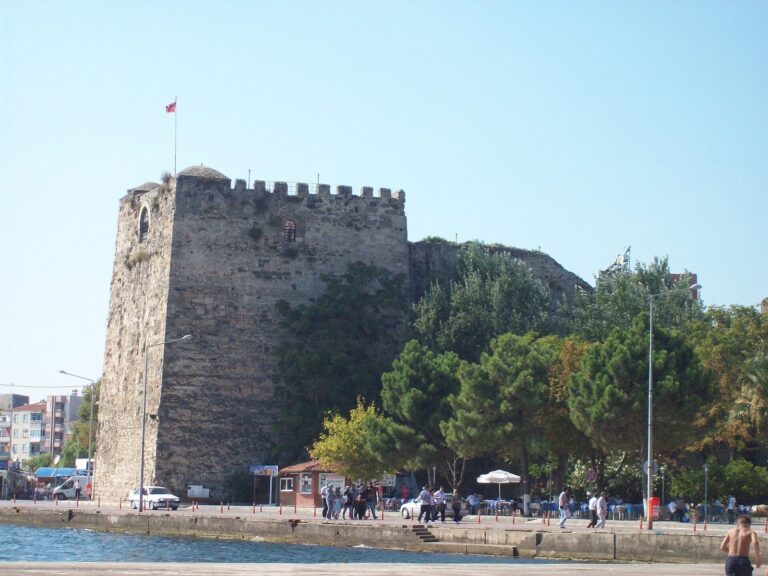
Balatlar Church is a Byzantine church in Sinop, Turkey, within a complex that began as a Roman imperial bath in the 2nd century. The church phase dates to around AD 660, during the Byzantine period, the history of the Eastern Roman Empire and its successor state, centered on Constantinople. The church may have occupied the place where Phocas, an early Christian martyr venerated as a saint, was killed.
Medieval uses and monastery
Between the 11th and 13th centuries, the building was used to store grain. After Sinop came under either Anatolian Seljuk or Ottoman control, the complex passed to the local Christian community and became a monastery associated with the Virgin Mary, the mother of Jesus in Christian belief, and Archangel Michael. The Anatolian Seljuks were a medieval Turkic dynasty that ruled parts of Anatolia before Ottoman dominance.
Orthodox cemetery and abandonment
During the Ottoman period, the church and its courtyard became an important burial ground for the Orthodox community, part of a major Christian tradition. Worship and burial continued at the site into the 1920s. It was abandoned in that decade after Greek Christians were deported during the population exchange between Turkey and Greece.
Excavations
Excavations at the church and surrounding area have been underway since about 2010, led by art historian and archaeologist Gülgün Köroğlu of Mimar Sinan Fine Arts University. They have uncovered more than a thousand burials and Christian relics. Köroğlu identified a stone reliquary as the most important discovery of the Sinop excavations. Work in 2018 revealed mosaics and remains associated with a 5th-century building. In 2024, excavators found a skull believed to date to the 19th century and interpreted as evidence of an Orthodox burial custom.
Remains
The ruins cover 3,062 square metres in Sinop, on Turkey’s Black Sea coast. The church has a rectangular basilica plan, a church layout organized around a central nave. Its surviving fabric brings together parts of the Roman bath and spaces adapted for Christian use.
Bath complex and church structure
Roman bath
The original bath complex included an exercise area, cold-, warm-, and hot-bathing rooms, and a dry-heating room. Its substantial Roman walls and supports were cut into and reused as the building took on religious functions.
Reused church spaces
The north and south walls survive from the church. Across the complex, alterations to the Roman structure created religious spaces and features including a bone repository, niches, doors, arches, benches, windows, and a basin for a holy spring.
Frescoes
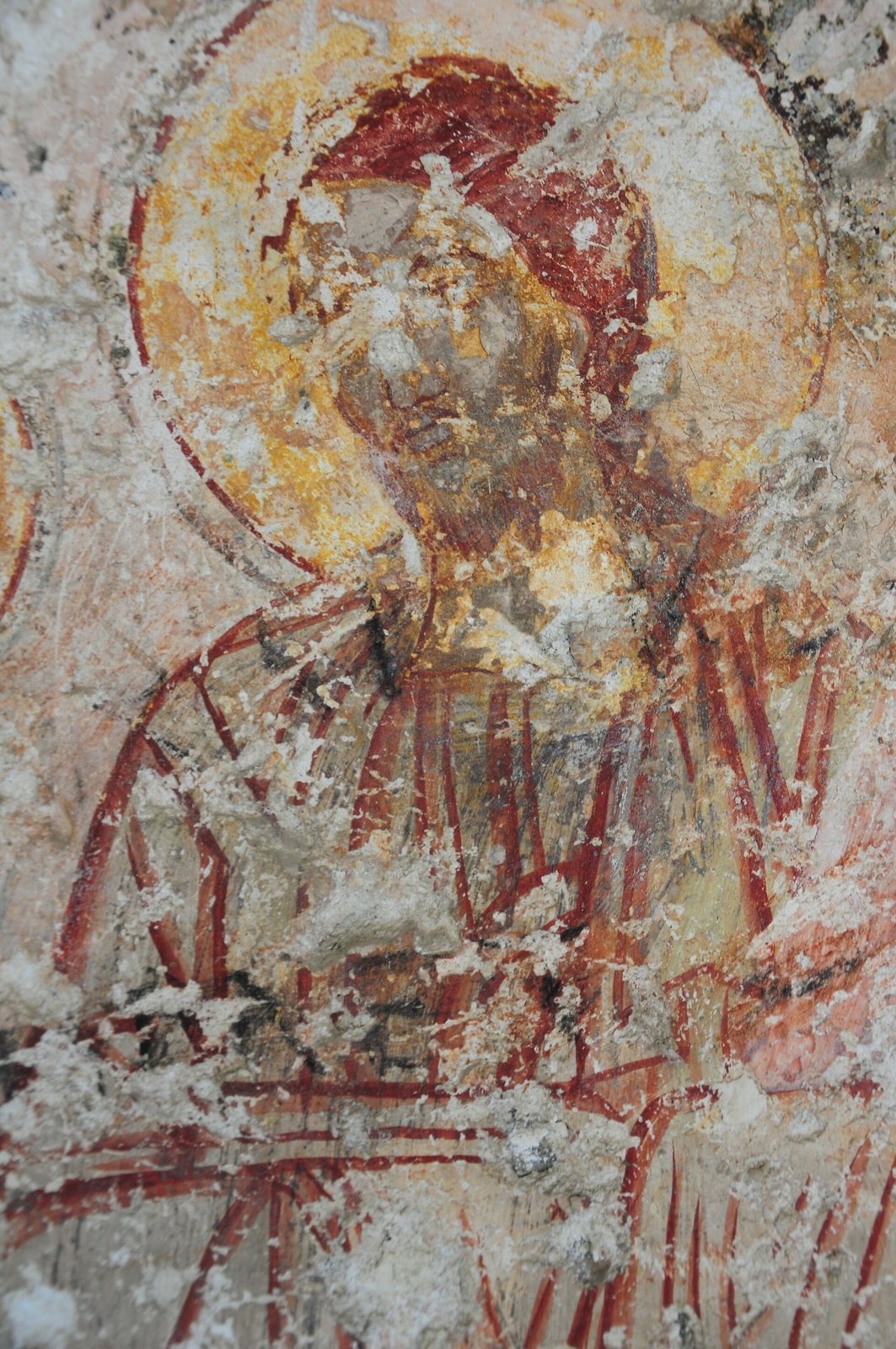
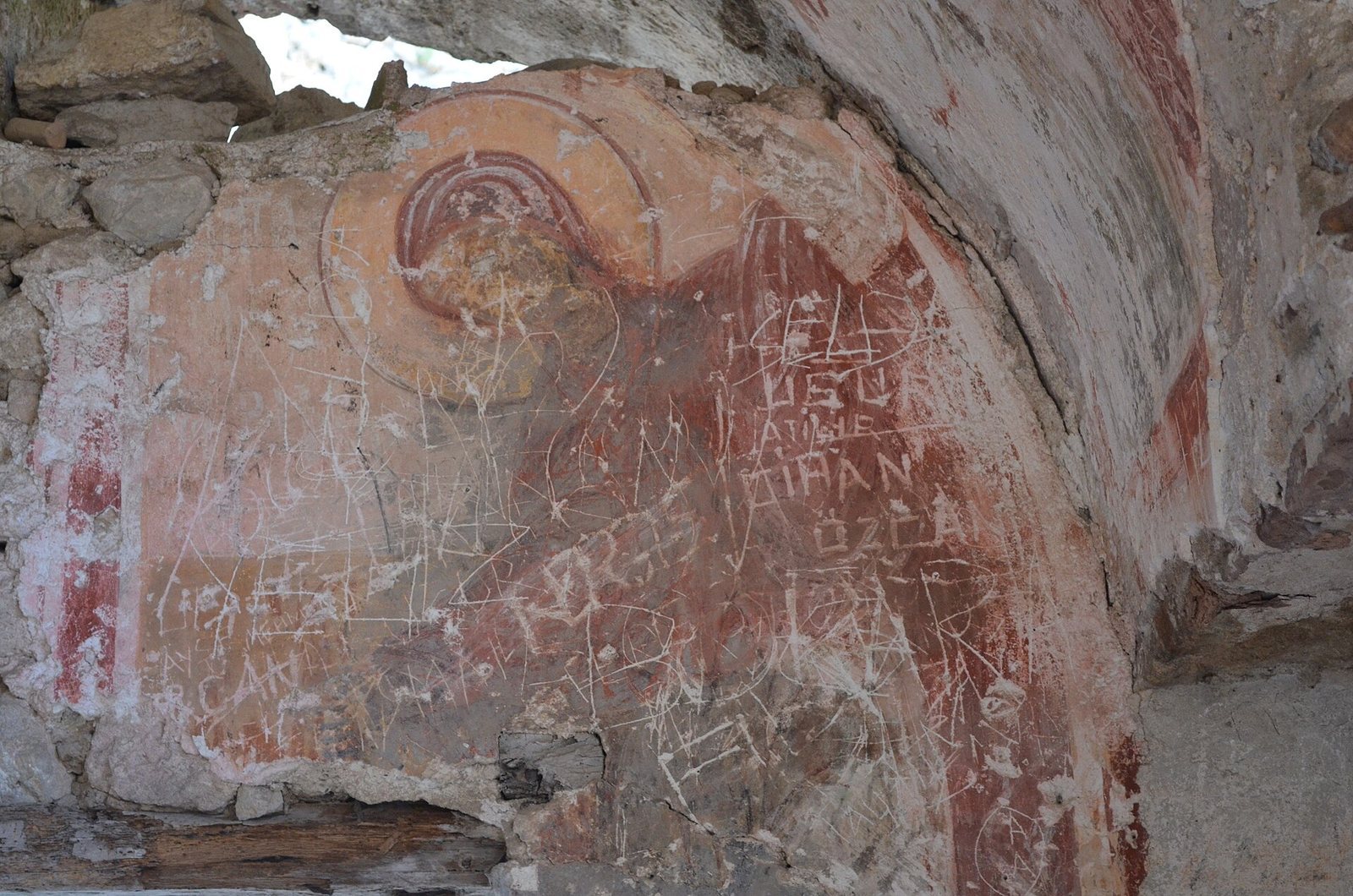
Byzantine frescoes on the surviving north and south walls show Jesus, Mary, and the apostles in scenes from the Old and New Testaments. Weathering and vandalism have badly damaged the paintings, which have been placed under protection.
Burials and finds
Burial chapel and mosaics
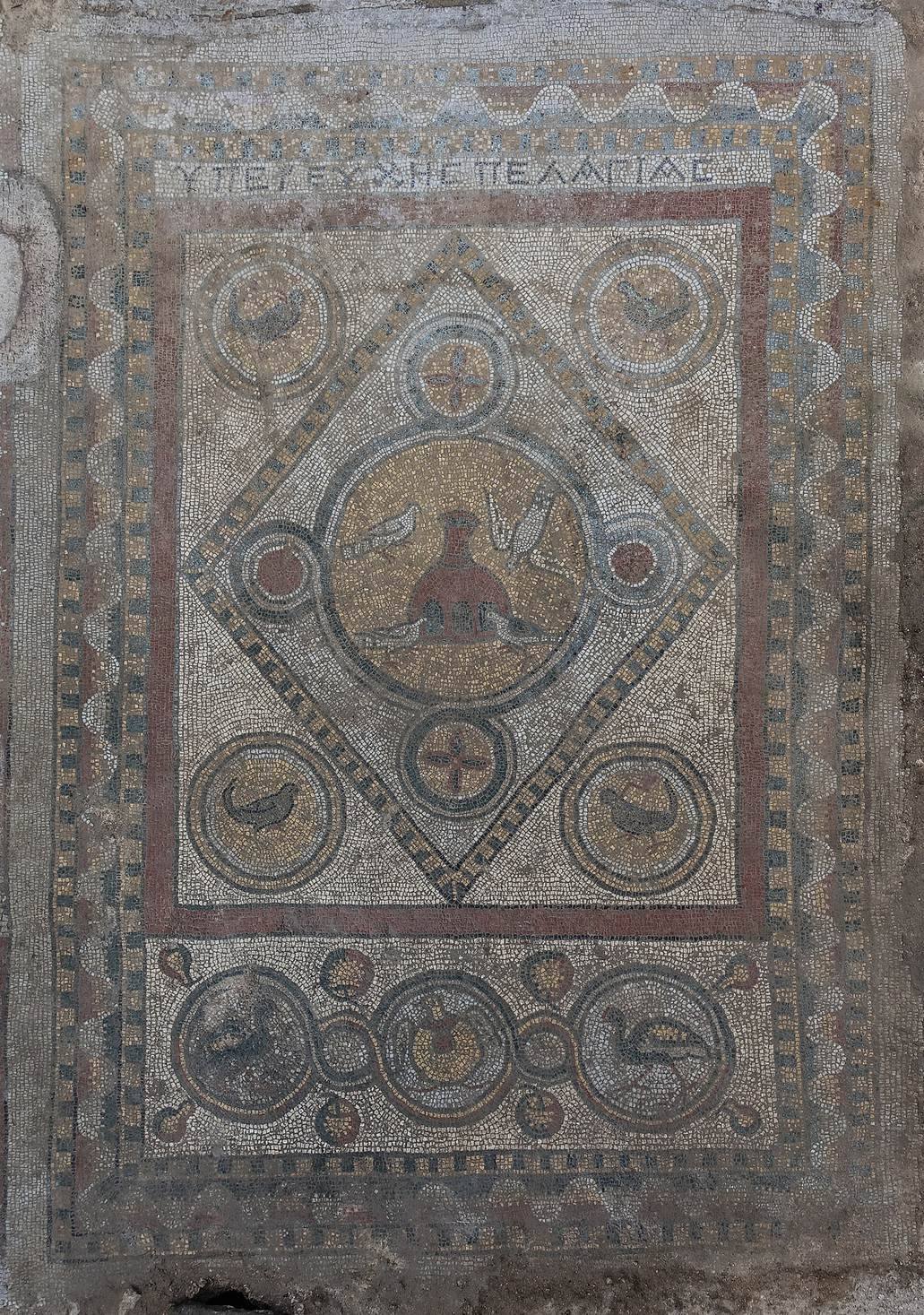
Burials were made inside the building and in its courtyard, and excavations have opened more than a thousand graves. The bath’s cold-bathing room was converted into a burial chapel. Its mosaics were made from small pieces set into a surface, and inscriptions indicate that relatives of people buried there commissioned the panels as offerings. Other mosaics and fragments of reliquaries have also been found in the complex.
Reliquary and inscribed skull
A stone reliquary, a container for a venerated relic, is associated with a fragment that may have come from the True Cross, the cross believed by Christians to have been used to crucify Jesus. The object may instead have held a bone or represented a symbolic tomb of a holy person. The 19th-century skull found in 2024 bears the inscription “Pilgrim Dimitrakis.” It is believed to have belonged to an Orthodox cleric who had made a pilgrimage to Jerusalem, and is described as the first known Anatolian example of this burial tradition, with comparable cases in Greece and Egypt.