Czchów Castle: A Royal Fortress Controlling the Dunajec Trade Route
Site at a Glance
- Rating
- 4.7
- Popularity
- Medium
- Country
- Poland
- Primary era
- Medieval
- External website
- Open
- Eras represented
- Medieval
- Civilizations
- Kingdom of Poland
- Site type
- Military
- Remains
- Castle
On this page7 sections
History
Czchów Castle is a royal castle ruin in Czchów, Poland, built between the thirteenth and sixteenth centuries on a hill above the Dunajec River. Its earliest fortification dates to the second half of the thirteenth century, when a masonry defensive tower stood within wooden fortifications. The castle later controlled the trade route through the Dunajec gorge and housed a customs chamber for goods brought from Hungary.
Foundation and expansion
The castle was first mentioned in written records in 1356. During the fourteenth and fifteenth centuries, its defenses and residential facilities expanded around the original tower. Defensive walls, an entrance gate, and a residential building were added, creating a more substantial royal stronghold. The earlier wooden defenses were replaced by masonry walls in later centuries.
Royal administration
The residential building became the seat of the Czchów starostas. A starosta was a royal official responsible for administering a territory or royal estate in medieval and early-modern Poland. The castle also housed a land court, combining military, customs, and administrative functions. In the second half of the sixteenth century, it belonged administratively to Sącz County in the Kraków Voivodeship.
Abandonment and later history
From the middle of the seventeenth century, the castle was abandoned and gradually fell into ruin. The surviving remains were reduced to the tower, which had lost its upper storey, and the foundations of the enclosing walls. During the second half of the eighteenth century, a prison operated in the tower. It was abolished after the First Partition of Poland in 1772, when the Polish-Lithuanian Commonwealth was divided by neighboring powers.
Archaeological investigations on the castle hill have recovered fourteenth-century pottery, metal objects, and axes. These finds are displayed in an exhibition devoted to the castle on Czchów’s market square. The ruins also appear in a lithograph by Maciej Bogusz Stęczyński and a drawing by Adam Gorczyński. The castle is protected as a cultural heritage site in Poland and was entered in the heritage register as item 27 (XII-37/30) on 28 February 1930.
Remains
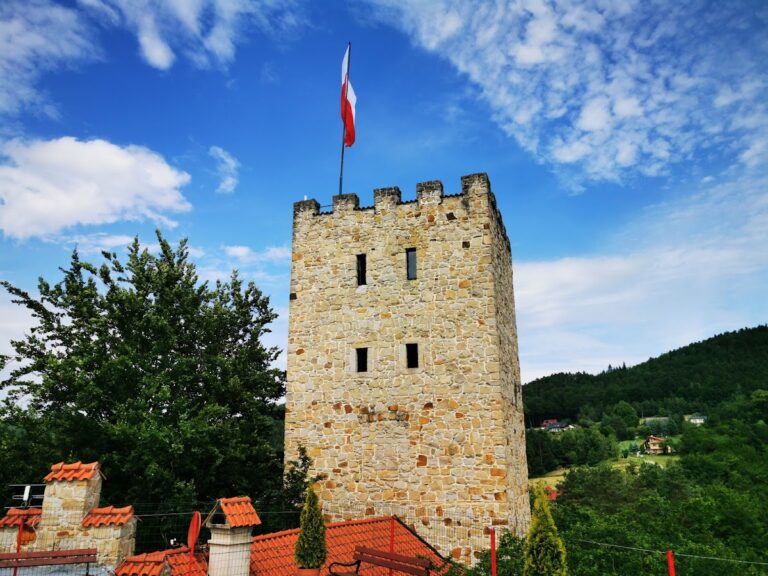
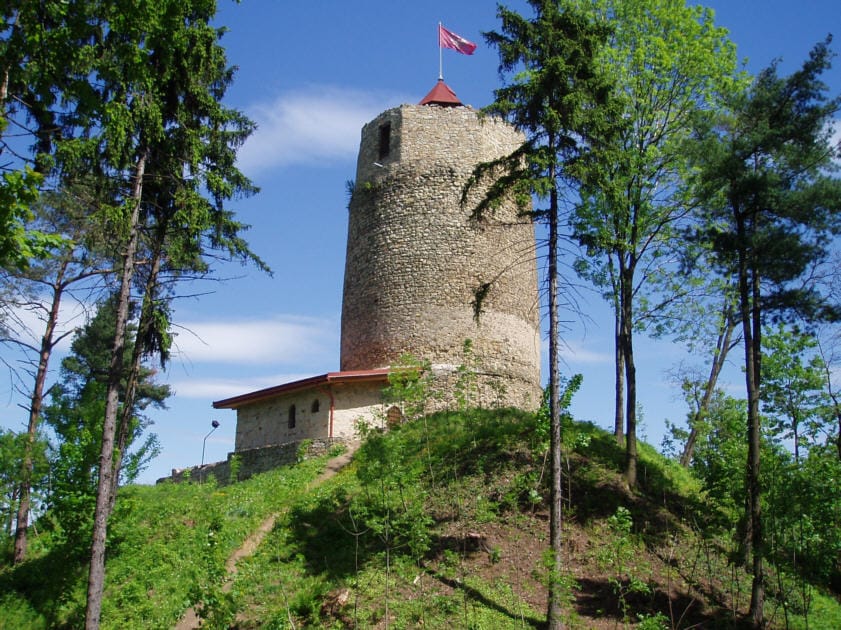
The surviving castle fabric consists mainly of a partially ruined sandstone tower and exposed foundations belonging to the former enclosing walls. The complex stood on the hill known as Baszta nad Dunajcem above the Dunajec River. Its principal defensive structure occupied the southern part of the castle, while other buildings and the entrance were arranged around the perimeter.
Defensive tower
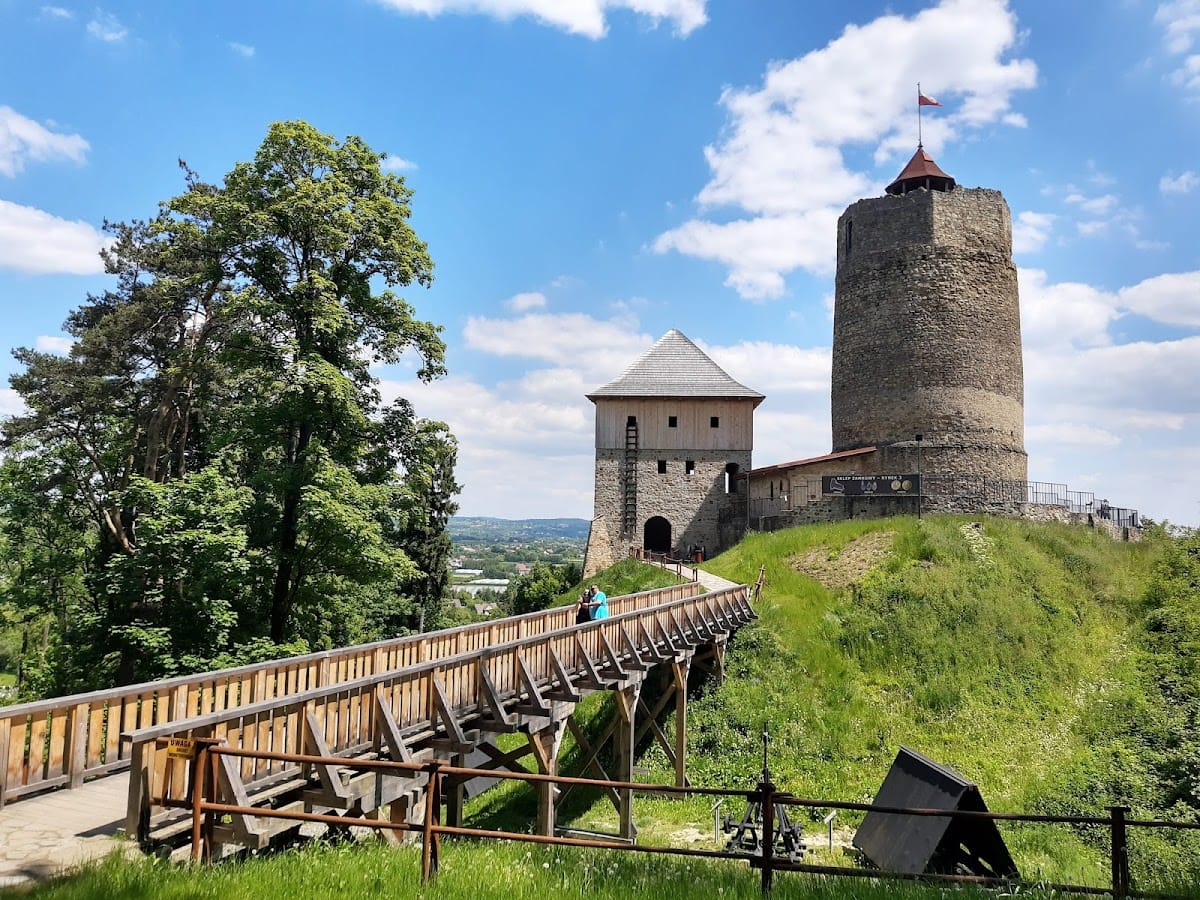
The main tower was a free-standing cylindrical structure about 20 metres high and 12.5 metres in diameter. It was built of sandstone, and its upper part was octagonal. Although the upper storey has been destroyed, the octagonal form remains visible in the surviving structure. Several metres above ground level, an opening marks the original entrance, which was reached by wooden stairs. The tower later served as a prison before becoming the principal surviving ruin of the castle.
Walls, entrance, and residential buildings
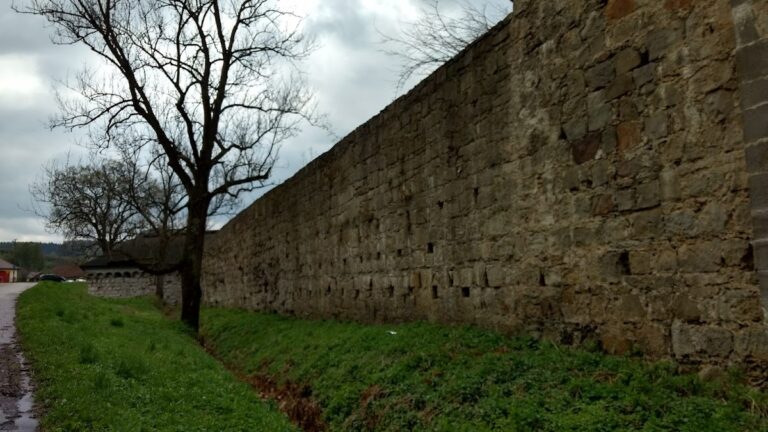
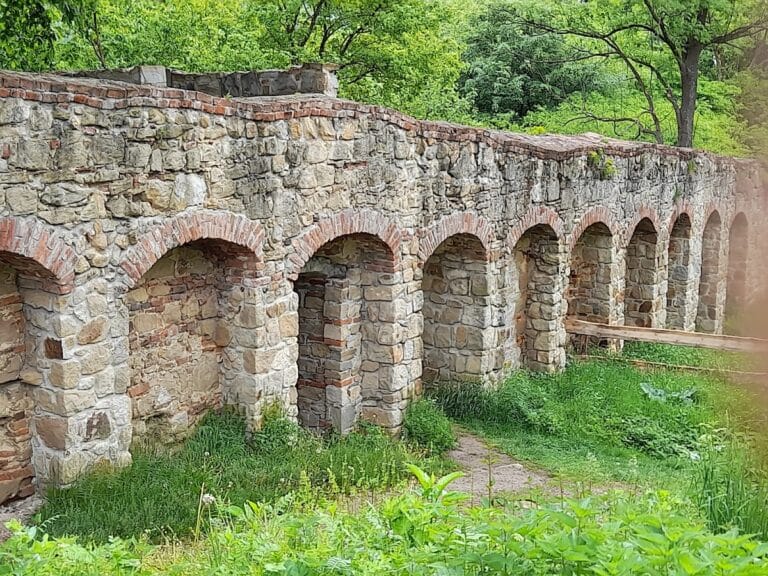
A perimeter wall enclosed the castle hill. It was between 1.2 and 2 metres thick, and sections of its foundations have been exposed through archaeological work. A gate tower stood in the eastern part of the wall and formed the entrance to the complex. Beside the north-eastern curtain wall stood the residential building used by the Czchów starostas. A rectangular vestibule or entrance hall adjoined the tower on its southern side. A plan for partial reconstruction of the ruins has been developed.