Welsperg Castle: A Medieval Hilltop Fortress in Italy
Site at a Glance
- Rating
- 4.4
- Popularity
- Low
- Country
- Italy
- Primary era
- Medieval
- External website
- Open
- Eras represented
- Medieval, Early Modern
- Civilizations
- Habsburg, Holy Roman Empire
- Site type
- Military
- Remains
- Castle
On this page10 sections
History
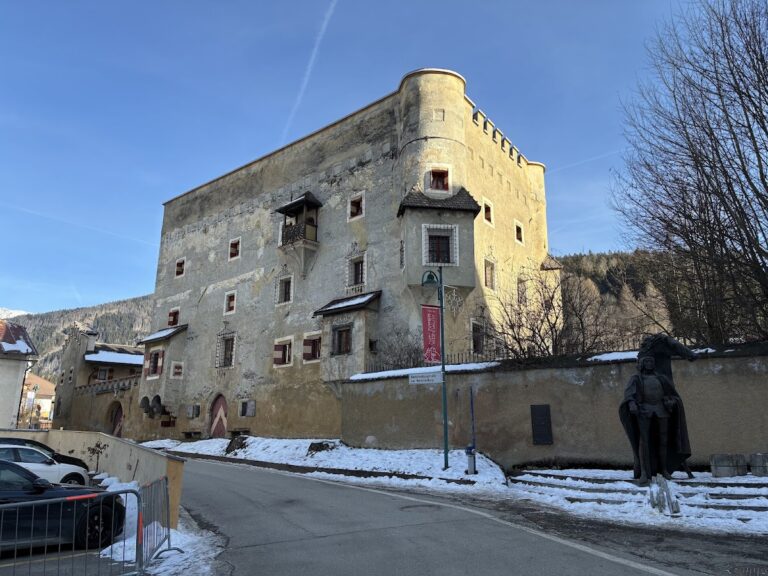
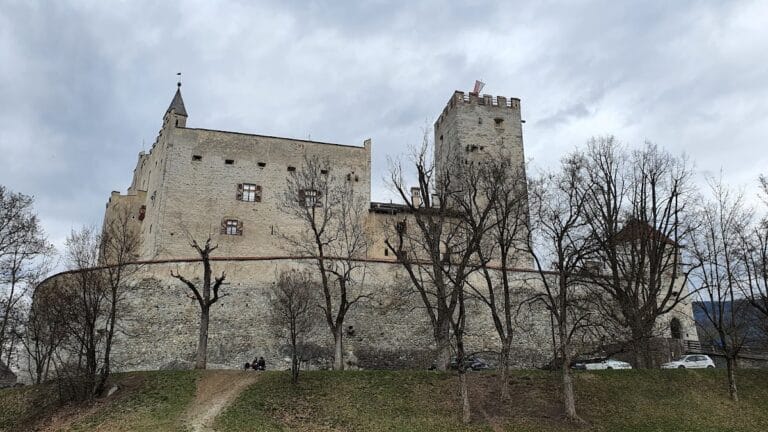
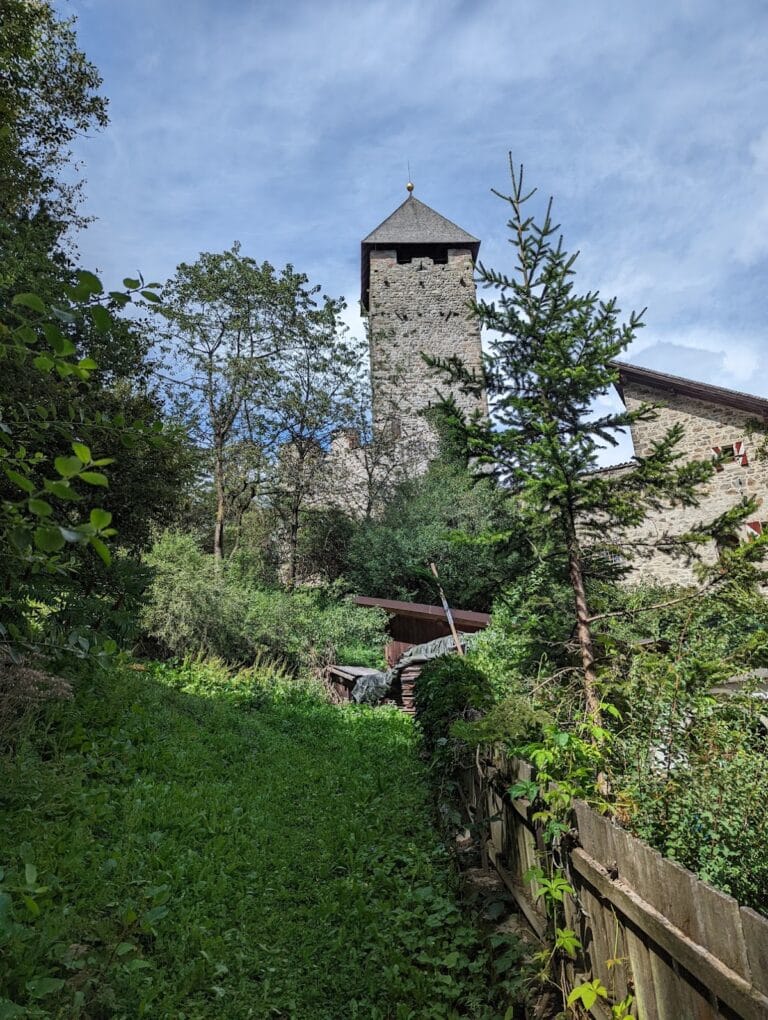
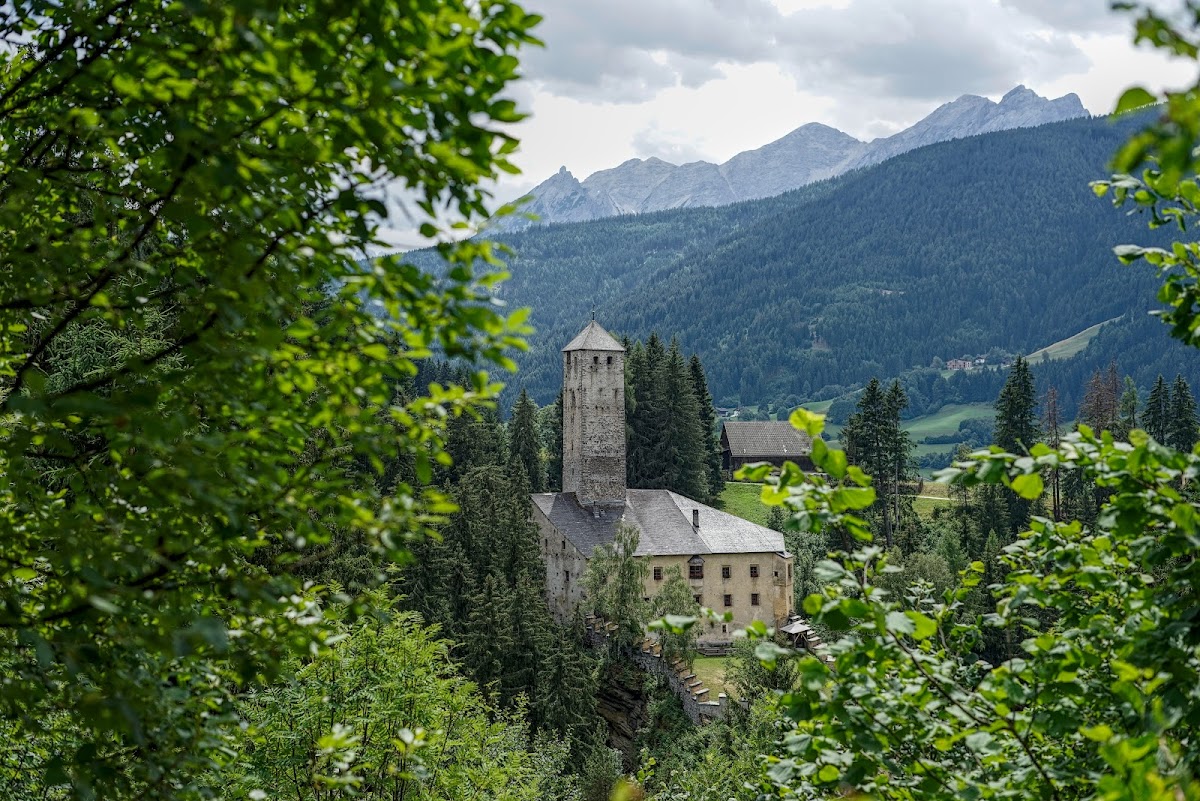
Welsperg Castle is a medieval hilltop fortress in Italy, just north of Welsberg in Monguelfo-Tesido, at the entrance to the Gsies Valley. Its unusually tall keep was built between 1126 and 1140 for the brothers Schwikher and Otto von Welsperg. The Welsperg family served as under-bailiffs, officials exercising delegated administrative or judicial authority, for the Counts of Gorizia and Tyrol, territorial ruling houses whose authority extended across parts of the eastern Alps.
The rise of the Welsperg family
The family expanded its wealth and influence through advantageous marriages, trade, mining, and administrative work. In 1359, Georg von Welsperg acquired the nearby Thurn Castle, extending the family’s power on the opposite side of the Gsieser Bach.
Welsperg Castle was considerably enlarged between the late fifteenth and early sixteenth centuries. The family reached its greatest influence under Baron Guidobold von Welsperg, who served as chamberlain and adviser to Leopold I, the Habsburg emperor of the Holy Roman Empire from 1658 to 1705. In 1693, Leopold elevated Guidobold to the rank of count.
Fire, decline, and preservation
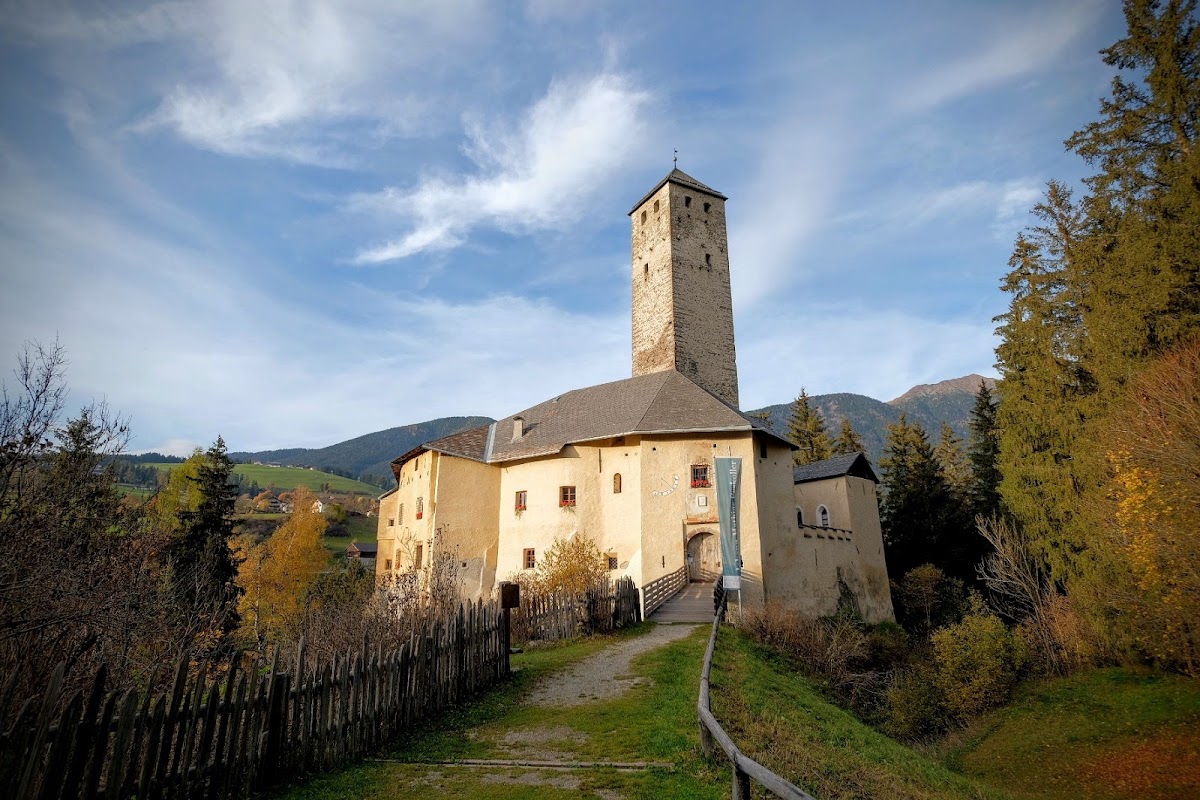
A fire in 1765 destroyed much of the castle complex, including sections of the residential palace and service buildings. The palace roof was later lowered to its present height during renovation. Welsperg Castle soon lost its importance and ceased to be inhabited.
The Welsperg family died out with Heinrich Karl, Count von Welsperg, in 1907. The property then passed to a branch of the Counts of Thun-Hohenstein, which adopted the name Thun-Hohenstein-Welsperg. The castle remains privately owned by Georg Siegmund, Count von Thun-Hohenstein-Welsperg. Since 1987, the Kuratorium Schloss Welsperg, a cultural association founded on the initiative of Josef Sulzenbacher, has maintained and managed the property. Its aims include restoring and revitalizing the rooms and keep while combining tradition with innovation. Welsperg Castle is a protected monument in South Tyrol.
Remains
Welsperg Castle occupies a rocky hilltop spur or plateau at approximately 1,144 metres above sea level, just north of Welsberg and above the Gsieser Bach. The steep drop toward the stream strengthened the site’s natural defensive position. The complex developed around the tall original keep, with a residential palace, service buildings, and a Romanesque chapel added soon afterward. Later expansion reshaped the fortress between the late fifteenth and early sixteenth centuries.
Principal buildings
Keep
The oldest surviving part of the castle is its unusually tall, slender keep, constructed between 1126 and 1140. A keep was the principal fortified tower of a castle, serving as both a stronghold and a residence. Its elevated position formed the central defensive element of the complex.
Residential palace
The residential palace was added soon after the keep as the main living and representative building of the castle. It was enlarged as the wider complex expanded during the late fifteenth and early sixteenth centuries. The 1765 fire destroyed part of the palace, and its roof structure was subsequently lowered to the height seen today.
Service buildings
Service buildings formed part of the early castle complex and were also expanded during the later medieval and early modern enlargement. The fire of 1765 destroyed substantial portions of these buildings, after which the surviving complex was renovated.
Romanesque chapel
A chapel in the Romanesque style was added soon after the keep. Romanesque architecture, the medieval style that preceded Gothic architecture, is associated with massive masonry, rounded arches, and relatively small openings.
Relationship to Thurn Castle
Thurn Castle stands on a hill directly opposite Welsperg Castle, across the Gsieser Bach. Georg von Welsperg’s acquisition of Thurn Castle in 1359 connected the two fortifications with the wider expansion of the family’s power.