Fürstenburg: A Medieval Castle and Agricultural School in Italy


Site at a Glance
- Rating
- 4.3
- Popularity
- Low
- Country
- Italy
- Primary era
- Medieval
- Eras represented
- Medieval, Modern
- Civilizations
- Holy Roman Empire
- Site type
- Military
- Remains
- Castle
On this page6 sections
History
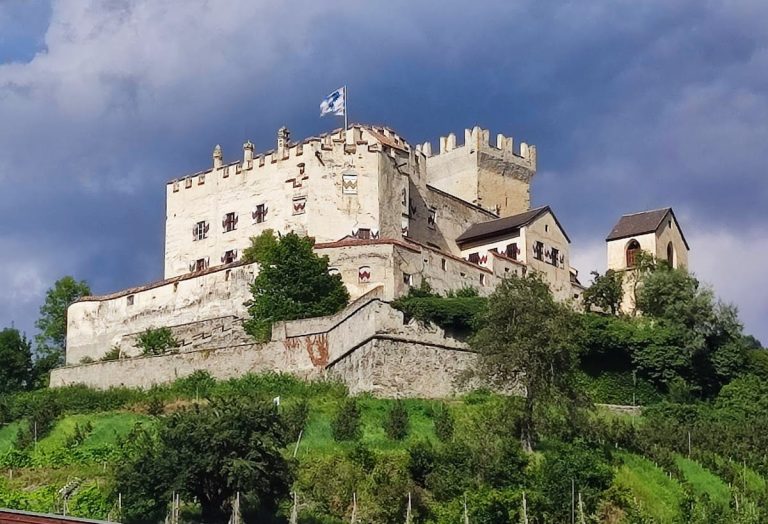
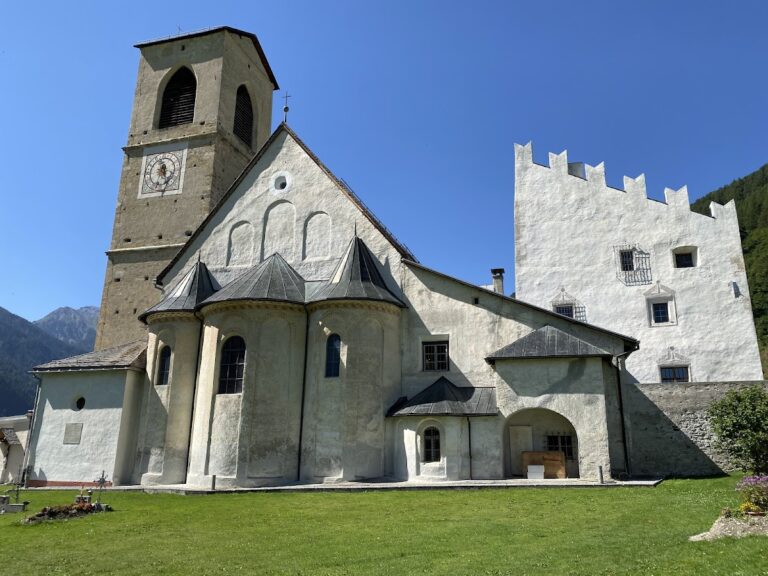
Fürstenburg is a medieval castle near Burgeis in South Tyrol, Italy, erected between 1272 and 1282 as the seat of the prince-bishops of Chur. A prince-bishop was a bishop who also held secular territorial power. The castle’s first documented mention dates to 1292, in a document signed by Berthold von Heiligenberg, and it was probably built where earlier structures had stood.
Seat of the prince-bishops
Until the secularization of ecclesiastical property in 1803, Fürstenburg administered the Chur princes’ possessions in the Upper Etsch Valley and the Münstertal. The Upper Etsch Valley is the upper valley of the Adige River, while the Münstertal adjoins the Vinschgau Valley to the west. Administration at the castle included collecting money and payments in kind from dependent inhabitants and subjects.
Administrative and institutional changes
During Bavarian rule over the Princely County of Tyrol from 1806 to 1814, Fürstenburg became the seat of the district court for the Upper Vinschgau, the upper part of the Vinschgau, or Venosta, Valley. After the territory returned to Austria, the castle housed an imperial-royal revenue office until 1850. The municipality of Burgeis acquired it in 1859. Across its later history, the complex also served as an emergency shelter, barracks, prison, and brewery.
Restoration and reconstruction took place during the sixteenth and seventeenth centuries. In 1952, Fürstenburg became the home of the German-language Fürstenburg Vocational School for Agriculture and Forestry, which continues to use the castle. A sudden collapse of part of the tower in 1996 led the school’s then-director, Georg Flora, to initiate a comprehensive renovation and modernization overseen by architect Werner Tscholl.
Remains
Castle complex and setting
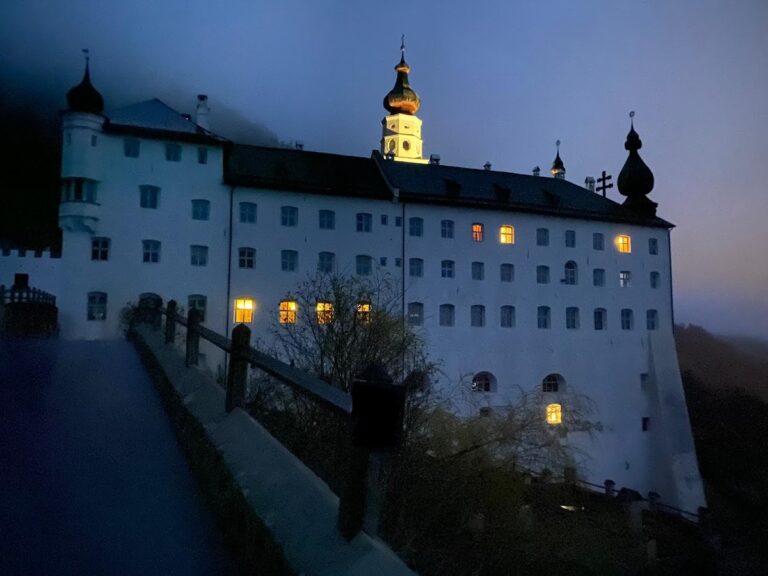
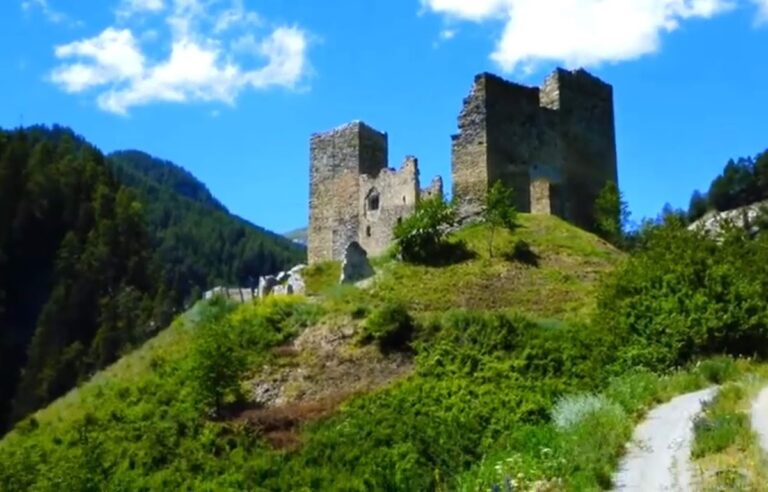
Fürstenburg stands at approximately 1,200 metres above sea level in the valley below Marienberg Abbey, a Benedictine monastery overlooking the castle. The medieval complex includes a single square tower and was probably constructed on the site of pre-existing buildings. Its surviving form therefore combines the medieval castle layout with the changes made during later periods of use.
Twentieth-century intervention
The 1996 work renovated and modernized the entire complex after the partial tower collapse. The intervention avoided irreversible alteration of the existing structure, adding architectural elements and extensions rather than replacing the historic fabric wholesale. The present castle consequently accommodates the vocational school while retaining the earlier building structure.