Neurasen Castle: A Medieval Stronghold in Italy
Site at a Glance
- Popularity
- Very Low
- Country
- Italy
- Primary era
- Medieval
- Eras represented
- Medieval, Early Modern
- Civilizations
- Holy Roman Empire
- Site type
- Military
- Remains
- Castle
On this page7 sections
History
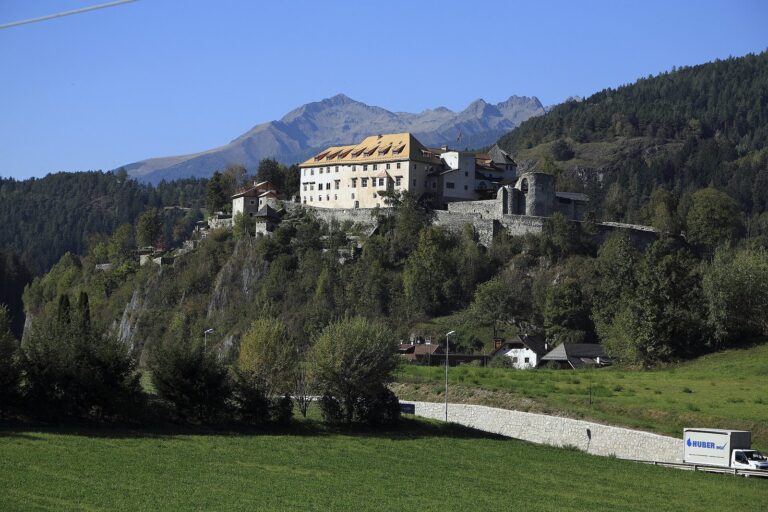
Neurasen Castle, near Oberrasen at the entrance to the Antholz Valley in Italy, is a stronghold built around 1230 by the Lords of Rasen. The family served the prince-bishops of Brixen as ministerials, retainers who could gain land and knightly standing through service; the bishops combined church office with rule over a territory. Construction is attributed to Ulrich of Rasen. Also known as Castelnuovo Rasun and, in older usage, St. Anastasienberg, the castle was built across the valley from the family’s ancestral Altrasen after its main branch lost possession of that stronghold.
Thirteenth-century conflict
A branch of the Rasen family that favored the Counts of Tyrol took control of Altrasen, setting it against Ulrich. During the ensuing feud, Ulrich seized Rudolf of Rasen, who held Altrasen. Egno of Eppan mediated a settlement involving a ransom, after which Rudolf was released.
A peace agreement in 1241 ordered the demolition of Neurasen and five other castles, but Neurasen survived. The reason is uncertain: its lords may have defied the order, or the opposing parties may have cooperated in preparation for a possible Mongol invasion.
Episcopal ownership and rebuilding
A feud between the prince-bishopric of Brixen and the Counts of Gorizia brought Neurasen’s destruction in 1325. It was rebuilt soon afterward, and in the mid-fourteenth century ownership passed by sale to the bishop of Brixen. During the second half of that century, the castle was held as a fief, property granted in return for service or loyalty, by the castle governors of Lienz and Lueg. A dispute with Count Meinhard of Gorizia followed. After conflict and mediation by Berthold of Gufidaun, the castle remained in the bishop’s possession.
Renovation and abandonment
In 1499, Bishop Melchior von Meckau ordered extensive renovation as Turkish incursions into the Puster Valley were feared. The castle was later granted as a fief several times. In 1522 it went to Stefan Lercher, secretary to the bishops of Brixen, who surrendered it in 1541 because of his substantial debts. The Welsperger family subsequently held the castle but neglected it. It was no longer inhabited from the beginning of the seventeenth century and became a ruin; after 1650 it was not granted as a fief again.
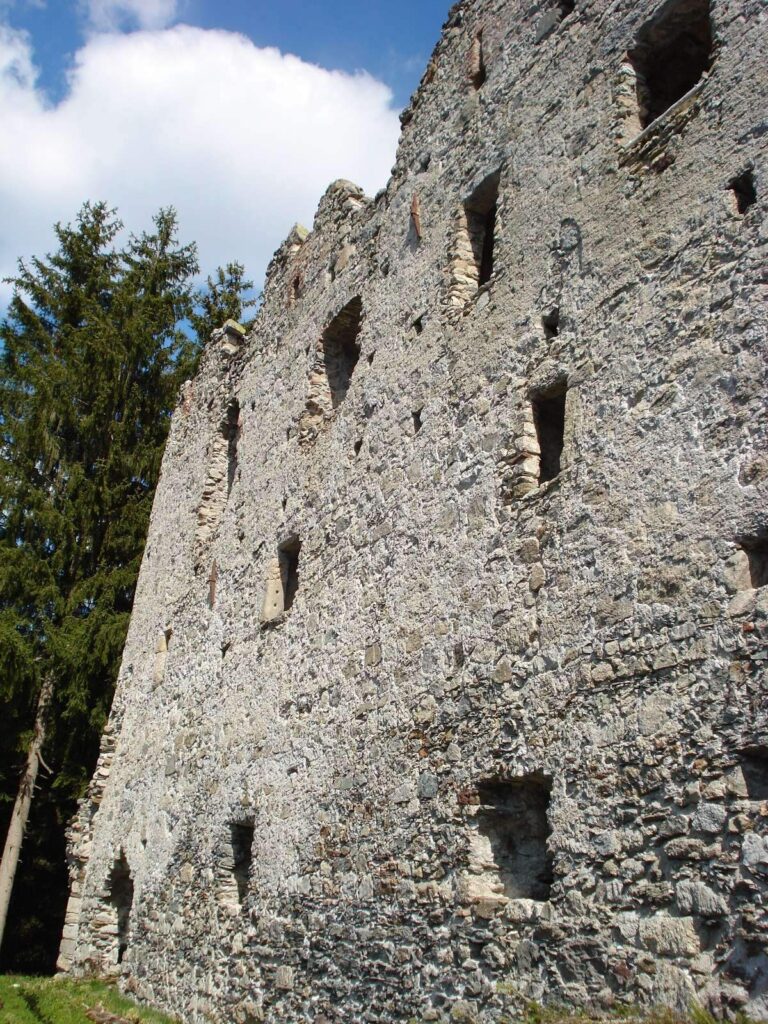
Between 2000 and 2004, the remaining walls were secured and restored.
Remains
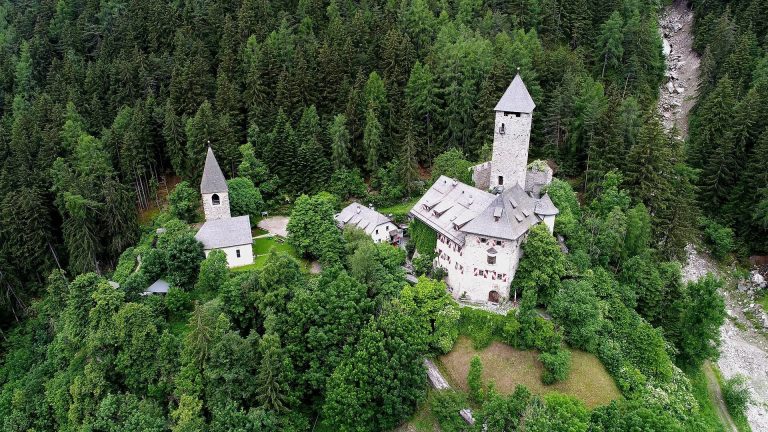
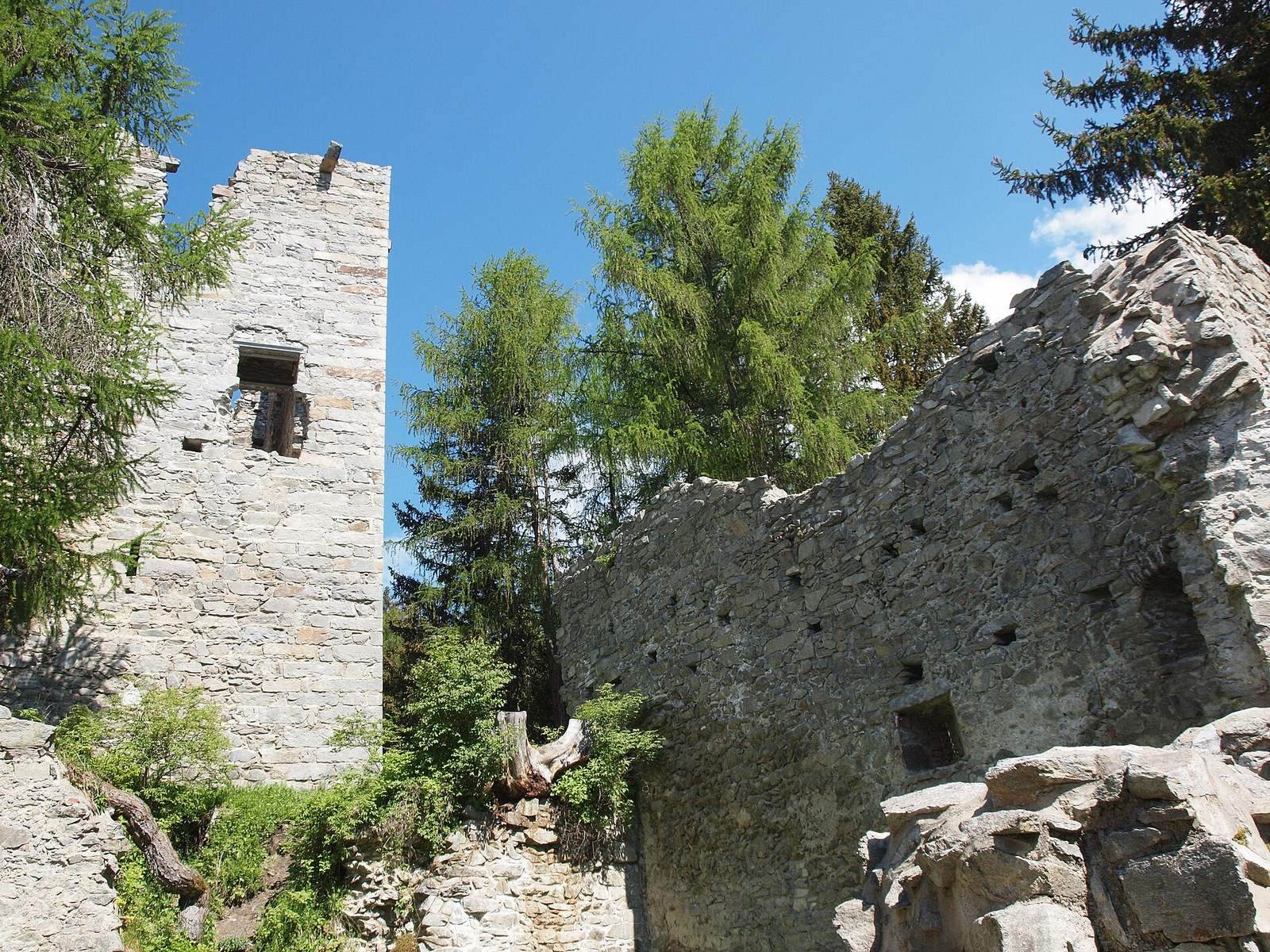
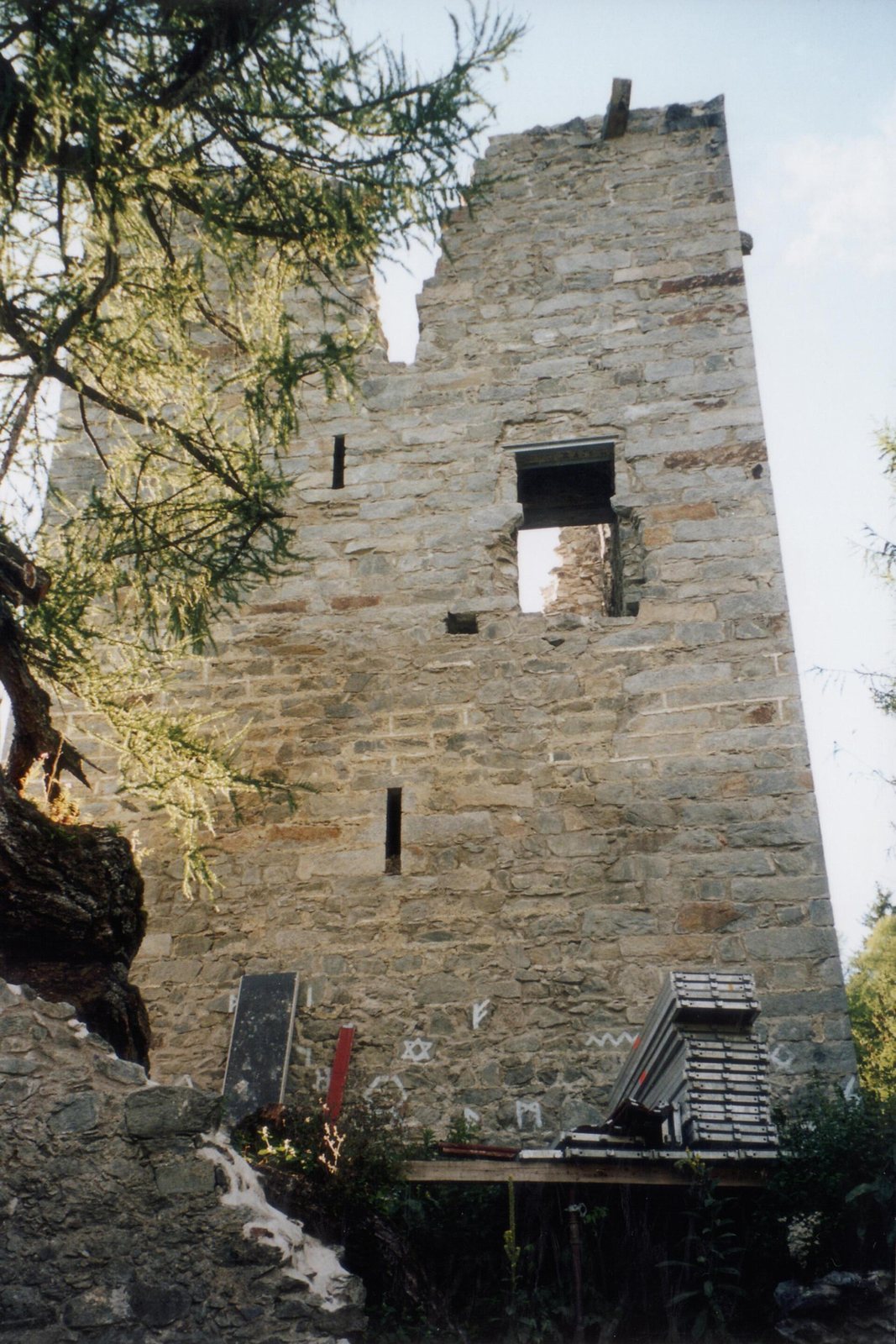
The castle stands at 1,345 metres above sea level in woodland on a rise on the western side of the valley, with steep slopes on three sides. Its surviving remains include parts of a tower, most of the perimeter wall, an outer defensive enclosure and gate, much of the eastern residential wing, and a cistern.
Tower and defenses
The square tower rises about 17 metres and measures 9.70 by 9.20 metres at its base, with walls around 2 metres thick. It and parts of the perimeter wall date to the fourteenth-century rebuilding. The tower then had five storeys and served as a residence, with some rooms panelled. Tradition holds that a wooden bridge crossed an artificially made ditch to reach the outer defensive enclosure and its gate.
Eastern residential wing
The castle reached its greatest extent through enlargement in the late fifteenth or early sixteenth century. A new three-storey residential wing was added on the east side, and the surviving parts of the castle date from this phase. A description from 1603 places a kitchen, pantry, and chamber on the wing’s ground floor, with a panelled room and hall above. An old stone sink preserved in the eastern part marks the kitchen’s location.