Gate of Bibarrambla: A Nasrid City Gate in Granada
Site at a Glance
- Popularity
- Medium
- Country
- Spain
- Primary era
- Medieval
- Eras represented
- Medieval, Early Modern
- Civilizations
- Crown of Castile, Nasrid, Spanish
- Site type
- Military
- Remains
- Gate
On this page8 sections
History
Nasrid origins
The Gate of Bibarrambla was a city gate in Granada, Spain, and formed part of the walled medina, the historic enclosed center. Its construction is attributed to the Nasrid period, when Granada was ruled by a Muslim dynasty from the thirteenth to the fifteenth centuries, and to Yusuf I, a Nasrid sultan who reigned from 1333 to 1354.
The name Bibarrambla derives from the Arabic Bab al-Ramla, meaning “Gate of Sand” or “Gate of the Sandbank.” The later nickname “Arch of the Ears” has two traditional explanations. One links it to the display of ears and other body parts taken from executed criminals. Another associates it with an incident during Philip IV’s reign, when a crowded floating platform sank and people mutilated the ears of drowned women as they tried to take their earrings.
Christian adaptations
In 1507 the gate was adapted for worship. A Catholic monarch had a painting of Our Lady of the Rose placed on the second arch, possibly during the monarchs’ visit to Granada. Such images were intended to Christianize prominent features of Muslim architecture and present the religion of the newly conquered city to visitors.
Demolition and reconstruction
The gate became a national monument during the nineteenth century, but Granada’s city council ordered its demolition between 1873 and 1884 as part of modernization plans. A preservation campaign supported by the Spanish president of the time did not reverse the decision. Scottish artist David Roberts helped record the gate’s former appearance, and its surviving pieces were kept in the Archaeological Museum of Granada after demolition. In 1935, Leopoldo Torres Balbás, the architect and conservator responsible for the Alhambra, carried out a partial reconstruction in the Alhambra Woods.
Remains
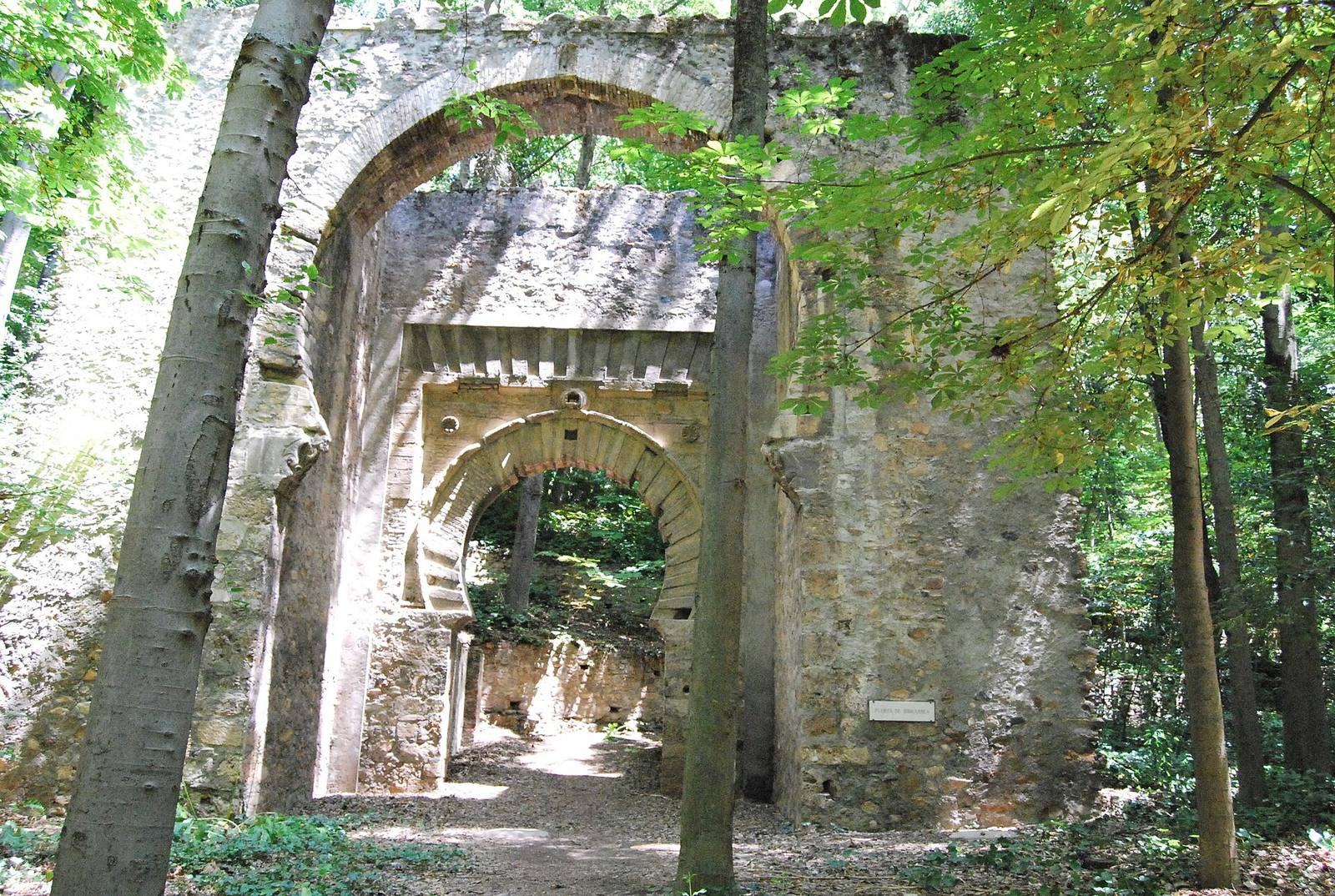
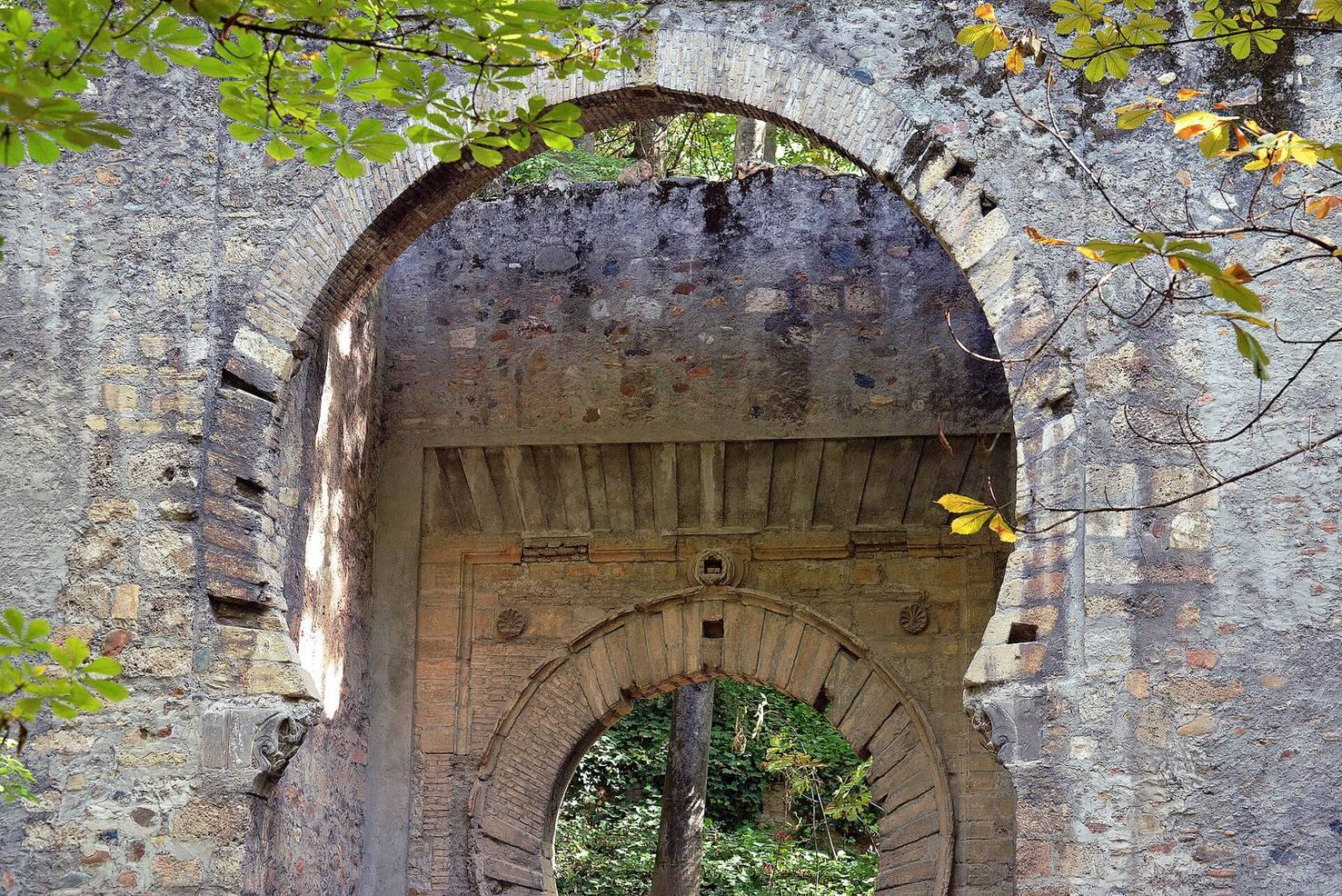
The gate stood at the corner of Plaza de Bibarrambla, with three arches arranged within a square tower. Rammed earth formed most of the structure, while stone was used for some elements. Its design had a comparatively elegant line because it was not primarily a military or defensive building.
Tower, arches, and balcony
The tower stood 10 or 11 metres high. Its large outer horseshoe arch was built from wedge-shaped blocks of Sierra Elvira stone. A balcony crowned the structure. The gate also had a machicolation (a projecting structure with openings for dropping objects), which was later adapted as part of the chapel.
Chapel and painted image
The machicolation was closed to form a chapel. A platform was set beneath the wedge-shaped blocks of the first arch, and an opening allowed the image to be seen from the plaza. The painting of Our Lady of the Rose showed Mary with the infant Jesus, who held the flower that gave the image its name. The kings’ initials appeared at its sides. Its late Spanish-Flemish style combined Spanish and Flemish influences, with Gothic features in the small angels’ angular wings and more naturalistic faces for Mary and Jesus.
Reconstructed portion
The partial reconstruction stands in the Alhambra Woods on Sabika Hill, on the approach to the Alhambra. Many features of the original gate were lost, so the present structure preserves only part of its former appearance.