Pont du Diable: An 11th-Century Bridge in Hérault, France
Site at a Glance
- Popularity
- Medium
- Country
- France
- Primary era
- Medieval
- Eras represented
- Medieval, Early Modern
- Civilizations
- French
- Site type
- Infrastructure
- Remains
- Bridge
On this page5 sections
History
Construction and agreement
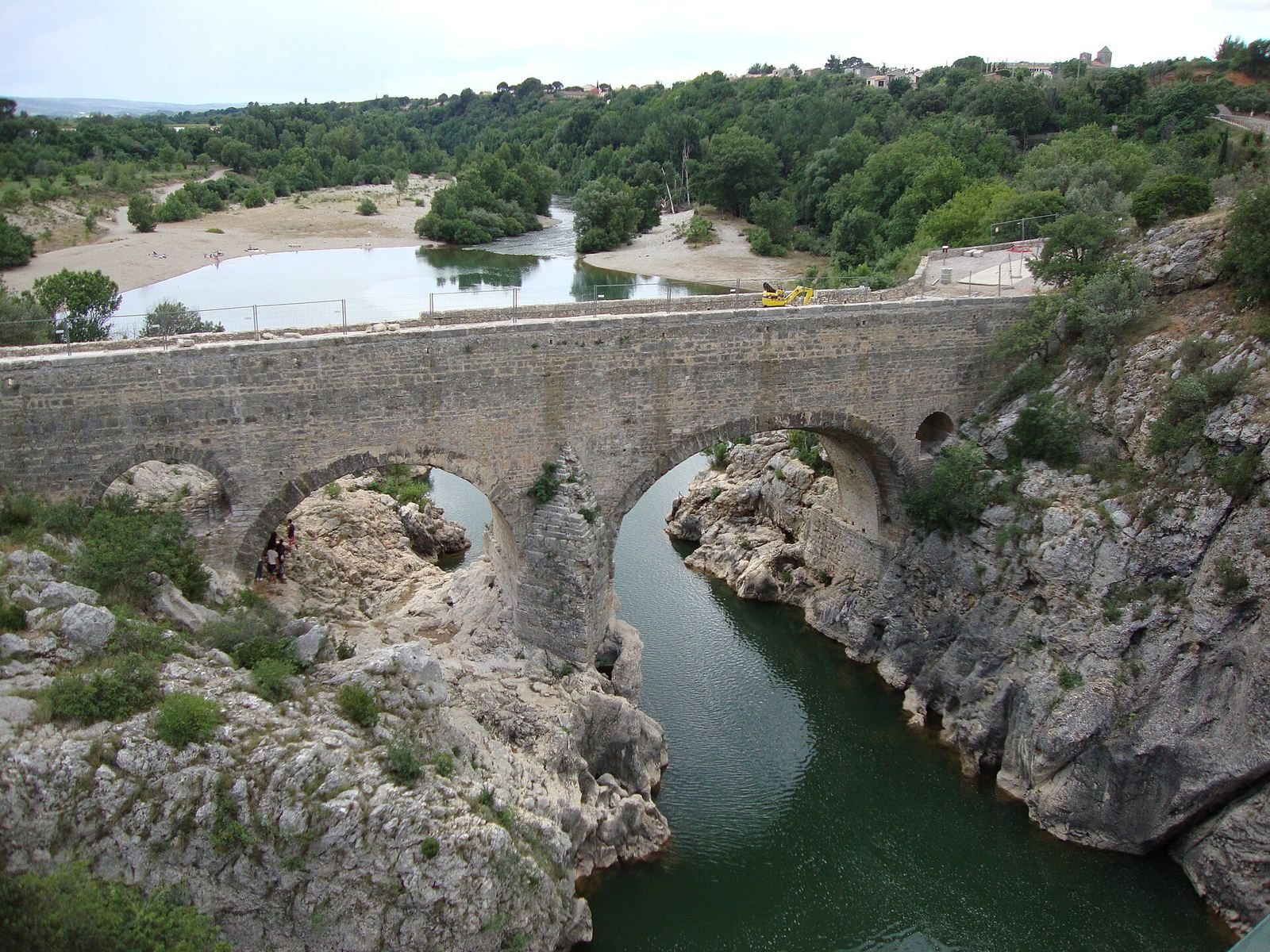
The Pont du Diable, or Devil’s Bridge, is a Romanesque stone bridge over the Hérault River between Saint-Jean-de-Fos and Aniane in France. Benedictine monks built it in the first half of the 11th century to connect the abbeys of Aniane and Gellone. Romanesque architecture is a medieval style known for rounded arches and substantial masonry. The bridge is regarded as one of France’s oldest medieval bridges.
A cartulary, a medieval collection of copied charters and legal records, from Gellone gives 1025–1031 as the probable construction period. An agreement drawn up between Pons, abbot of Aniane, and Geoffroy, abbot of Gellone, is dated to 1036–1048. It divided the building work equally between the abbeys and barred them from fortifying the bridge, adding a church, or charging people to cross.
Pilgrimage and legend
For centuries, pilgrims crossed the bridge on their way from Aniane’s monastery, founded around 780 by Benedict of Aniane, to the tomb of William of Gellone. William, a Frankish count venerated as a Christian saint, was canonized in 1066, after which pilgrimage to his tomb increased. The settlement of Gellone later took the name Saint-Guilhem-le-Désert, and the tomb became an important stop on the Via Tolosana, one of the French routes to Santiago de Compostela.
A second version of the medieval French epic Moniage Guillaume, written around 1160, gives the bridge’s construction to Guillaume d’Orange, a legendary hero. In the story, the devil destroys each day’s work overnight. The builders promise him the first soul to cross, then send a cat over the bridge. The devil, thwarted and furious, fails to destroy it and falls into the river. The tale offers a legendary explanation for the name Pont du Diable.
Modern use and recognition
Motor vehicles have been barred from the bridge since 1932, and it is now used by pedestrians. France designated it a protected historic monument in 1935. In 1998, it became part of the UNESCO World Heritage listing for the Routes of Santiago de Compostela in France.
Remains
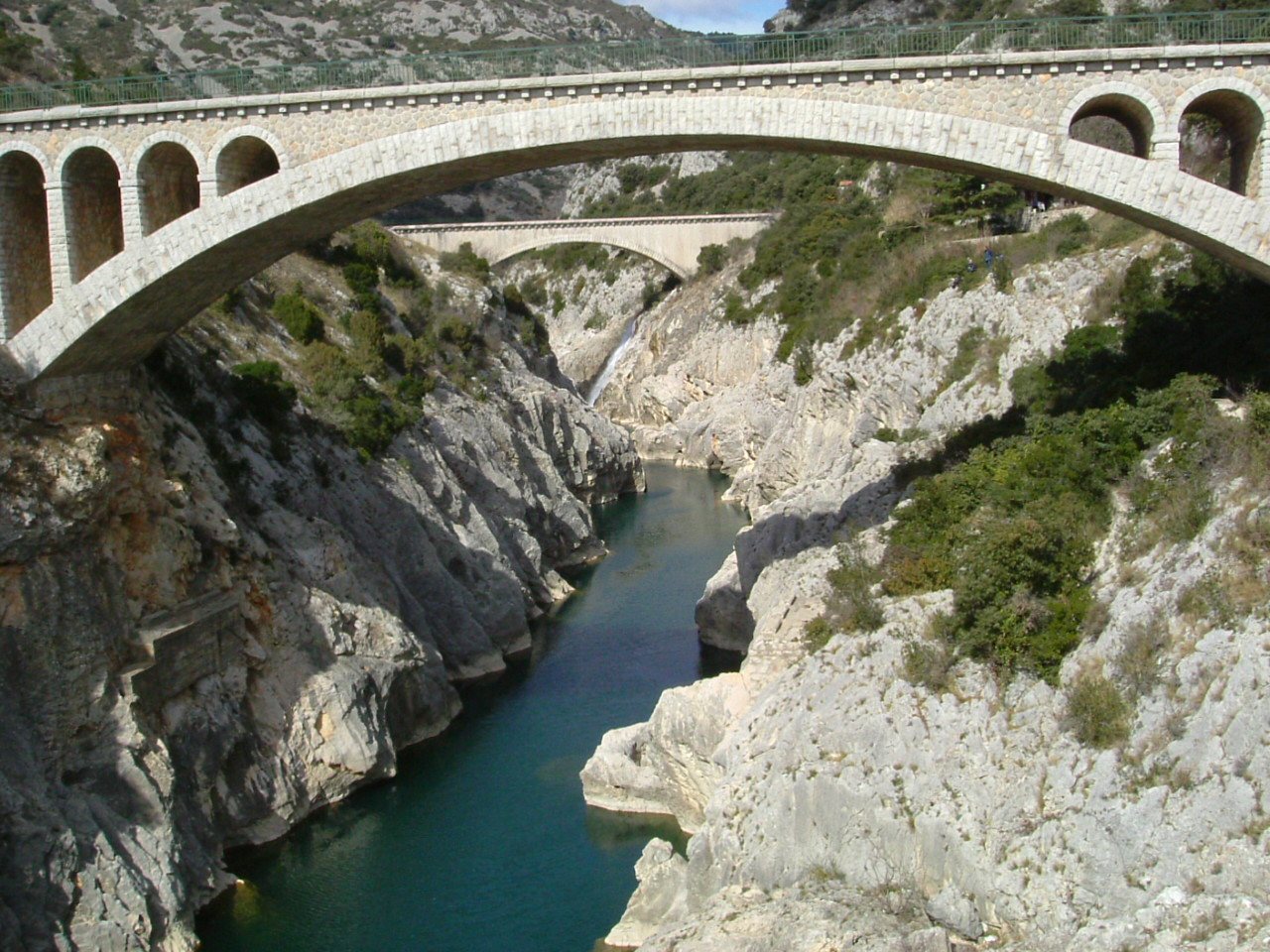
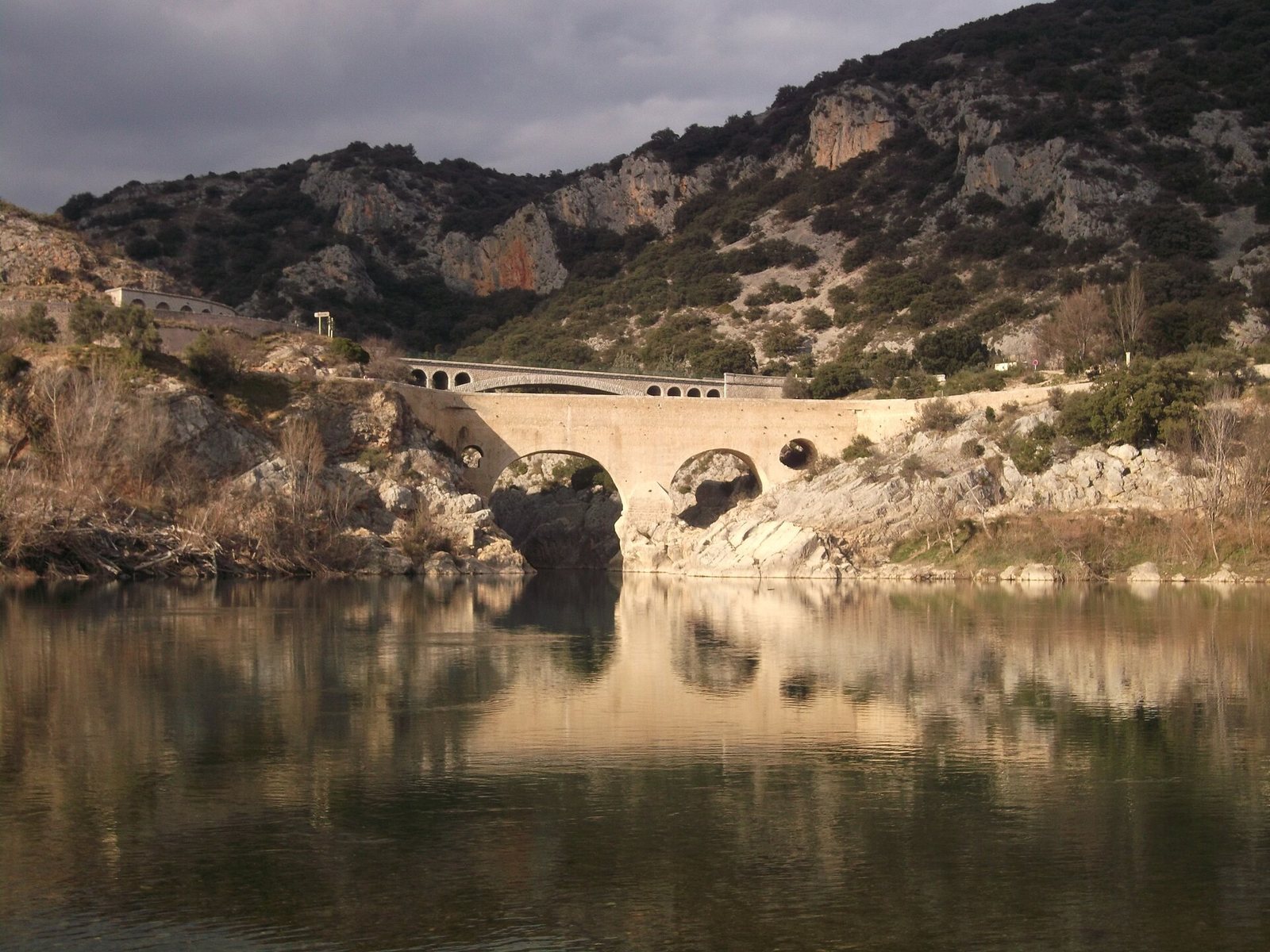
The stone bridge crosses the Hérault at the end of a steep-sided gorge, about 4 km northwest of Aniane. It measures 65 m long, 4 m wide, and 18 m high. Its Romanesque structure has two large semicircular arches and two additional openings.
Around 1770, the bridge was widened and raised by several metres, while retaining its original form. A newer bridge stands nearby, with an aqueduct associated with the vineyards of Saint-Jean-de-Fos in its surroundings.