Viničko Kale: A Fortified Settlement in North Macedonia
Site at a Glance
- Popularity
- Medium
- Country
- North Macedonia
- Primary era
- Classical
- Eras represented
- Classical, Medieval
- Civilizations
- Byzantine, Roman
- Site type
- Military
- Remains
- Fortified Town
On this page15 sections
History
Viničko Kale is a fortified settlement on a hill southwest of Vinica, North Macedonia. Occupation extended from the Neolithic, when farming and settled communities became widespread, into the High Middle Ages. Most of its architectural remains date to Late Antiquity, the later centuries of the Roman world and the transition to the early Middle Ages.
Early settlement and fortification
A fortified settlement took shape here in the fourth century. It lay on an ancient economic route linking the cities of Stobi, Pautalia, and Serdica. The site’s ancient identity remains uncertain: it may have been Armonia or Kelenidin. Written records identify Kelenidin as an episcopal see, or bishop’s seat, and archaeologist Ivan Mikulčić proposed that the small fortress may have developed into an episcopal center.
Late Antiquity
In the sixth century, fire damaged and destroyed buildings at the settlement. Coins of the Byzantine emperor Justin II, dated 569–570, were found at the site. These remains and successive building works reflect periods of growth and decline during the settlement’s history.
Medieval occupation
The site continued in use during the Middle Ages, when its defenses were rebuilt and a cemetery served the community. Grave goods include jewelry from burials dating between the tenth and thirteenth centuries.
Archaeological investigation and heritage status
Miodrag Grbić studied the site in 1954 under the name Gradishte, followed by further work from Milutin and Draga Garašanin in the late 1950s. Interest grew in 1978, when archaeologist Tsone Krstevski brought five terracotta relief fragments to the Museum of Macedonia. Excavation began in 1985 as rescue work before continuing systematically. Work carried on into the twenty-first century under Kosta Balabanov and Krstevski.
Viničko Kale was recognized as Macedonian cultural heritage in 1955, with the decision supplemented in 1992. It was also declared a cultural monument in 1992.
Remains
Hilltop layout and defenses
Terrain and enclosure
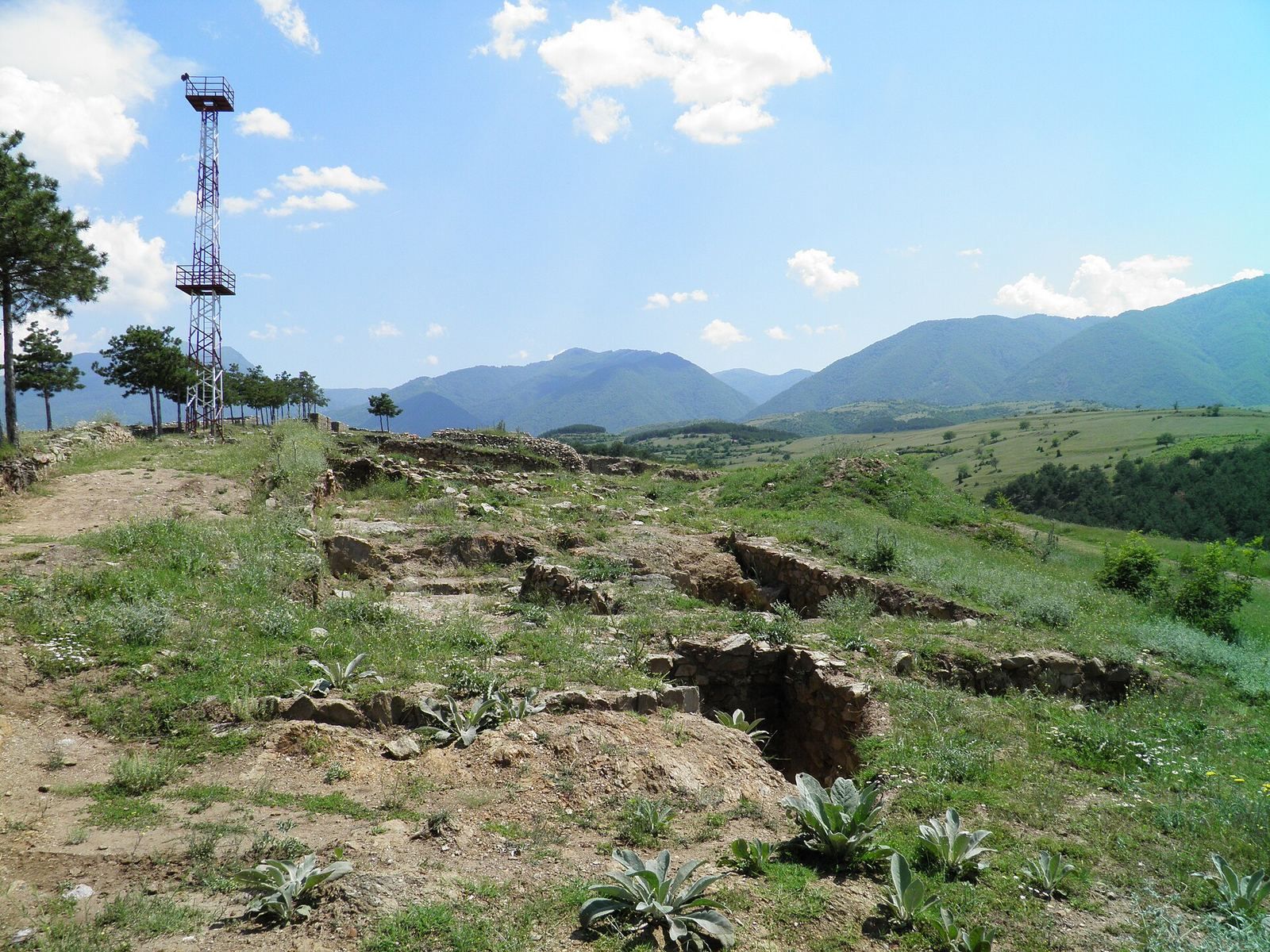
The settlement occupies an irregular hill on the left side of the Grdečka River. Its crest, about 400 metres above sea level, rises roughly 40 to 70 metres above the plain and extends from southeast to northwest. The uneven ridge descends toward the northwest by as much as 10 metres. Steep slopes protect most sides, while a broad, deep artificial ditch cuts off the southeastern approach; a defensive cut crosses the southern saddle. Ruins cover about 2.5 hectares, roughly 250 by 150 metres, while surface remains indicate settlement also spread onto the slopes and nearby low hills. The elevated position overlooks Vinica and the Bregalnica valley.
Fortifications and upper town
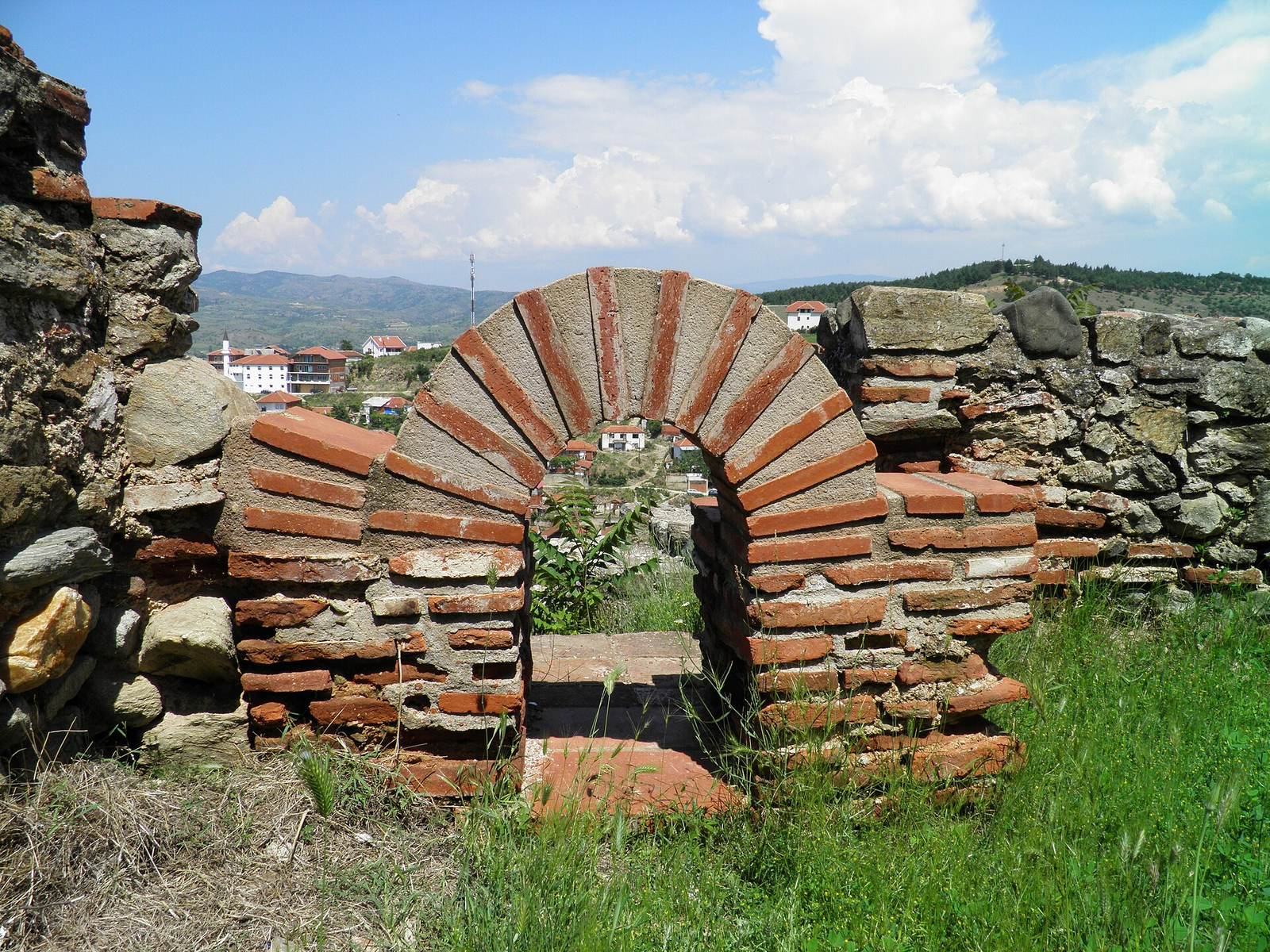
The fourth-century defensive wall was built from rubble stone bonded with lime mortar and measured about three metres thick. Excavation exposed part of it with a semicircular tower. In the sixth century, builders renewed the wall and its forward tower, then added another tower with an entrance through it on the southeast side. The upper town, in the southern part of the enclosure, covered about 0.4 hectares. Its medieval wall used weaker masonry without mortar and incorporated the earlier ruined fortification; the front tower was also renewed. A cemetery occupied the northwest part of this enclosure.
Buildings and worship
Late-antique buildings
Several non-religious buildings stood beside the defensive wall. Their organized roofed walkways, seating benches, and storage rooms suggest varied uses. Walls of stone and lime mortar survive in places to a height of four metres. Some buildings had a water basin, heating furnace, and water-supply installations. Excavations from 1985 to 1990 exposed part of a storehouse, where large storage jars had been set into the ground, and part of a substantial house with a peristyle, a colonnaded courtyard. The house may have served as an episcopal residence.
Church buildings
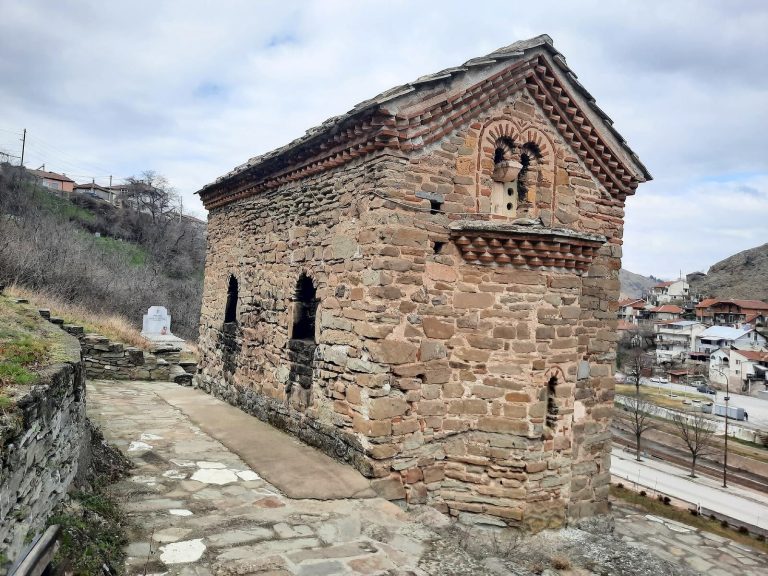
An early Christian basilica, a church with a long central nave often flanked by side aisles, stood at the site and was probably renovated during the Middle Ages. A separate small medieval church near the site’s approximate center survives only as very poorly preserved wall remains; illicit digging for gold had disturbed it. Columns, bases, capitals, paving slabs, and pieces of a chancel screen, which separated the sanctuary from the rest of a church, were found around this church.
Burials and recovered objects
Cemetery and grave goods
Graves in the cemetery yielded jewelry dating from the tenth to thirteenth centuries. One richly furnished tomb, belonging to a woman and dating to the twelfth century, contained nine glass bracelets, four gilded bronze bracelets, eleven bronze rings, several of them gilded, and a bone needle case.
Terracotta reliefs and other finds
Excavators recovered numerous complete and fragmentary terracotta reliefs, raised images formed from fired clay, from rubble between walls. Dating to the fifth or sixth century, they carry Christian imagery and Latin inscriptions for Christian worship. They probably decorated the walls of funerary buildings within the Late Antique complex. Other finds include painted vases and coins of Philip II of Macedon, a fourth-century BC king, as well as pottery fragments and bronze, iron, and bone objects.