Västra Vingåker Church: A Medieval Parish Church in Sweden
Site at a Glance
- Popularity
- Low
- Country
- Sweden
- Primary era
- Early Modern
- Eras represented
- Medieval, Early Modern, Modern
- Civilizations
- Swedish
- Site type
- Religious
- Remains
- Church
On this page7 sections
History
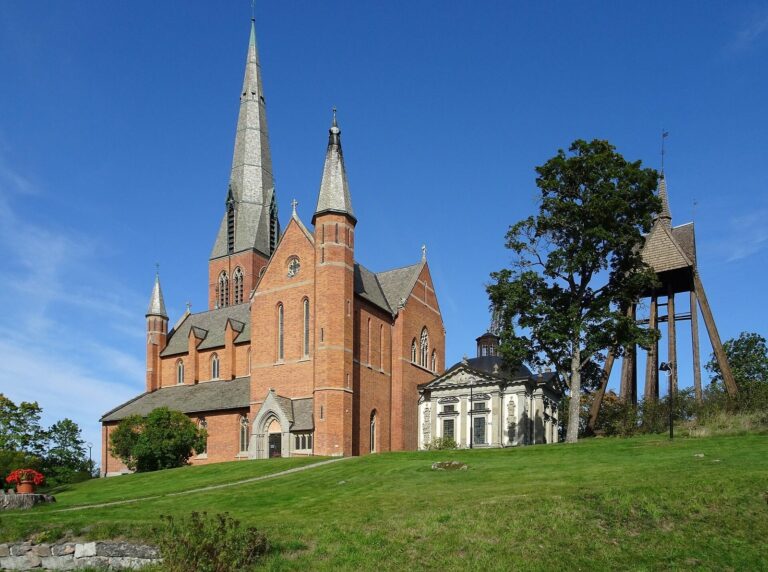
Västra Vingåker Church is a Church of Sweden church in Vingåker, Sweden, where construction began around 1300. It is associated with the Strängnäs Diocese and Västra Vingåkers parish.
Medieval origins
The church was begun around 1300. A porch and tower were added in the fifteenth century, changing the medieval building’s form.
Parish life and church furnishings
After a parish meeting in June 1748, organ builders Jonas Gren and Petter Stråhle were commissioned to make an instrument for 6,000 riksdaler in copper currency. It was inaugurated on 10 September 1749 with vocal and instrumental music. In 1754, Vingåker parish was divided into Västra Vingåkers and Östra Vingåkers parishes. Since 2010, Västra Vingåkers parish has belonged to Katrineholmsbygdens parish.
A later organ was rendered unusable by water during the fire of 1885. Bells also had a history of fire damage: the great bell destroyed in 1885 had been cast from bells lost in a fire in 1827.
Fire and restoration, 1885–1887
On 9 October 1885, lightning ignited the tower spire. Residents formed a bucket brigade to bring water from a nearby stream, containing the fire to the tower and a small part of the church. The effort could not save the three tower bells, and water damaged the organ. In December, the parish ordered three replacement bells weighing 2.1 tonnes, 1.2 tonnes, and 680 kilograms. The smallest was installed on Midsummer Eve 1886, and the middle bell arrived in July. In November, the great bell and apparently the middle bell were dispatched after being cast from the old bells’ metal.
Restoration work on the tower reached its first completed phase in spring 1886. Interior work was delayed while claims to graves inside the church were investigated. The transept galleries were removed and new pews acquired; the graves were to be filled or sealed after 15 August. A replacement organ was contracted in December 1885 and used in May 1887. On 13 November, Bishop Thore Strömberg, assisted by clergy, dedicated the restored tower and interior along with the new organ.
The church underwent extensive renovation and rebuilding in 2011–2012.
Remains
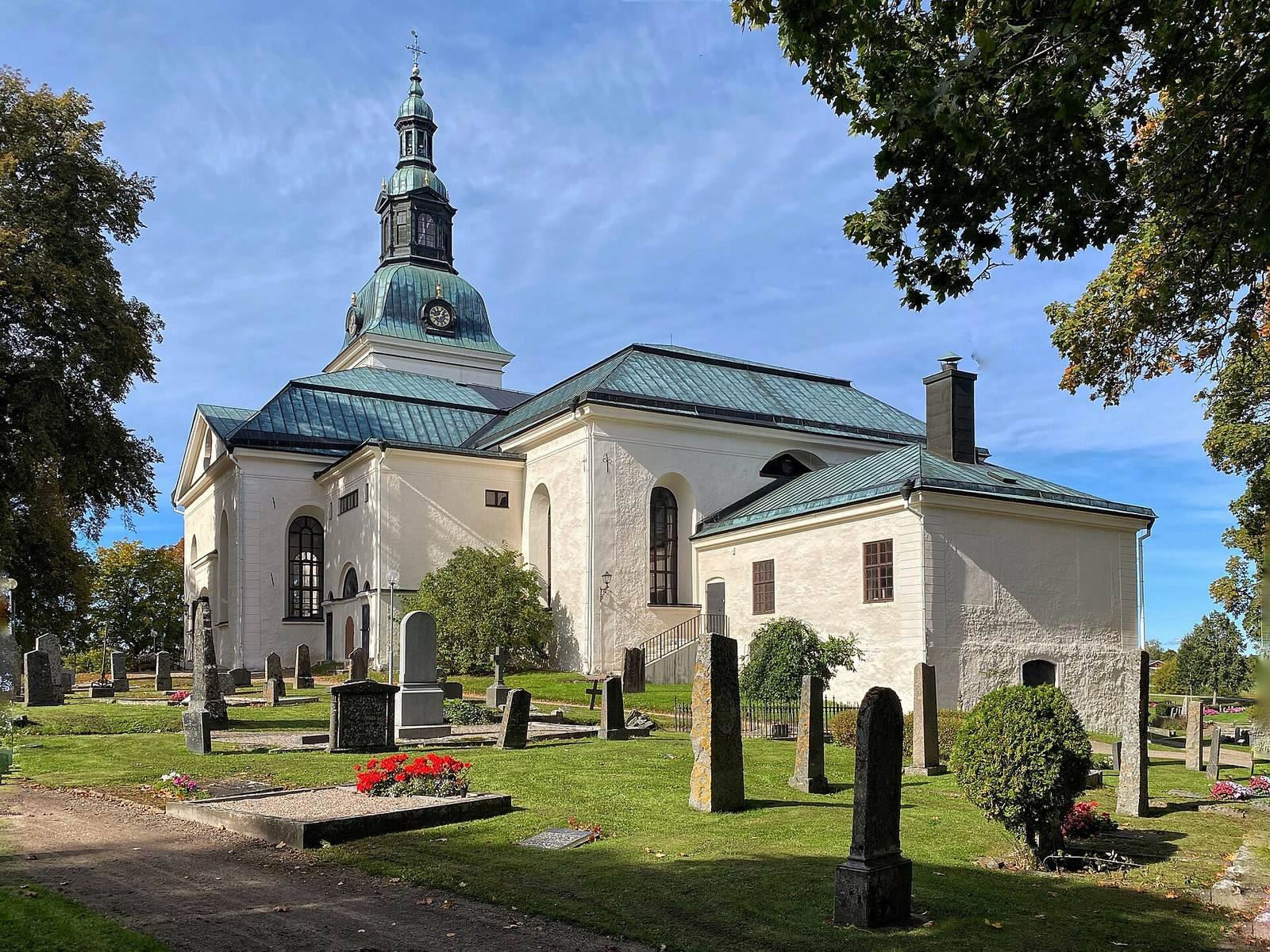
Standing in Vingåker’s Vidåker residential district, the church is 48.9 metres high and is considered one of Sweden’s largest rural churches. Several nineteenth-century buildings, including the old church school and Åsens gård, stand around it.
Building and furnishings
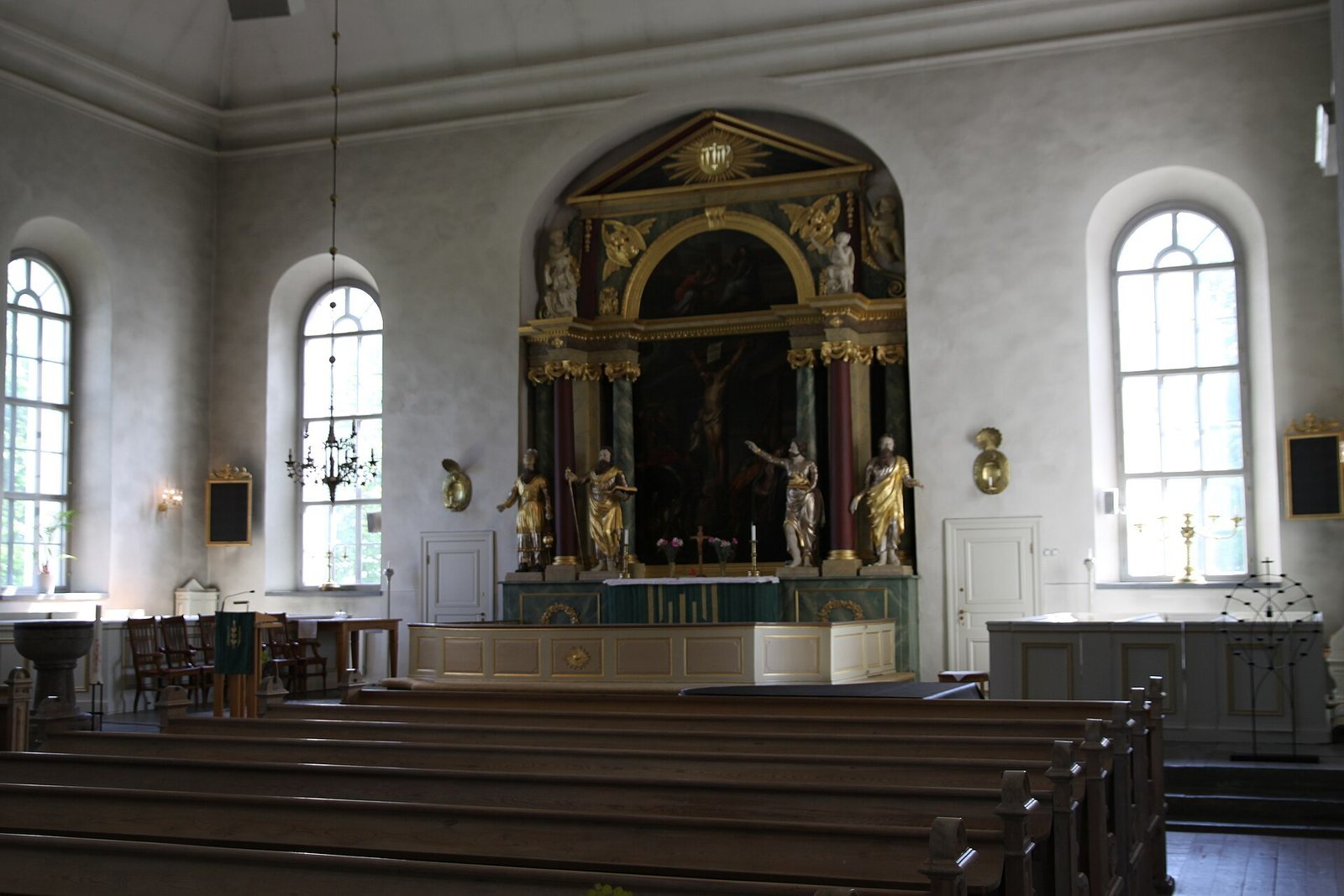
The church’s general form reflects a major renovation completed in 1783. That work added transepts, the arms crossing the main body, and a new sacristy, a room for preparing services and storing religious items. It also gave the building a low mansard roof, with a steep lower slope on each side. Two burial chapels and the altarpiece, artwork placed behind or above an altar, date from the seventeenth century. A tower cap was added in 1885; a replacement spire was planned for summer 1887 following the fire.
Organs
The eighteenth-century organ had 13 stops, which control groups of pipes. An organ built in 1887 had 27 stops across two hand keyboards and a foot keyboard. Its visible front, or façade, reused the front of an organ built in 1822. That façade is also used by the mechanical organ made by Olof Hammarberg in 1965, whose keys connect mechanically to the sound-producing mechanism. A smaller choir organ, intended for use by a choir, was built in 1973 by I. Starup & Sön of Copenhagen and has four stops.