Keltendorf Schwarzenbach: A Celtic Oppidum and Open-Air Museum in Austria
Site at a Glance
- Popularity
- Very Low
- Country
- Austria
- Primary era
- Iron Age
- Eras represented
- Iron Age, Modern
- Civilizations
- Celtic
- Site type
- City
On this page13 sections
History
Keltendorf Schwarzenbach is the site of a Celtic oppidum (a large fortified settlement of Iron Age Celtic Europe) east of Schwarzenbach in Austria, dating to the second century BC. It belongs to the La Tène period, a Central European Iron Age era associated with Celtic societies, and was an important iron-production center. The settlement was probably closely connected with contemporary sites at Velem-Szentvid and Sopron-Várhely in Hungary.
Early occupation and the oppidum
Occupation reaches back to the Neolithic, the later Stone Age. Copper Age pottery is associated with the Jevišovice culture, a Central European prehistoric tradition. Intensive settlement followed from about 1600 to 800 BC, spanning the end of the Early Bronze Age through the Late Bronze Age.
Use probably resumed in the Middle La Tène period, about 280 to 190 BC. The fortified settlement is dated to the second century BC. Its population has been estimated at about 2,000. Residents worked and traded iron from the area around Oberpullendorf. Noric iron, associated with Noricum in the eastern Alps, was valued in the Roman Empire for its quality.
Roman arrival and later use
The settlement was probably abandoned with the arrival of the Romans. The fortified site was used briefly again during the Migration Period, an era of population movements as Roman rule declined in western Europe, apparently without becoming a settlement again.
Local legend and archaeological investigation
A local legend placed Anchenstein Castle on the Schwarzenbach hilltop. A document associated with the 1337 Peace of Pressburg, a peace agreement, mentioned Schwarzenbach Castle and Anchenstein together. People in the area apparently did not know of Anchenstein at distant Cirkulane, in present-day Slovenia, and the names became linked in local tradition. Ramparts remained visible in the late Middle Ages, though their Celtic origin was probably not understood. The resulting saying joined the two places, and folklorist Hans Paul Schad’n recorded the legend in 1938.
Surface finds were collected and published from the 1920s. The University of Vienna began interdisciplinary investigations in 1992, when Otto H. Urban and Wolfgang Neubauer led the first excavations of successive layers in the rampart. Systematic work inside the enclosure and geophysical surveys, which use physical measurements to detect buried features, began in 1996.
Remains
The enclosure occupies a high plateau at about 600 m above sea level, on a spur at the eastern edge of the Bucklige Welt. It covers roughly 15 hectares, measuring about 500 by 300 m, and is among the largest Celtic rampart enclosures in present-day Austria.
Enclosure and fortifications
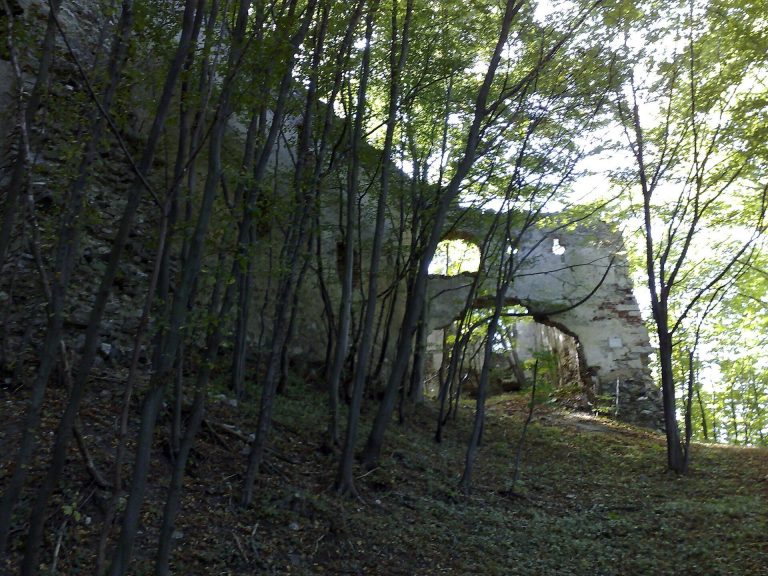
The earthworks are clearest on the flatter northern and western sides, where they rise to about 7 m; fortifications reach 10 m in some places. They are less well preserved along the steeper eastern and southern slopes. An outer ditch follows the northern rampart. At the north-west corner, adjoining defensive sections form a tongs-shaped gate, an entrance shaped by the arrangement of the walls.
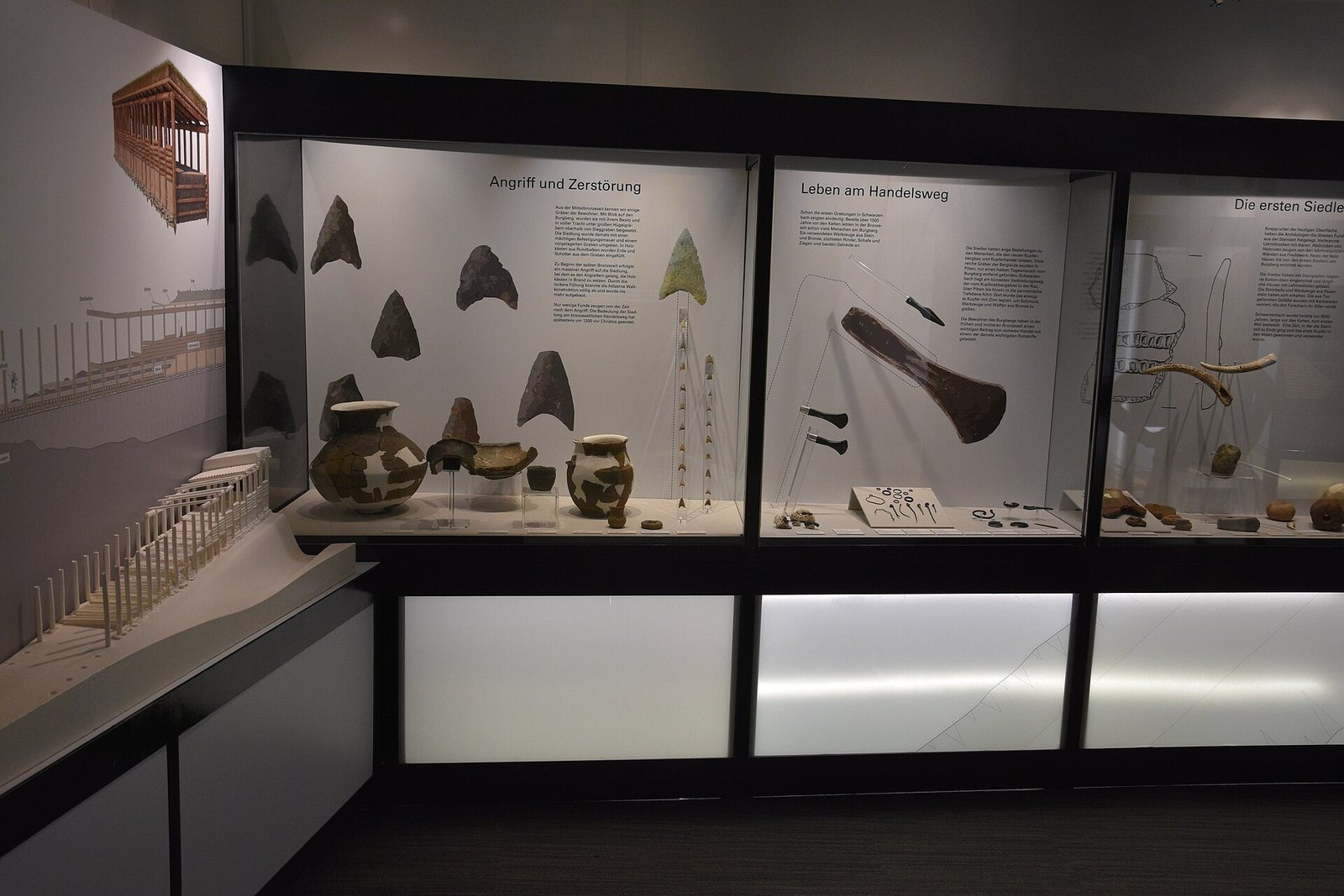
Excavation identified a La Tène post-slot wall, a rampart built with upright posts set into slots, which had been repaired twice. In one section, oak trunks formed a timber box with supporting posts and a rubble-stone facing. A portion of the fortification has been reconstructed on site to this arrangement.
Buildings and workshop
Log-built buildings
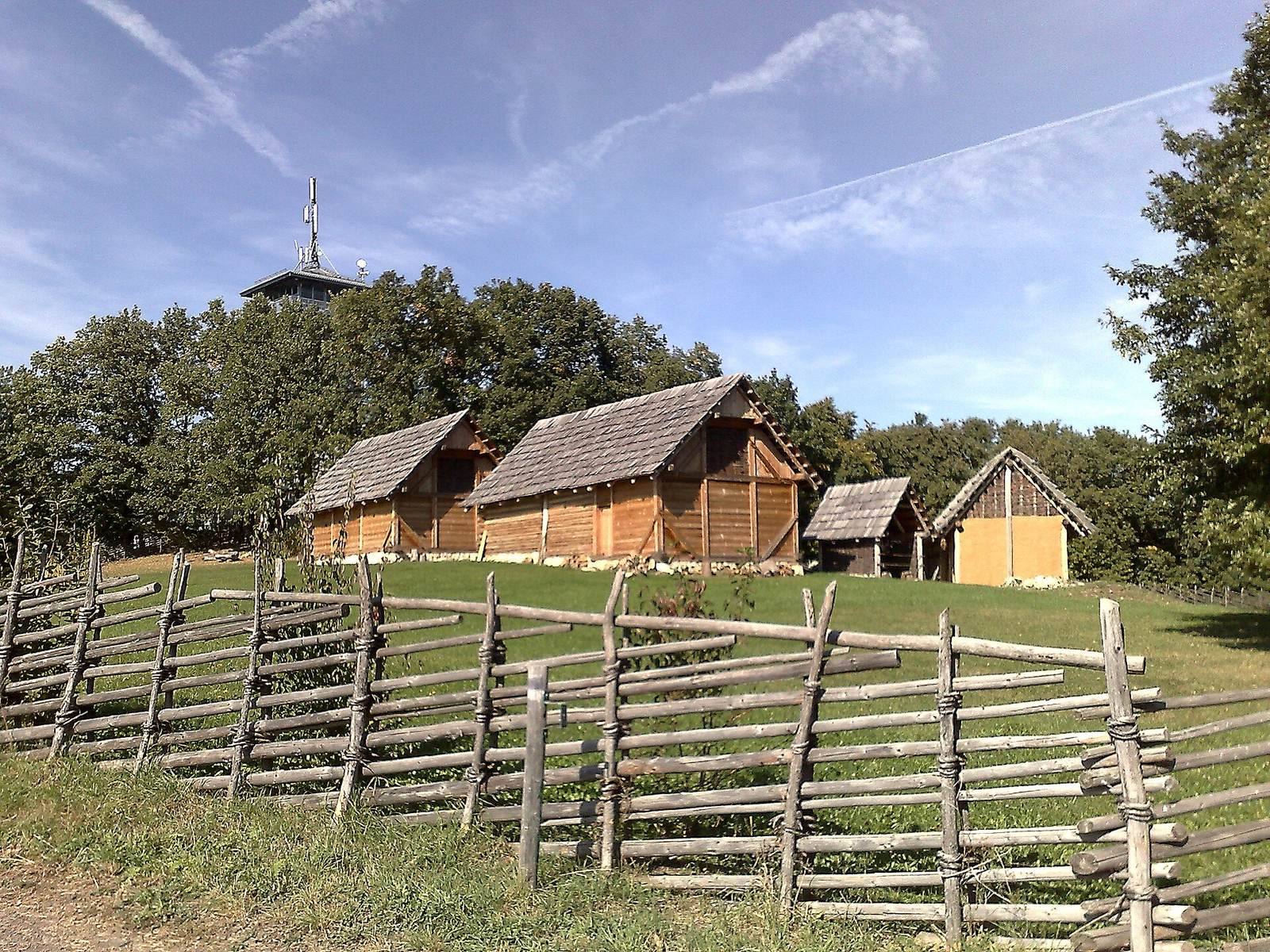
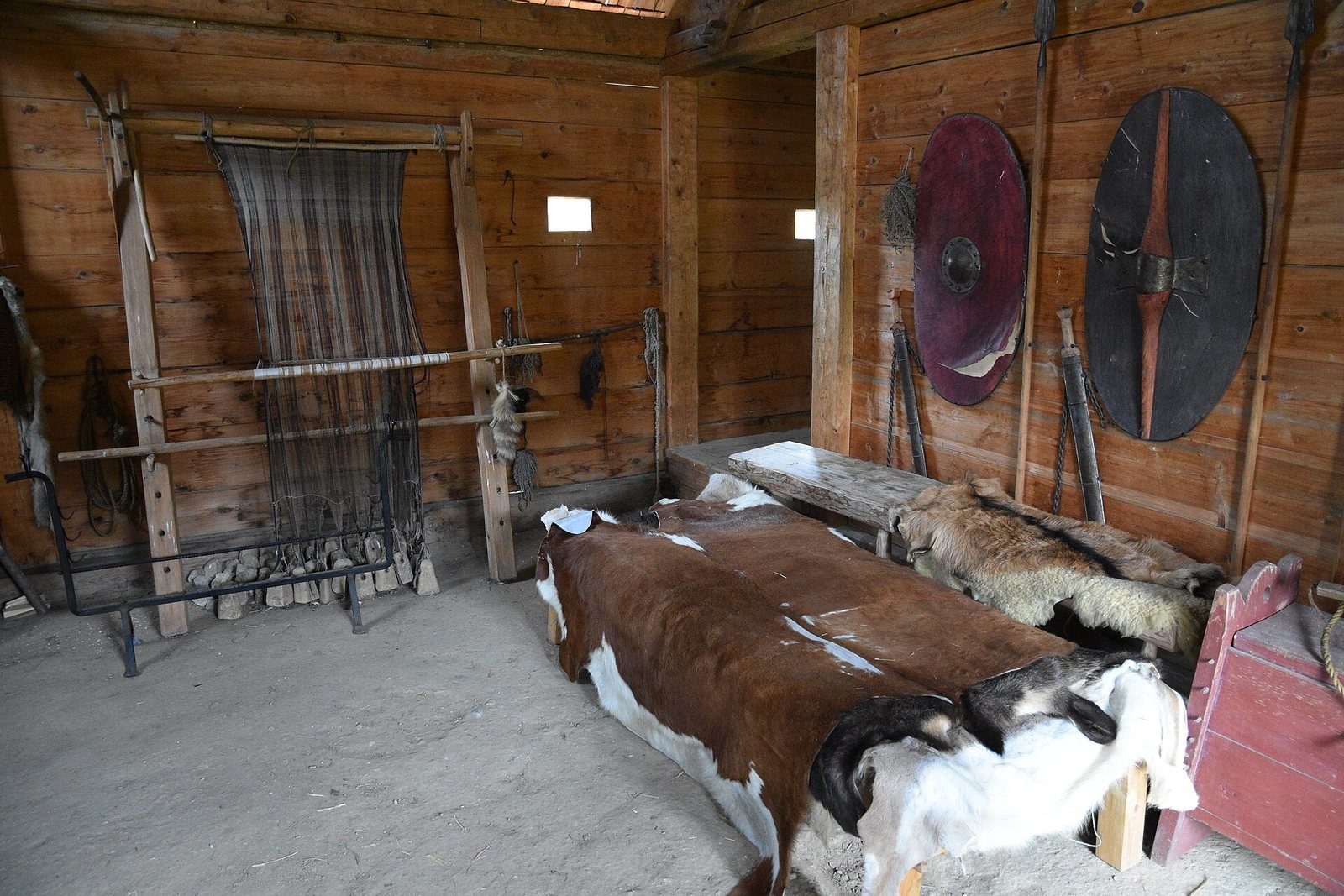
Remains of log-built structures lay within the enclosure. A larger building on the western slope measured 9 by 5.4 m. Its foundation was cut into the hillside, allowing for a lower and an upper storey. A reconstruction of this building is displayed in the open-air museum.
Workshop at the north-western gate
Excavations inside the gate from 2004 to 2008 uncovered a destroyed timber wall box filled with rubble. It had later been reused as the foundation of a utility building. Finds included iron hooks and clamps, part of a wire brooch, knives, a file, small blacksmith’s tongs, slag and hearth remains. Together, these finds indicate a smithing workshop.
Finds and burial
Finds from the latest occupation
Finds assigned to the settlement’s latest occupation include five small silver coins of the Velem type and a gold stater, an ancient coin denomination, of the Boii, a Celtic people. Other Celtic coins included tetradrachms, coins worth four drachmas, and small silver pieces; many entered private collections. An amulet ring, strap fittings and belt hooks from this phase suggest military use.
Child’s grave
A child’s grave from the Migration Period was found at the plateau’s highest point.
Reconstructed features
A museum tower was built on the plateau in 1998 to 1999. In addition to the reconstructed western-slope building, the open-air museum includes two further buildings erected in 2018 to 2019, designed to reflect archaeological evidence for Late Iron Age construction.