Schlenkerla: A Historic Brewery and Tavern in Bamberg
Site at a Glance
- Popularity
- High
- Country
- Germany
- Primary era
- Medieval
- Eras represented
- Medieval, Early Modern, Modern
- Civilizations
- German, Holy Roman Empire
- Site type
- Economic
- Remains
- Production Complex
On this page9 sections
History
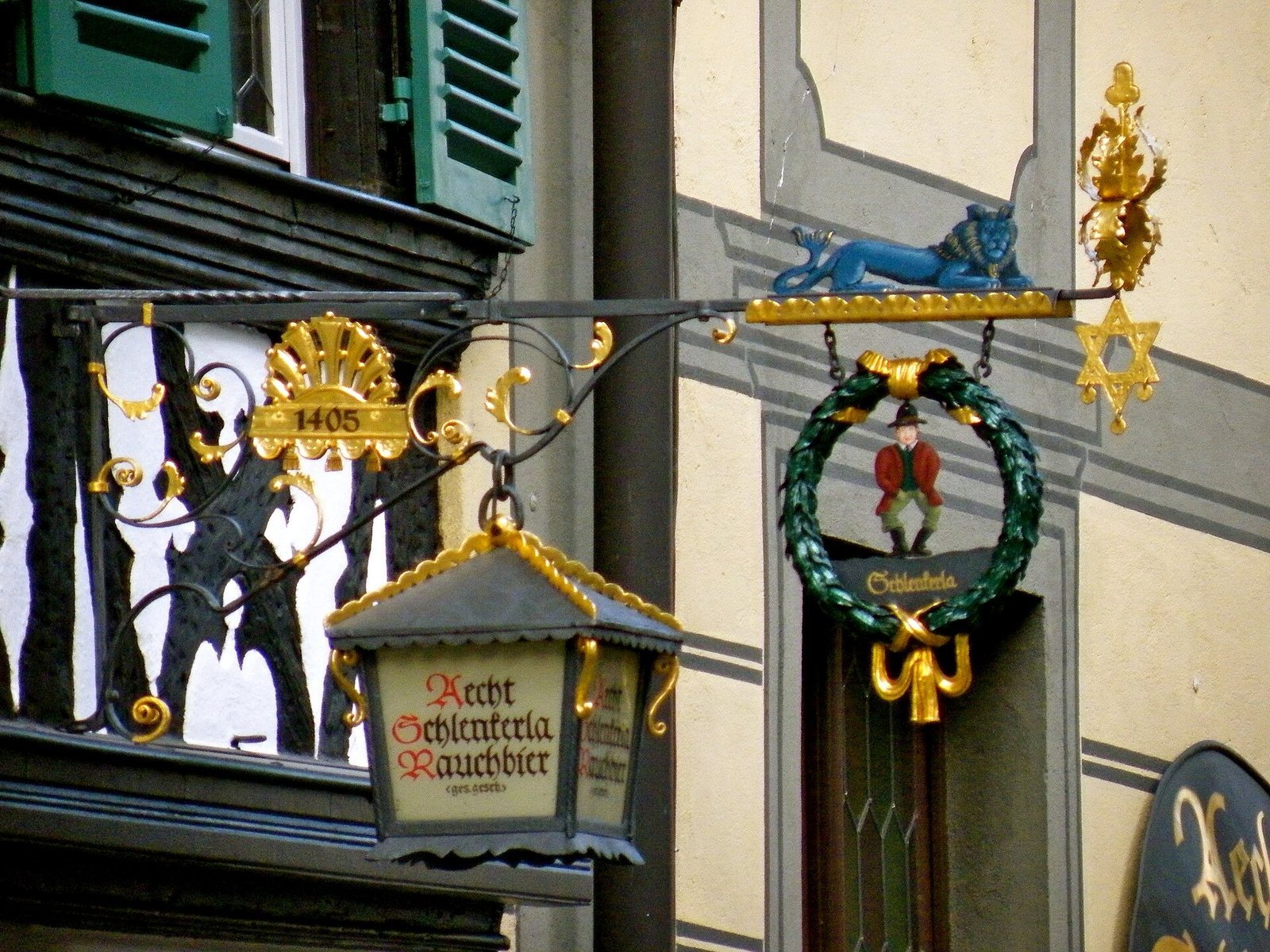
Schlenkerla is a brewery and tavern in Bamberg, Germany, occupying a building first recorded in 1405 as Zum Blauen Löwen. The property stood near the monastery church of Dominican friars, members of a Catholic religious order. The brewery traces its history to that early record, though it does not establish when brewing first began there.
Early records and rebuilding
In 1538, cooper Asmus Schneider was probably the first owner to establish both a tavern and a brewery in the building. The property was almost entirely destroyed during the Thirty Years’ War, a major European conflict fought from 1618 to 1648. Jakob Stengel acquired the ruins in 1649 and began rebuilding; a rear building was added in the years that followed.
Ownership and the Schlenkerla name
The brewery changed hands after Georg Zimmermann declared bankruptcy in 1714, following poor management. Johann Peter Hirsch, then deputy local magistrate for the St. Georgen district, acquired the property and its brewing rights. Johann Wolfgang Heller bought the brewery in 1738 and named it Hellerbräu, a name that remains in use. Heller also obtained a stone cellar on Kaulberg, which he passed, together with a field and garden, to his daughter. His grandson Josef Heller took over the business in 1797 and bought the cellar back.
Konrad Graser acquired the brewery in 1866, and it stayed in his descendants’ hands. He stepped back from the business when his son Andreas married in 1877. Andreas had worked as a brewmaster since 1875 and continued until his death in 1905, helping popularize the name Schlenkerla. In East Franconian dialect, the ending -la is a diminutive, while the German verb schlenkern means to swing or dangle. A local story links the nickname to a brewer injured when horses bolted as barrels were being unloaded from a cart. The story says he compensated by swinging his arms. A Bamberg rhyming chronicle also connects the nickname with his gait and presents it as teasing.
Twentieth-century ownership
Andreas’s son Michael took over in 1906. After Michael died in 1943, his widow Margarete and daughter Elisabeth managed the brewery during the final years of the Second World War. In 2024, the owner was Matthias Trum, a grandson of Jakob and Elisabeth Trum.
The smoked-beer tradition
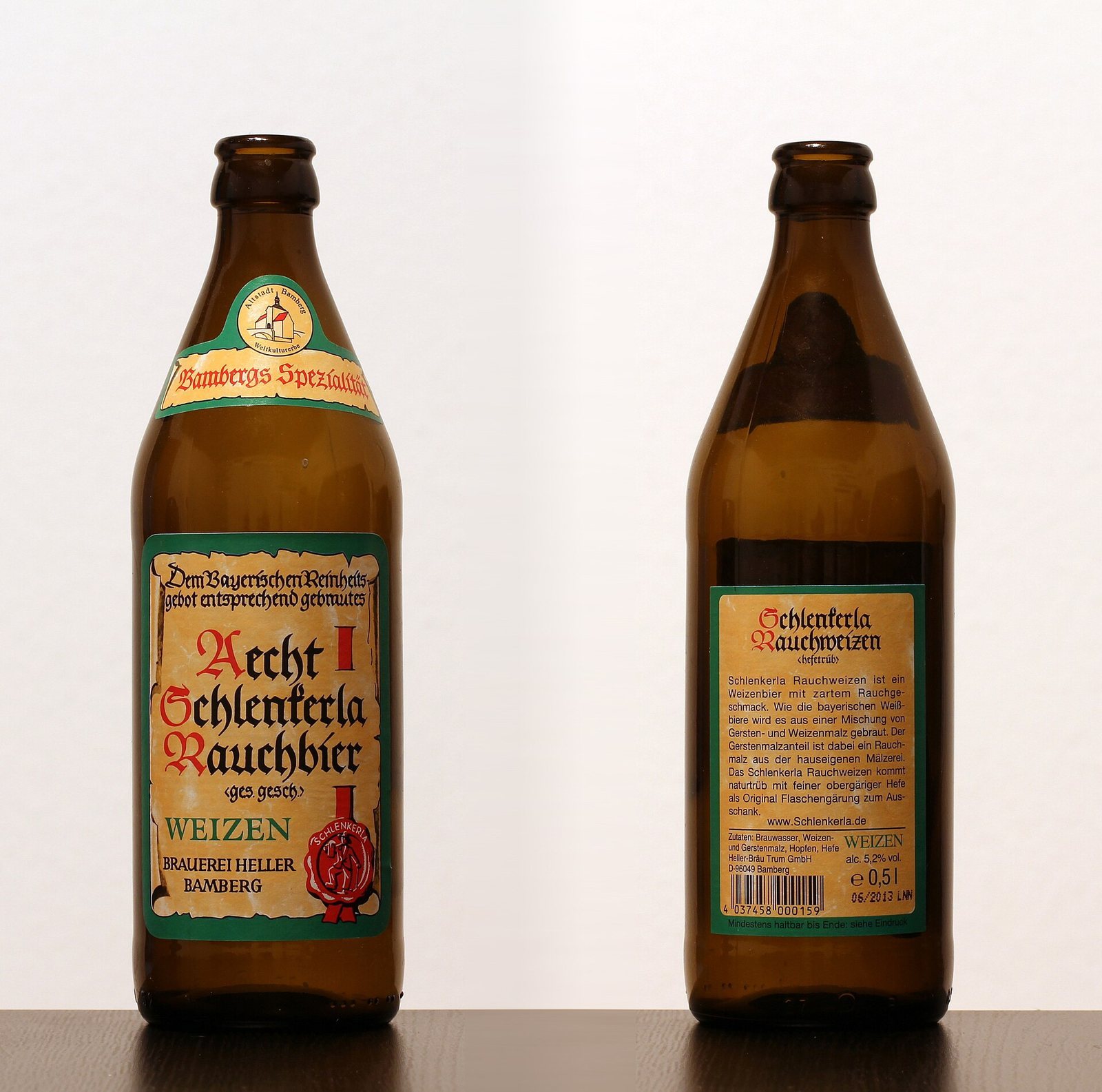
Schlenkerla is associated with Rauchbier, or smoked beer, whose smoky flavor comes from malt dried over a fire. The first machine for drying malt without smoke was patented on July 23, 1635. As smoke-free drying became widespread, smoked beer grew uncommon; a small number of Bamberg breweries continued using traditional fire-kiln drying. The brewery says it follows the 1516 Bavarian beer-purity law, a regulation governing brewing ingredients.
In the brewery’s process, barley is steeped until its water content reaches 35 percent, then allowed to sprout for seven days while the brewer aerates and turns it. The sprouted barley is dried over beechwood fire and milled. The milled grain is mixed with water and heated between 45 and 77 degrees Celsius, converting starch into malt sugar. The solids are separated from the liquid, which is boiled with hops; evaporation concentrates it, and cooling removes insoluble residues. After further cooling and aeration, yeast is added. Main fermentation lasts seven days, followed by several weeks of maturation in the brewery’s storage cellar. Filtration removes yeast and other particles that make the beer cloudy.
The brewery uses the same copper kettles and, chiefly, the same yeast for its smoked beer and lager, giving the lager a subtle smoky taste. Smoked beer is traditionally stored and sold in oak casks. They are filled under pressure to prevent foaming, a method also used for bottling.
Remains
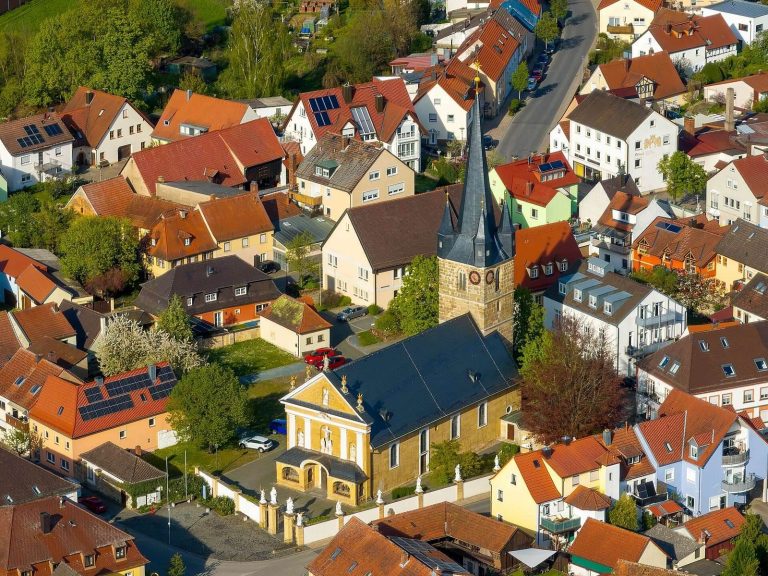
The physical site includes the historic house and a later rear addition, with tavern and brewing spaces. Associated cellar facilities occupy locations on Kaulberg and Upper Stephansberg.
Historic building and brewery spaces
House and tavern
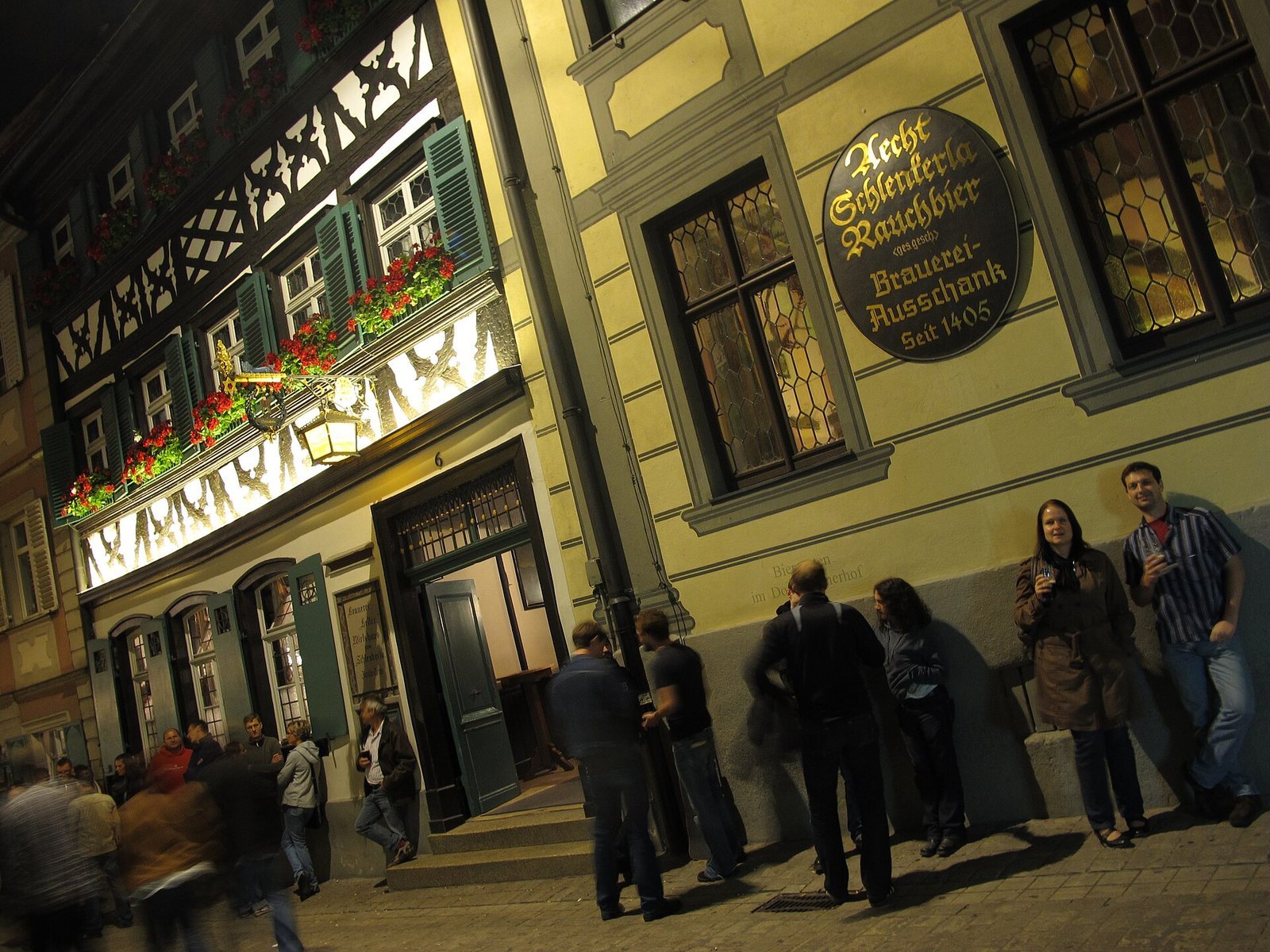
The house acquired a rear building in the years after its reconstruction. The tavern has a Gothic ceiling known as the Dominikanerklause, a name meaning Dominican retreat. The restaurant expanded in 1926 through a lease of the Dominikanerklause. A brewhouse and bottling facility were built in 1936.
Cellar facilities
An associated stone cellar stands on Kaulberg. The brewery’s cellar facilities in the rock were later enlarged through the acquisition of an additional property on Upper Stephansberg.