Grünau Charterhouse: A Carthusian Monastery in Germany
Site at a Glance
- Popularity
- Medium
- Country
- Germany
- Primary era
- Early Modern
- Eras represented
- Medieval, Early Modern
- Civilizations
- Holy Roman Empire
- Site type
- Religious
- Remains
- Monastery
On this page8 sections
History
Early religious use and foundation
Grünau Charterhouse is a former Carthusian monastery in the Kropfbach valley of Germany, founded in 1328 by Elisabeth von Hohenlohe. The Carthusians, a Catholic contemplative order whose monks combined solitary life with communal worship, made it the first Carthusian house in Franconia and in what is now Bavaria.
A chapel in the valley was consecrated in 1216 to the Blessed Virgin Mary, Saint Lawrence, and Saint Nicholas. Before the monastery’s foundation, regular canons from Triefenstein served the site. By the early 14th century it had become a pilgrimage destination, after which the canons left the area.
Elisabeth founded the monastery in memory of her husband, Gottfried von Hohenlohe-Röttingen, who had died in a hunting accident for which she was believed responsible. On 15 March 1328, the Carthusians of Mainz received Schollbrunn for the foundation. Monks from Mainz settled at Grünau in 1333 under Heinrich Spiegel, its first prior, or head. The initial buildings were considered provisional, and the monks at first celebrated Mass using a portable altar.
Growth and monastic life
Grünau was a monastery for men in the Diocese of Würzburg and belonged to the Carthusian Order’s Lower German Province, an administrative division of the order. Its holdings grew to include several localities, and it received dues from the parish of Eichel and the chapel of Hasloch. Monks from Grünau may also have joined Carthusian communities at Erfurt and Koblenz during the 14th century; the Erfurt settlement dates to around 1372.
In the early 15th century, larger buildings replaced the first modest structures, and the monastery could accommodate as many as 24 monks. The chapel was enlarged, and a new monastery church was consecrated in 1446. The Counts of Wertheim acted as the monastery’s lay protectors, and the church became their family burial place. Grünau reached a high point during the century. Hammanus de Rudisheim, prior from 1457 to 1463, wrote several meditations.
Reformation and suppression
A church inspection in 1523 found the monastery’s administration and discipline in poor condition, and prior Michael Lemlein consequently left office. In 1525, during the German Peasants’ War, a major uprising across German-speaking lands in 1524–1525, peasants from the surrounding area plundered Grünau. The monks fled to the Carthusian house at Ilmbach. That same year, Count Georg von Wertheim adopted the Lutheran Reformation, the 16th-century religious movement that led to the establishment of Protestant churches.
The Wertheim family took control of the monastery’s lands in 1545. Three monks remained in 1550; by 1557 the last monks had left, and the final prior, Matthias de Monte, was expelled. The estate was assigned to the Wertheim hospital, while other holdings passed to nearby Carthusian houses.
Return, war, and dissolution
Grünau was formally united with Ilmbach in 1615–1616. The Carthusian Order challenged the loss of its property before the Imperial Chamber Court, a major court of the Holy Roman Empire, and the Court Chamber Court, another tribunal involved in the dispute. An imperial edict in 1629 ordered the return of property taken from Catholic owners by Protestants, and Grünau returned to the Order.
Swedish troops invaded in 1631 during the Thirty Years’ War, a major European conflict fought from 1618 to 1648. The monks fled again, and King Gustavus Adolphus of Sweden transferred the monastery to the Löwenstein-Wertheim family. After the Swedish withdrawal, the monks recovered half of their former property. In 1635, Count Johann Dietrich von Löwenstein-Wertheim restored the monastery and its buildings, and four monks returned.
The monastery prospered in the 18th century. It was dissolved in 1803 during the secularization of Bavaria, the transfer of church institutions and property to secular ownership, and its property passed to the Counts of Löwenstein-Wertheim-Freudenberg. The church remained in use until 1812. In 1820, the family converted the complex into an estate. Demolition of monastery buildings had begun in the 17th century; the church was later abandoned, and further destruction took place in 1878.
Remains
The convent precinct
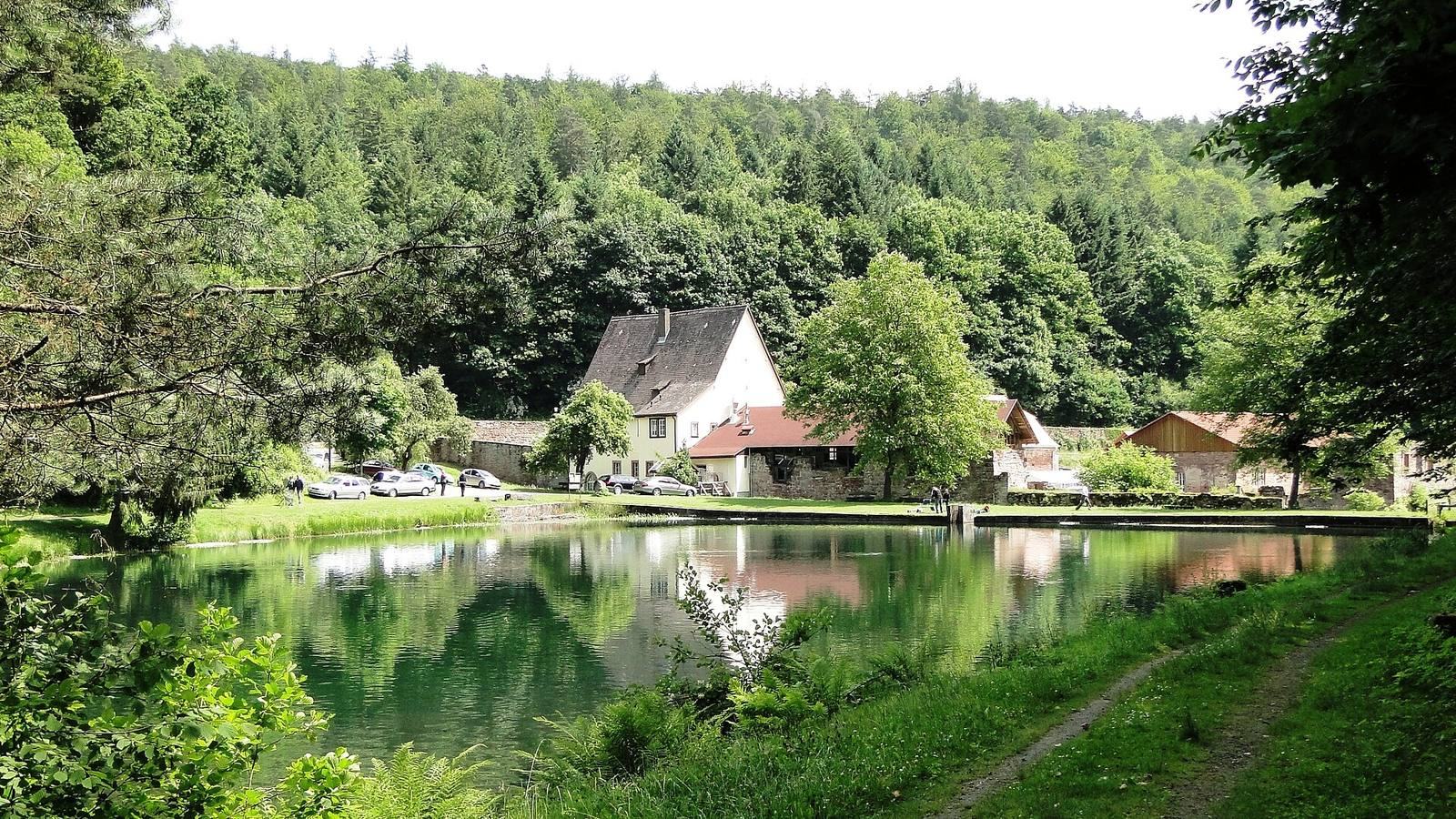
The former monastery lies among the wooded hills of the Spessart, in the Kropfbach valley, a tributary valley of the Haslochbach; a pond is also associated with the complex. Its 18th-century buildings were modernized in the Baroque style and stood within an enclosing wall. In 1728, the church was moved to a higher position, replacing the upper convent building. The communal dining room was probably in the church basement, while a sacristy, a room for church furnishings, occupied the northeast part of the complex.
By the 16th century, the monks’ cells probably numbered 16; those that remained were demolished in the 1720s. A portal on the west side, built in 1779, led to the prior’s cell.
Surviving buildings
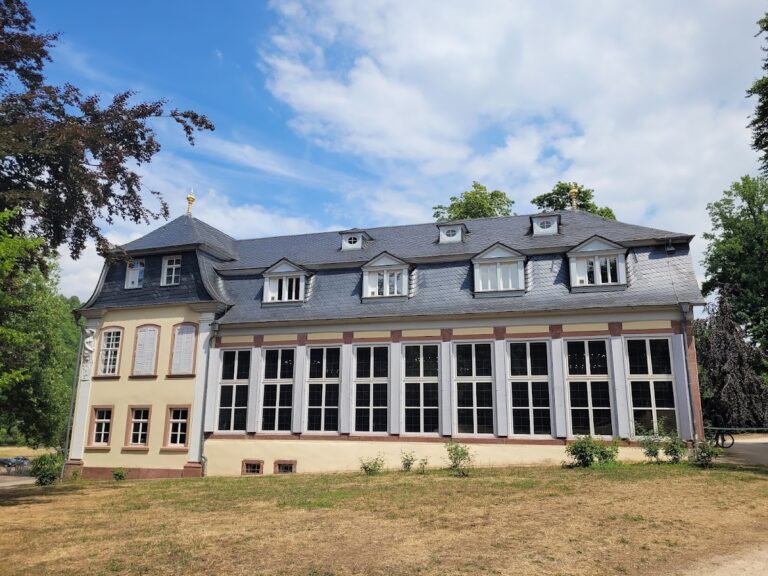
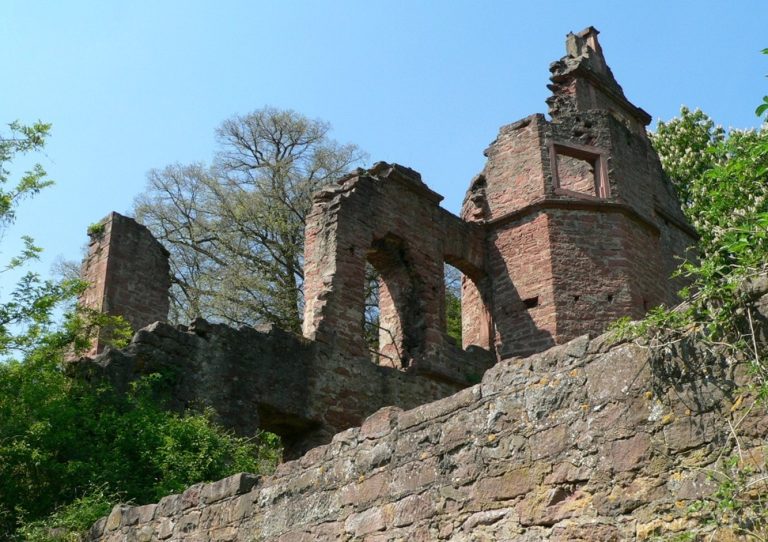
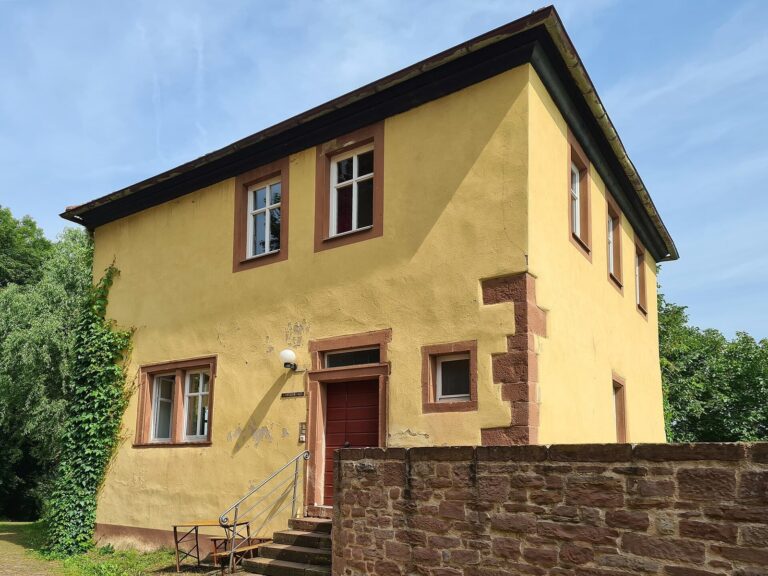
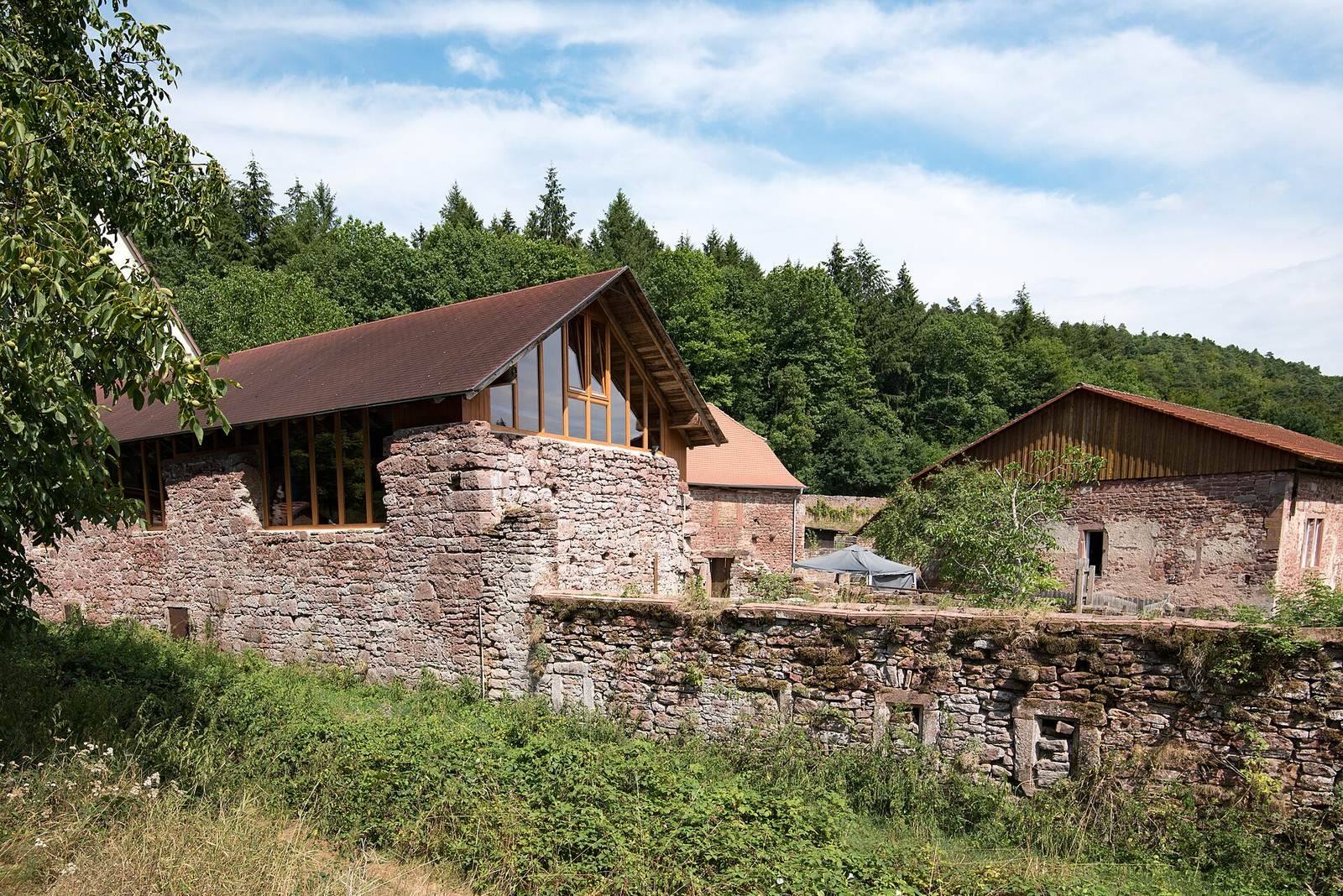
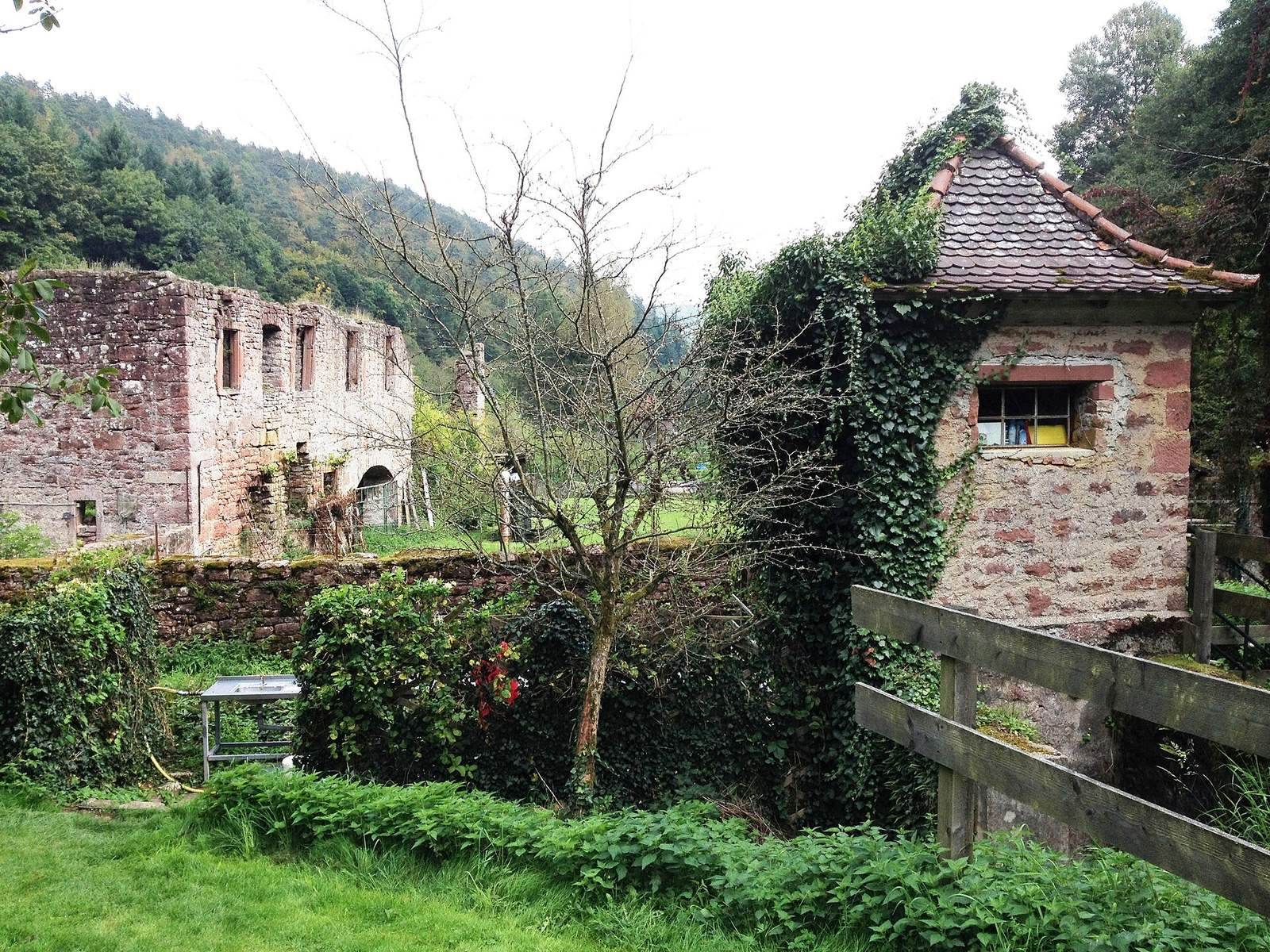
The remains include the prior’s lodging, now used for guests, the ruins of the church, and a fragment of the perimeter wall with an arched gateway. A 17th-century building for the procurator, the monastic officer responsible for practical affairs and property, also survives. The main building and a guesthouse now serve as an inn and restaurant. Some books from the monastery are held in Wertheim.