Riesenstein: A Menhir Associated with Neolithic Cult Use
Site at a Glance
- Popularity
- Low
- Country
- Germany
- Primary era
- Stone Age
- Eras represented
- Stone Age
- Civilizations
- Unclassified
- Site type
- Religious
- Remains
- Sanctuary
On this page6 sections
History
Neolithic use
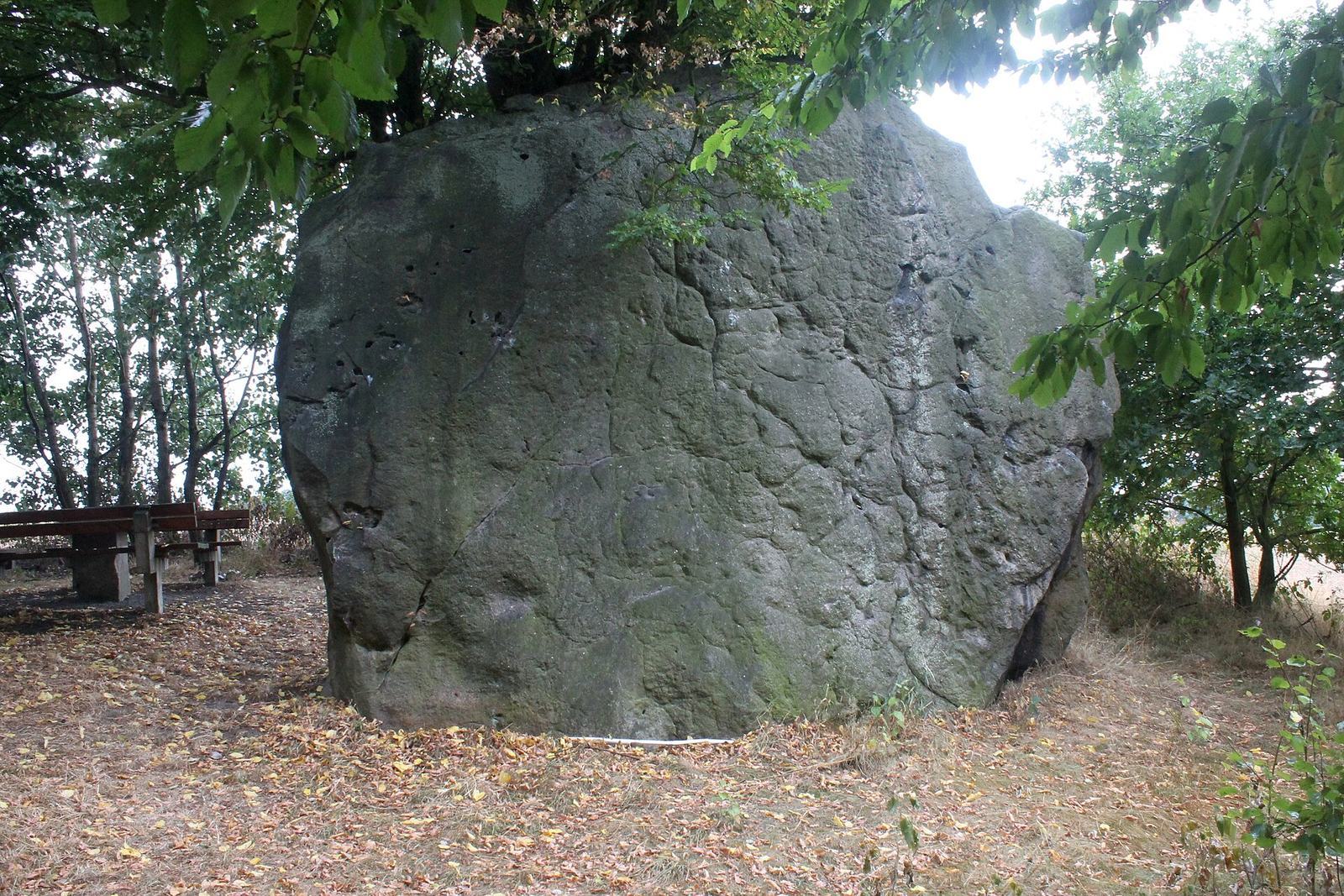
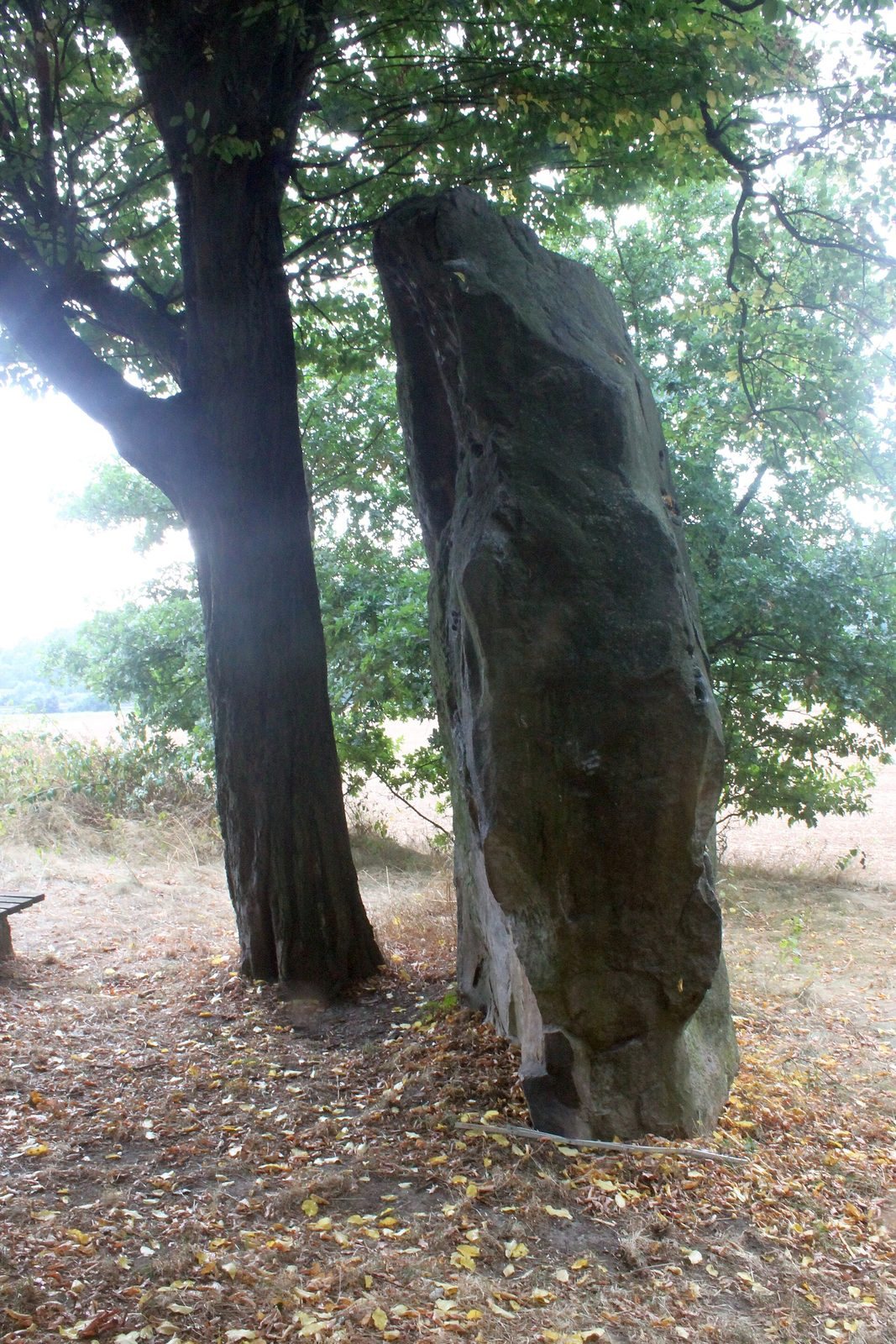
Riesenstein is a menhir, a single standing stone erected as a monument, near Wolfershausen in Felsberg, Germany. Human bone remains found at its base connect it with a Neolithic farming community that used the stone for cult purposes around 3000 BCE.
Medieval beliefs and local legends
During the Middle Ages, people credited Riesenstein with healing powers and the ability to promote fertility. Its first written record dates to 1615, when it was called the “Large Stone.”
Local legends offer explanations for the name Riesenstein, or “Giant’s Stone.” One tells that monks and people from neighbouring villages built Breitenau Monastery in the Eder floodplain. After its completion, a hostile giant on Lotterberg threw a rock at the monastery to destroy it, but the stone fell short near Ellenberg, across the river.
In another tale, two giants, Lothar and Kunibert, fought over Nagathe, a giantess who had gone to live with Lothar on Lotterberg. Kunibert, whose home was Heiligenberg, seized her in front of Lothar. Lothar hurled a stone after them, but it missed and sank into soft ground.
In 1986, Riesenstein was protected as a natural monument, a natural feature recognized for its natural or cultural value.
Remains
Form and setting
Riesenstein stands at the southeastern edge of a small wood, about 1.14 km north of Wolfershausen. The Eder River lies about 180 m away, across the railway. The stone has a flattened, rectangular block shape, measuring approximately 4.5 m high and wide and about 1 m thick. Its larger, flat face covers an estimated 14 m². The portion above ground has a volume of about 14 m³ and a mass of roughly 37 metric tons. It is the largest megalith in the Schwalm-Eder district and the largest menhir in the Kassel–Fritzlar region.
Rock and geological setting
The stone is quartzite, a hard rock rich in quartz, formed during the Miocene epoch of the Neogene geological period. It developed from local Triassic sandstone through intense tropical weathering and the action of groundwater carrying dissolved silica. The resulting rock is nearly pure quartz and has little porosity. Layers that originally lay horizontally now stand vertically, showing that the stone is not in its natural position. Quartzite blocks occur in the surrounding wood and on nearby hills, suggesting that Riesenstein was probably not moved far, if at all. Nearby ground also contains volcanic ash and small fragments of volcanic material.