Brahe Church: A Renaissance Castle and Burial Church on Visingsö
Site at a Glance
- Popularity
- Medium
- Country
- Sweden
- Primary era
- Early Modern
- Eras represented
- Medieval, Early Modern, Modern
- Civilizations
- Swedish
- Site type
- Religious
- Remains
- Church
On this page16 sections
History
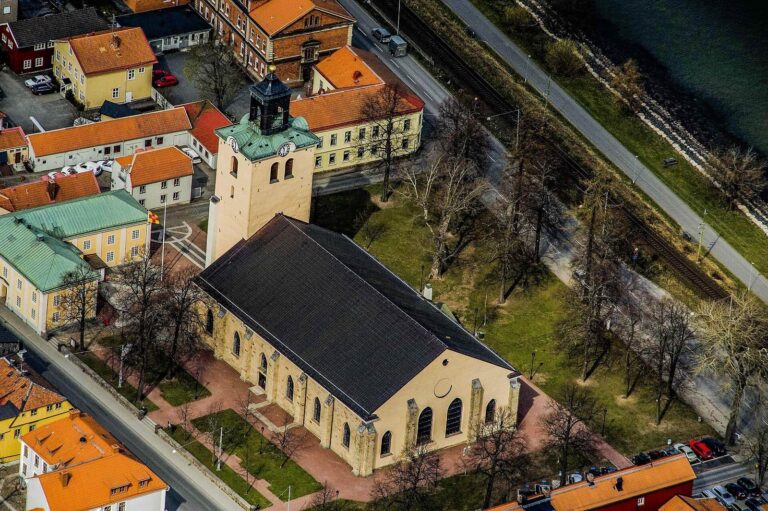
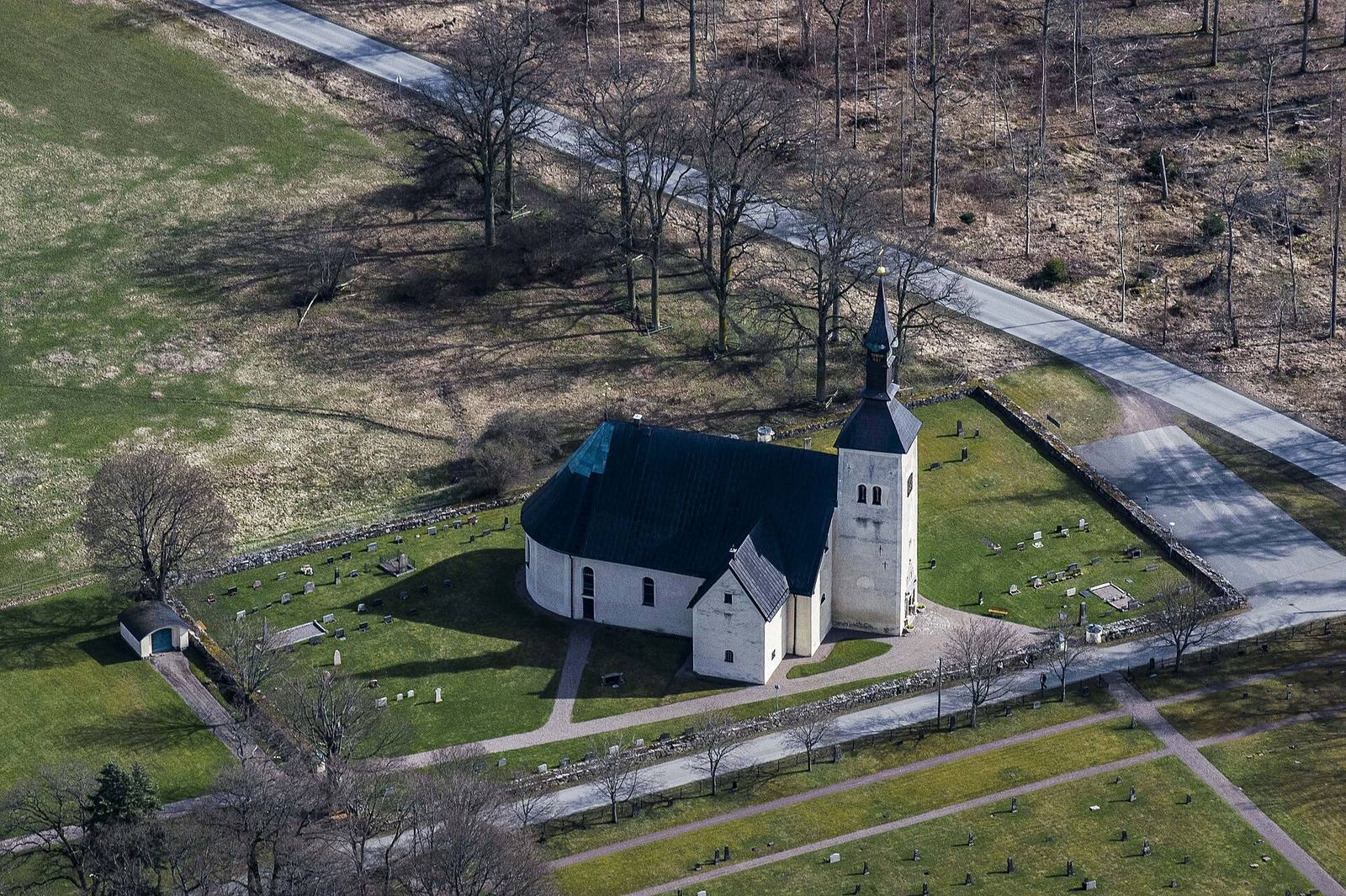
Brahe Church is a church on Visingsö in Lake Vättern, Sweden, built in the Renaissance style, a broad European tradition in art and architecture. Count Magnus Brahe commissioned it between 1623 and 1636 as a royal church and monument to his family. It became the castle and burial church of Visingsborg. The church remains a place of worship in the Church of Sweden, a Lutheran church, within Visingsö Parish, the local church community in Växjö Diocese, a regional church jurisdiction. It also serves as a museum, art gallery, and collection of curiosities.
Two Romanesque churches, buildings in a broad medieval European style, stood on Visingsö in the 12th century. One, Ströja Church, occupied the site of the present church and served kings and aristocratic families. The other was Kumlaby Church.
Building the Brahe church
Magnus Brahe, son of Per Brahe the Elder, built the new church on Ströja’s foundations, retaining its tower. Magnus died before work was complete. His nephew Per Brahe the Younger inherited the project, finished the building, and dedicated it in 1636 as Wisingsborg Castle Church.
The interior was elaborately decorated in stages during the 1630s and 1660s. Court artist Johan Werner the Elder worked on the church in the earlier period, while Johan Werner the Younger directed the later campaign. The display of wealth reached its height in the 1660s, during Sweden’s Great Power era, when the country was a major European power, especially in the 17th century.
Later changes and church use
The west tower was raised in the 1670s. In 1680, Christina Brahe, Per Brahe the Younger’s sister, paid for a copper roof that replaced what was probably an earlier covering of shingles. Per Brahe donated a large bell, but it could not fit in the medieval tower’s bell chamber. A separate bell tower was therefore built, while the church’s bells had originally hung in the west tower.
An eight-stop organ, believed to have been built by Per Jönsson of Skänninge in 1635–37, was the earliest instrument at the church. A small positive organ, made by Nicolaus Manderscheidt of Nuremberg in 1634, came from Poland and was donated by Per Brahe the Younger in 1666 after being kept at Visingsborg Castle. It was lent to the chapel at Jönköping Castle from 1691 to 1772, later went to Bjurum Church, and is now at Västergötland Museum in Skara. A replacement by Lars Strömblad had 15 or 17 stops and was installed in either 1789 or 1797. A choir organ made by Olof Hammarberg of Gothenburg in 1953 was transferred from Kumlaby Church in 1970.
Construction work in 2024 initiated an archaeological investigation that is continuing.
Remains
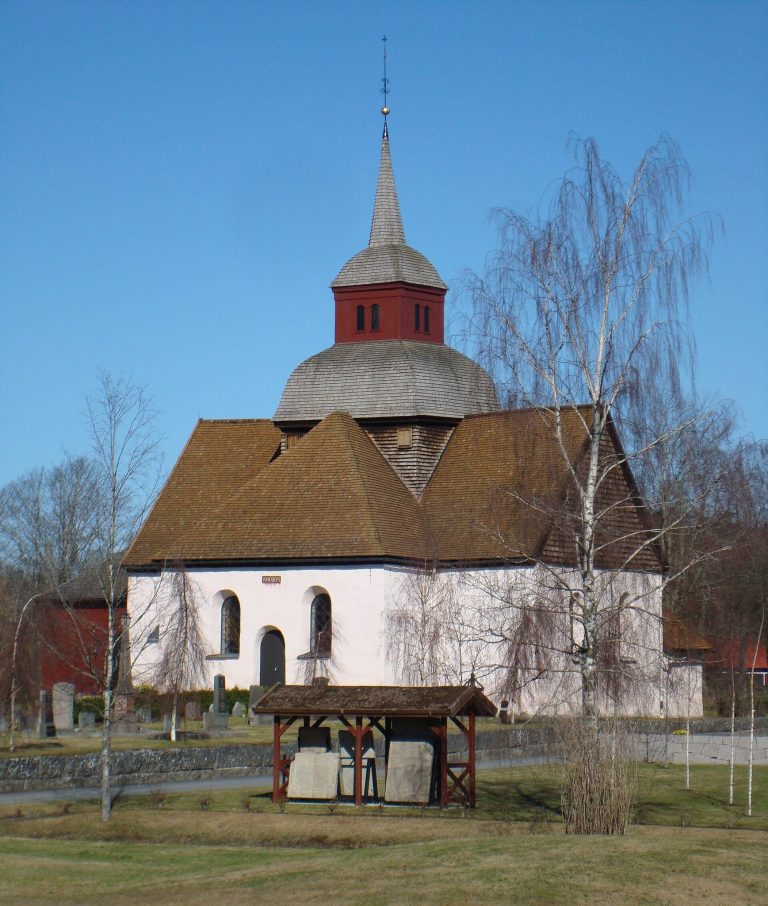
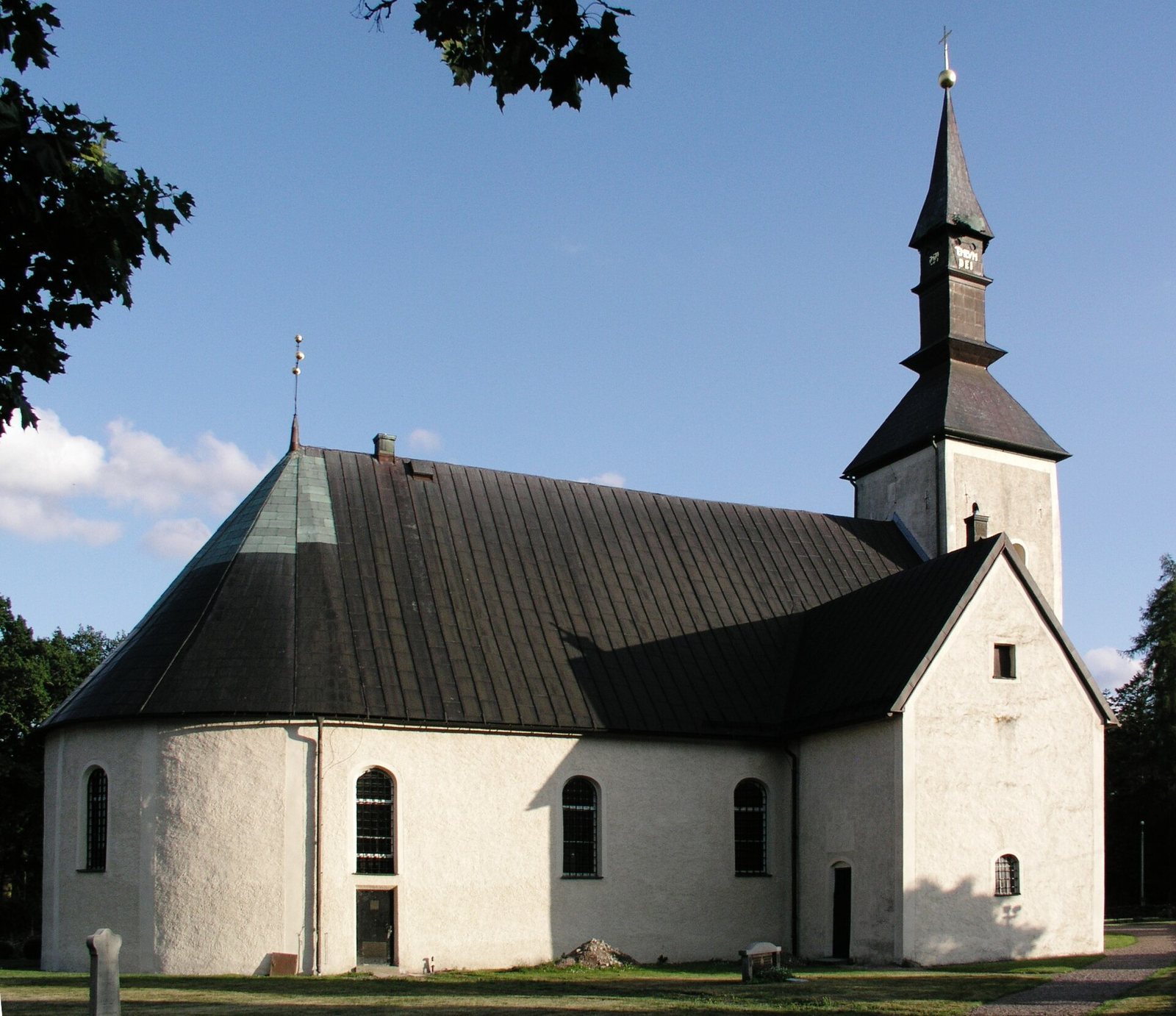
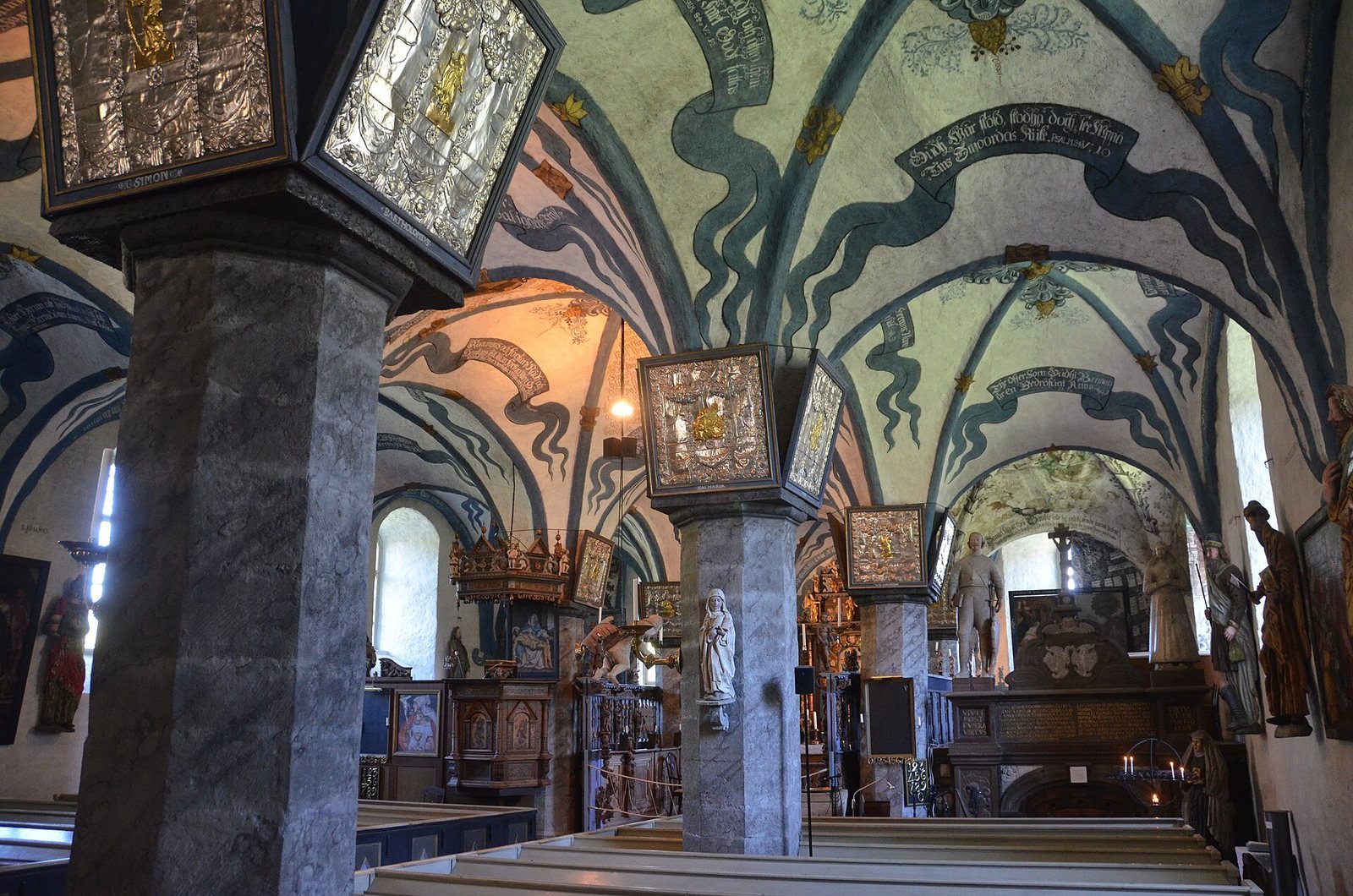
The church is a spacious Renaissance hall with three aisles and a rounded chancel, the area around the altar, at its eastern end. Its limestone-slab vaults are formed by intersecting barrel-shaped sections and rest on octagonal limestone pillars. Local clay slate, sandstone, and limestone were used in the building, which has a copper roof. Windows with shallow arches and exterior grilles line the church. A sacristy, a room associated with church services and furnishings, stands on the north side near the west tower.
Towers and entrances
West tower
The three-level west tower is the surviving sandstone tower of Ströja Church. Its ground floor forms the church porch, an entrance vestibule, beneath a decorated barrel-shaped ceiling. Twenty circular painted panels, or roundels, decorate this ceiling; they date to the 15th century, and their surviving image motifs are attributed to Master Amund, the name used for an unidentified medieval painter. The entrance portal, built in 1653, bears relief coats of arms belonging to the Brahe and Stenbock count and countess.
The tower’s middle level may once have served as a gallery for the manor household or as a small chapel. It is now open to the former bell level above. Romanesque sound openings, with different designs on each of the tower’s four sides, occupy the upper level. A clock and its striking mechanism are housed in the former bell chamber. Above it, the raised section carries a lantern, an upper structure set on a tower, a pointed spire, and a gilded orb topped by a cross.
Separate bell tower
The separate bell tower stands about 30 metres west of the church. It is timber-built and shingle-clad, with a bell house beneath four pointed gables. An octagonal roof turret and spire rise above it. The tower holds three bells, dated 1672, 1826, and 1910.
Interior art and furnishings
Paintings, sculpture, and ceiling decoration
Near the altar is a carved figure of Christ made by Johan Werner the Elder in 1637, followed by a set of twelve apostle figures. Werner the Elder also produced paintings and epitaphs. His paintings include scenes of Christ crowned with thorns, before Pilate, on the journey to Calvary, and at the Crucifixion. An oil painting of Mary mourning Christ after the Crucifixion hangs beside the pulpit, while an image of Mary with the child and John, accompanied by text scrolls, is on the south wall. Renaissance sculpture adorns the chancel screen, which separates the altar area from the main worship space, as well as the galleries and count’s pews.
Paintings by Werner the Younger decorate the vaults as banners bearing biblical texts. The ceiling also includes a family tree of Kristina Katarina Stenbock, Per Brahe the Younger’s first wife. The eastern compartment of the central vault displays the Brahe arms with surrounding text. In 1669, Stockholm brass worker Åke Witzell made 34 metal plaques with biblical scenes for the pillars; two are now in Kumlaby Church.
Altar retable and pulpit
The altar retable, a decorated structure behind or above the altar, was made in 1634. Its three tiers show the Annunciation, the angel’s announcement to Mary, above; the Resurrection in the middle; and the Last Supper below. The paintings are probably by Johan Werner the Elder. Reliefs and columns were added in 1644, 1650, and 1662. The oak pulpit was made in 1627 by a carpenter named Jackobus from Åbo. Its six-sided body has inlay decoration, and Magnus Brahe and his wife Helena Bielke donated it to the church.
Medieval features and burial remains
Ströja furnishings
A medieval door from Ströja Church, probably once its south entrance, was moved to its present position in the sacristy during the building of the new church. Its surface carries abundant iron fittings. The sandstone baptismal font from Ströja dates to the 1160s. Its four-sided basin has plain panels and rests on a column with rope moulding, set on a square base.
Images of Saint Bridget
Two older images depict Saint Bridget of Sweden, a medieval Christian mystic and founder of the Bridgettine Order. A sculpture from the second half of the 15th century is displayed in the church; a second image, made in the 16th century, is kept in the sacristy.
Brahe family burial vault
The Brahe family burial vault occupies much of the south aisle beside the choir. Prepared in 1634, it took its final form in 1651 for the funeral of Kristina Katarina Stenbock. Its limestone and marble entrance monument was made by Börje Eriksson. The Brahe and Stenbock arms appear at its centre, with an angel’s head above and a crucifix at the top, flanked by sculptures of the count and countess. A Latin inscription above the entrance gives their life dates. Per Brahe the Younger’s remains were buried at Östra Ryd Church in Uppland.
Late 12th-century graves
Two graves from the late 12th century form part of the archaeological remains at the church. One contained 170 silver bracteates, thin coins commonly struck on one side, scattered around the body.
Organ
The organ in use was built in 1931 by Åkerman & Lund of Sundbyberg and retains the façade of Strömblad’s 1797 organ. It has two manuals, or keyboards, a pedal keyboard operated by the feet, and 14 stops, controls for sets of pipes with distinct sounds. Its pneumatic mechanism operates through air pressure.