San Giovanni Decollato: A Florentine Confraternity Church in Rome
Site at a Glance
- Popularity
- Medium
- Country
- Italy
- Primary era
- Early Modern
- Eras represented
- Early Modern
- Civilizations
- Papal States
- Site type
- Religious
- Remains
- Church
On this page16 sections
History
Earlier church and the confraternity
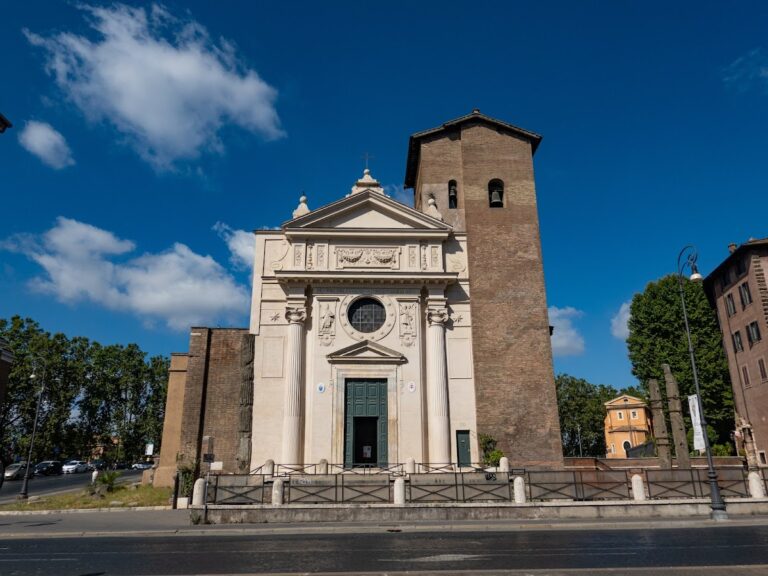
San Giovanni Decollato is a Mannerist church in Rome, Italy, rebuilt by the Florentine Archconfraternity of the Beheaded John the Baptist. Mannerism is a sixteenth-century artistic style known for sophisticated, often complex compositions. The present church was begun in 1504 and completed in 1588. It occupies the site of an earlier church called Santa Maria de fovea, also known as Santa Maria della fossa or Santa Maria in petrocia. In 1488, that church was granted to the Florentine archconfraternity, a religious association with a higher institutional rank than an ordinary confraternity.
Established in Rome by Florentines living there, the association cared for people sentenced to death. Its members urged them to repent, gave them last rites, and buried those who were executed. The church was dedicated to John the Baptist, Florence’s patron saint, and its main feast commemorated his beheading. From 1540, the confraternity could secure the release of one condemned person each year. This annual privilege was linked to a feast day and lasted into the nineteenth century.
Florentine church and artistic undertaking
Administered by the confraternity, San Giovanni Decollato served Rome’s Florentine community rather than functioning as an ordinary parish. Florentines, including popes, supported much of its art, which was largely made by artists from Florence. Members included Michelangelo, who joined in 1514, Giorgio Vasari, and the Florentine popes Clement VIII, Urban VIII, and Clement XII. The church and its oratory became a major collaborative artistic project in Rome and an important example of the rise of the Roman High Maniera, a developed form of Mannerism. Its role as the community’s church was later eclipsed by the larger San Giovanni dei Fiorentini.
Later history
Pope Clement VIII ordered a cloister for the complex in 1600. The church was restored in 1727 and 1888. It also served as a titular deaconry, a church assigned to a cardinal deacon, until 2013. Mario Nasalli Rocca di Corneliano held its cardinal-deacon title from 1969 to 1988 and was its only cardinal deacon.
Remains
The complex includes a brick church, an oratory beside it, and a cloister behind the oratory. The church’s plain exterior contrasts with its richly decorated interior, while the oratory preserves an extensive group of sixteenth-century paintings.
Church
Setting and façade
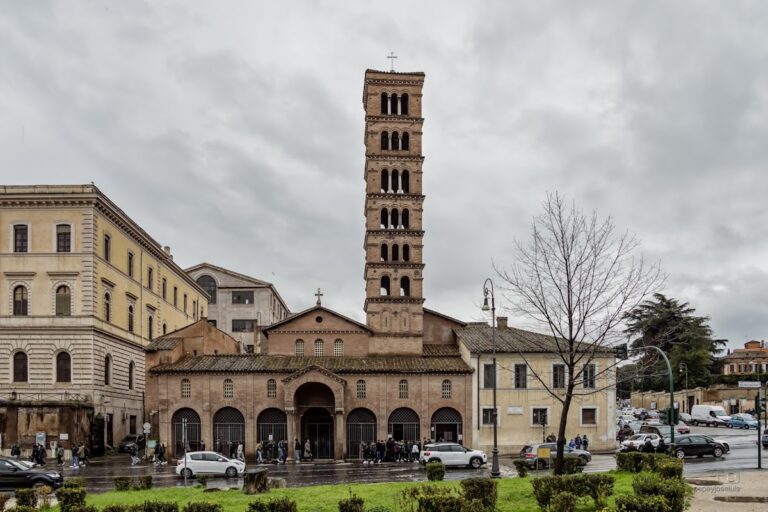
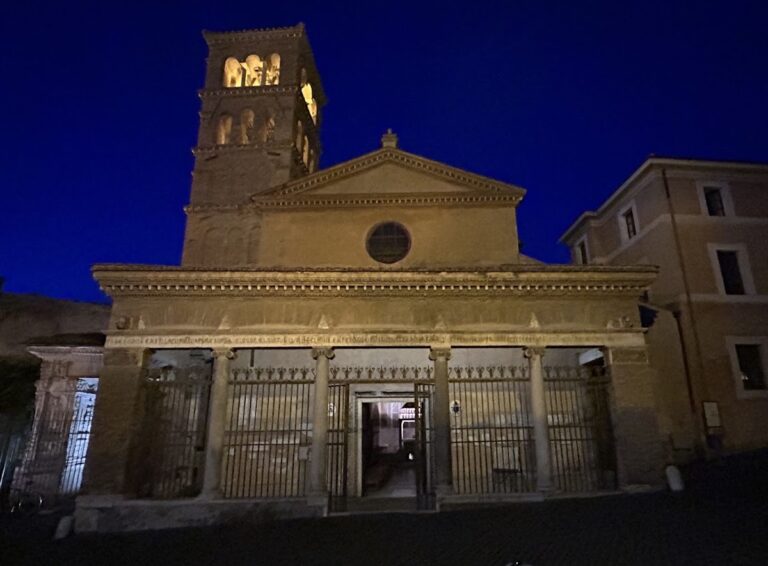
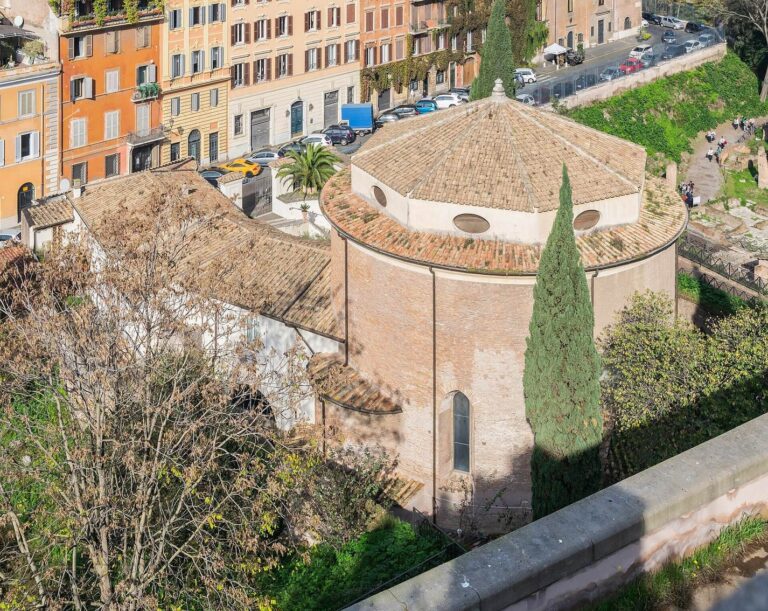
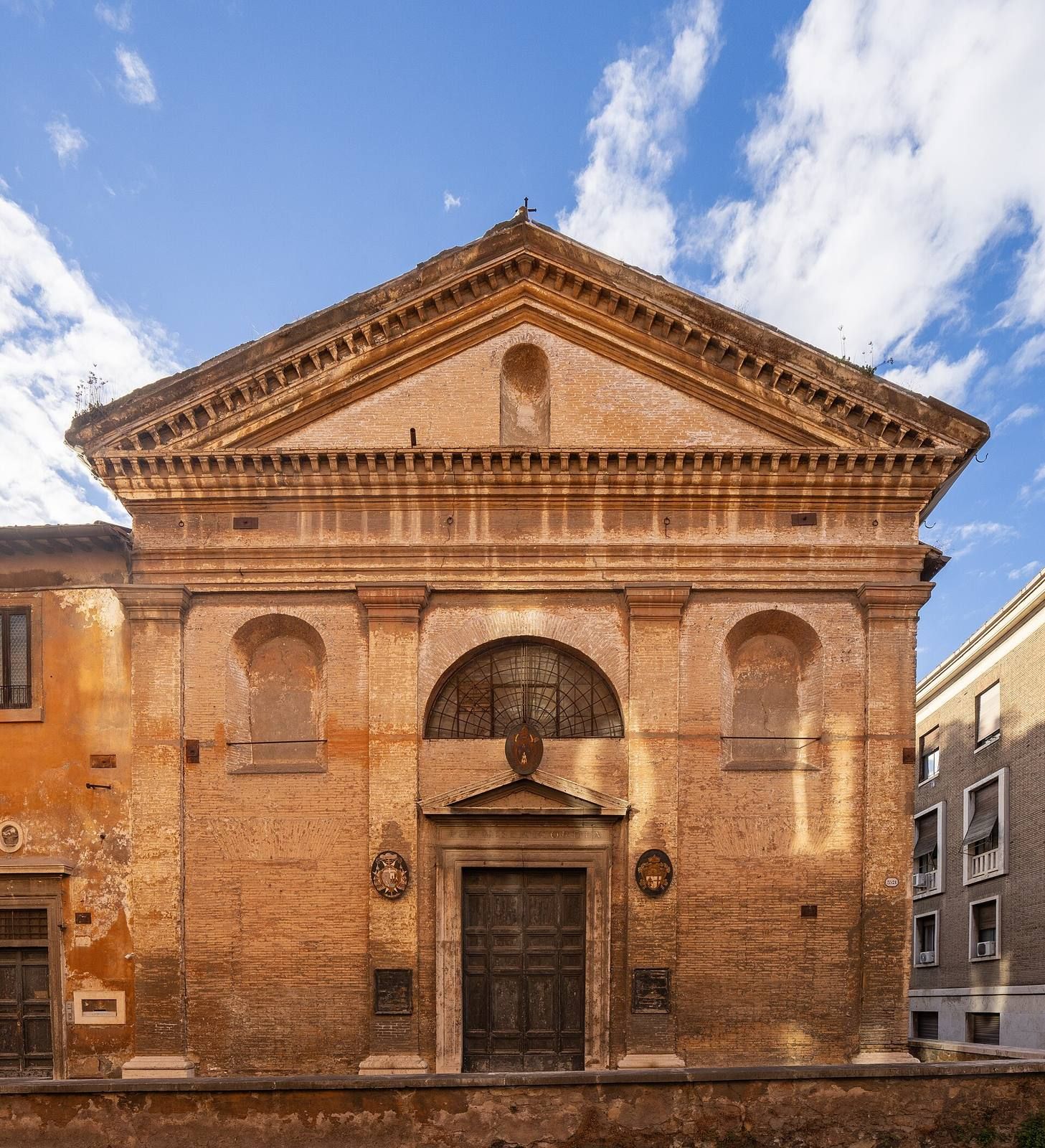
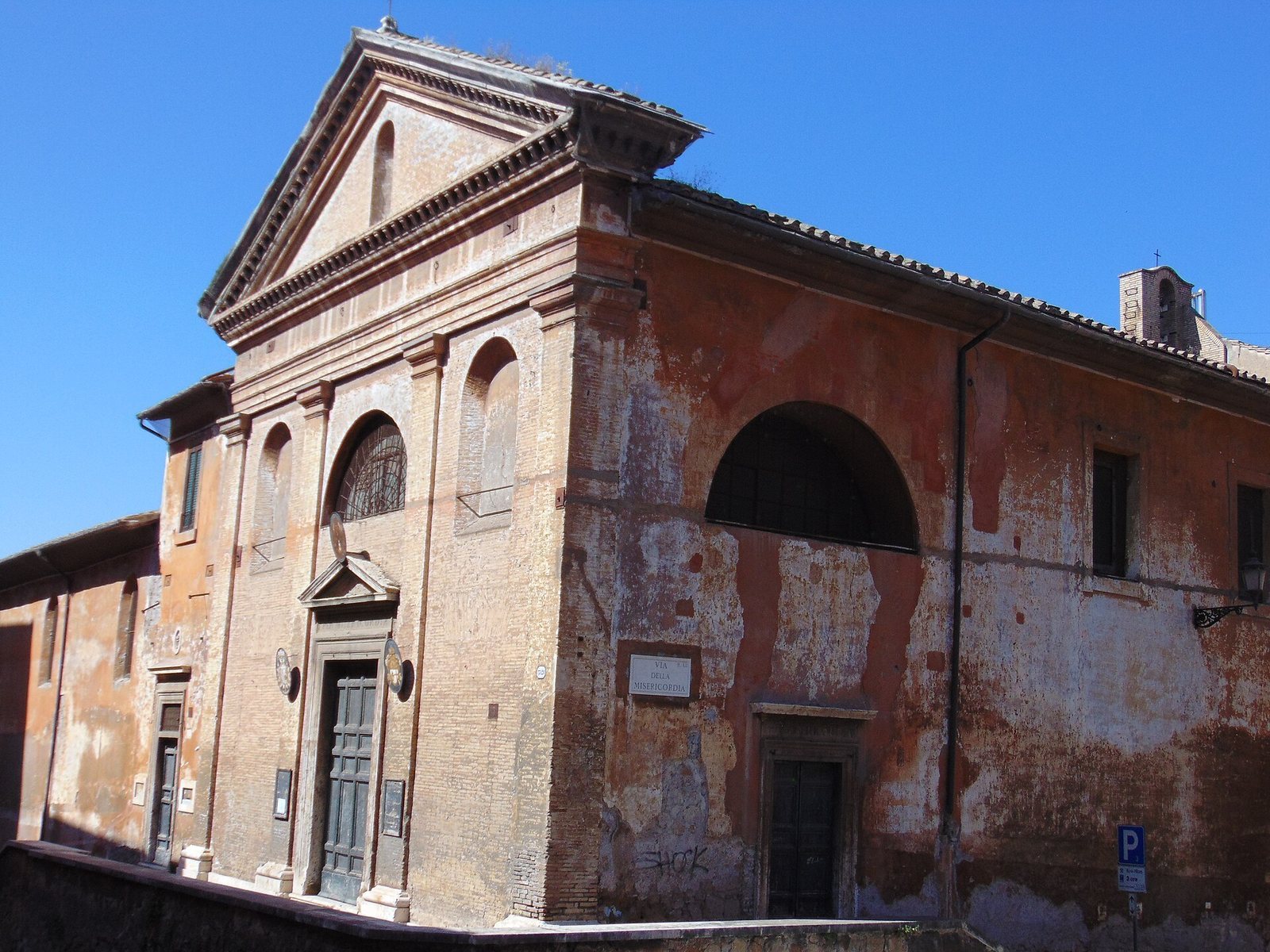
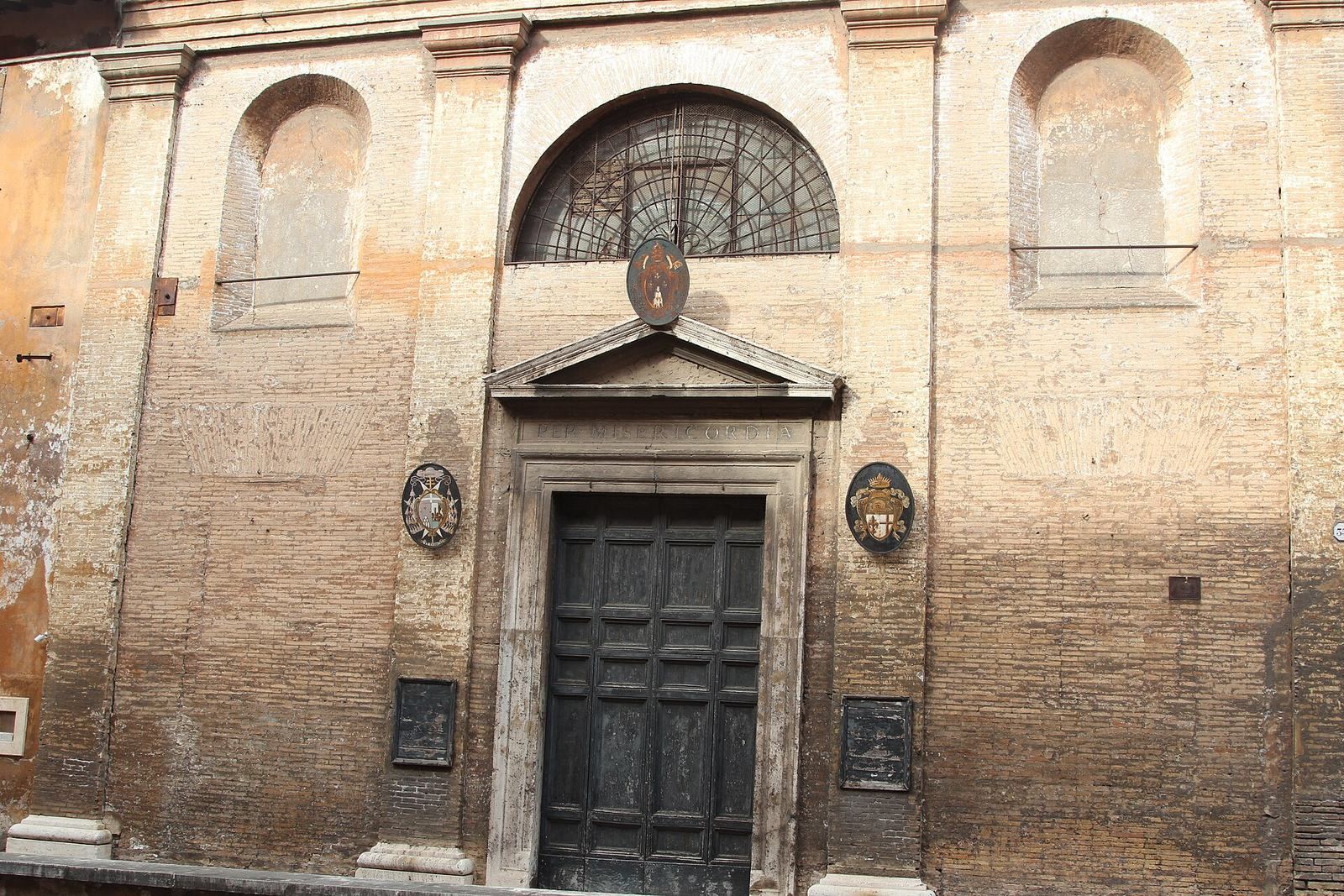
The church stands in Rome’s Ripa district, on the Aventine Hill, about 250 metres northwest of the northern end of the Circus Maximus and close to the Arch of Janus. Its façade is faced in brickwork and has an unfinished appearance. Four Doric pilasters, flat wall supports in a classical style, divide its surface, with niches above. Between the inner supports, an entrance framed like a small classical shrine sits below a semicircular window. A plain triangular pediment crowns the façade.
Interior
The church has a single nave, the central space for worship, with three side chapels on each side. A flat wooden ceiling is arranged in recessed panels, and the sanctuary ends in a square apse. Ornamental plasterwork decorates the supports between the chapel arches. The interior has been characterized as a consistent expression of Tuscan-derived Mannerism in Rome.
Altars and chapel paintings
Vasari’s main altarpiece, a painting behind the principal altar, depicts the Beheading of John the Baptist and dates to the early 1550s. In the middle chapel on the left, Giovanni Battista Naldini’s painting of Saint John of Patmos shows his martyrdom in boiling oil; it dates to around 1580. Another side altar holds a fragmentary medieval sculpture of Mary nursing the infant Jesus, brought from the earlier church. A painting of the Madonna of Mercy, from the second half of the fifteenth century, is at the first altar on the left. Other chapel paintings include Jacopo Zucchi’s Birth of John the Baptist (1585) in the first chapel on the right, an Incredulity of Saint Thomas by an artist from Vasari’s school (around 1580) in the middle chapel on the right, and Pomarancio’s Visitation (around 1590) in the last chapel on the right.
Other church paintings
A painting of the Dance of Salome, dated 1550 and attributed to Pirro Ligorio, is in the church. In a separate scene of the Beheading of John the Baptist, Ligorio probably painted the background; an assistant of Salviati painted the figures following the master’s design. On the arch above the choir, Giovanni Balducci’s paintings show six Church Fathers, influential early Christian theologians and writers. Inside the choir, an unknown artist, possibly from Michelangelo’s school, painted the beheading of John on the left wall. Balducci, also known as Il Cosci, painted the Resurrection on the right.
Oratory
Fresco cycle
The oratory, a small chapel or prayer hall, stands to the left of the church façade and was completed around 1530. Its frescoes, paintings made on wet plaster, run along the upper walls above benches, with an altar at the far end. Made around 1540 by Francesco Salviati, Jacopino del Conte, Ligorio, and other artists, the cycle includes del Conte’s Annunciation to Zechariah, probably from 1536, and Saint John Preaching (1538), which appears to draw on a design by Perino del Vaga. Salviati painted the Visitation in 1538; del Conte painted the Baptism of Christ in 1541; and Salviati’s Birth of Saint John dates to 1551. The Annunciation to Zechariah may include Michelangelo’s portrait at the far left, though the identification is uncertain.
Altarpiece and other decoration
Del Conte’s Deposition altarpiece, dated around 1552, completed the oratory’s decorative programme; its design is sometimes attributed to Daniele da Volterra. Salviati also painted large figures of Saints Andrew and Bartholomew beside an altarpiece and a painted imitation of a window. Battista Franco’s Arrest of Saint John probably dates to 1541.
Cloister and historical hall
Cloister graves
The cloister, a covered walkway around an open courtyard, opens through round-arched arcades. Seven circular marble covers set into its floor mark the nameless graves of executed people. Their inscription reads DOMINE CVM VENERIS IVDICARE NOLI NOS CONDEMNARE
, meaning, Lord, when you come to judge, do not condemn us.
Giordano Bruno’s remains are believed to be among those buried in the cloister.
Historical hall
A hall associated with the confraternity houses objects connected with its work, including a basket used to collect the heads of executed people. The basket is associated with the head of Beatrice Cenci, who was executed in 1599.