San Teodoro al Palatino: A Greek Orthodox Church in Rome
Site at a Glance
- Popularity
- Medium
- Country
- Italy
- Primary era
- Medieval
- Eras represented
- Medieval, Early Modern
- Civilizations
- Byzantine, Papal States
- Site type
- Religious
- Remains
- Church
On this page8 sections
History
Early church and deaconry
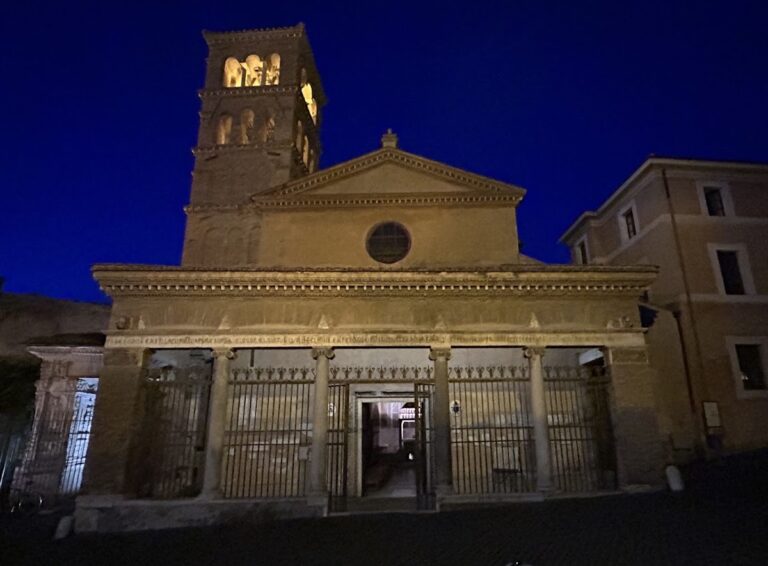
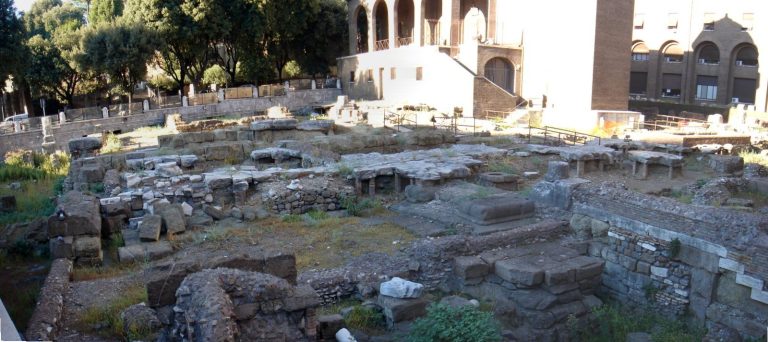
San Teodoro al Palatino is a Greek Orthodox church in Rome, Italy, probably founded in the late sixth century. It was dedicated to Theodore of Amasea, also called Theodore Tiro of Euchaita, a Greek soldier and Christian martyr killed around 306. The church stood near the Lupercal, a cave associated with the legend of Romulus and Remus, in the courtyard of the still-active Horrea Agrippiana. This granary served a district inhabited largely by Greeks.
What occupied the site before the church is uncertain. One proposal places a circular temple beneath or within it. A sixteenth-century identification of that building as a Temple of Romulus was mistaken; another proposal connects it with a temple of Juno Sospita, a protective form of the Roman goddess Juno. The church may instead have stood over remains of the granaries.
San Teodoro is traditionally counted among Rome’s seven original deaconries, church institutions associated with cardinal deacons. It is recorded as a deaconry during the pontificate of Gregory I, from 590 to 604. Tradition names Pope Agatho as its first deacon, around 678. The earliest deacon whose name is known was Roberto, whose tenure is dated to about 1073–1099.
Rebuilding and changing church roles
Pope Nicholas V commissioned a rebuilding in 1453–1454, probably on the earlier foundations. The Capitoline Wolf was kept in the church until 1471, when it was transferred to the Lateran. In 1587, Pope Sixtus V ended the church’s status as a titular deaconry, an ecclesiastical title assigned to a cardinal deacon.
Cardinal Francesco Barberini renovated the church in 1643. Pope Clement XI then commissioned Carlo Fontana to rebuild it in 1703–1705 and assigned it to the Society of the Sacred Heart of Jesus, a Catholic religious association. In 1729, Pope Benedict XIII granted the church to the Archconfraternity of the Sacred Heart, an elevated Catholic confraternity.
Modern Orthodox use
Pope John XXIII restored the titular deaconry on 2 December 1959. William Theodore Heard became its first cardinal deacon; later holders included Ernesto Civardi and Vincenzo Fagiolo. After Fagiolo’s death in 2000, the title became vacant, and it was suppressed again in 2004.
In 2000, Pope John Paul II announced that the church would be made available to the Ecumenical Patriarchate of Constantinople and Rome’s Greek Orthodox community. Restoration and adaptation for worship in the Byzantine rite, a liturgical tradition of Eastern Christianity, followed from 2002 to 2006. San Teodoro is now a Greek Orthodox place of worship affiliated with the Orthodox Archdiocese of Italy.
Remains
Setting and building
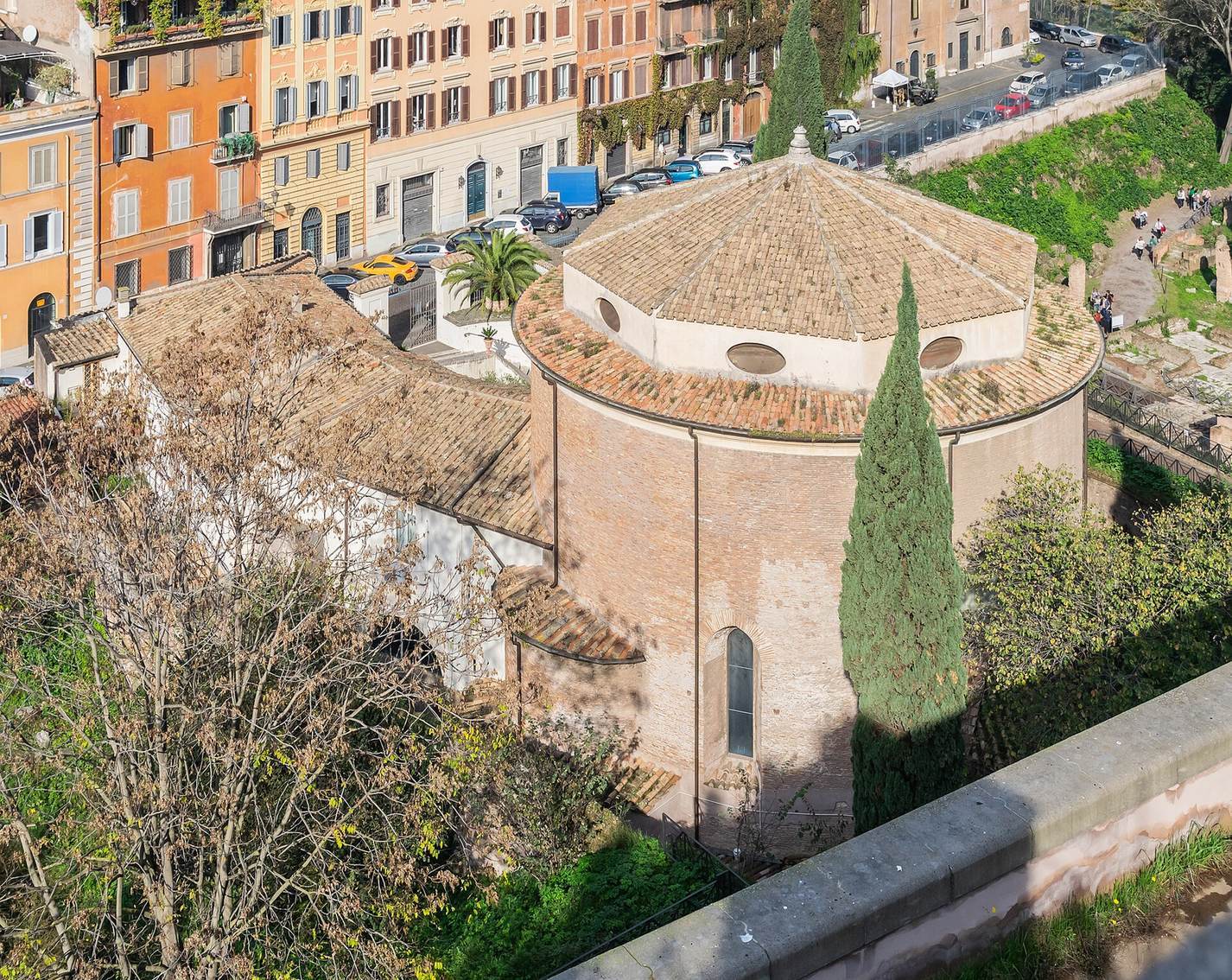
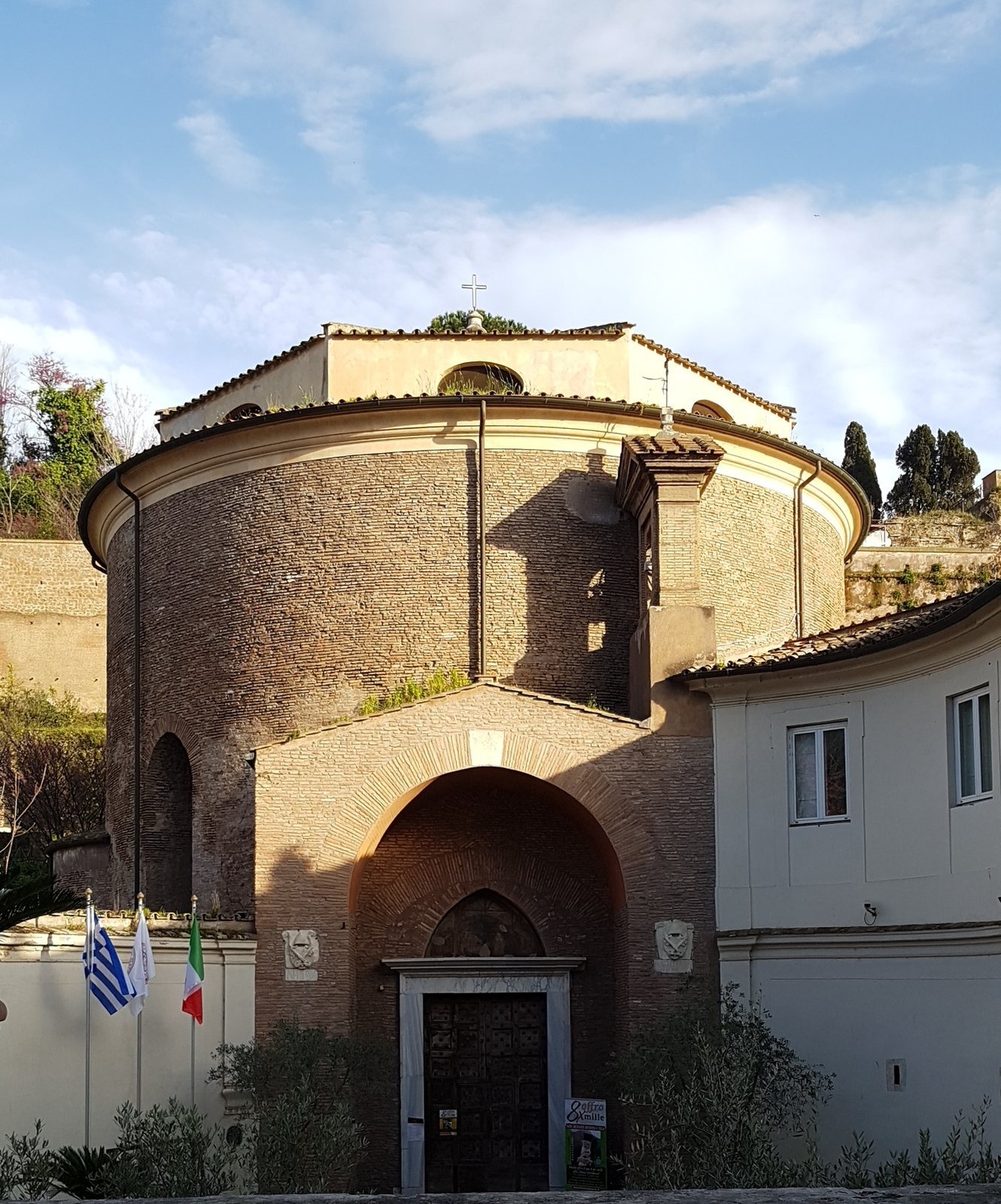
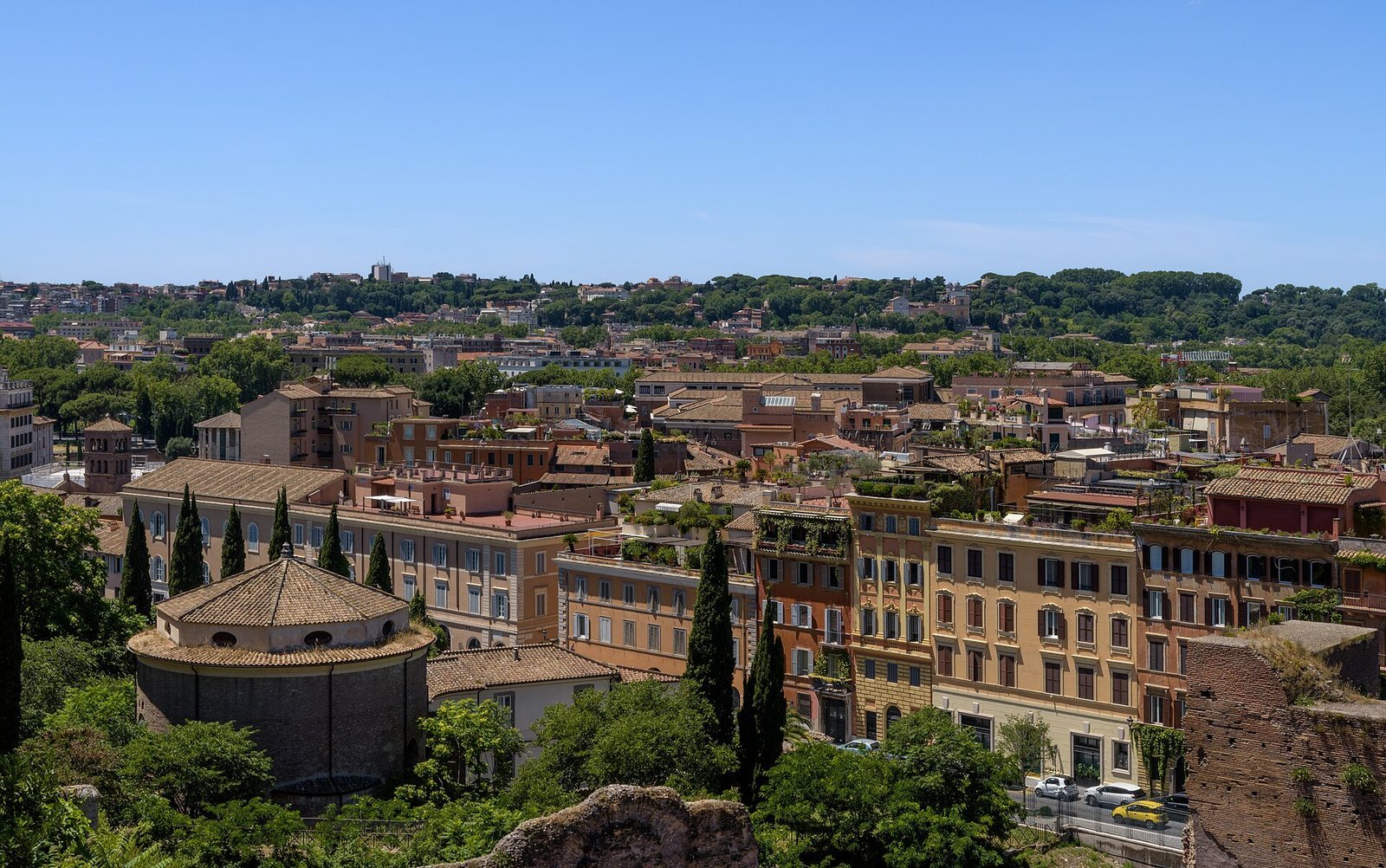
The church stands along an ancient route below the Palatine Hill’s northwestern slope, connecting the Roman Forum with the Circus Maximus and the Forum Boarium. The earliest building was small and circular, and parts of its walls and apse survive. A later rebuilding produced a brick, domed circular structure with three apses. The present exterior arrangement, including the courtyard and stairs leading up to Via San Teodoro, dates to Fontana’s rebuilding of 1703–1705. An ancient pagan altar is visible in the courtyard at the entrance.
The apse mosaic
The apse contains a mosaic dating to around 600. Its overall composition survives, although the figure of Theodore was added during Nicholas V’s restoration. At the center, Christ sits on a star-covered globe representing the heavens, blesses with one hand, and holds a cross-staff. His black robe bears a broad gold stripe, a mark of high social rank. Above him, a hand of God the Father emerges from multicolored clouds holding a laurel wreath.
On the right, Peter carries a key as he leads Theodore, dressed in a patterned cloak, toward Christ. On the left, Paul carries a scroll and guides a youthful saint, identified as Cleonicus, with George also proposed as an identification. The two outer martyrs hold their crowns on veiled hands, reflecting Byzantine court ceremony. Restoration around 1642 affected the head of Christ, Paul’s hand, the youthful saint, the gold background, and the ornamental border.
Orthodox fittings and ossuary
An icon screen, a screen bearing icons that separates the sanctuary from the main body of the church, reflects its present Greek Orthodox use. At the rear of the courtyard, outside the church, an ossuary holds stacked skulls and bones visible through a grille.