Tomb of King Kongmin: A Goryeo Royal Tomb Complex in North Korea
Site at a Glance
- Popularity
- Medium
- Country
- North Korea
- Primary era
- Medieval
- External website
- Open
- Eras represented
- Medieval
- Civilizations
- Goryeo
- Site type
- Burial
- Remains
- Tomb
On this page8 sections
History
The Tomb of King Kongmin, also known as Hyeonjeongneung Royal Tomb, is a fourteenth-century royal burial complex in Haeson Village in the Kaesong area of North Korea. It was built for King Gongmin, the 31st ruler of Goryeo, a Korean dynasty that ruled from 918 to 1392, and his queen, Queen Indeok, also known as Princess Noguk. She was the Mongolian princess Budashiri. The complex is one of Goryeo’s royal tomb groups.
Construction and royal burial
After Queen Indeok died in childbirth in 1365, Gongmin directed the construction of her tomb. It was modeled on the tomb of an earlier Goryeo king’s queen, but was intended to be more splendid. Work on the complex began in 1365 and was completed in 1372. The History of Goryeo records that construction of Gongmin’s own tomb began in 1366, during his lifetime. He was buried there in 1374.
Site selection and local tradition
Geomancers, astrologers and mathematicians assessed the landscape and orientation for auspicious placement, a practice known in Korean as pung su. A local legend tells that Gongmin threatened to have a young geomancer killed if the proposed location displeased him, while secretly ordering attendants to execute the man if the king waved his handkerchief. After climbing a nearby mountain and admiring the site, Gongmin wiped his brow. The attendants mistook the gesture for the signal and killed the geomancer. The tale explains the name given to the mountain opposite the tombs.
Looting and heritage recognition
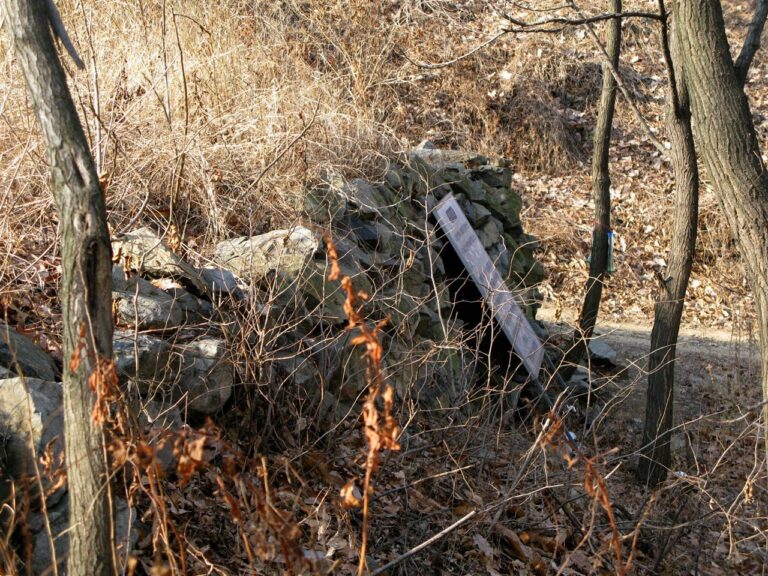
During the Russo-Japanese War period, Japanese looters used dynamite to blast open the rear of a tomb chamber and plundered the tombs. Most of the relics are thought to have been taken to Japan.
North Korea recognized the complex as an important cultural property and has maintained official attention to it. It is listed as National Treasure No. 123. In 2013, UNESCO inscribed it, alongside 11 other historic sites, as part of Historic Monuments and Sites in Kaesong.
Remains
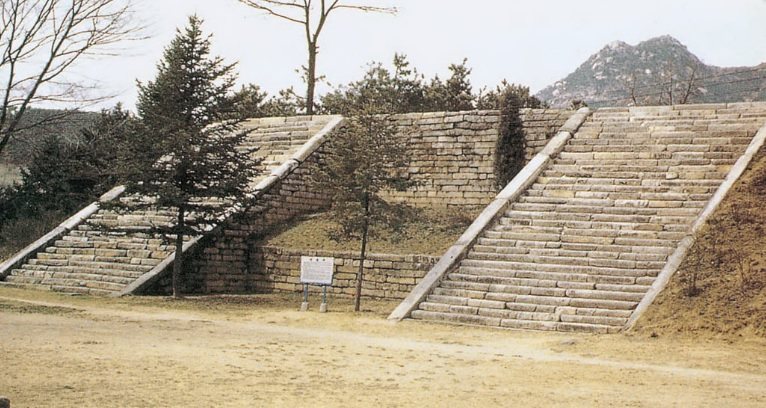
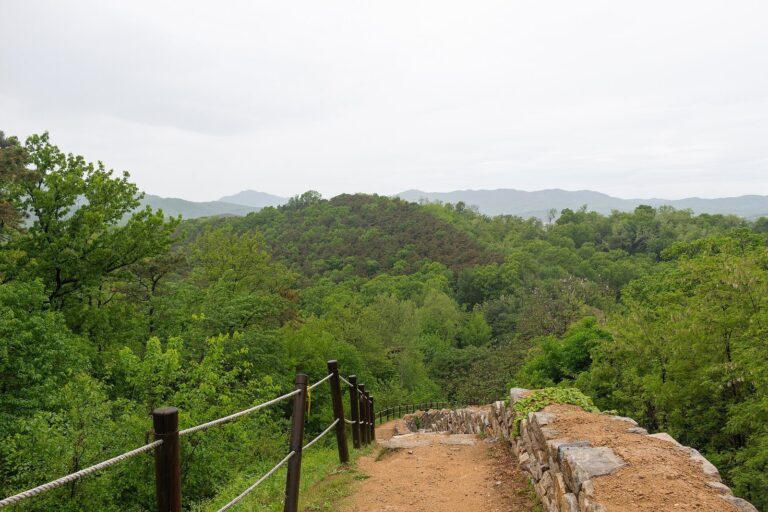
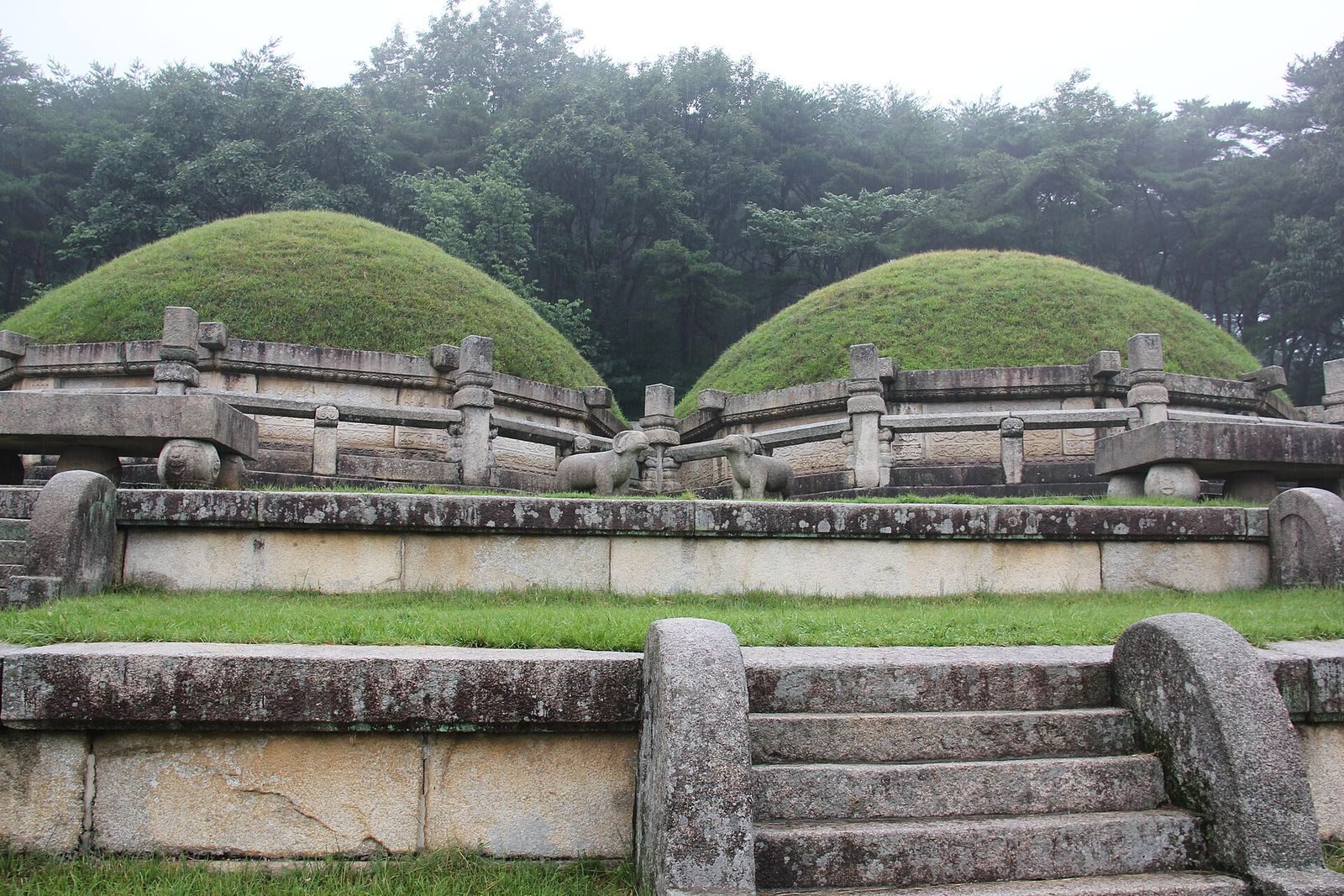
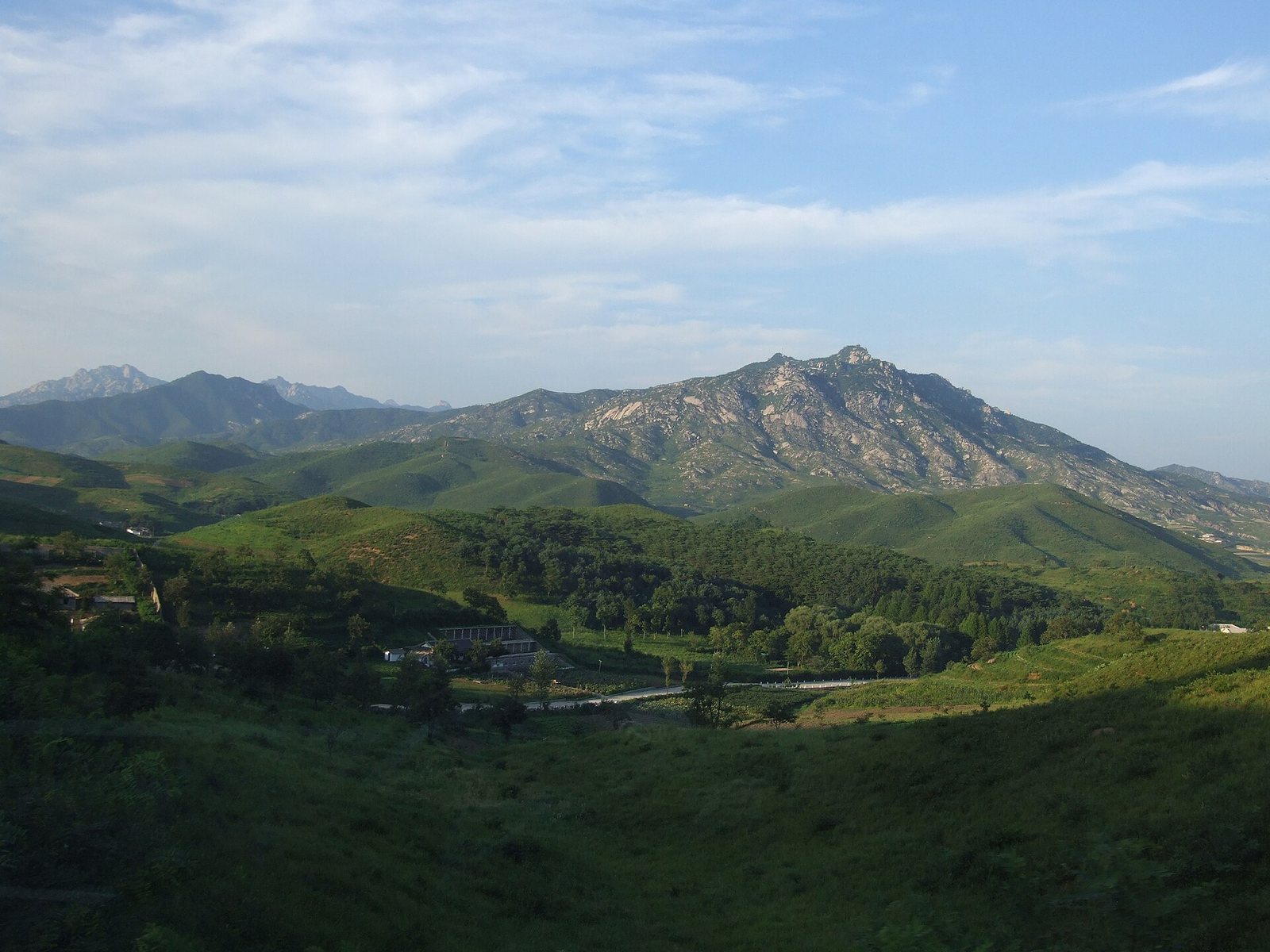
The complex lies on the mid-slope of Museon Peak on Bongmyeongsan, about 14 km from Kaesong, while the two burial mounds stand at the top of a hill. Its stepped layout places the mounds at the highest level, with sculptures and other installations on lower levels. The arrangement was intended to create a grand setting and is associated with Goryeo achievements in mathematics, astronomy, geography, stone construction and visual art. The complex is regarded as the best-preserved example among Goryeo royal tombs and a mature form of late-Goryeo tomb construction. Its design is considered a model for royal tombs of Joseon, the Korean dynasty that followed Goryeo.
Burial mounds and chambers
Gongmin’s mound stands to the west and the queen’s to the east. Each is about 6.5 m high and 13 m across, with a carved granite base supporting a small earthen mound. Twelve-sided stone panels encircle the lower part of each mound, held in place by different types of stone above and below. The burial chambers were built separately to fit their respective mounds, then joined by an internal passage; murals cover the chamber walls. After Korea’s liberation, the damaged chamber was repaired with cement. The complex has largely retained its original arrangement and avoided extensive restoration. Gongmin’s coffin is exhibited at the Goryeo Museum in Kaesong.
Animal sculptures
Stone sheep and tigers surround the mounds. The sheep represent gentleness and the tigers fierceness; together, they express yin and yang, complementary forces or qualities.
Spirit road and official statues
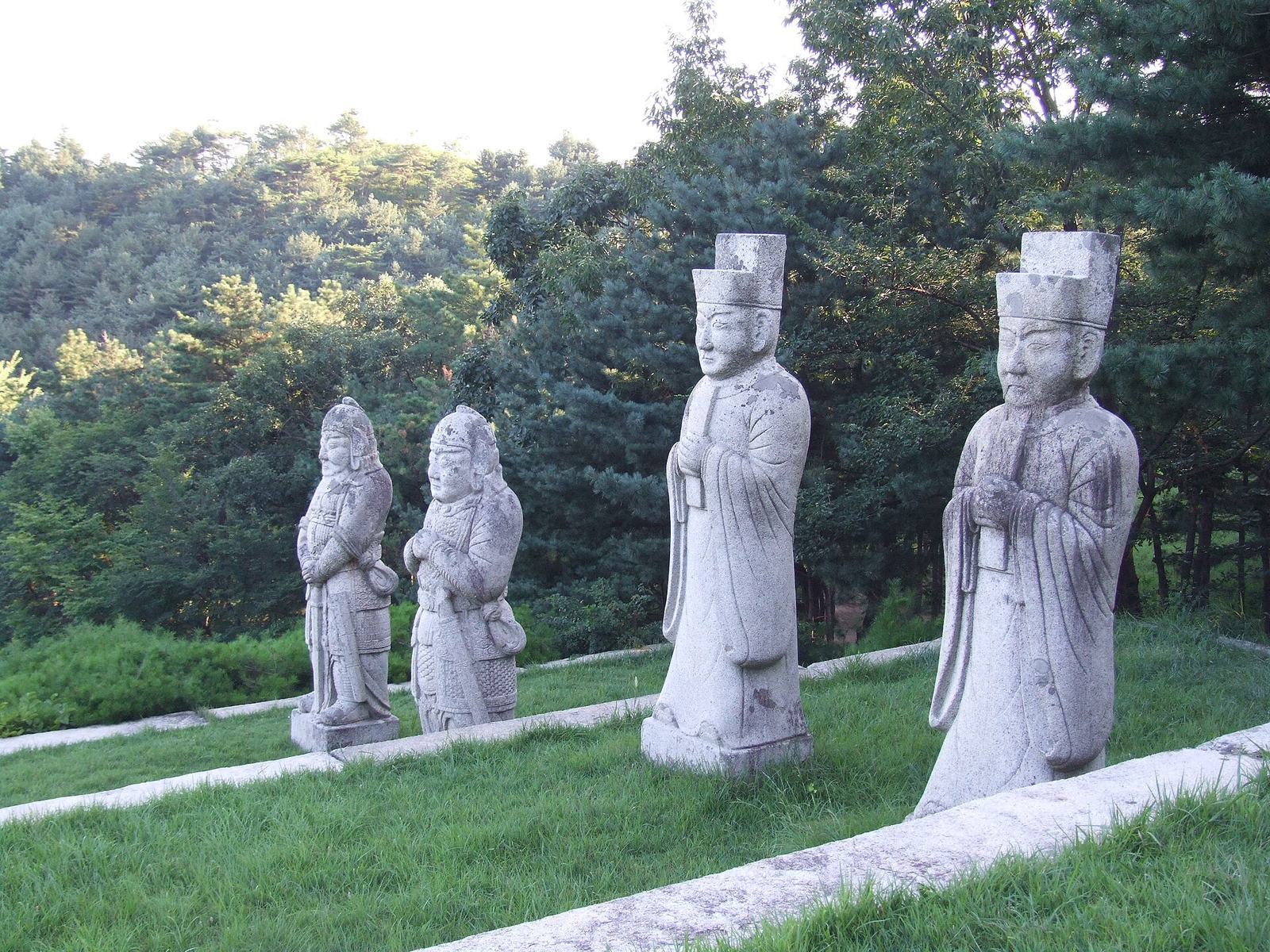
The spirit road, the approach path associated with a tomb, is lined with statues of military officers and Confucian officials, civil administrators shaped by Confucian learning. At the top of the stairs leading to the tombs stand eight statues, about 3 m high, with four on each side. They depict a young and an older warrior, and a young and an older official. The older officials stand nearer the tombs, reflecting the belief that experienced advisers should assist the ruler. The older warriors are farther away, reflecting the belief that veteran soldiers were better suited to guard the country’s borders.