Ancient Theatre of Ohrid: A Hellenistic Performance Venue in North Macedonia
Site at a Glance
- Popularity
- High
- Country
- North Macedonia
- Primary era
- Classical
- Eras represented
- Classical
- Civilizations
- Kingdom of Macedon, Roman
- Site type
- Entertainment
- Remains
- Theatre
On this page8 sections
History
The Ancient Theatre of Ohrid is a late Hellenistic theatre in North Macedonia, built during the ancient Macedonian period around the end of the third or beginning of the second century BC. The Hellenistic period was an era of Greek cultural influence that followed Alexander the Great’s conquests. In ancient Lychnidos, the predecessor city of Ohrid, the theatre served as a cultural center for dramatic, musical, and poetic performances.
Roman rule
After Macedonia came under Roman rule in 148 BC, the theatre was adapted for gladiatorial contests and fights with wild animals. A later addition of upper seating raised its capacity to about 5,000 spectators.
Early Christian period
The theatre probably suffered damage during the early fourth century AD, amid the destruction of pagan buildings as Christianity spread. A tradition connects the destruction to Saint Erasmus of Antioch, an early Christian saint and missionary, and credits him with converting 25,000 people in Ohrid. Stone from the theatre was later reused in early Christian basilicas and in other religious and secular buildings.
Rediscovery and restoration
In the early twentieth century, Russian art historian Nikodim Kondakov proposed that a theatre had stood in ancient Lychnidos. Excavations partly exposed it in 1935, and work in 1959–60 established its location and size. Systematic excavation began in 1977, paused for six years, and resumed in 1984.
A project to uncover the theatre fully and return it to use began in 1999. Performances were being held there again by 2001, and parts of the structure were restored in 2002.
Remains
Setting and layout
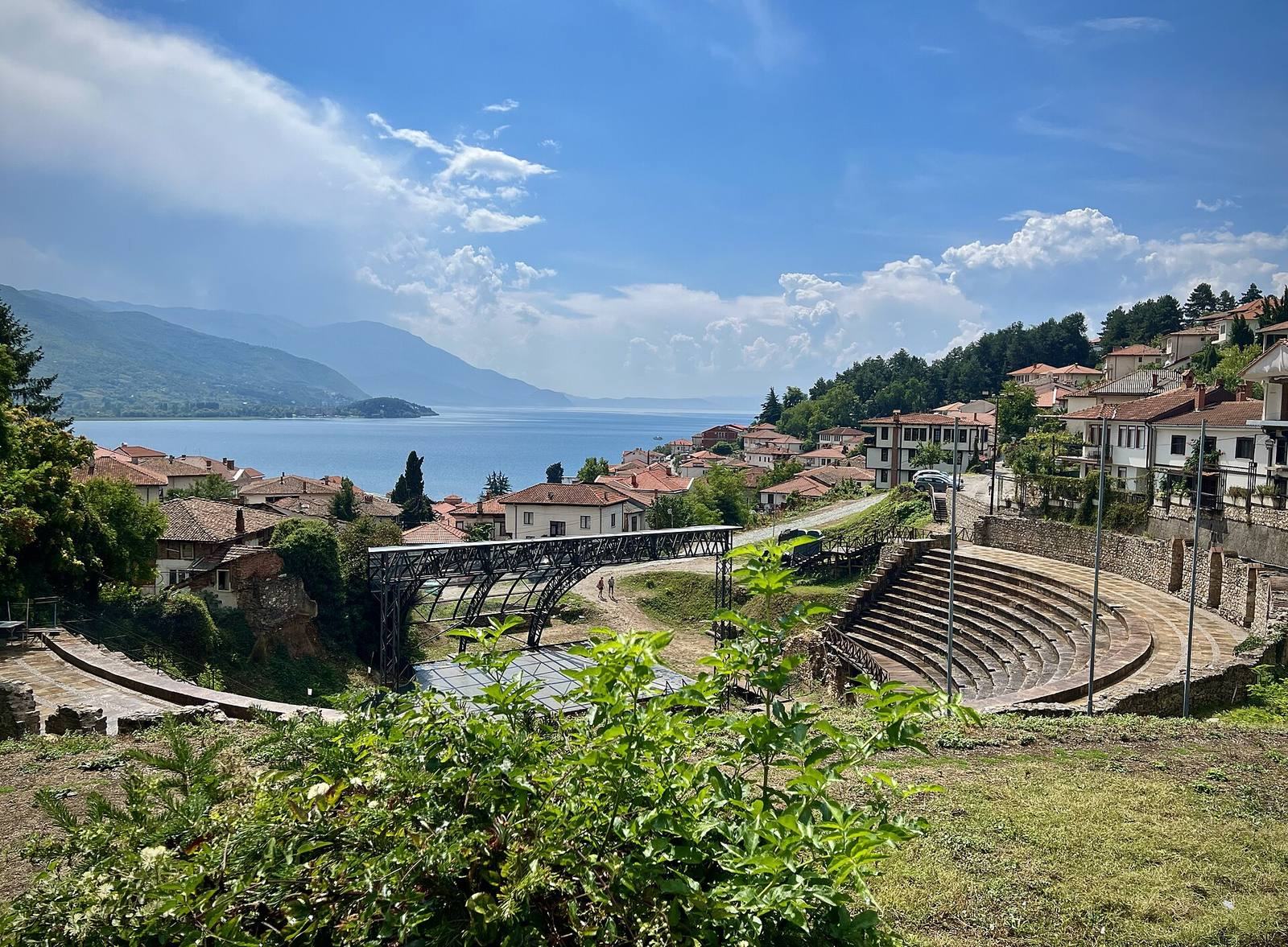
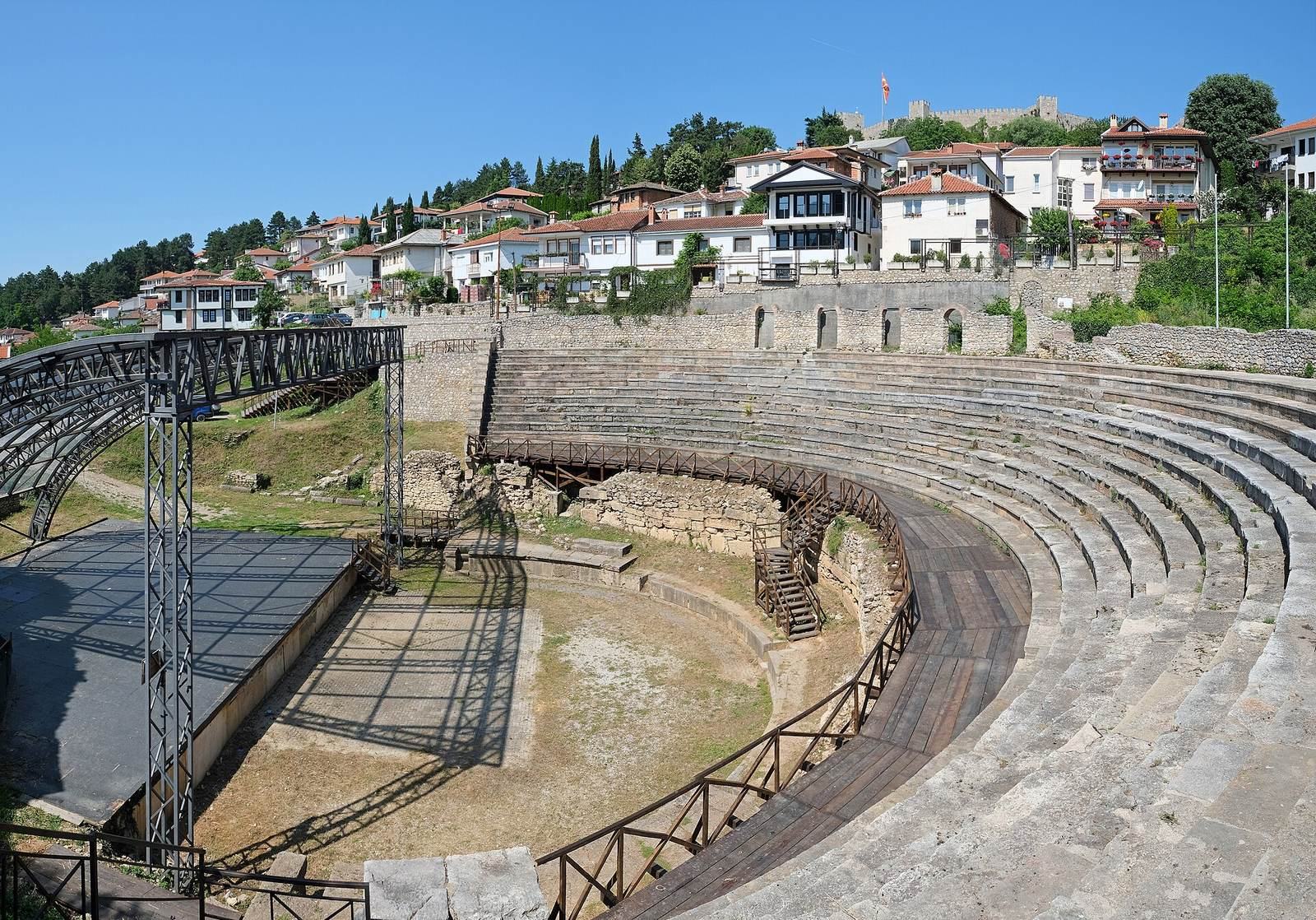
The theatre covers about 4,000 square metres at the foot of the east-facing slope of Gorni Saraj, one of Ohrid’s old-town hills. It lies below Samuel’s Fortress and near Upper Gate, overlooking Lake Ohrid and the surrounding mountains. The auditorium was cut into the hillside, with some sections supported by substructures. The surrounding hills shelter the open-air performance space from winds that could affect acoustics. The surviving complex includes the auditorium, stage building, entrance passages, orchestra (the performance space before the seating), honor seats, and arena.
Auditorium and arena
Twelve seating rows survive, while excavations exposed nine rows; three stairways lead up through the seating. During the Roman adaptation, lower rows were removed to make room for animal cages, a protective wall enclosed the orchestra and honor seats, and an outer upper seating section was added. The arena includes a wall formed from upright stone slabs. The theatre’s present capacity is about 1,700.
Stage and inscriptions
Parts of the stage building remain. Its rich decoration included a frieze, a horizontal decorative band, carved with scenes from the lives of the gods. Two marble reliefs found at the theatre show Dionysus, the Greek god associated with theatre and performance, accompanied by the Muses, goddesses of the arts and poetry; they are preserved in the Ohrid Museum. Latin inscriptions on seats retain the names Crispos and Topos, while some city notables had seats reserved for their own use.