Dolmen D5: A Neolithic Passage Grave in the Netherlands
Site at a Glance
- Popularity
- Very Low
- Country
- Netherlands
- Primary era
- Stone Age
- Eras represented
- Stone Age
- Civilizations
- Unclassified
- Site type
- Burial
- Remains
- Tomb
On this page8 sections
History
Neolithic setting
Dolmen D5 is a Neolithic passage grave northwest of Zeijen in the Netherlands. A passage grave is a burial chamber classified by its passage-like entrance. The tomb is assigned to the western group of the Funnel Beaker culture, a Neolithic tradition named for its funnel-shaped pottery. Its construction date is uncertain.
Archaeological work in the surrounding area has identified settlements from the beginning of the Neolithic and two settlements dating to the beginning of the Common Era. Northwest of the tomb, the Noordsche Veld contains burial mounds and a large complex of Celtic fields, prehistoric agricultural field systems.
Early descriptions and intervention
Dutch clergyman and antiquarian Nicolaas Westendorp visited the tomb in 1814 and published an account the next year. In 1833, professor and archaeologist Caspar Reuvens made a small excavation. At the direction of Drenthe provincial administrator Petrus Hofstede, workers partly removed the mound to expose the tomb.
Antiquarian and museum curator L. J. F. Janssen visited in 1847 and published the first survey of Dutch megalithic tombs in 1848, with descriptions and schematic plans. In 1857, a stone collector began taking the tomb’s floor stones. Lucas Oldenhuis Gratama bought the monument from stone dealer I. L. Hendriks van de Smilde for 40 guilders, preventing its destruction, and transferred it to the Province of Drenthe.
Surveys and preservation
Concern among British antiquarians that restoration might erase the original appearance of Dutch megalithic tombs led William Collings Lukis and Henry Dryden to survey D5 on 3 July 1878. It was then provincial property and had formerly belonged to members of the Vries community, who shared rights to common land. Their survey was published in 2015 by Drenthe archaeologist Wijnand van der Sanden, who considered it high-quality work.
Willem Johannes de Wilde recorded Dutch megalithic tombs between 1904 and 1906, but his notes on D5 are lost. Albert Egges van Giffen included the tomb in his atlas in 1918 and described its condition as fairly good. The monument was restored in 1952, and a small excavation at the entrance in 1965 sought the portal stones, which frame a megalithic tomb’s entrance. D5 has been a National Monument, a site protected under Dutch law, since 1993. In 2017, the Gratama Foundation created a three-dimensional photographic record of the tomb for an atlas, as part of a project with the Province of Drenthe and the University of Groningen.
Remains
Setting and mound
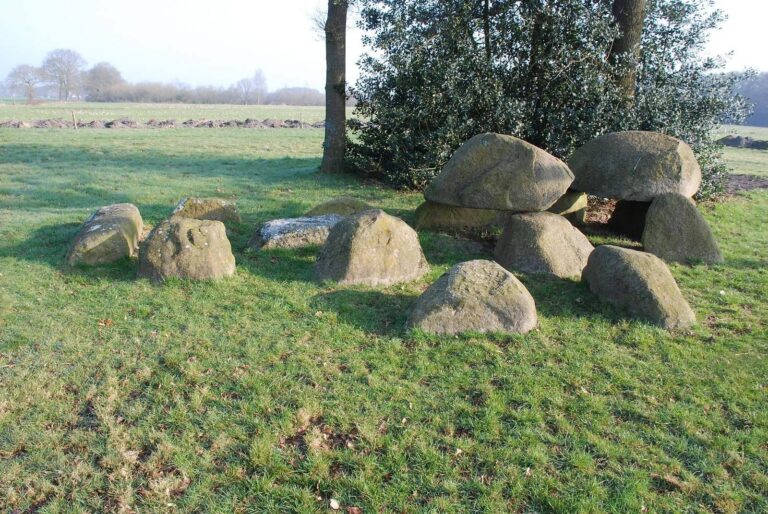
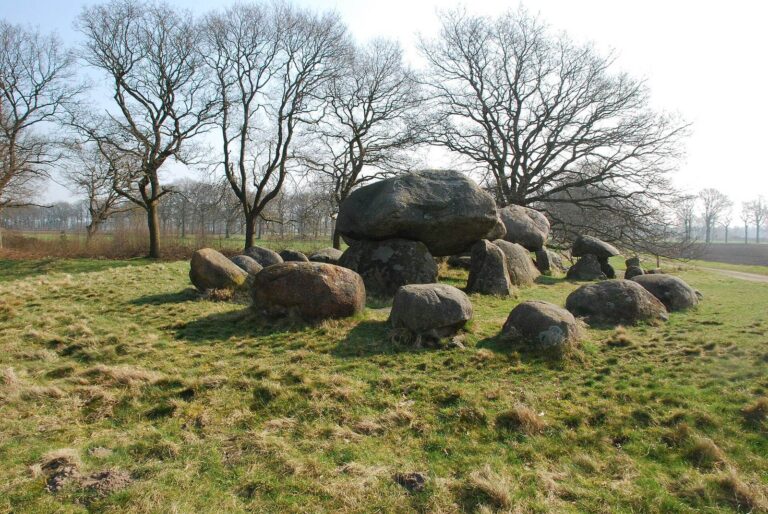
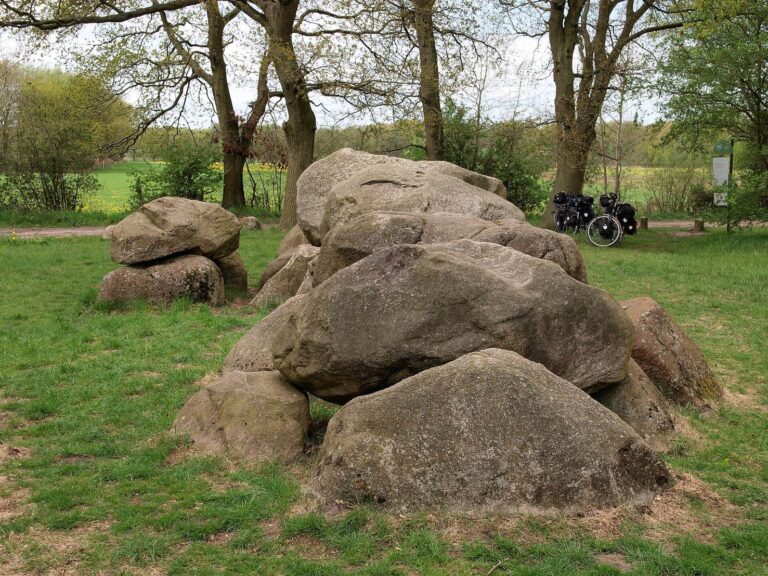
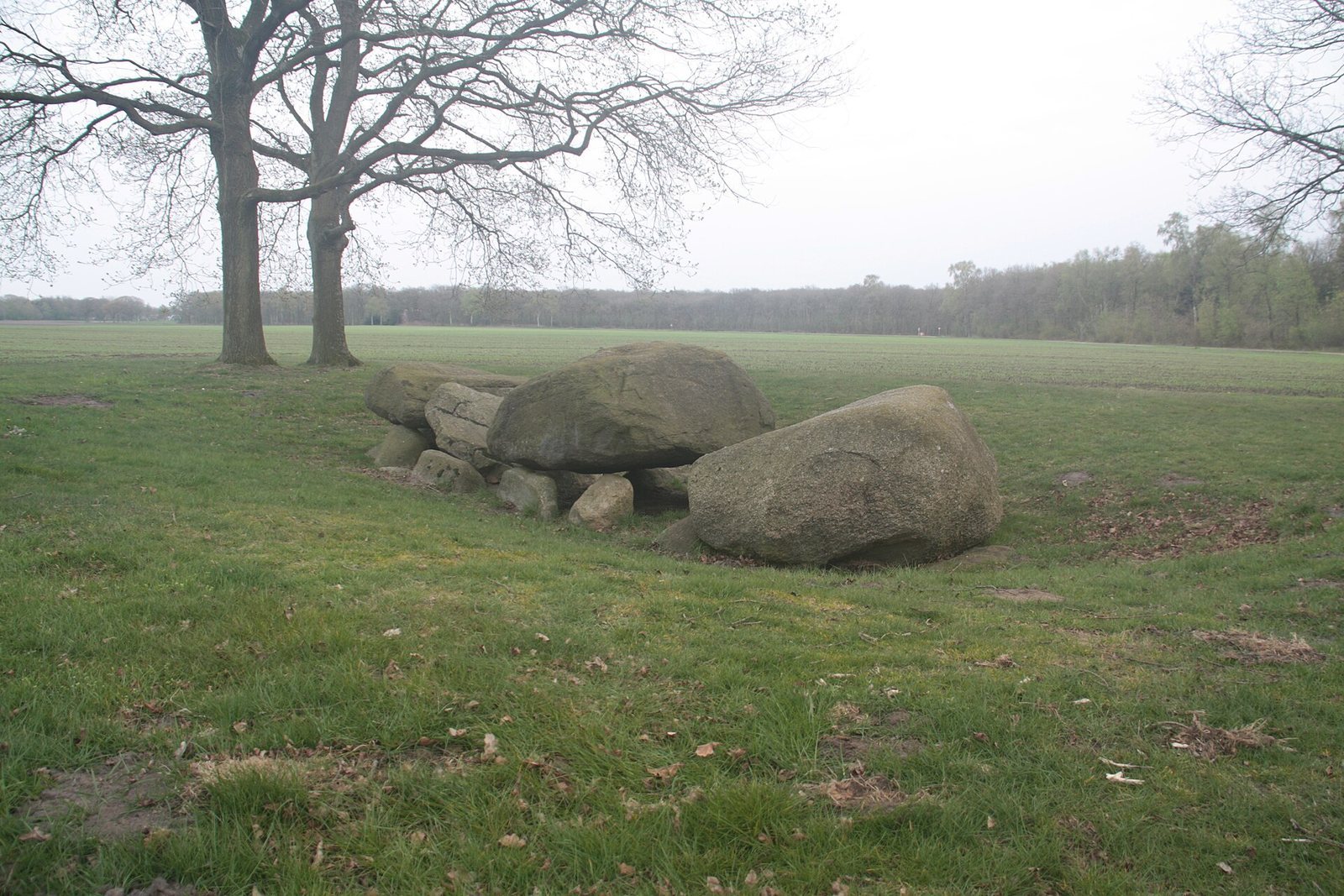
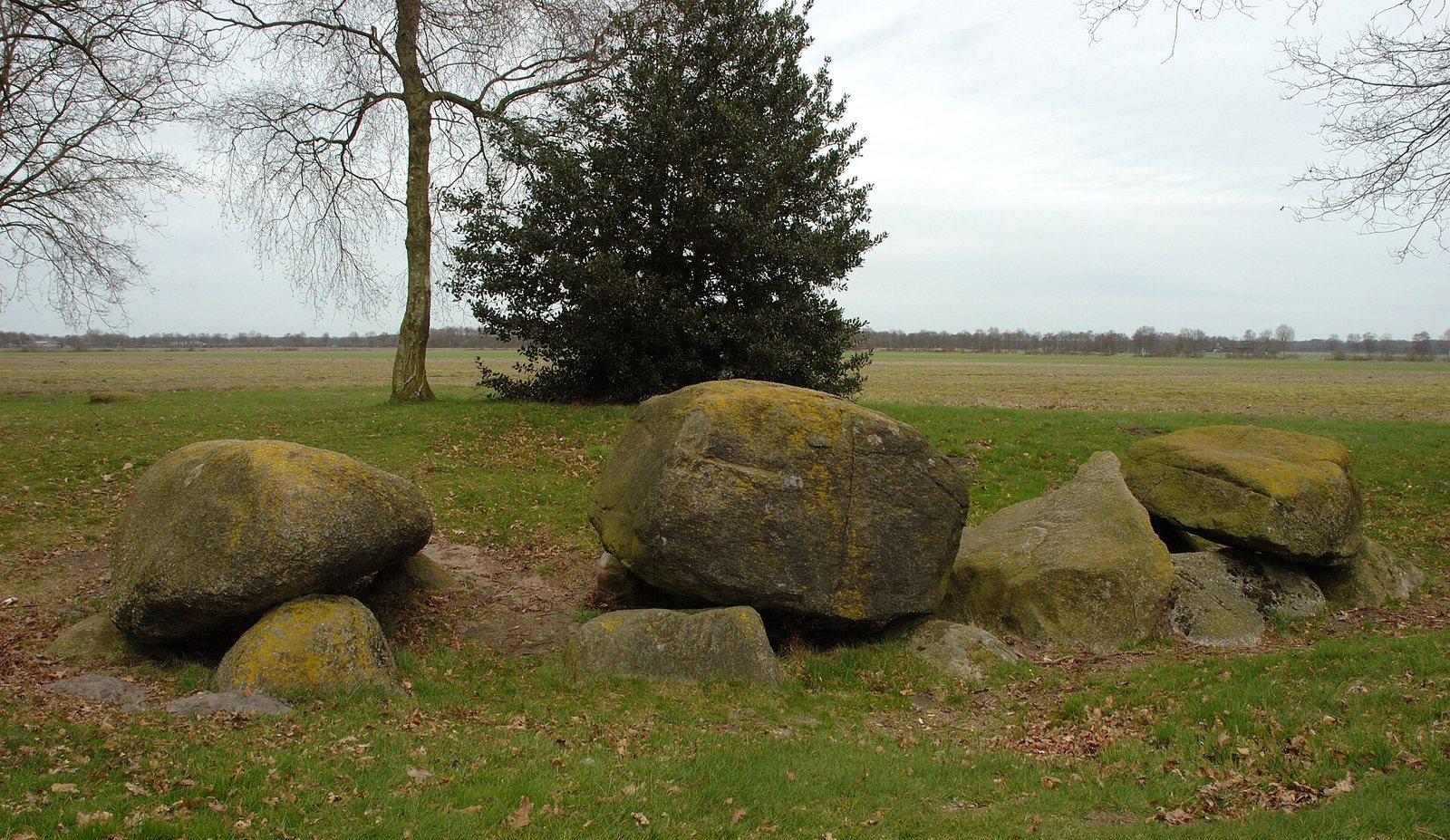
The tomb stands in a field within a shallow depression, lower than the surrounding ground. Its long axis runs from east-southeast to west-northwest, and its supporting stones rest on firm sand. The original covering mound has been largely removed, though its base remains fairly visible.
Burial chamber
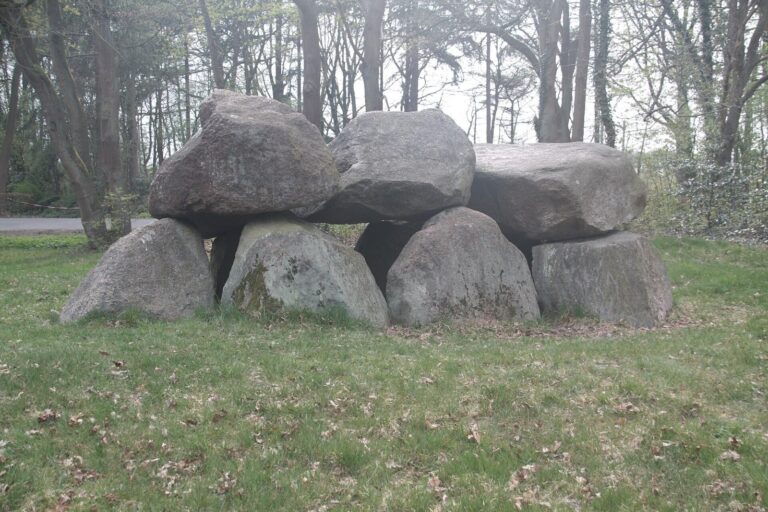
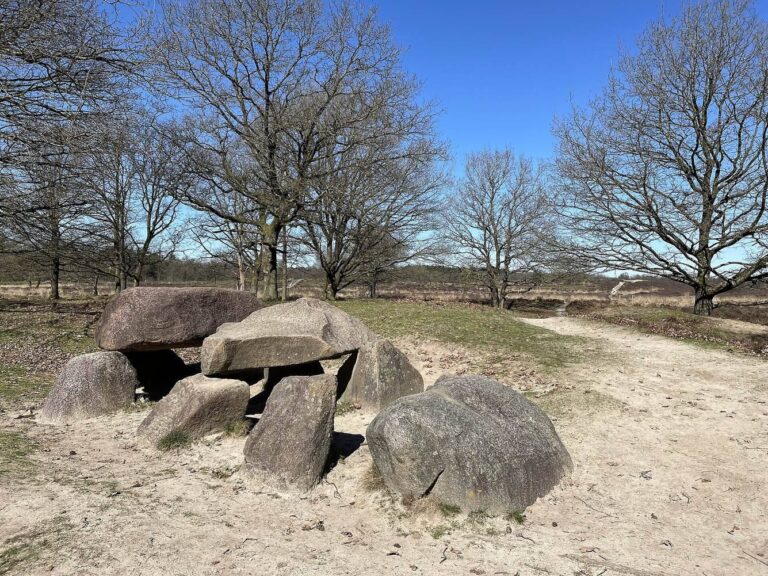
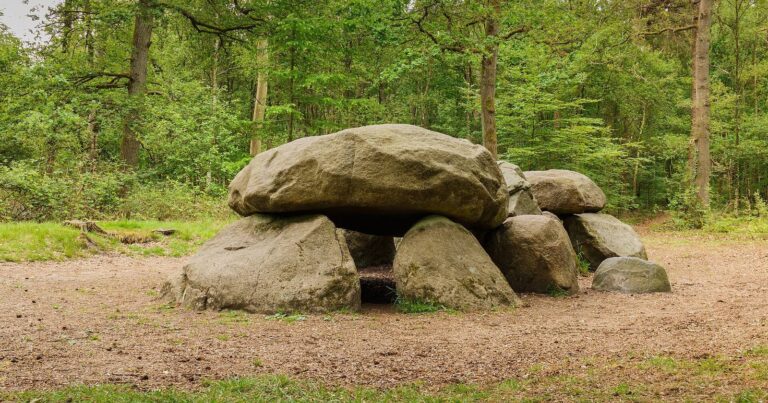
The chamber measures 7.4 metres long and 2.5 metres wide. Four pairs of supporting stones run along its long sides, with one end stone at each short end, and four capstones cover the chamber. Most of the eight side supports and both end stones lie underground. A drawing from 1847 shows the mound largely intact, with the tops of the supports and capstones visible above it. By the 1878 survey, the tomb lay in a hollow. Two capstones had shifted from their supports; the western capstone had lost its northern support, which Janssen had seen in place.
Entrance and finds
The entrance is midway along the chamber’s southern side. Fragments of urns were found around the tomb.