Dolmen D8: A Neolithic Passage Tomb in the Netherlands
Site at a Glance
- Popularity
- Low
- Country
- Netherlands
- Primary era
- Stone Age
- Eras represented
- Stone Age
- Civilizations
- Unclassified
- Site type
- Burial
- Remains
- Tomb
On this page7 sections
History
Neolithic origins
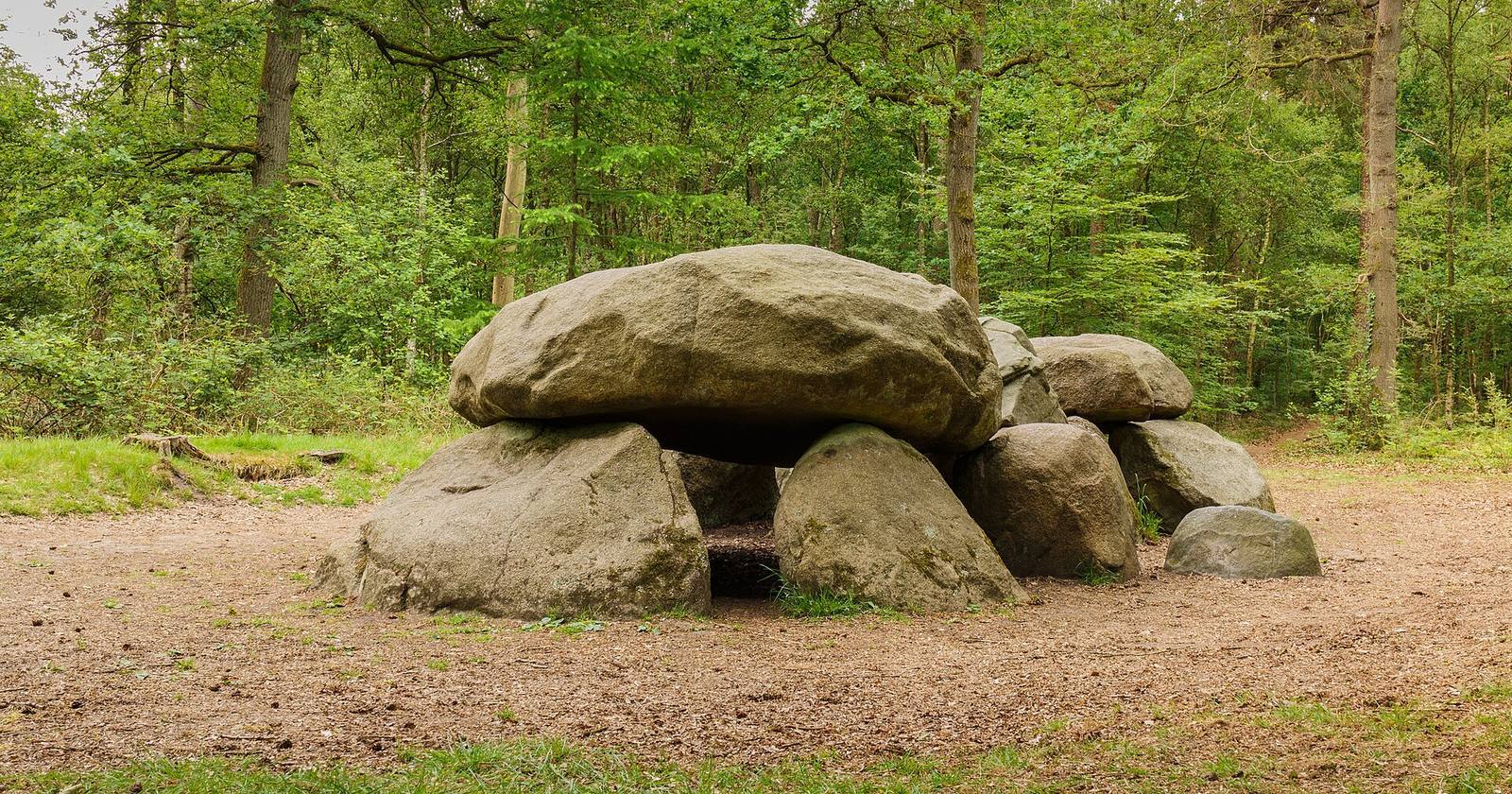
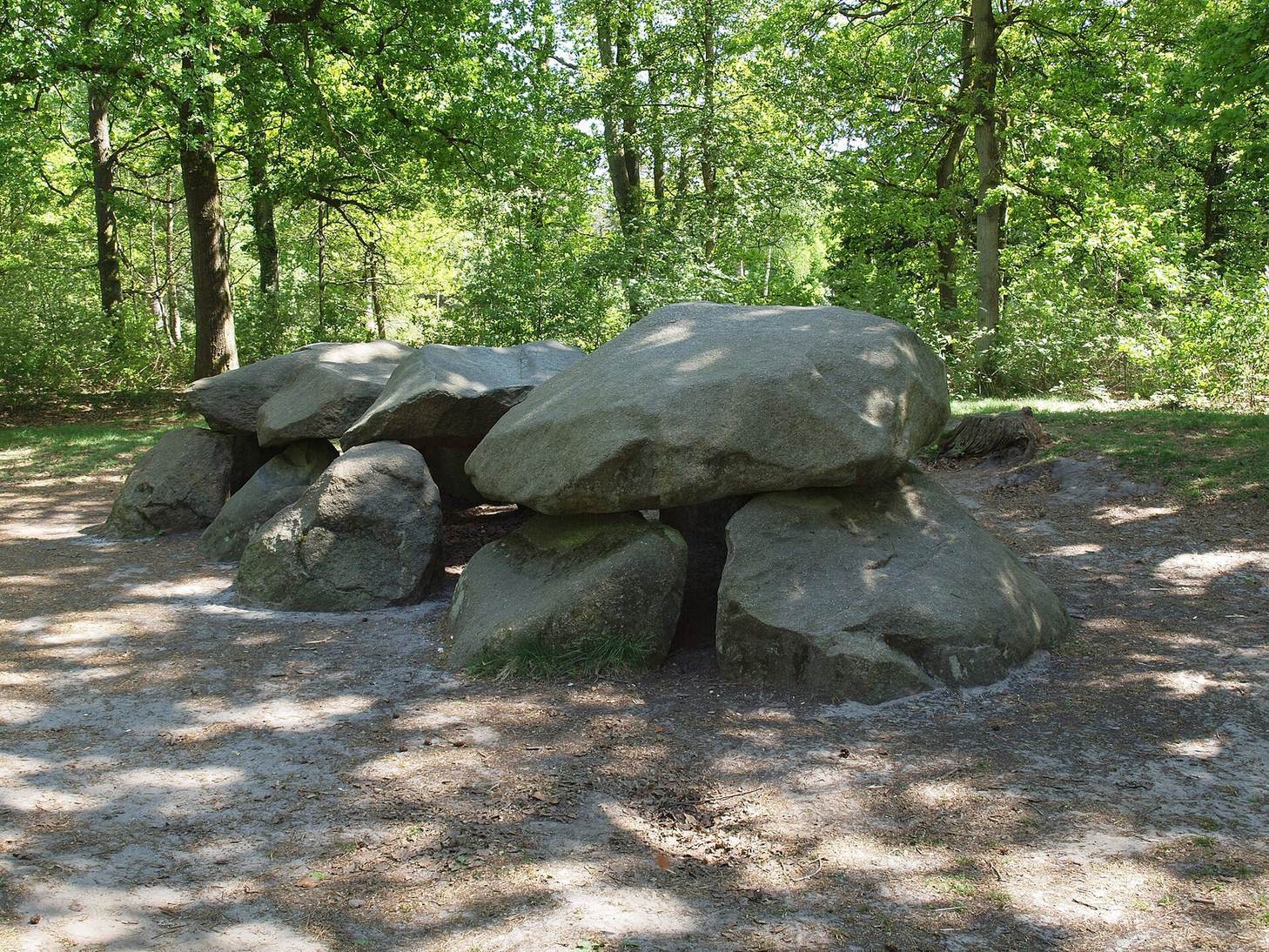
Dolmen D8 is a Neolithic tomb built from large stones in the wooded De Strubben-Kniphorstbos nature area, north of Anloo in the Netherlands. It was built between 3400 and 3100 BCE and is associated with the Funnel Beaker culture, a Neolithic tradition named for its distinctive funnel-shaped pottery. D8 belonged to the western group of tombs at Anloo-Noord and is the only one of probably three associated with that group to survive.
Antiquarian records and early restoration
Dutch antiquarian Ludolf Smids mentioned D8 in 1711, and the physician and artist Petrus Camper drew it in 1768. Nicolaas Westendorp described the tomb in 1822. Antiquities curator Leonhardt Johannes Friedrich Janssen visited in 1847 and included it in his 1848 survey, the first overview of Dutch megalithic tombs to provide building descriptions and schematic plans. An initial restoration followed sometime between 1848 and 1875. In 1871, C. L. Kniphorst donated the tomb to the Province of Drenthe.
In 1874, antiquities scholar Willem Pleyte and photographer Jan Goedeljee systematically photographed Drenthe’s surviving tombs; Pleyte also produced lithographs from their photographs. Conrad Leemans visited Drenthe in 1877, and Jan Ernst Henric Hooft van Iddekinge prepared plans for him, but Leemans’s report was not published. English antiquarians William Collings Lukis and Henry Dryden surveyed D8 in 1878 as part of a wider effort to record the tombs before restoration work might alter their original condition. Their survey included plans and sections, and a fragment of an urn was found during their visit.
Willem Johannes de Wilde recorded the surviving Dutch tombs between 1904 and 1906, although his notes on D8 are lost. In 1918, archaeologist Albert Egges van Giffen included it in his atlas and described its condition as very good.
Modern conservation and recording
D8 was restored again in 1952 and 1965, with a small investigation carried out during the latter year. In March 2015, a fire lit beside the tomb damaged its stones. That year, Dutch archaeologist Wijnand van der Sanden published the Lukis and Dryden material with an introduction and an account of later archaeological work. In 2017, the Province of Drenthe and the University of Groningen included D8 in a three-dimensional atlas project using photogrammetry, a method that derives measurements and 3D models from photographs.
Remains
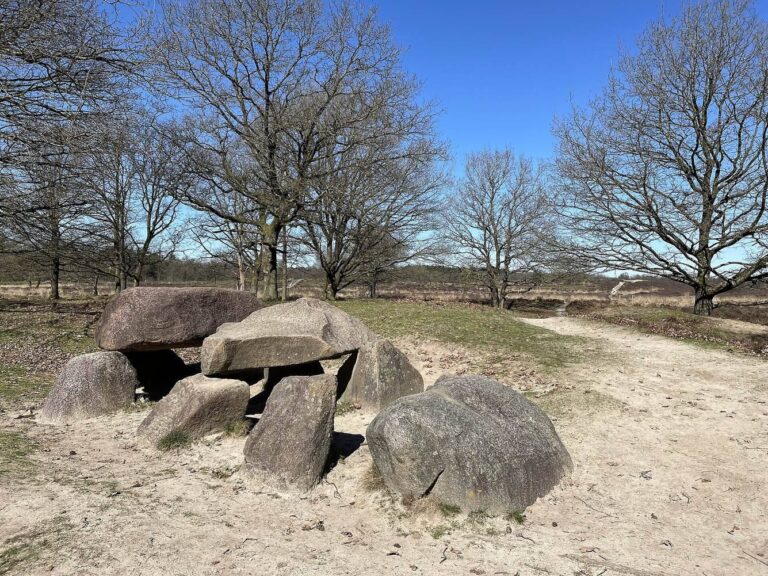
The surviving tomb stands on lower ground in the wooded nature area, a few metres east of the Bosweg. It lies between Annen and Schipborg, west of the N34, and north of Anloo. A former cart track runs nearby; its position on a prehistoric route has been proposed, but is uncertain. The remains also include two low mounds with pits south of D8, marking the locations of the companion tombs.
D8 chamber and entrance
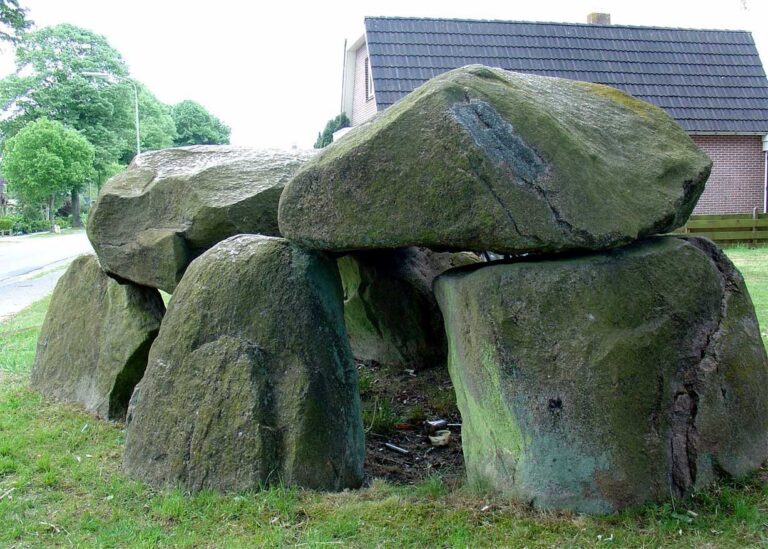
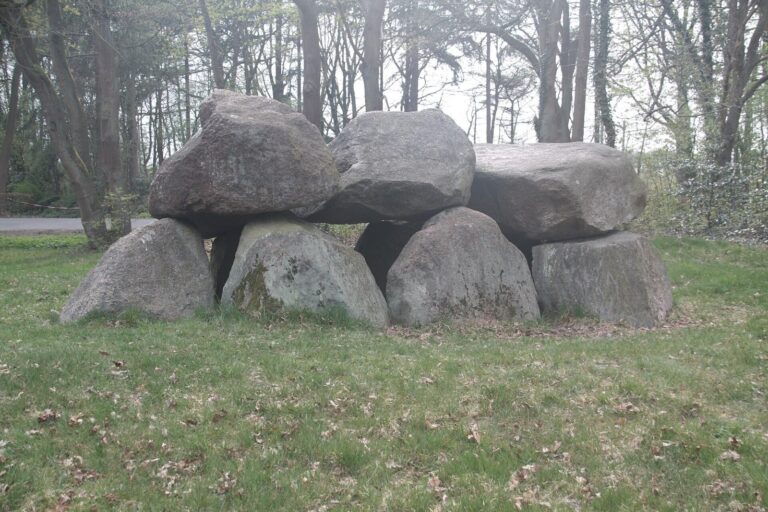
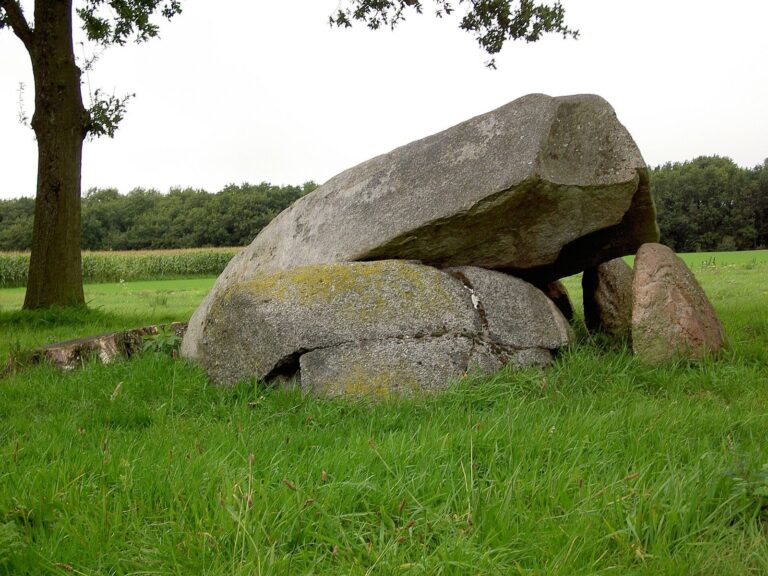
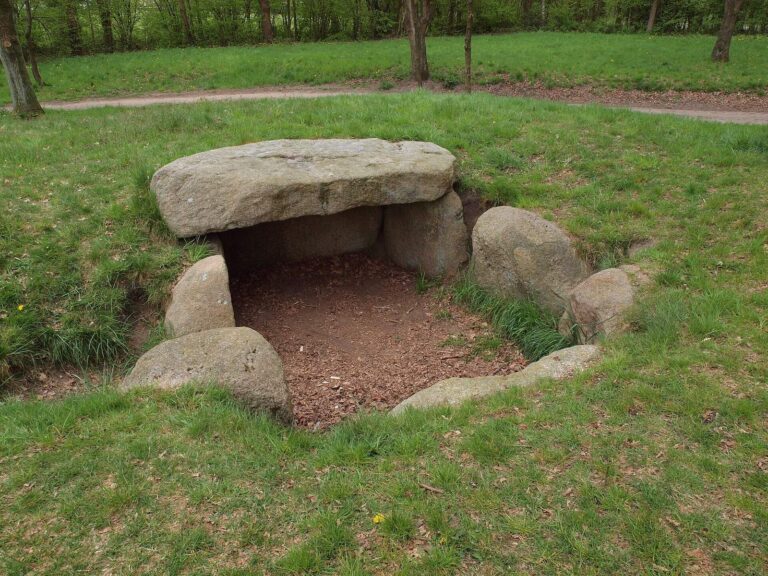
The chamber measures 7.9 by 4.4 metres and runs east-northeast to west-southwest. Its entrance passage is set midway along the southern long side and faces south-southwest. Four pairs of side stones support the chamber, with an end stone at each short end and four capstones above. The passage originally had two upright stones; one survives, while concrete fills the socket of the other. Lukis and Dryden noted in 1878 that the covering mound had recently been removed.
Remains of D8a and D8b
The pit associated with D8a measures 11 by 6 metres. Its chamber may have had four or five pairs of side stones, with an end stone at either end. The D8b pit measures 6 by 3.5 metres; its chamber may have had up to three pairs of side stones and an end stone at each end. Stone paving survives on the floor of the D8b pit. The chamber dimensions and precise forms of both tombs remain uncertain, though they were probably passage tombs. Surface finds associated with them include Funnel Beaker pottery sherds and flint artifacts.