Dolmen D15: A Neolithic Passage Grave in the Netherlands
Site at a Glance
- Popularity
- Low
- Country
- Netherlands
- Primary era
- Stone Age
- Eras represented
- Stone Age
- Civilizations
- Unclassified
- Site type
- Burial
- Remains
- Tomb
On this page9 sections
History
Neolithic construction
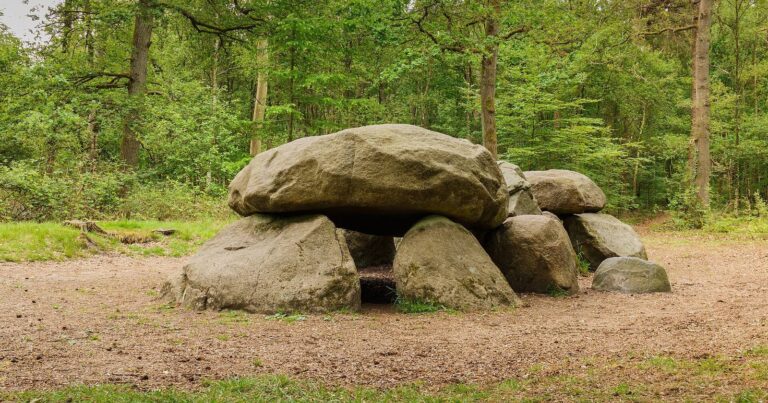
Dolmen D15 is a Neolithic passage grave, a burial chamber entered through a passage, north of Loon in Drenthe, Netherlands. It dates to the Neolithic, the later Stone Age when farming and settled communities became established, and is attributed to the western group of the Funnel Beaker culture, a prehistoric farming culture named for its funnel-shaped pottery. Its construction is dated to 3470 to 2760 BCE.
Early records and nineteenth-century study
A. van Slichtenhorst first recorded D15 in 1654, and Johannes Hofstede investigated it in 1809. Leonhardt Johannes Friedrich Janssen visited in 1847 and published a description and schematic plan the following year.
In 1878, William Collings Lukis and Henry Dryden included D15 in a survey of 40 megalithic tombs in Drenthe. They undertook the work because restoration was thought to be obscuring the monuments’ original condition; their report was published only in 2015. Willem Johannes de Wilde recorded surviving Dutch megalithic tombs between 1904 and 1906. Although most of his records were lost, his notes on D15 survive. Albert Egges van Giffen recorded the tomb in 1918 for an atlas of Dutch megalithic tombs. A nineteenth-century painting of D15 by Taco Mesdag is held by the Groninger Museum.
Twentieth-century investigation and protection
Archaeological investigation and restoration took place in 1952, followed by further restoration later in the mid-twentieth century. D15 received Dutch National Monument status in 1992, a designation that gives heritage sites national legal protection. Another restoration followed in 1993. In 2017, photogrammetry, which uses photographs to create measured records and 3D models, was used to record the tomb for a 3D atlas project involving the Province of Drenthe and the University of Groningen.
Remains
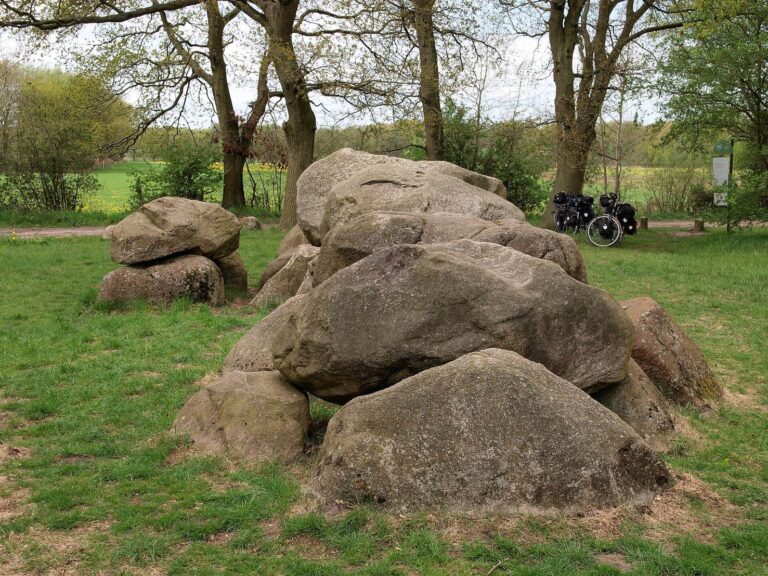
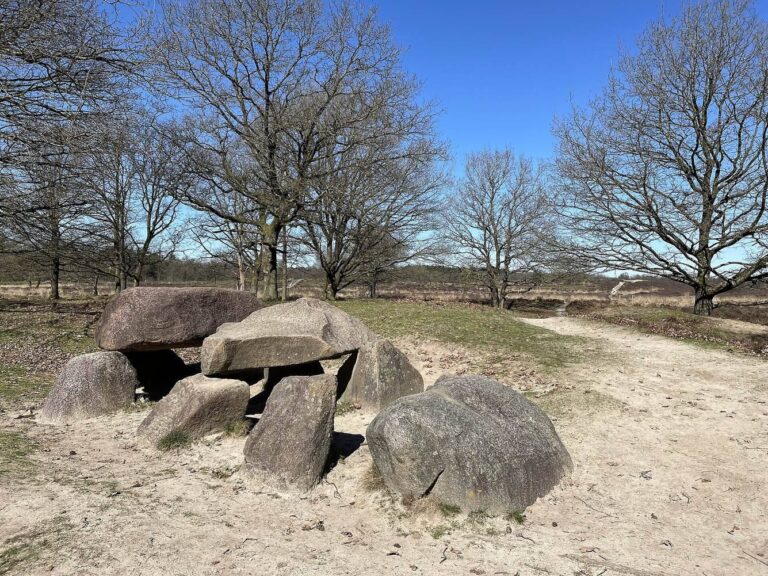
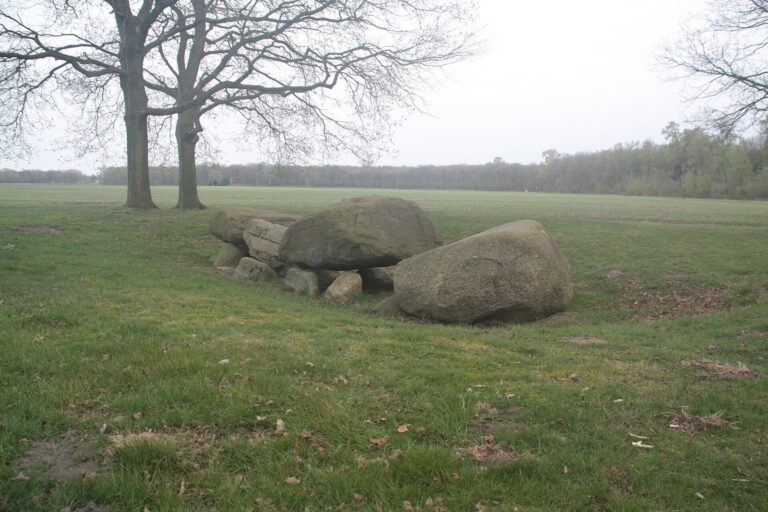
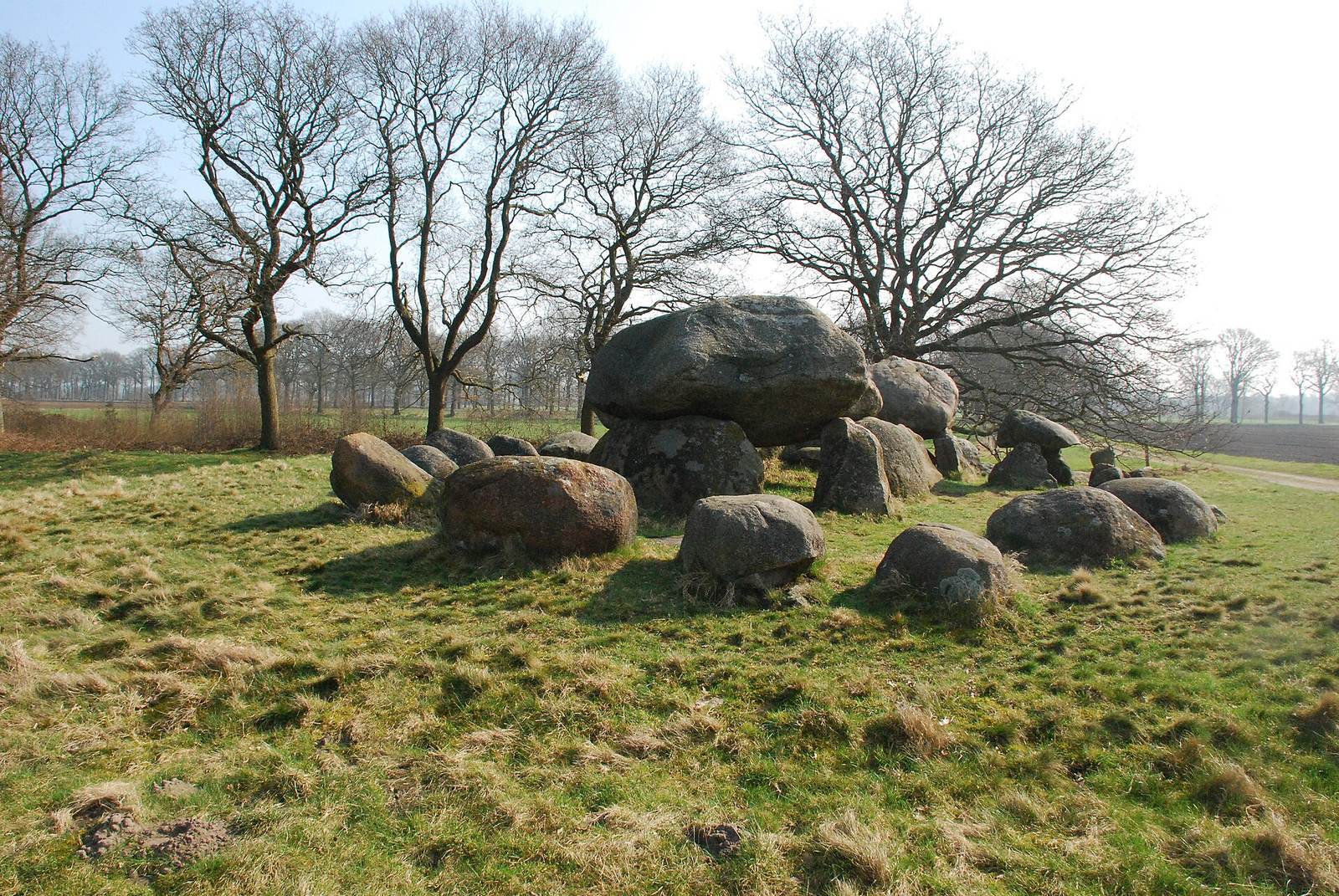
D15 stands on the Looner es, the traditional arable field associated with Loon, between Loon and Taarlo. Its chamber is aligned east-southeast to west-northwest, and an entrance passage opens on its southern side within an oval stone enclosure. The nearby tomb of Balloo (D16) lies 2.5 km to the south, while Gasteren (D10) is 3.7 km to the northeast.
Chamber and passage
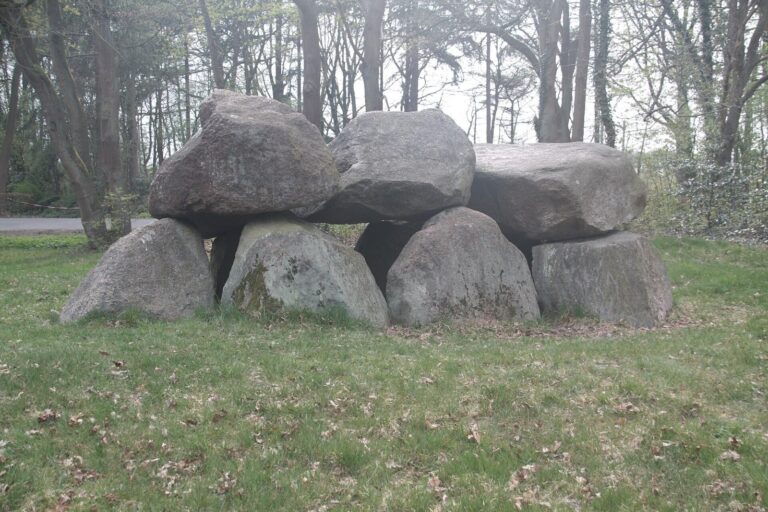
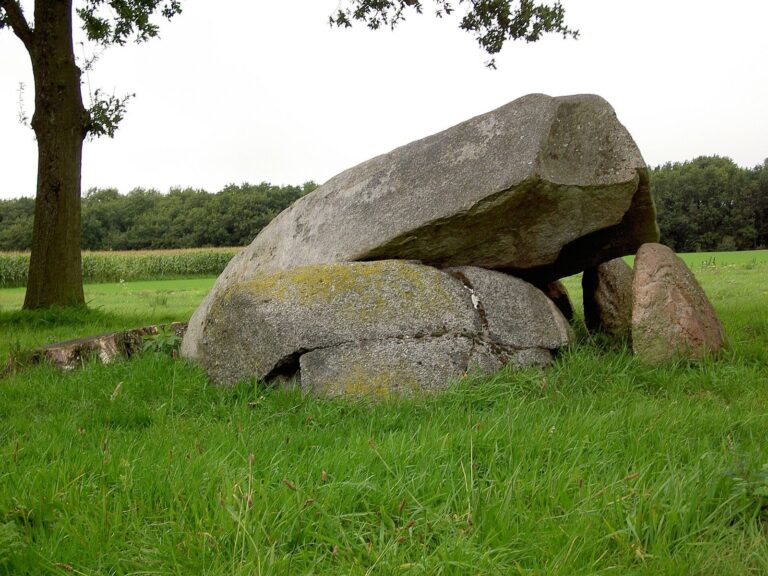
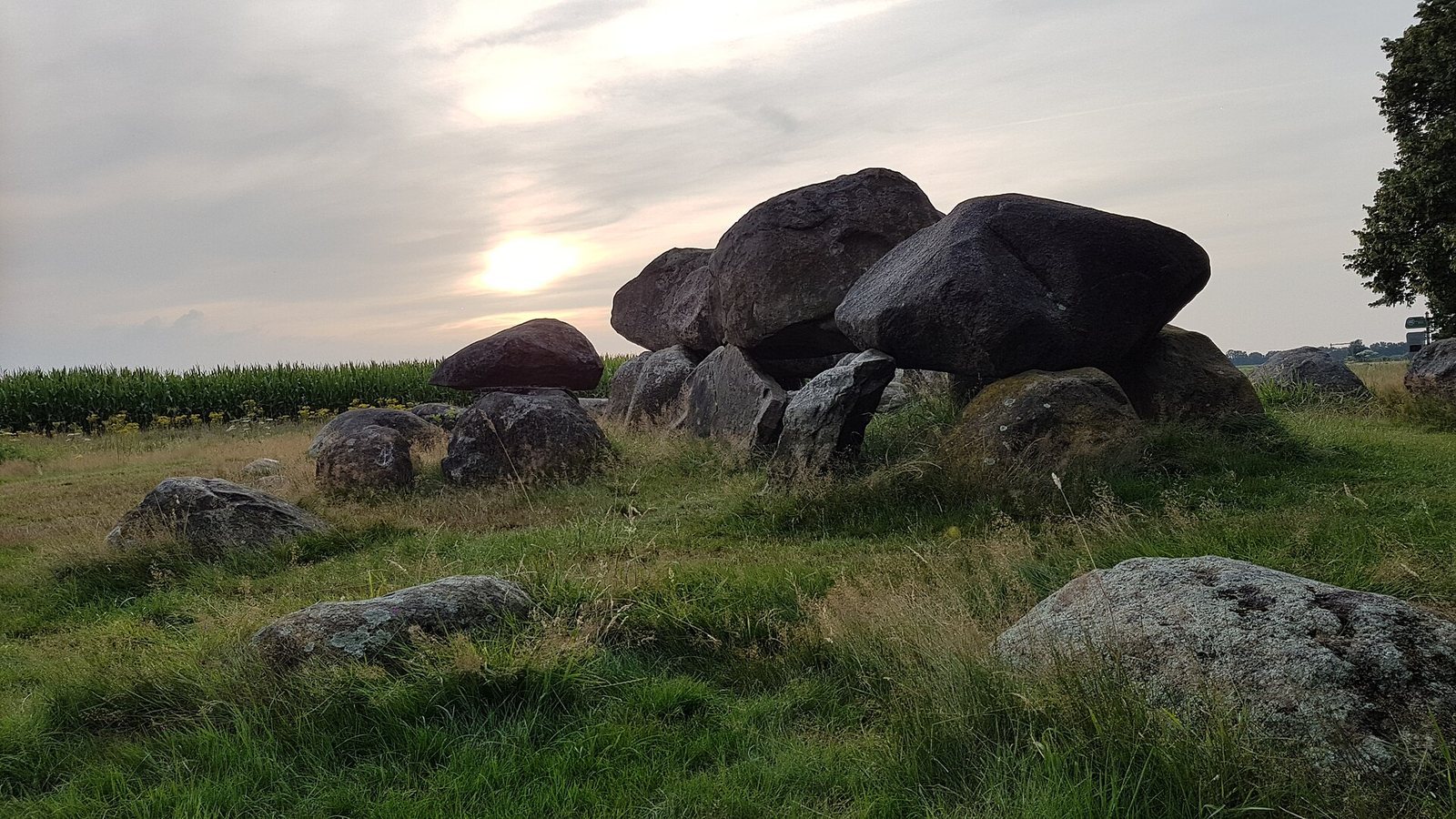
The chamber measures 9.6 m long and about 3.6 m wide. Five pairs of wall stones form its long sides, with an end stone closing each short end. Four of the five capstones, the large stones covering the chamber, remain on the walls; the central capstone is broken inside the chamber. The entrance lies between the second and third wall stones when counted from the east. Two pairs of stones and a capstone form the passage in front of it. Lukis and Dryden’s 1878 plan, designated Plan X, shows four capstones in place, fragments of a fifth near the entrance, and twelve support stones.
Enclosure and covering mound
The oval stone enclosure is well preserved, with 18 of its original 23 stones still standing. Most of the covering mound was removed during a restoration in 1870 overseen by Gregory, the King’s provincial representative. At the time, the mound was considered not to belong to the original monument. Lukis and Dryden’s plan depicts the mound after it had been lowered and shows an entrance stone on the southern side.
Burial remains
The cremated human remains weighed 752.9 g and represent three adults: one man, one woman, and one individual whose sex could not be determined. Cremated animal bones weighed 80 g. One may have come from a horse and another from a pig or cow; a separate bone fragment had been used as a chisel.
Pottery and other finds
A clandestine excavation at the entrance in 1974 recovered two Bell Beakers, vessels named for their bell-shaped form, and a copper or bronze fragment measuring 4.5 by 3.5 cm. The Bell Beaker-period objects had been deposited centuries after the tomb was built; the finds are held by the Drents Museum. Nineteenth-century finds include stand-foot beakers, pottery vessels with raised bases, and Bell Beakers. A collared flask, with a collar-shaped neck, was found nearby. Lukis collected pottery sherds in and around the tomb and a flint drill, which he gave to the Drents Museum; a small bowl with a knob and a clay bottle at the museum were also thought to have come from D15. A Funnel Beaker vessel and a prehistoric flint axe attributed to the tomb are held by the Rijksmuseum van Oudheden, the National Museum of Antiquities in Leiden. That museum also holds a ceramic boat model dated to the fifth or sixth century CE. Its purpose is uncertain, and it may have been a toy or an offering.