Schandauer Schlossberg: A Medieval Castle and Watch Post in Germany
Site at a Glance
- Popularity
- Low
- Country
- Germany
- Primary era
- Medieval
- Eras represented
- Medieval, Modern
- Civilizations
- German, Holy Roman Empire, Kingdom of Bohemia, Kingdom of Saxony
- Site type
- Military
- Remains
- Castle
On this page12 sections
History
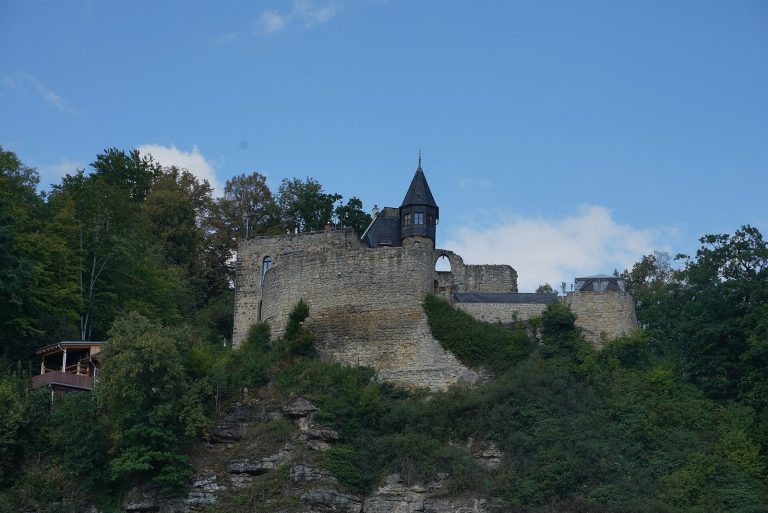
Schandauer Schlossberg is a wooded hill and medieval castle site in Bad Schandau, Germany. Its castle probably originated in the 13th century as a watch post overlooking the Elbe and the Via Regia, a historic trade route across Central Europe. It protected traffic on both routes and was the only river watch post owned by the Bohemian noble family Berka von Dubá, whose members were based at Hohnstein Castle.
The medieval watch post
Ceramic finds indicate that people lived on the hill by the 14th century at the latest. The garrison probably numbered about ten men and may have included mounted soldiers. The castle was burned during the Hussite Wars, 15th-century conflicts connected to a religious movement that arose in Bohemia. Evidence of burning places its destruction between 1419 and 1439.
Altendorf belonged to the castle estate. In 1445, members of the Borsko noble family were recorded there as followers of the Berka von Dubá. The Borsko may have been the castle’s earlier lords, since Altendorf itself was never the seat of a manor.
Later records and changing names
Records from the 17th century use several forms of the hill’s name, including Schomberg, Schönnbergk, Schamberg, and Schaumberg. A map from the second half of the century gives Schoumberg. Schomberg and Schömberg were also used as dialect forms of Schönberg, while Kiefericht sometimes referred to the plateau at the top. The name’s origin remains uncertain. One proposed explanation connects it to the Middle High German word schouwen, meaning “to look,” perhaps reflecting the hill’s use as a lookout.
A 1629 complaint records a dispute over a proposed building on Schönnbergk. A smallholder from Zauke argued that it would block light and air from his house.
Recreation and the artificial ruin
A viewpoint was established in 1857 on a small plateau at the Schlossberg’s southeastern corner. Around 1840, the spot was known as “Auf der Wand” or “auf der Steinwand.” In July 1861, a Bad Schandau master carpenter and his daughter opened the Schlossbastei restaurant there. Repeated expansions turned it into a destination for dancing and excursions, with guest rooms. After it fell into disrepair, the restaurant closed in the 1970s and was demolished in 1979, leaving a two-level terrace.
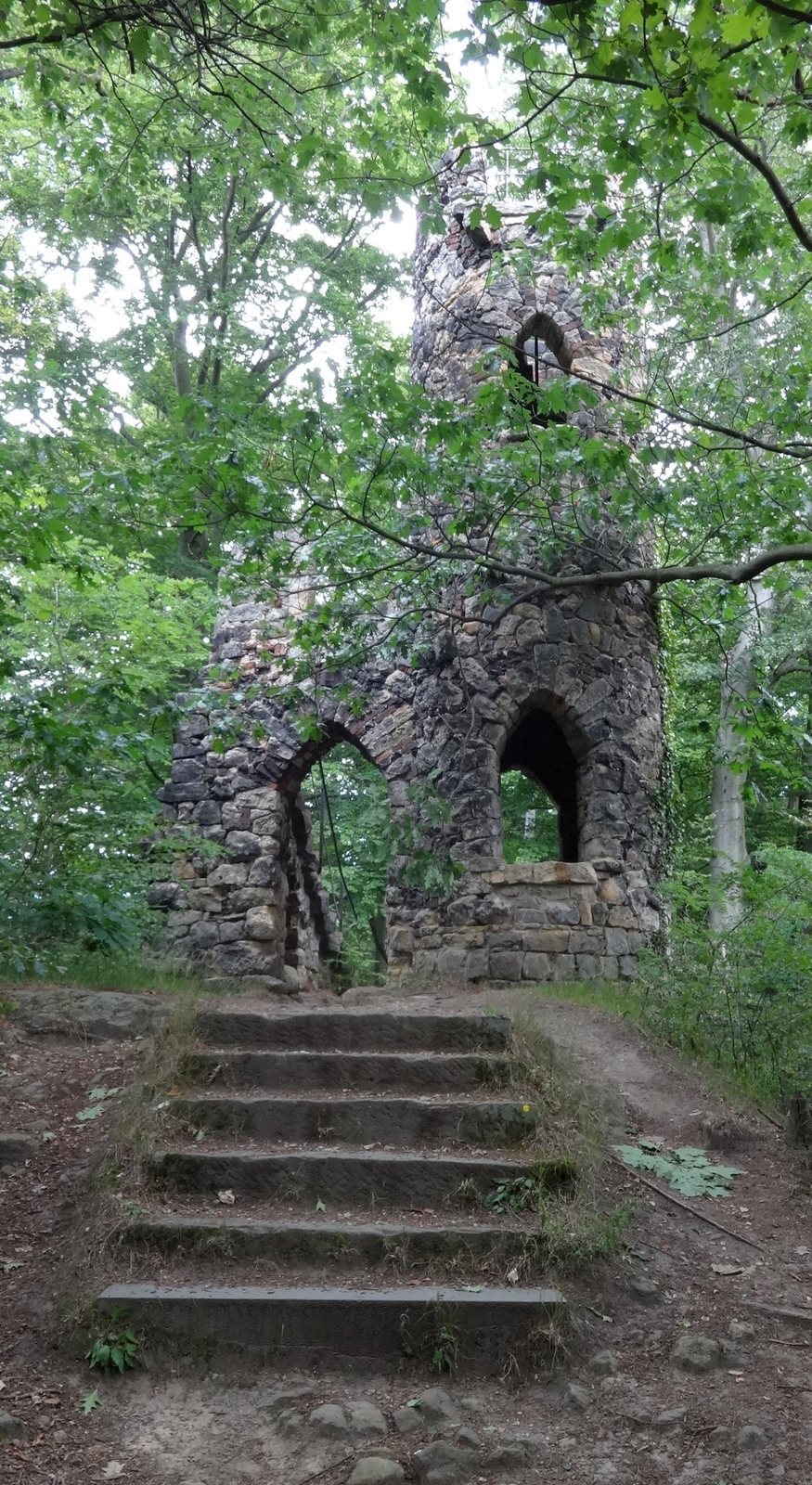
At the end of the 19th century, a master builder created an artificial castle ruin on the medieval castle site, incorporating remnants of its masonry. Members of the Mountain Association for Saxon Switzerland, a regional hiking and mountaineering association, formally inaugurated it on 24 June 1883. The association first called it Frienstein. In 1906, its local group dropped that name after the Vordere Raubschloss was definitively identified as Frienstein, a rock formation associated with a medieval rock-castle site. The hill is protected as an early-historical archaeological monument.
Remains
The wooded Schlossberg rises to 222.3 m above sea level as a southern spur of the Elbe Sandstone Mountains, about 300 m north of Bad Schandau’s town center. The Kirnitzsch passes to the east and another stream to the west; both flow through the town and join the Elbe nearby. The castle occupied an irregular plateau above the surrounding defenses.
Medieval castle remains
Plateau and defenses
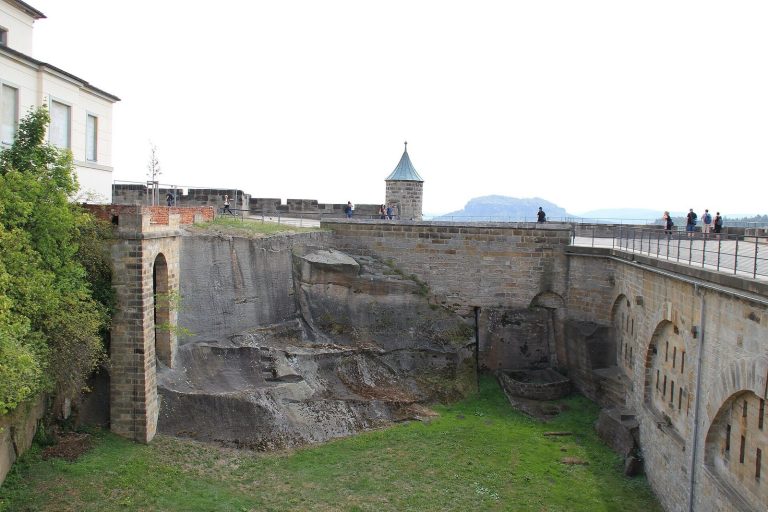
The original castle plateau measured about 20 by 45 m and stood roughly five to seven metres above the upper rampart ditch. A wall and palisade enclosed it, while a double rampart and ditch defended the approach. Today, the double rampart, ditch, and a few masonry sections survive.
Probable original buildings
The castle probably included a small wooden blockhouse. In the southwest, a roughly cuboid chamber was cut into a projecting rock. A wall closed its valley-facing side, and the chamber may have served as a watchroom.
Cistern
The round cistern is partly built of masonry and partly cut into the rock. It is now filled in. A mid-19th-century estimate put its depth at about 8.5 m.
Artificial castle ruin
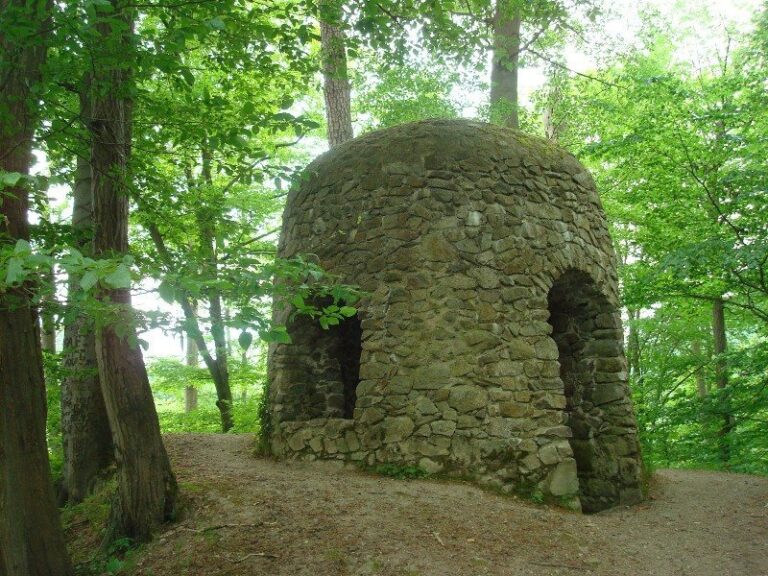
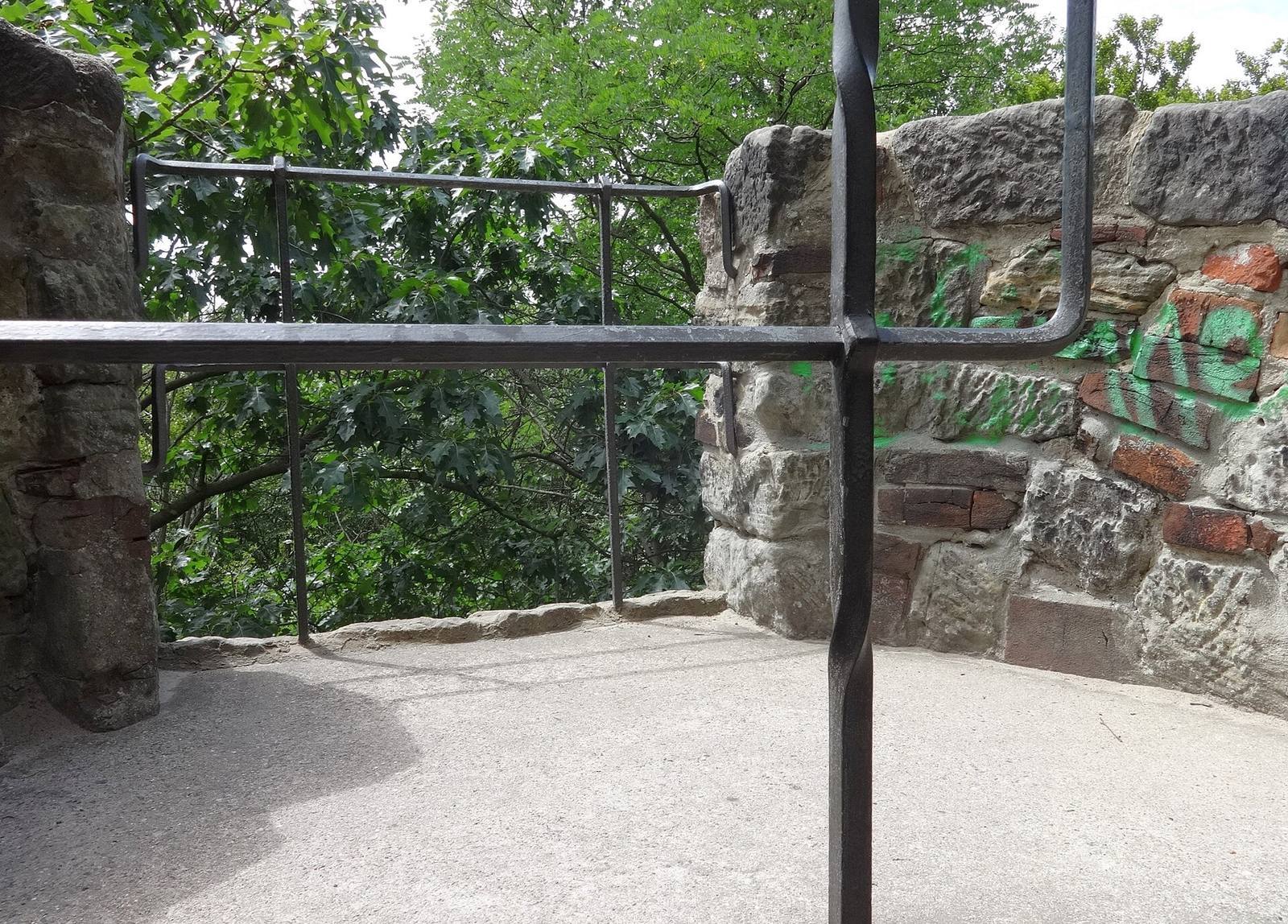
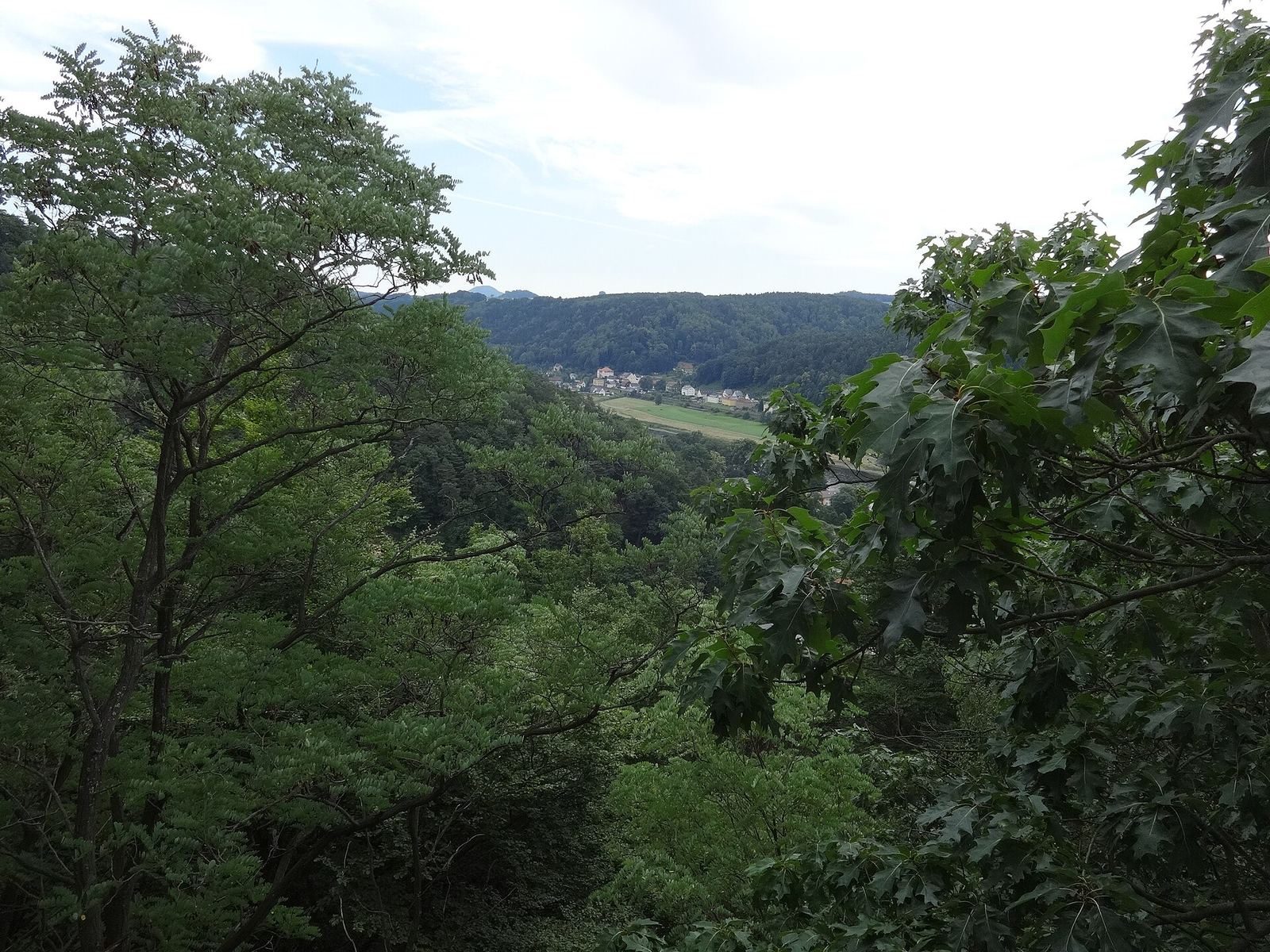
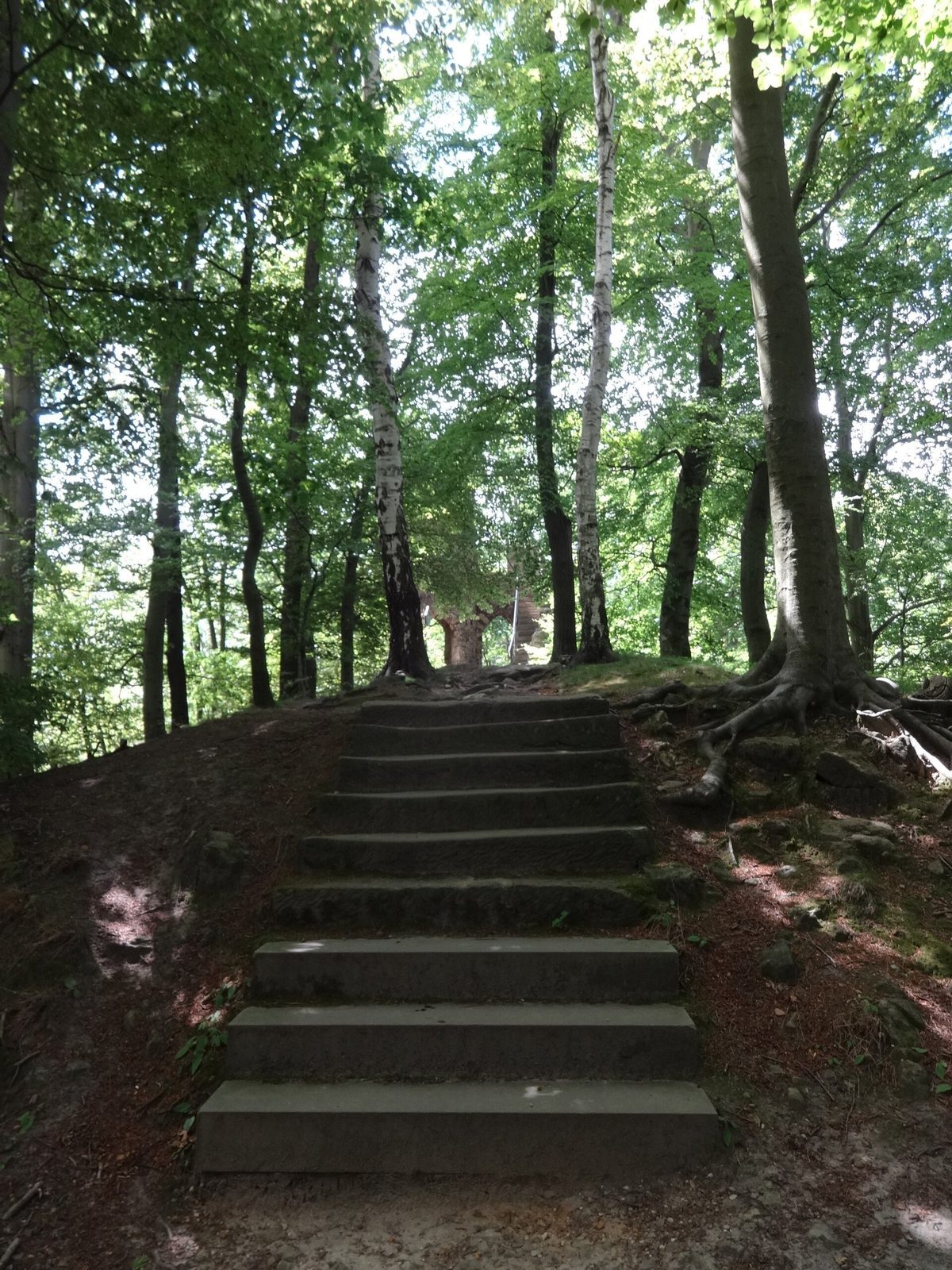
The artificial ruin incorporates masonry from the medieval castle. Its tower has a viewing platform reached by an exterior stone staircase with a metal handrail, followed by an interior spiral staircase. A raised causeway with steps runs through the center of the castle and was built when the tower was constructed. Woodland restricts views from the platform toward Bad Schandau and the Elbe valley.
Schlossbastei terrace
Below the castle plateau at the Schlossberg’s southeastern corner, the Schlossbastei survives as a terrace on two levels and serves as a viewpoint.
Archaeological finds
Finds from the Schlossberg include spearheads, crossbow bolts, whetstones, a stone grain mill, horseshoes, and spurs. They are held at the Bad Schandau local history museum, which also exhibits a model of the Schomberg fortifications.