Sint-Benedictuskerk: Mortsel’s Oldest Parish Church
Site at a Glance
- Popularity
- Low
- Country
- Belgium
- Primary era
- Early Modern
- Eras represented
- Medieval, Early Modern, Modern
- Civilizations
- Belgian, Duchy of Brabant, Habsburg, Holy Roman Empire, Spanish
- Site type
- Religious
- Remains
- Church
On this page11 sections
History
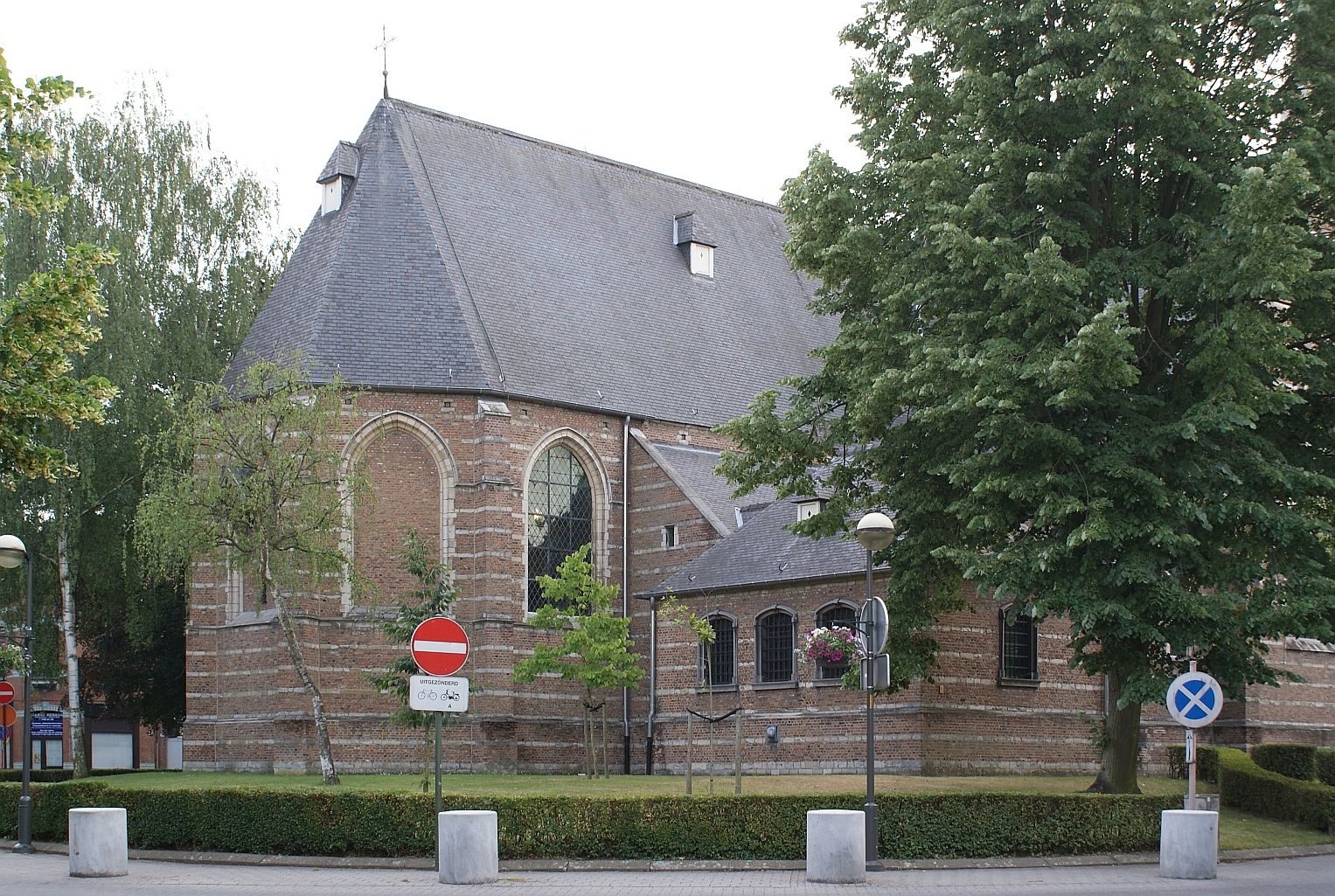
Sint-Benedictuskerk is Mortsel’s oldest Catholic parish church, in Belgium. It belongs to the Diocese of Antwerp and is dedicated to Almighty God and Saint Benedict, an early Christian monk whose Rule became the basis of Benedictine monastic life. The church’s history reaches back to a chapel recorded in 1150, and its architecture is described as Gothic and neo-Gothic.
From chapel to parish church
A papal bull, a formal document issued by a pope, mentions an altar at Mortsel in 1150. At that time, worship took place in a chapel subordinate to the mother church at Kontich. In 1158, Nicholas I of Chièvres, bishop of Cambrai, returned the altar to the Benedictine Abbey of Lobbes, a monastery following Saint Benedict’s Rule. A church probably began to replace the chapel around then. The handwritten Knopboeck assigns 1203 to the chapel’s transition into a church.
The first church was replaced during the first half of the fifteenth century. Its new high altar was consecrated in 1442, while work on the rest of the church continued into the sixteenth century.
Unrest and repair
During the sixteenth-century revolt against Spanish rule in the Low Countries and the accompanying iconoclasm, the destruction or removal of religious images, Mortsel was exposed to military movement. The town stood at the crossing of routes to Antwerp, Lier, and Mechelen. In 1583, Spanish commander and governor Alexander Farnese left only three families in Mortsel.
Major repairs took place around 1607. The church received new bells in 1631, and the repair work was completed on 7 April 1632.
Closure, growth, and enlargement
During the French Revolution, a period of political upheaval in France that began in 1789, the church closed in 1798 and reopened in 1802. Around 1840, population growth prompted a proposal to enlarge it, but the plans were rejected. An extension followed in 1877. As the surrounding population continued to grow, new parishes were established between 1885 and 1959: Heilig Kruis, Sint-Lodewijk, Sint-Theresia, Sint-Jozef, and Sint-Bernadette.
A further enlargement began on 1 March 1960 under pastor Hendrik Heylen, who served from 1959 to 1984. Architect Jozef-Louis Stynen designed the work. In 1961, Schoenmaeckers, auxiliary bishop of Mechelen, consecrated the enlarged church. The organ was expanded for the building and blessed on 26 December 1962 by Daem, bishop of Antwerp. Canon Edgar De Laet, a member of a cathedral or collegiate chapter, and sacristan-organist August Delhaye played it. The church is protected immovable heritage in Flanders.
Remains
Church and tower
The church stands within an area bounded by Kerkstraat, Sint-Benedictusstraat, Wouwstraat, Dorpsstraat, and Rubensstraat. Its portal is beneath the tower. The building is described as Gothic and neo-Gothic; the Gothic tower, constructed of white sandstone, dates to around 1300.
Altars
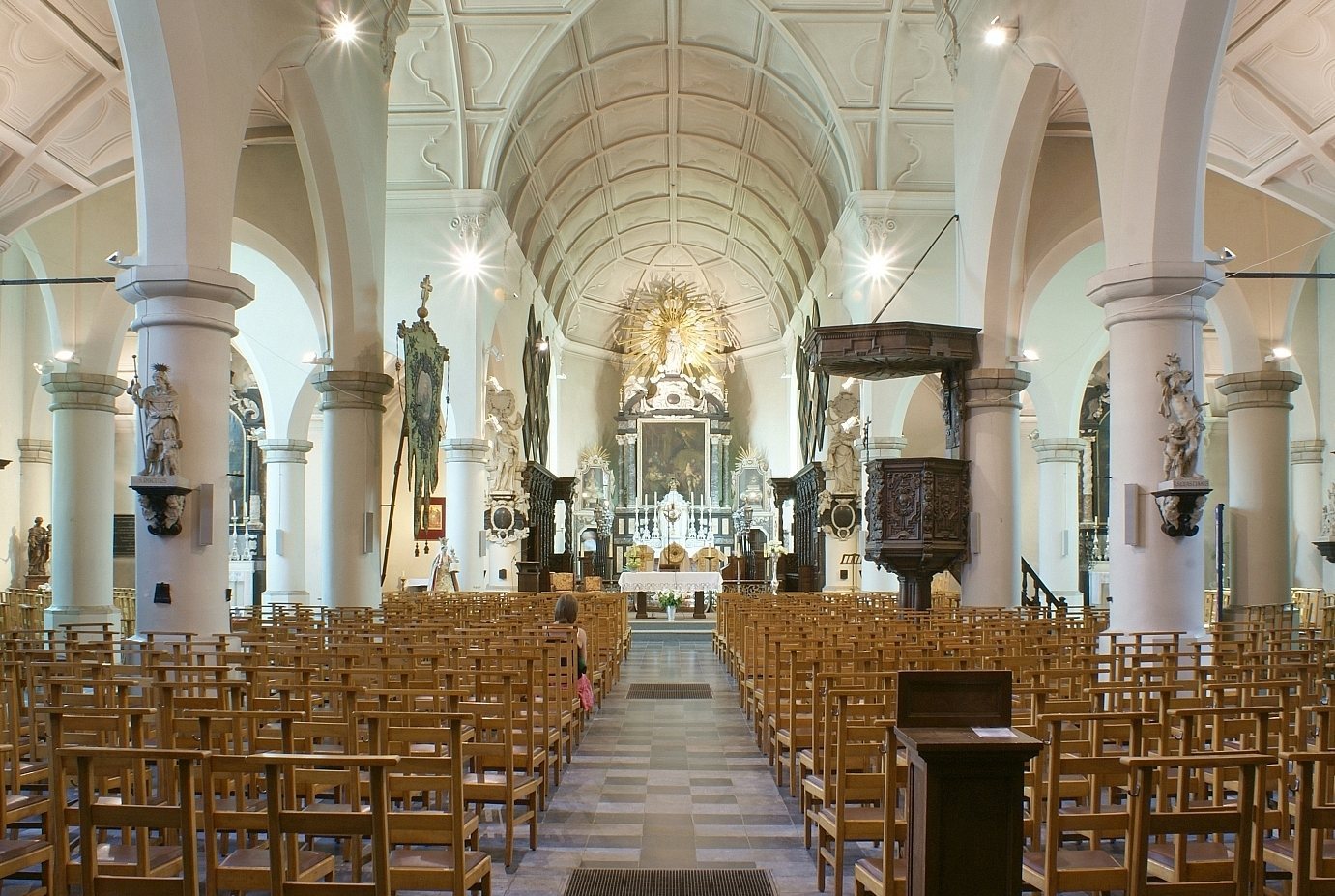
Sebastiaan de Neve made the main altar and two side altars around 1640–1642; all three were consecrated in 1645. Between 1640 and 1644, he also made the high altar’s depiction of Saint Benedict, shown raised within a radiant laurel wreath.
Pulpit and choir stalls
Jan De Kegel carved the pulpit from dark oak in 1642, and it remains in the church. After it was made, it traveled by ship from Brussels to Boom, probably by way of the Zenne and Rupel rivers, then continued to Mortsel by horse and cart. Joos Pasteels, brother of the pastor then in office, made the wooden choir stall on the left around 1653. Pieter Convent of Kontich installed the stall on the right in 1711, with carving by Thomas Maes.
Confessionals and liturgical fittings
The church has four confessionals: three date to 1662 and the fourth to 1710. Their makers included Janssens and Vridken, as well as Pieter Convent and Thomas Maes. A communion rail combines wood and wrought iron. Engelbertus Baets designed it, Jan de Neef carved the wood, and Cornelis Marckx made the ironwork. Marckx, of Kontich, made the revolving tabernacle in 1741. A tabernacle is a receptacle for the reserved Eucharist; this one is painted white, remains in use, and was donated by Count de Fiennes of Cantincrode.
Organ and baptismal font
Hans Gulphus made the church’s organ in the seventeenth century, and it was first played on 1 September 1652. The baptismal font dates to 1749.
Manuscript and former cemetery
The Knopboeck is a handwritten volume of 76 parchment leaves in Gothic script. A small leather button is sewn onto the opening page of each chapter, and several paper leaves with difficult-to-read handwriting are attached at the end. The old cemetery beside the church included the monumental tomb of Mayer van den Bergh.