Fort 5: A Brialmont Fort in Edegem, Belgium


Site at a Glance
- Rating
- 4.4
- Popularity
- Medium
- Country
- Belgium
- Primary era
- Modern
- External website
- Open
- Eras represented
- Modern
- Civilizations
- Belgian
- Site type
- Military
- Remains
- Fort
On this page7 sections
History
Fort 5 is a nineteenth-century Belgian fort in Edegem, Belgium, built between 1859 and 1864 as part of Henri Alexis Brialmont’s defensive belt around Antwerp. It formed part of the National Redoubt, a fortified refuge where Belgium’s field army could withdraw and continue defensive operations if the outer defenses were breached. Antwerp was selected for this role in 1859 because of its naturally defensible position, access to a port, and distance from potential enemies in France and Germany.
Construction of the Antwerp defensive belt
Belgium’s policy of neutrality required its army to delay an invading force until allied assistance could arrive. Since the Belgian army could not repel a large-scale attack on its own, the National Redoubt was intended to provide a defensible center for continued resistance. The Antwerp position included eight forts, extending from Fort 1 at Wijnegem to Fort 8 at Hoboken. Each covered approximately 30 hectares, and the belt was completed in 1864.
Brialmont, a Belgian military engineer who later became a general, designed the ring of forts. The works were built to resist the heaviest artillery of the mid-nineteenth century. Their defensive value declined, however, as artillery developed. Additional outlying barrier forts were later added because the original Brialmont forts stood too close to Antwerp, leaving the city vulnerable to bombardment.
First World War and occupation
Fort 5 had limited wartime usefulness by the beginning of the First World War. German forces employed 30.5-centimetre Skoda mortars from Austria and 42-centimetre Krupp mortars known as Big Bertha. Their shells could penetrate the forts’ unreinforced concrete and masonry or strike beyond the range of the Belgian guns stationed there.
German artillery shelled Fort 5 on 8 October 1914. The following day, the Belgian army abandoned Antwerp’s right bank. During the German occupation between 1915 and 1918, sixteen Belgian resistance fighters were executed on the fort’s firing range.
Military reuse and civilian stewardship
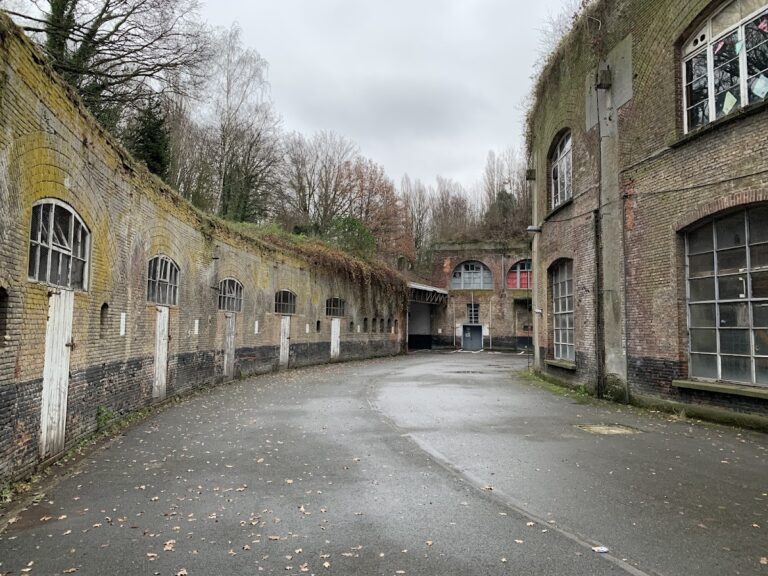
After the First World War, Fort 5 was converted into barracks. This change altered the fort’s military access. Part of the moat was removed, the drawbridge was taken away, and an ordinary road was constructed in its place. Large windows were also installed in the inner fort. During the Second World War, German forces used the site as a storage facility.
The municipality of Edegem has owned Fort 5 since 1977. From 1990 onward, the municipality increasingly emphasized the fort’s architectural and historical value, and the inner fort was restored. The Simon Stevin Flemish Fortification Centre, an organization devoted to the study and preservation of fortifications, has since been based there. Since 2013, the inner fort has also housed Het Bolwerk, a coworking location established to encourage entrepreneurship and support the local economy.
Fort 5 is included in the Natura 2000 protected area called “Historic Fort Belts of Antwerp as a Bat Habitat.” Natura 2000 is the European Union network for protecting important habitats and species. The designated area covers 3.585 square kilometres and is managed under the Habitats Directive by the Agency for Nature and Forests, Natuurpunt, and private owners. The forts around Antwerp provide important wintering sites for bats.
Remains
Fortifications and inner fort
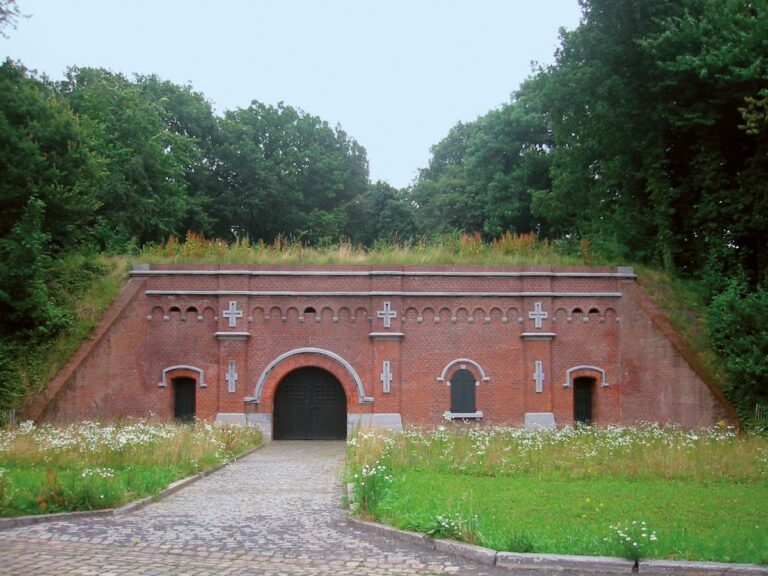
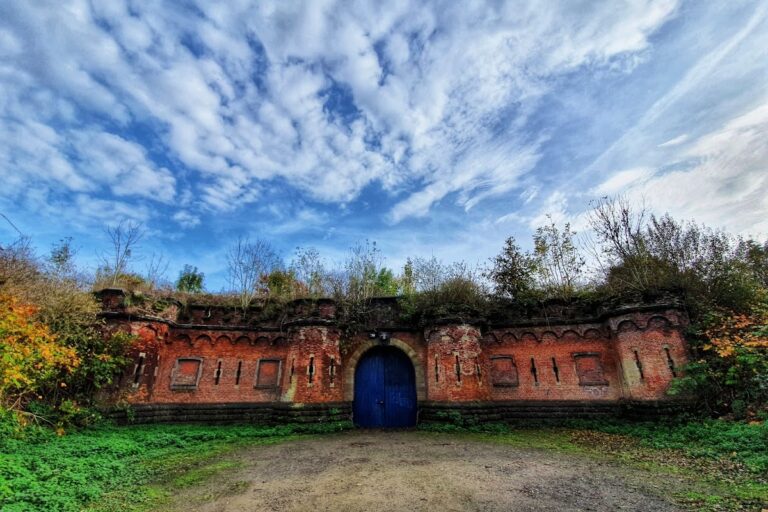
Fort 5 originally occupied approximately 30 hectares and forms part of the ring of forts around Antwerp. Its structures were built in concrete and masonry, materials chosen for a work intended to withstand the heaviest artillery of its period. The fort’s defensive arrangement included a moat and a controlled entrance reached by a drawbridge. After the First World War, part of the moat was removed and the drawbridge was replaced functionally by an ordinary road, changing the relationship between the fort and its approach.
The inner fort retains the fabric of the nineteenth-century defensive complex alongside alterations made during its conversion into barracks. Large windows installed during the postwar reuse remain part of the building’s later architectural history. Restoration from the 1990s onward preserved the inner fort as a usable historic structure, and it now accommodates the Simon Stevin Flemish Fortification Centre and Het Bolwerk.
Green setting and adjoining estate
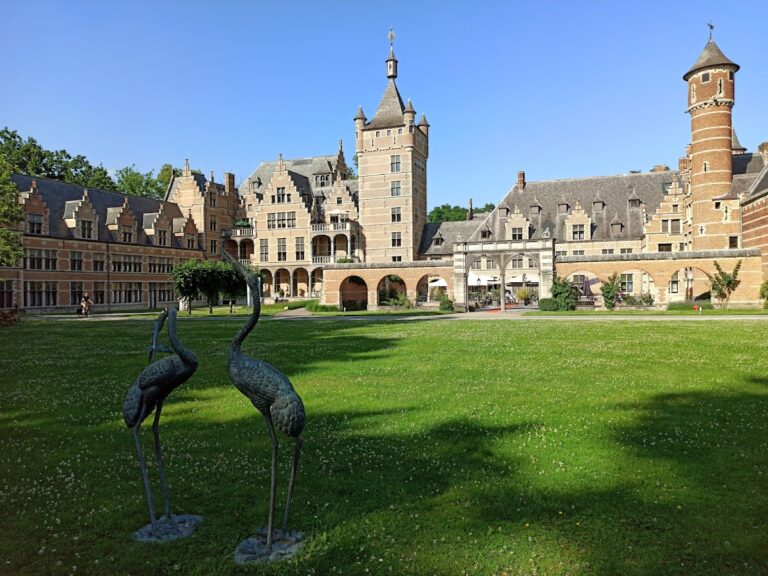
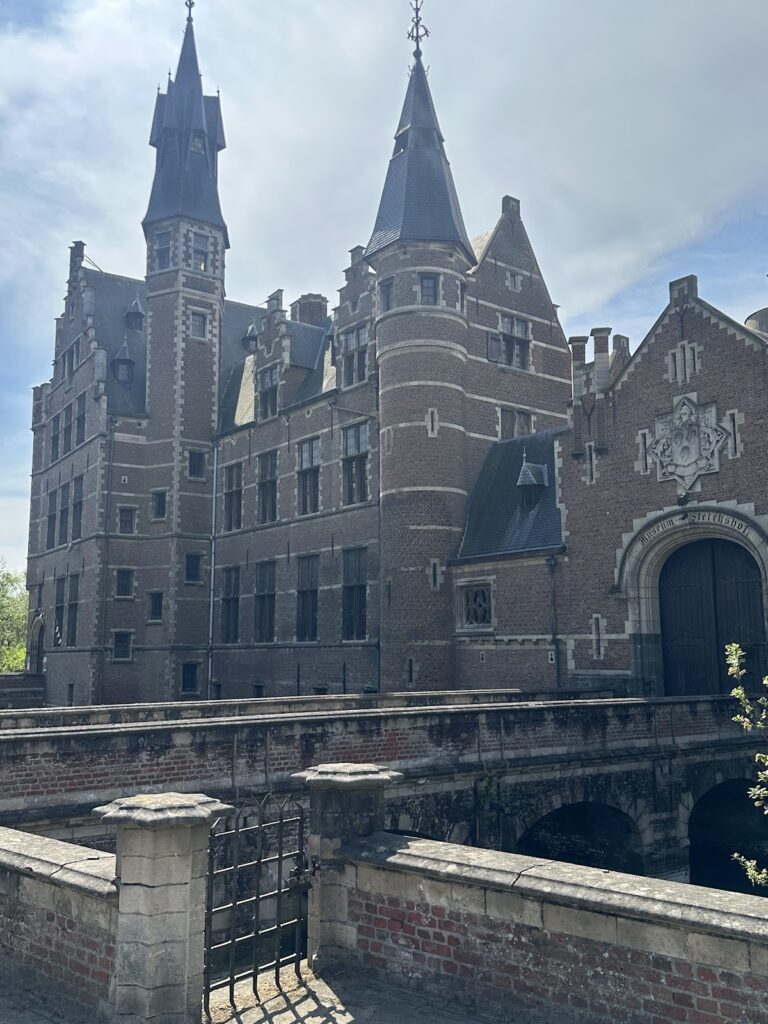
Fort 5 forms part of a nearly 90-hectare green area with the adjoining Hof ter Linden estate, a historic estate and green domain. The combined area is intended to preserve open space at the edge of Antwerp while providing premises for sociocultural organizations and sports clubs. Walking paths extend across the domain, placing the restored fort within a larger landscape of protected open space.
Nearby sites