Fort 3: A Brialmont Fortification in Borsbeek, Belgium


Site at a Glance
- Rating
- 4.3
- Popularity
- Low
- Country
- Belgium
- Primary era
- Modern
- External website
- Open
- Eras represented
- Modern
- Civilizations
- Belgian
- Site type
- Military
- Remains
- Fort
On this page11 sections
History
Fort 3 is a Belgian military fortification in Borsbeek, Belgium, built under the direction of the military engineer Henri Alexis Brialmont between 1859 and 1864 as part of the fortified belt around Antwerp. It was the first fort constructed in the second southern belt and served as a model for the group, giving it a design that differs from the cheaper and simpler plans used for later forts. The fort is also known as Fort Lieutenant Naeyaert.
Construction of the model fort
Brialmont’s designs shaped the defensive system around Antwerp during the nineteenth century. Fort 3 was built as an experimental or model example within the second southern belt. Its main front, entrances, defensive galleries, and barracks arrangements therefore differed from those of the forts that followed. The decision to construct it with more barracks buildings also set it apart from the later examples of the belt.
Wartime and Cold War use
During the German occupation in the Second World War, Fort 3 was incorporated into the defense of Deurne airport. Its terreplein, the level open area within a fort, was used as a temporary cemetery for enemy pilots who had been killed. A calibration disc for aircraft was also installed at the fort during this period.
Fort 3 retained a military role during the Cold War, when it functioned together with the adjacent Fort 3 freight station in Mortsel. The station stands on a branch of railway line 15 and remains in Mortsel, while the former Mortsel section of the military domain was transferred to Borsbeek. The municipal boundary now follows the enclosure of the military domain along Zoomweg and Fortstraat, between the Fortloop and Koudebeek.
Protection and later conservation
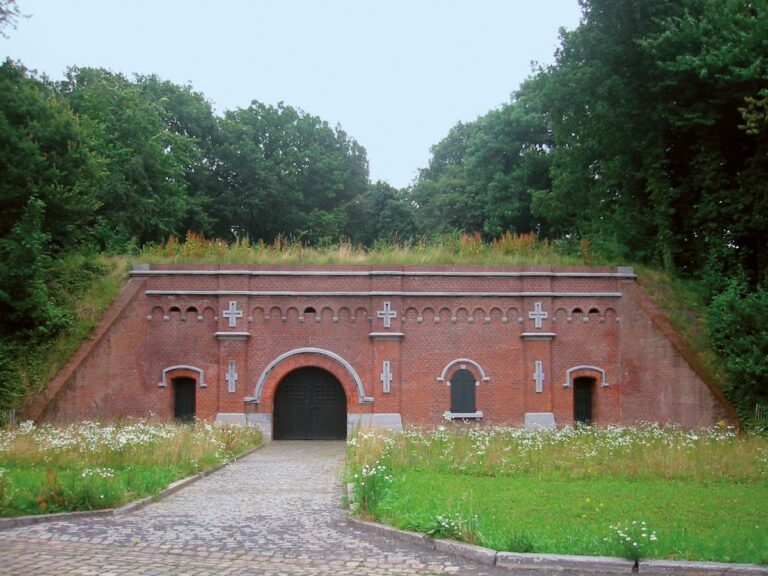
In 2003, the main front with its caponnière, the two half-caponières, the moat before the main front, and the outer glacis were protected as monuments. A caponnière is a fortified structure projecting into or alongside a moat, allowing defenders to fire along the ditch. A half-caponière is a smaller or partial version.
Fort 3 also forms part of a Natura 2000 area protected under the European Union Habitats Directive for its value as bat habitat. The protected area covers 3.585 square kilometres and is managed by the Agency for Nature and Forests, Natuurpunt, and private parties. Fort 3 is described as the most important Brialmont fort for bats overwintering there. The left half-caponière was restored between 2020 and 2022, and its Lieutenant Hall opened on 6 September 2022. Most of the former military area is now green space with walking paths, a playground, and a play forest.
Remains
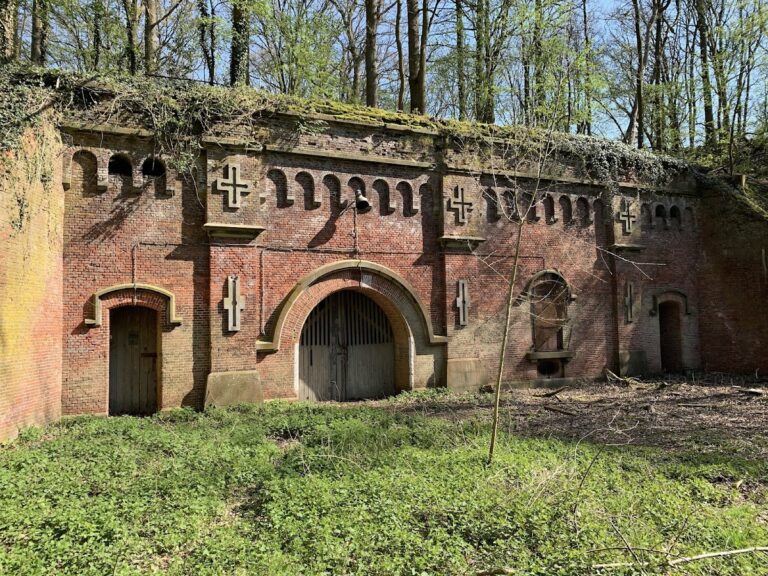
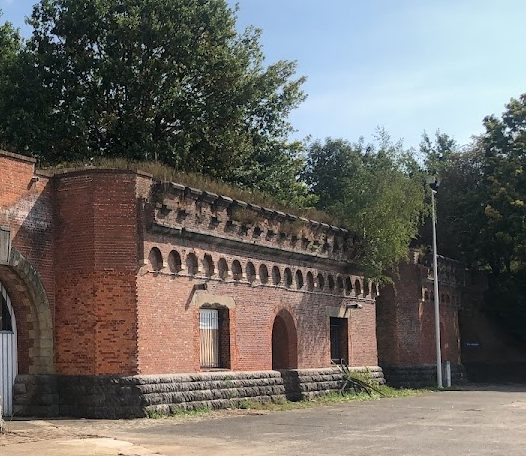
Fort 3 stands along Zoomweg as a fortified complex organized around a main front, a moat, defensive structures, an inner keep, and barracks buildings. Its outer glacis, a gently sloping open bank intended to expose attackers to fire and protect the fort’s walls, formed part of the defensive landscape. The fort’s arrangement and construction differ from those of the later Brialmont forts because it was built as the model for the second southern belt.
Moat defenses
Main-front caponnière
The main-front caponnière projected into or alongside the moat in front of the principal face of the fort. Its position allowed defenders to fire along the ditch, and it forms part of the protected monumental group established in 2003. The moat before the main front and the outer glacis survive as connected elements of this defensive arrangement.
Half-caponières and escarp gallery
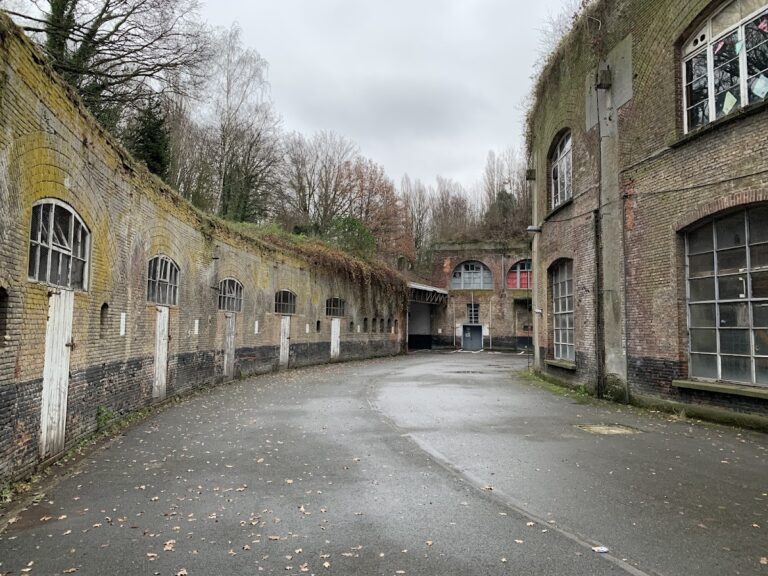
The left and right half-caponières guarded the sides of the moat. The left half-caponière was restored between 2020 and 2022, including its Lieutenant Hall. The right half-caponière still contains a former chapel and is intended for restoration. The unusual escarp gallery, a covered passage beside the inner side of the moat, contains loopholes and cannon openings that enabled additional fire into the surrounding ditch.
Inner defensive structures
Keep and double caponnière
The keep was the strong enclosed defensive position within the larger fortress. Its entrance is flanked by small towers, a distinctive feature of Fort 3. The keep and the double caponnière suffered severe explosion damage during the military period. They were not included in the list for immediate restoration, although the damaged structures remain of interest as bat habitat.
Barracks buildings
Several barracks buildings form part of the fort. Fort 3 contains more barracks buildings than the later forts in the Brialmont belt, reflecting its role as a model fort and its distinctive plan. The surrounding former military area is now largely green space, including walking paths, a playground, and a play forest.
Nearby sites