Pozzo Etrusco: An Etruscan Well in Perugia
Site at a Glance
- Popularity
- Medium
- Country
- Italy
- Primary era
- Classical
- Eras represented
- Classical, Medieval, Early Modern
- Civilizations
- Etruscan, Papal States
- Site type
- Infrastructure
- Remains
- Well
On this page9 sections
History
The Pozzo Etrusco is a well in Perugia, Italy, probably built by the Etruscans, an ancient people of central Italy whose civilization flourished before Roman rule. It is tentatively dated to the second half of the third century BC and may have been planned from the outset as a public water supply for the settlement.
Continued use and Palazzo Sorbello
Rebuilding had begun by the fifteenth century. Repeated repairs indicate that the community continued using the water supply, possibly without interruption. The wellhead at street level marked the underground source.
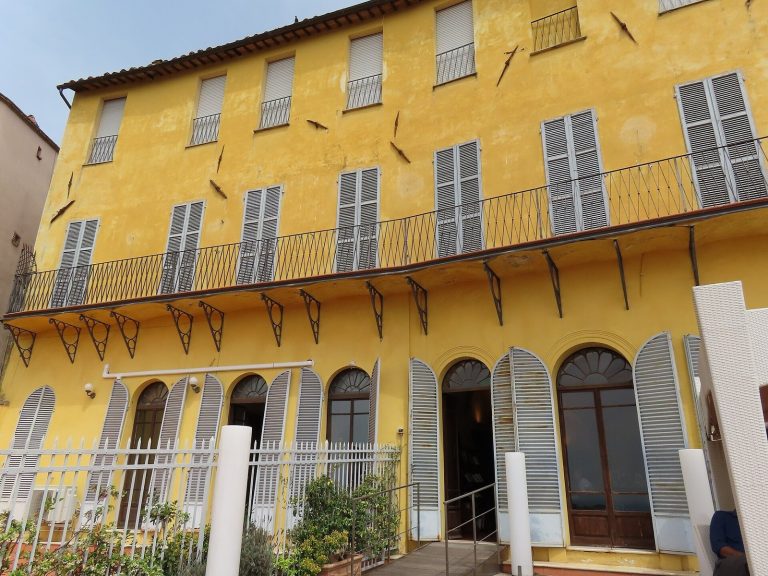
The well’s history became closely linked to Palazzo Sorbello and its successive owners. Niccolò Montemelini commissioned the palace in the sixteenth century. Diomede degli Oddi bought it in 1629, and it later passed to the Counts Eugeni of Perugia. In 1780, Marquis Uguccione III Bourbon di Sorbello purchased it from Count Antonio Eugeni and made it his principal residence, bringing the well into his family’s ownership. Although he owned the well, Uguccione III allowed residents of the square to draw water freely rather than rely on the old town’s public fountains.
Investigation, repairs and museum use
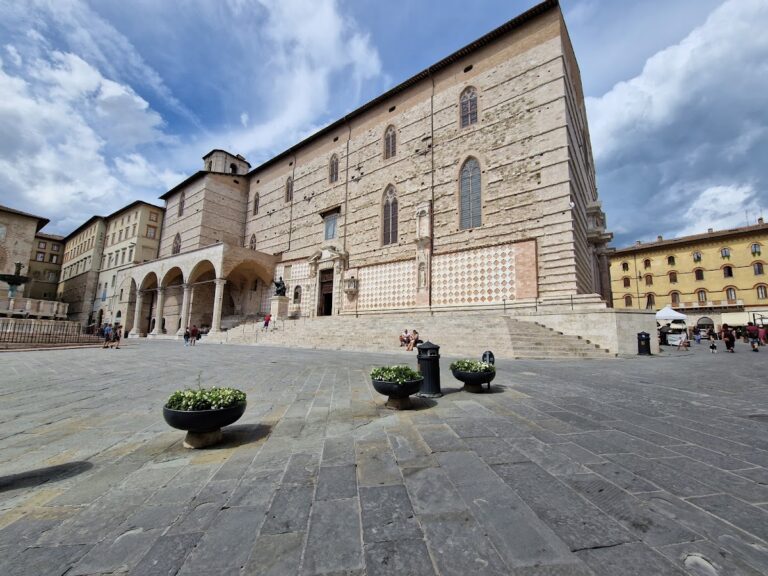
Municipal repairs addressed repeated damage to the wellhead. After part of its parapet fell into the well, the fallen section was recovered in the mid-1960s. The wellhead was placed on the lawn in front of the Temple of Sant’Angelo, where it remained until it was moved again in 1973.
At the direction of Uguccione V Ranieri Bourbon di Sorbello, an initial survey in 1960 attributed the well’s construction to Etruscan hydraulic engineering. A later survey by immersion led Filippo Magi, then a professor at the University of Perugia, to judge it among the most important known examples of that engineering at the time. In July 2016, the Ranieri di Sorbello Foundation, based at Palazzo Sorbello and heir to the family’s assets, completed restoration and reorganization of the entrance rooms and began managing the site as a museum.
Remains
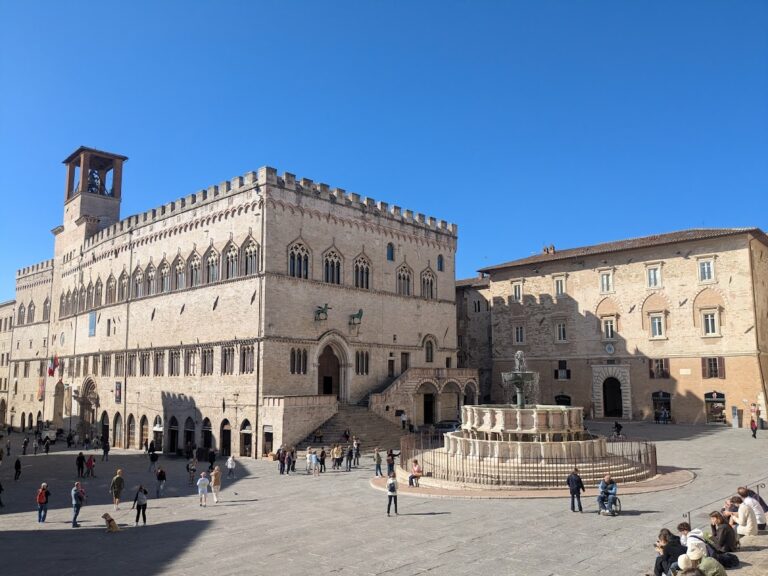
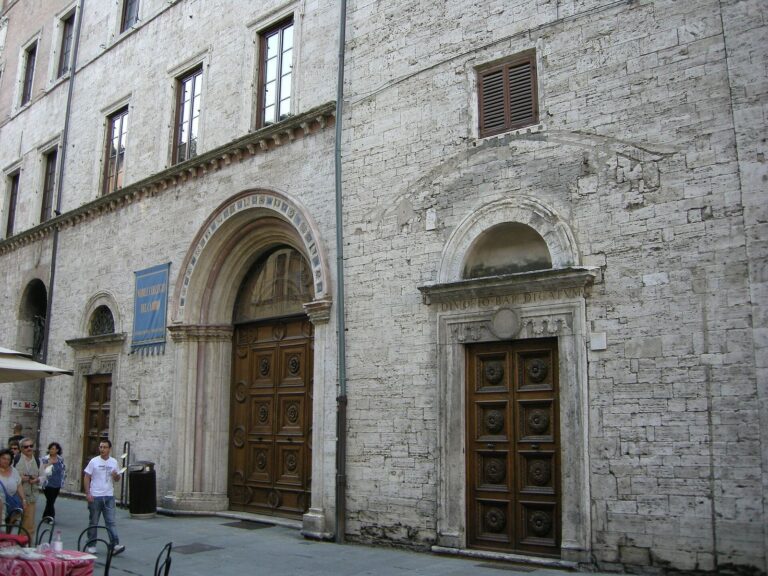
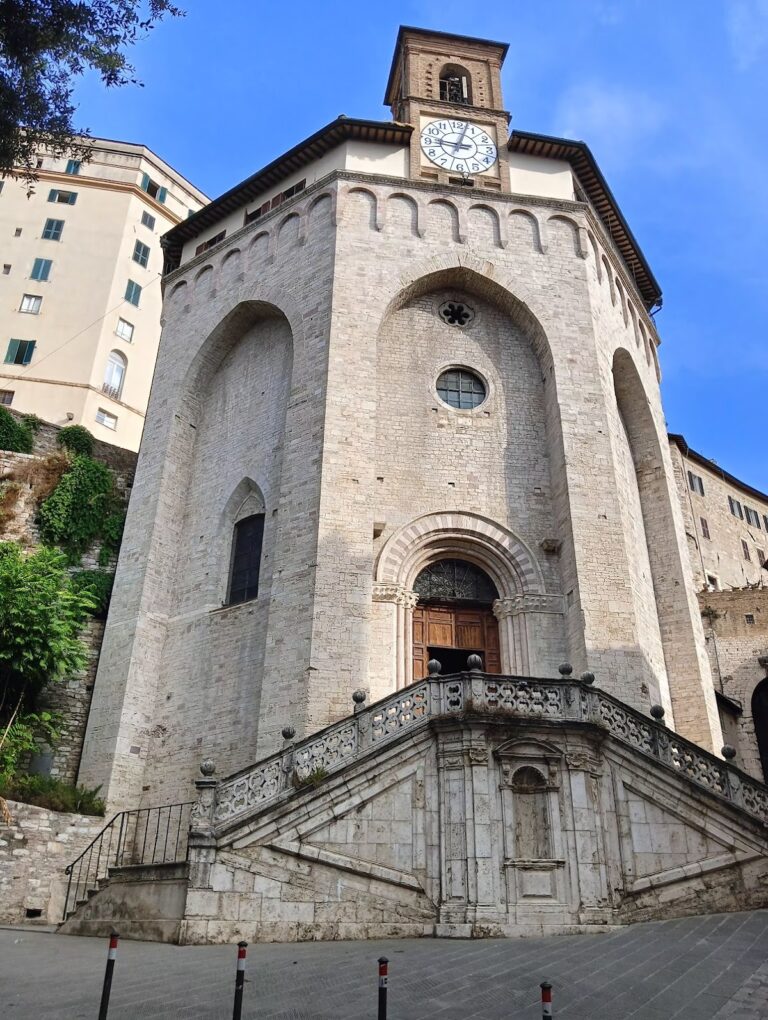
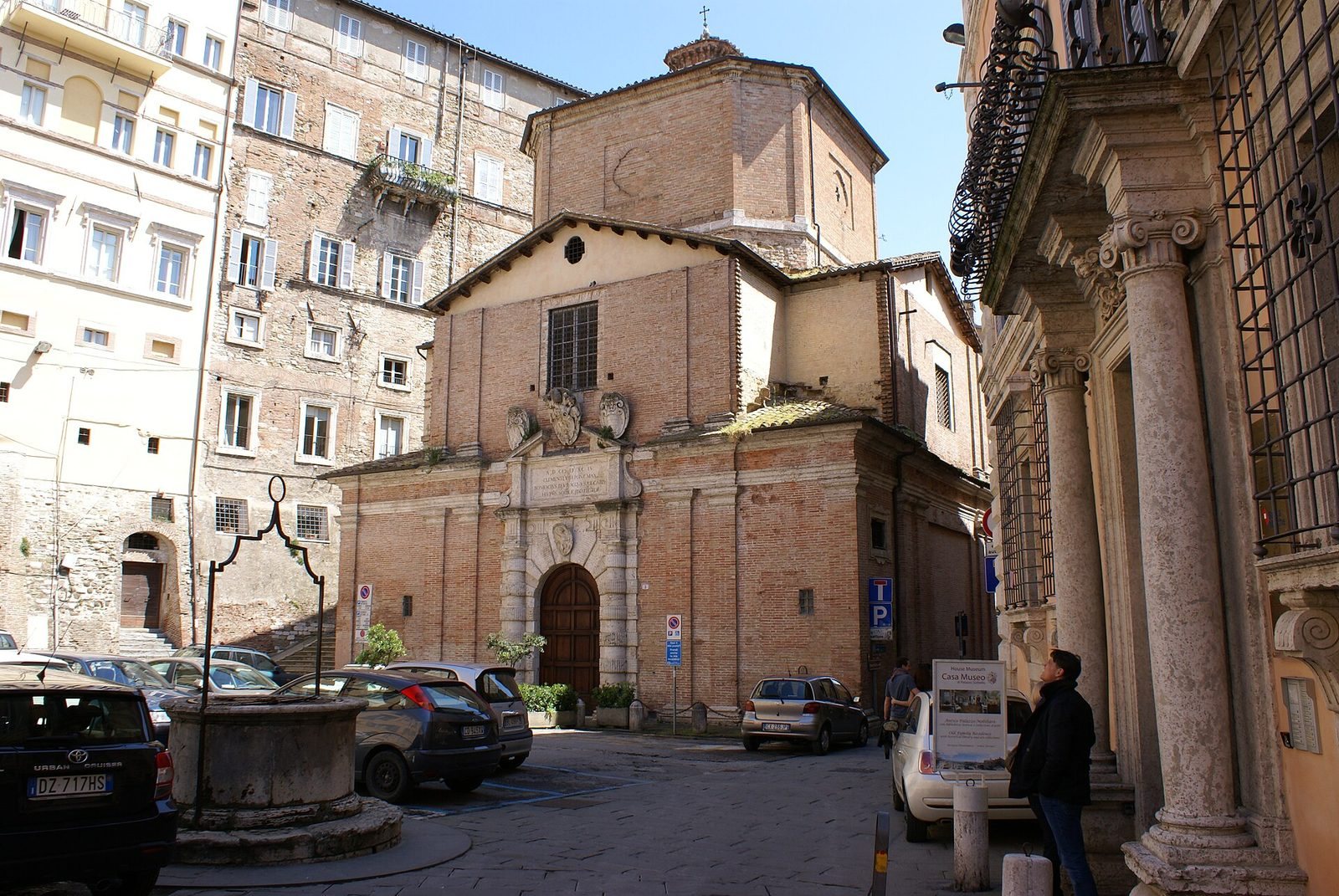
The well lies near Colle del Sole, 477 metres above sea level, at Perugia’s highest point and the site of the ancient Etruscan town’s citadel. A covered passage through Palazzo Sorbello connects Piazza Danti 18 with the underground rooms. At street level, the wellhead stood in what is now Piazza Piccinino, formerly Piazza dei Gigli; the underground cistern opening lay between the palace entrance and the Church of the Confraternity of Death.
Well structure and water system
Shaft and cistern
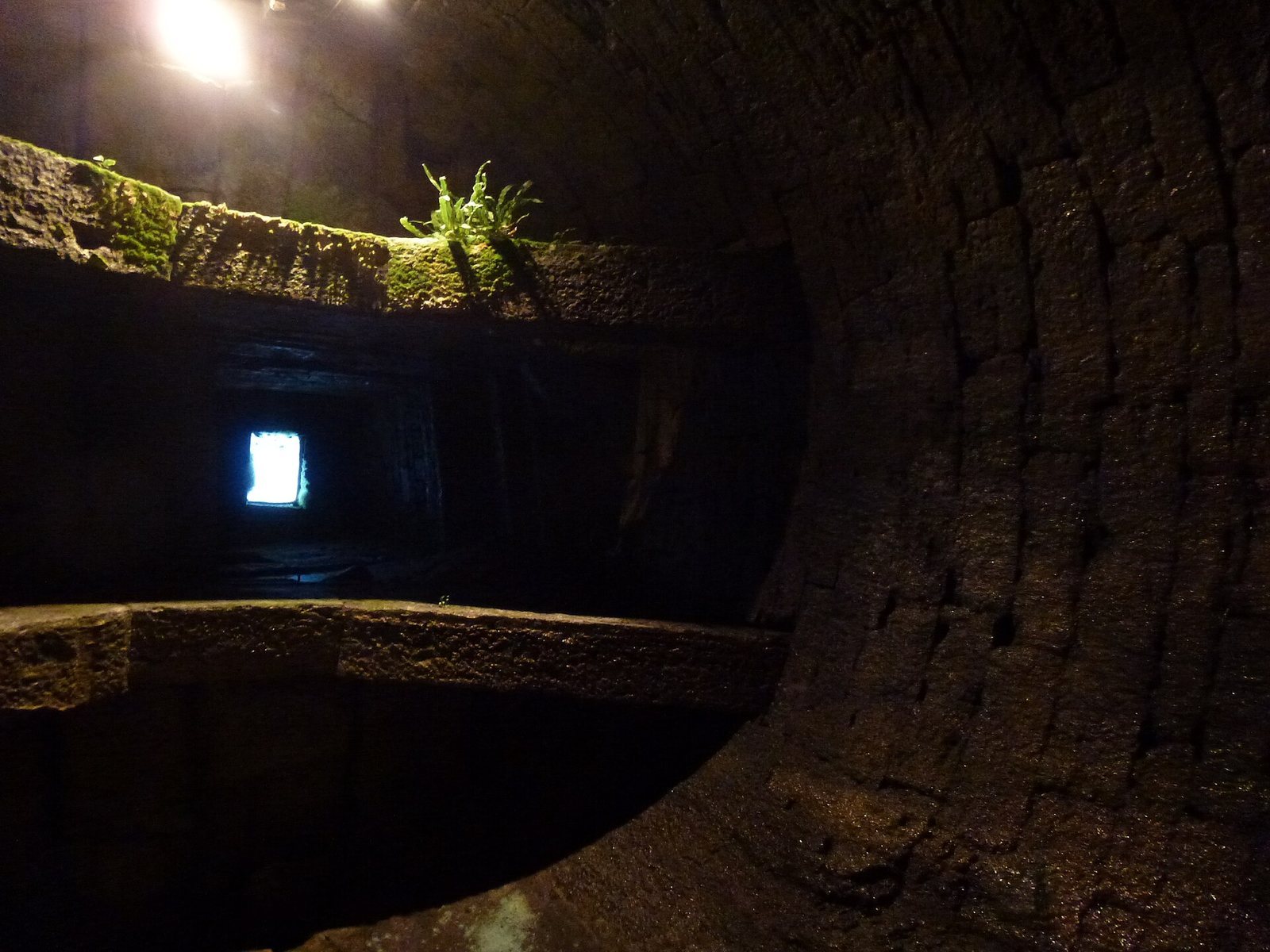
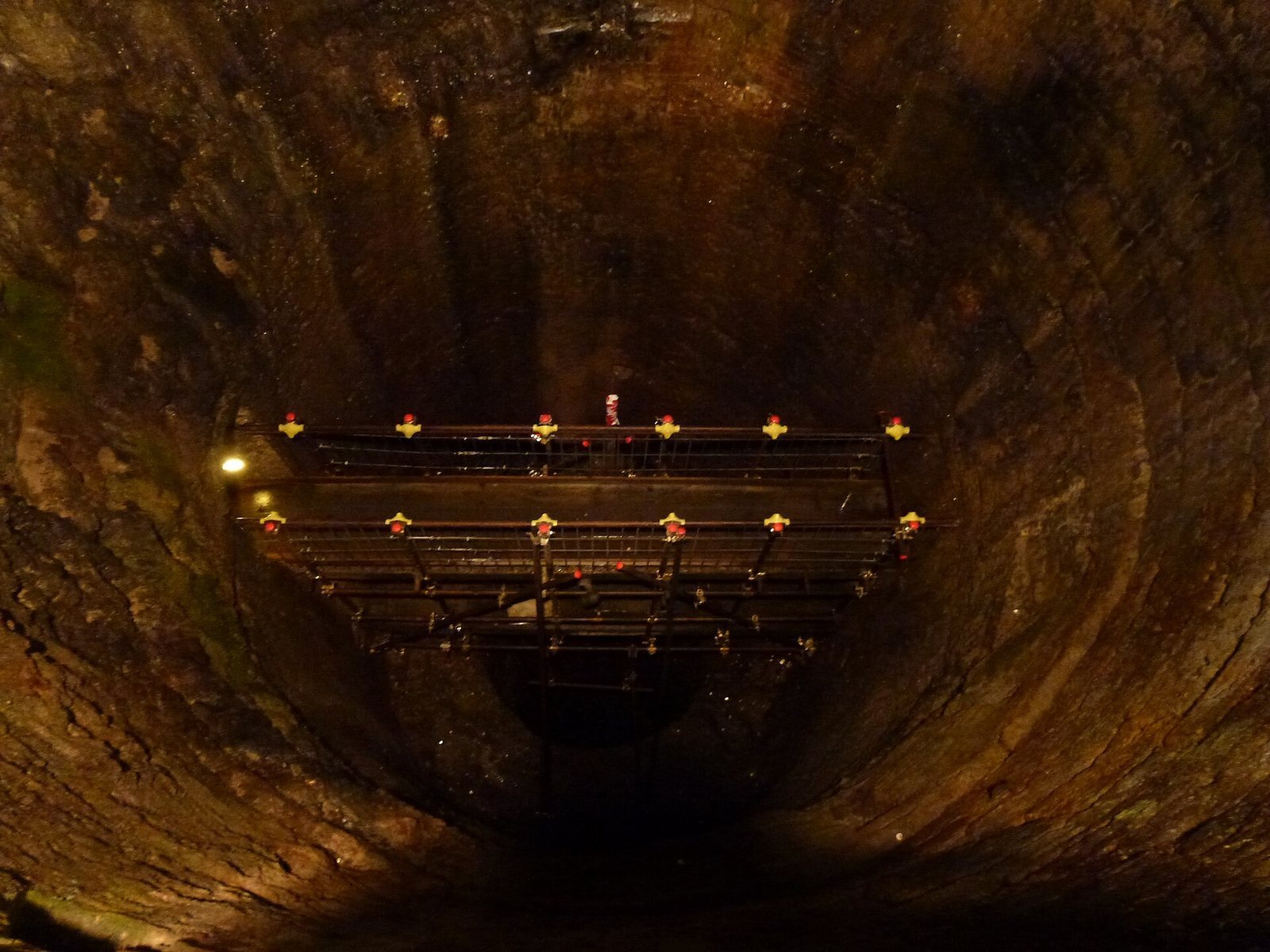
The cylindrical shaft descends about 37 metres through ground composed mainly of clay and rounded pebbles. Its first four metres below street level form a square space. The shaft then widens into a cistern, a chamber for storing water, about 5.6 metres in diameter and extending to a depth of 16 metres. Below that point, it narrows to about three metres across. The cistern is tentatively dated to the fourteenth or fifteenth century.
Cover and water-lifting equipment
Large travertine blocks line the upper part of the well. Above them, interlocking stone beams form two frames, each weighing about eight tonnes. The beams were assembled without mortar or lime and support a cover of large travertine slabs. The building methods resemble those used in Perugia’s Etruscan walls, while the vaulted cover has a parallel in another Etruscan-period cistern on Via Caporali. Grooves in the travertine show that water was first raised with buckets and ropes; a central pulley was added later. An iron grille at the wellhead bears the date 1768 and the coats of arms of the Bourbon di Sorbello marquises and the Counts Eugeni.
Capacity and springs
The well has a total volume of 424 cubic metres and could hold up to 424,000 litres when full. It remains active and is fed by three perennial springs. It was drained in 1996 for photographic surveys.
Palazzo Sorbello and earlier remains
Palazzo Sorbello stands partly over walls of Etruscan origin. The palace replaced a medieval tower and three houses, remains of which can still be seen in its underground rooms.