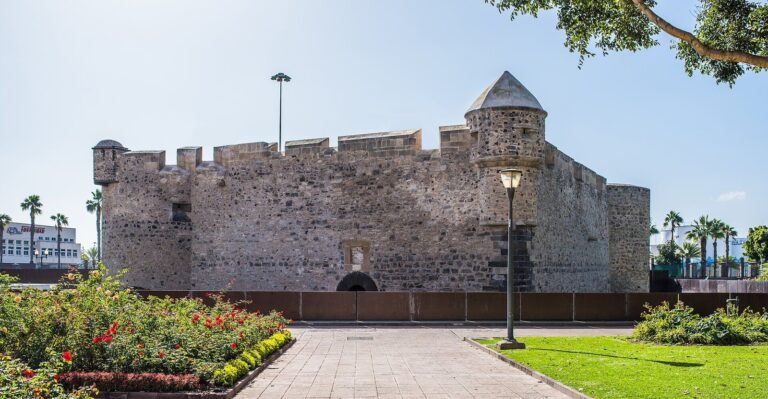
Archaeological Area of Barranco de Balos: Indigenous Rock Engravings in Gran Canaria
Site at a Glance
- Popularity
- Low
- Country
- Spain
- Primary era
- Unclassified
- Eras represented
- Unclassified
- Civilizations
- Amazigh
- Site type
- Civic
- Remains
- Rock Art
On this page7 sections
History
The Archaeological Area of Barranco de Balos is a rock-art site in Santa Lucía de Tirajana, Spain, attributed to Gran Canaria’s Indigenous people and to Berber culture. Its engravings form the most important group of rock engravings on Gran Canaria. A magical-religious use has been proposed, but remains hypothetical.
Recognition and early study
Rock art was recognized across the Canary Islands during the nineteenth century. Around 1940, researchers began to take a wider interest in the subject as additional sites came to attention, including Balos.
In 1957, British archaeologist O. G. S. Crawford removed a stone fragment bearing an animal-shaped engraving. A local witness who supervised a nearby well reported the removal. The following year, parish priest Pedro Hernández Benítez, a doctor of theology, brought together early critical investigations of the Balos engravings in a book.
Institutional and academic research
During Francisco Franco’s authoritarian dictatorship, the Archaeological Excavations Commission, a Spanish body concerned with archaeological work, appointed Sebastián Jiménez Sánchez to oversee excavations in Gran Canaria. He held the post from 1941 to 1969 and produced a study of the engravings. Later criticism faulted the study for relying on information already available rather than conducting a competent investigation. His limited attention has been linked to restricted knowledge of the site and poor preservation in some areas.
After the National Archaeological Excavations Service closed in 1968, archaeologist and University of Zaragoza professor Antonio Beltrán Martínez undertook a scientific study of the Balos massif. In 1973, prehistorian Mauro S. Hernández Pérez devoted his doctoral thesis to rock engravings across the Canary Islands, focusing on Balos. He agreed with most of Beltrán’s findings but differed over the engravings’ chronology and imagery. About three decades later, a new generation of mostly university-based researchers brought fresh interpretations, using newer technologies.
Protection and damage
The engravings received Spain’s Asset of Cultural Interest status in 1973, a formal heritage-protection designation for culturally important properties. In 2002, the protected surroundings were delimited as an archaeological zone.
On June 22, 2007, people deliberately demolished one of the site’s major engraved panels. A restoration team led by Manuel Solá Moreno reassembled and reintegrated the panel in work that took about two years.
Remains
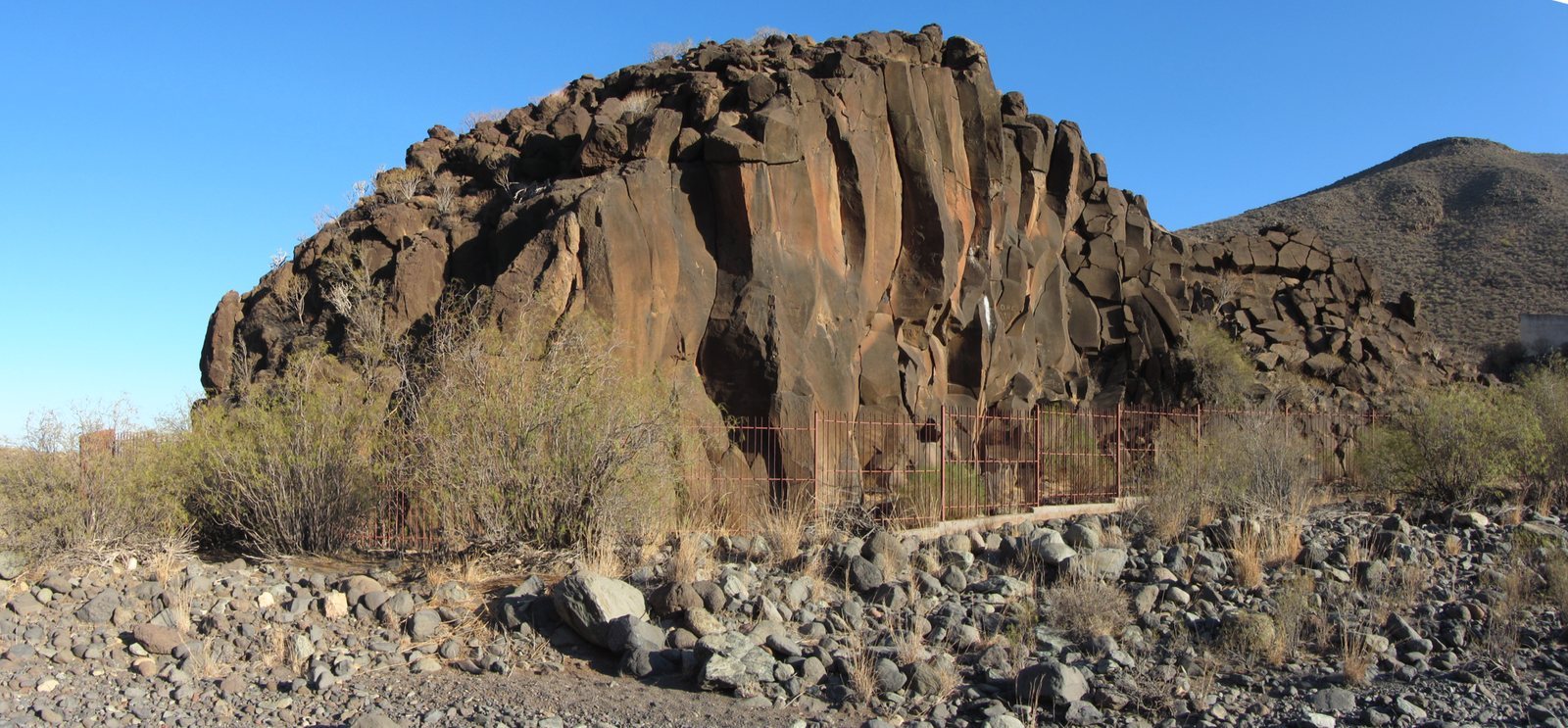
The site’s principal remains are inscriptions and rock engravings distributed across a basalt massif more than 600 metres long. The massif lies in the ravine channel at Agüimes, between Roque Aguayro to the east and Montaña de Los Perros to the west. Ten engraved sectors extend across its slopes, with eight on the north side and two on the south.
The engraved massif
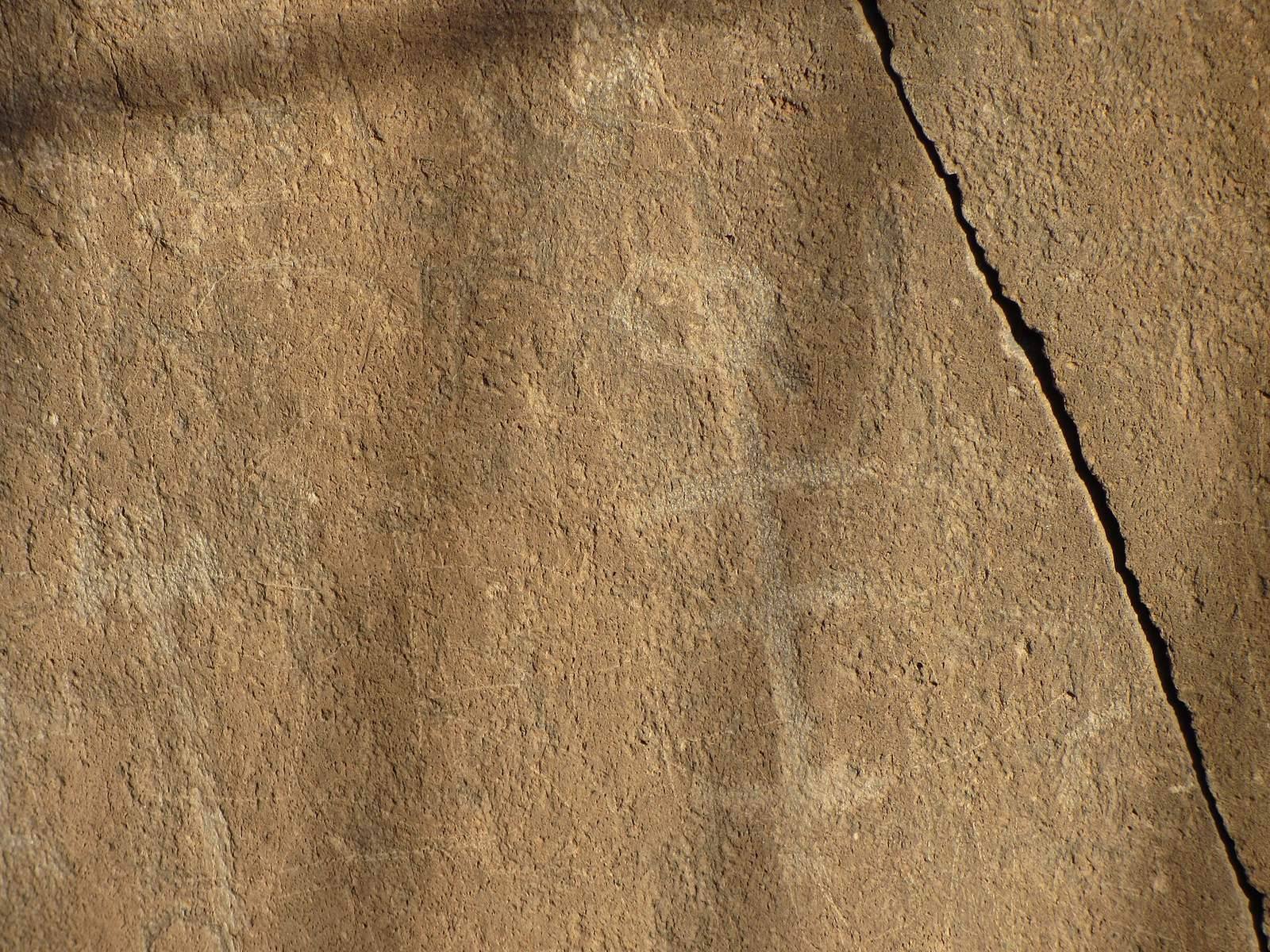
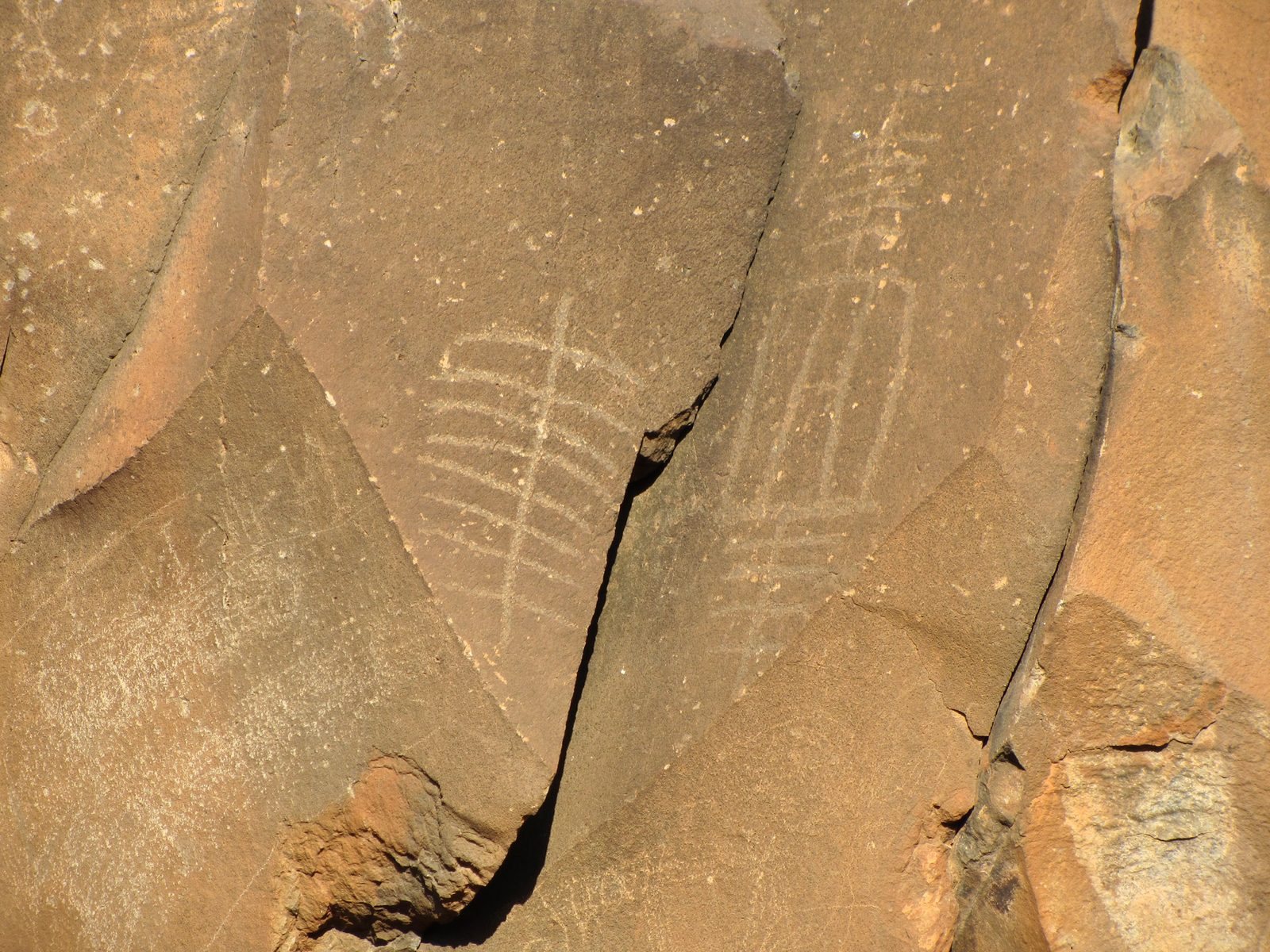
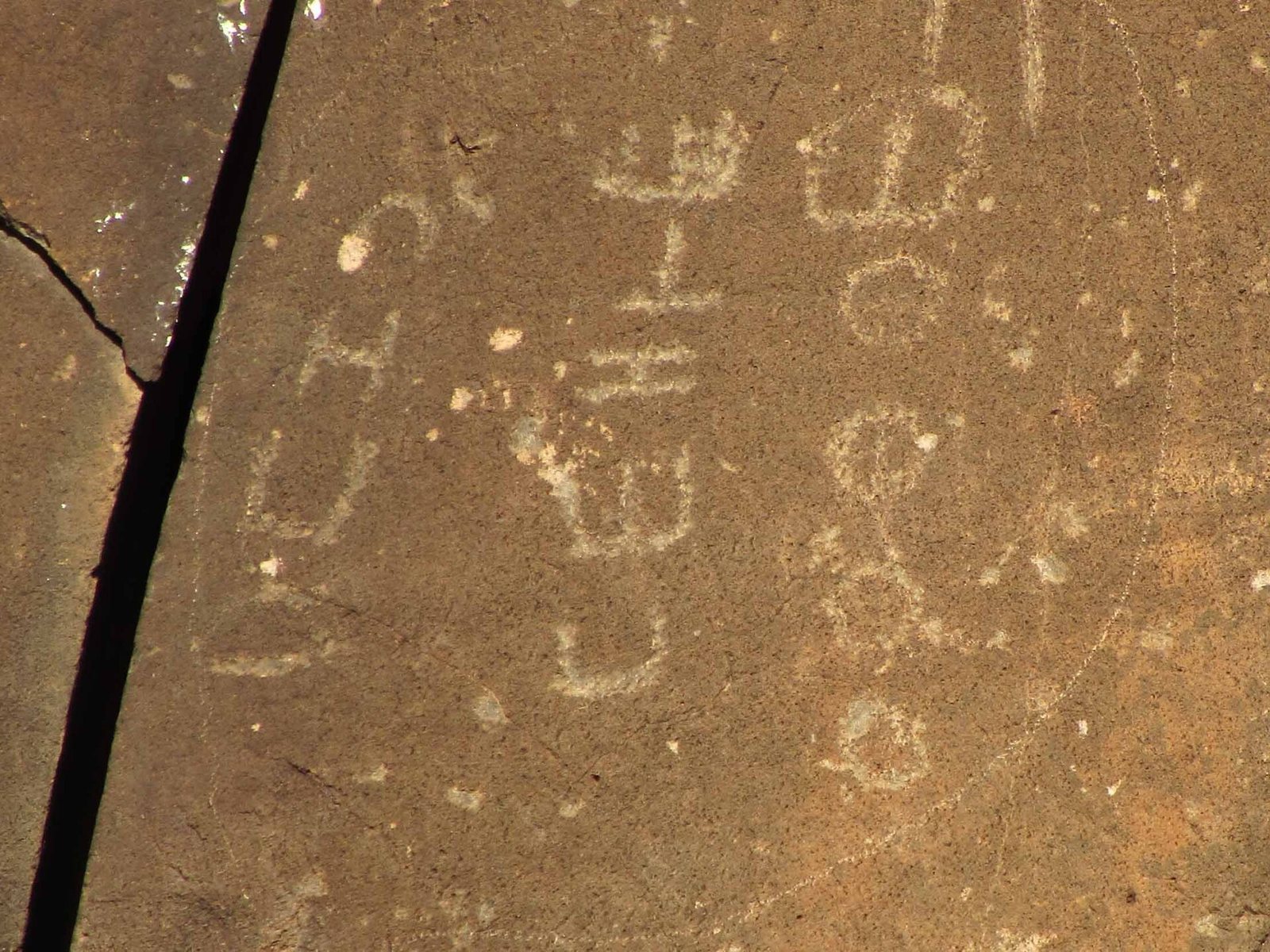
The surrounding geology includes smaller amounts of basaltic lava flows associated with the Roque Nublo volcanic phase, with thicknesses of 500 to 600 metres. More extensive phonolite formations, a type of volcanic rock, belong to the Post-Roque Nublo volcanic phase and are especially present near Montaña de Los Perros and Roque Aguayro, where they exceed 100 metres in relief. The engravings include mostly alphabet-like forms associated with the Libyco-Berber script tradition, an ancient tradition linked to Berber-speaking peoples; their resemblance to writing does not establish that every mark represents text. Geometric, animal-shaped and branch-like designs, as well as riders, also appear. Makers used continuous lines of percussion marks most often, alongside cutting, scratching and abrasion. Abrasive methods were also used to smooth marks made by percussion.
Condition of the engraved surfaces
The engravings are in very poor condition after repeated alteration. Graffiti includes visitors’ names and visit dates, while copies range from crude to precise. The removal of valuable pieces and the presence of imitations make it difficult to distinguish original engravings from later additions.