Santuario di Santa Maria dei Miracoli: A Roman Catholic Pilgrimage Church in Switzerland
Site at a Glance
- Popularity
- Medium
- Country
- Switzerland
- Primary era
- Early Modern
- Eras represented
- Medieval, Early Modern, Modern
- Civilizations
- Duchy of Milan, Holy Roman Empire, Swiss
- Site type
- Religious
- Remains
- Sanctuary
On this page15 sections
History
Earlier site and foundation
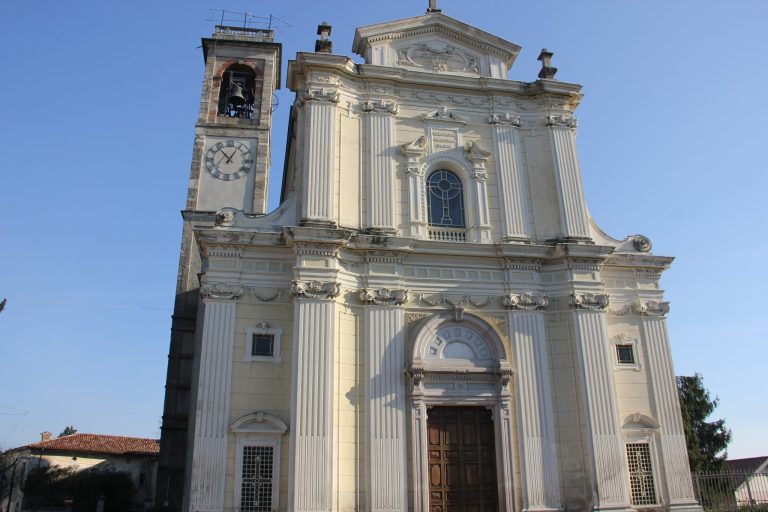
Santuario di Santa Maria dei Miracoli is a Roman Catholic church in Morbio Inferiore, Switzerland, in the Diocese of Lugano. Construction began in 1595 and was completed in 1613. Its facade follows Renaissance design, while its interior is Baroque.
The church stands on the site of an oratory dedicated to Saint Bernardino of Siena, a Franciscan preacher of the fifteenth century. The oratory had served as a chapel for Morbio Castle, which is mentioned in 1198 and was dismantled in 1517. The chapel had fallen out of use by 1550, although castle remains were still present there in 1594.
Tradition connects the sanctuary’s foundation to an event said to have taken place on 29 July 1594. Two ill Milanese girls, Caterina, aged ten, and Angela, aged seven, came to Morbio seeking a blessing from the local vice-parish priest, Gaspare dei Barberini. As he was away, they prayed before an image of Mary fixed to a wall among the castle remains. The Virgin was said to have appeared, healed the girls, urged them to pray, and invited Caterina to become a nun. Their mothers and other local women joined them in prayer.
The Bishop of Como recognized the miracle eight days later, and pilgrims began to visit. Tradition places the laying of the sanctuary’s foundation stone on 29 July 1595, one year after the apparition. The Silva family provided the land. The completed church was consecrated on 6 May 1613 by Filippo Archinti, then Bishop of Como.
Parish church and later history
Since 1776, the sanctuary has served as the parish church of Morbio Inferiore. Pope John Paul II raised it to the status of a minor basilica in 1990, an honorary Catholic title that does not make a church a cathedral. It remains a pilgrimage destination in Ticino, and its patronal feast is celebrated on 29 July.
The church underwent restoration in 1924 and again from 1999 to 2001.
Remains
The church combines a tiered exterior with a central worship space arranged around a main nave, a crosswise transept, and a dome. Its furnishings and decoration include altars, paintings, sculpture, and a modern pipe organ.
Exterior and interior plan
Facade
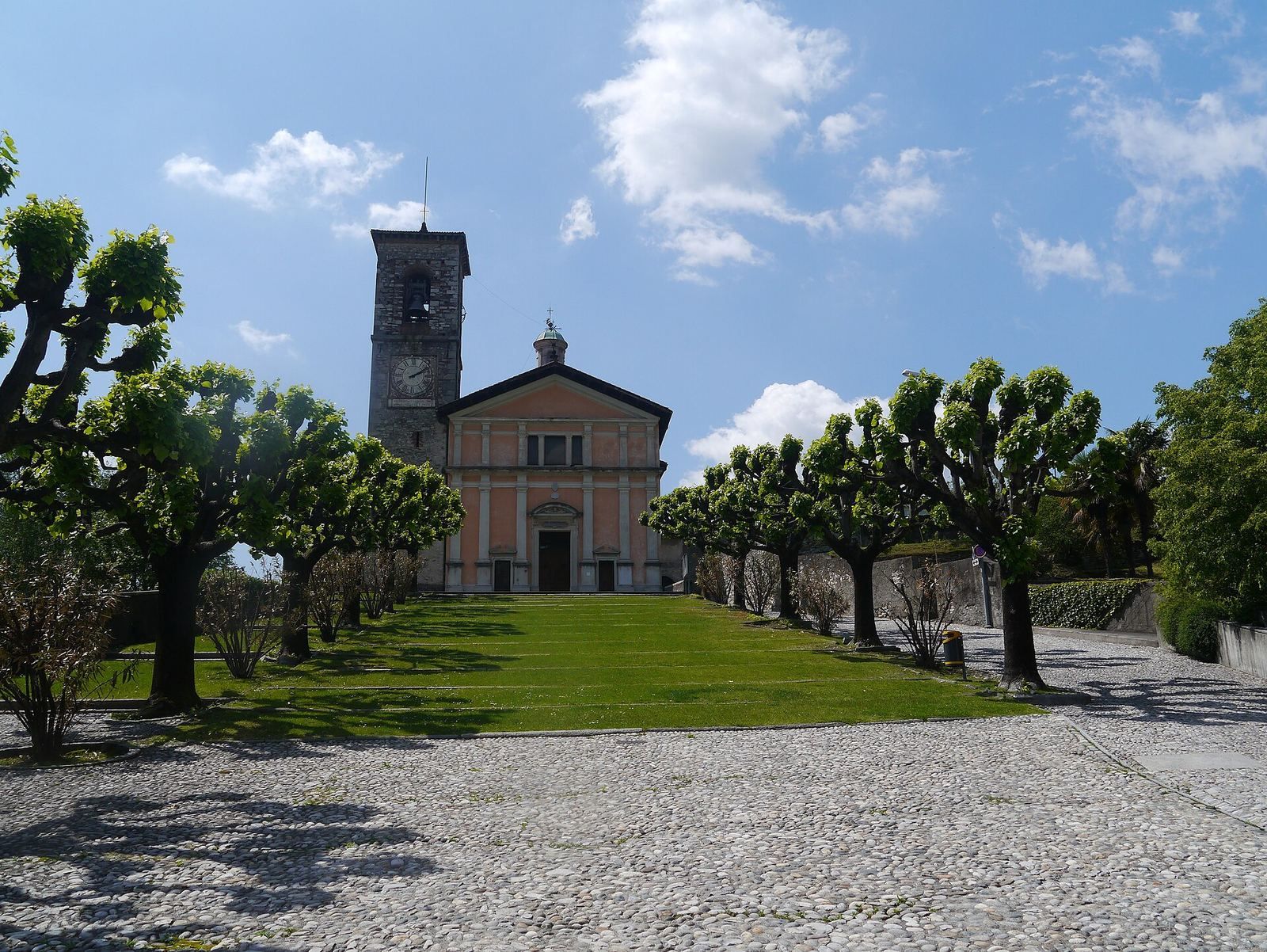
The gabled facade is divided into two levels by a projecting horizontal band. Each level has shallow wall projections shaped like columns, known as pilasters, in a plain Tuscan classical style. A triangular gable tops the facade. Three entrances occupy the lower level, with the central doorway larger than the two matching side portals. Three broad rectangular windows above align with the central entrance. A clock tower dated 1924 stands to the left.
Interior arrangement
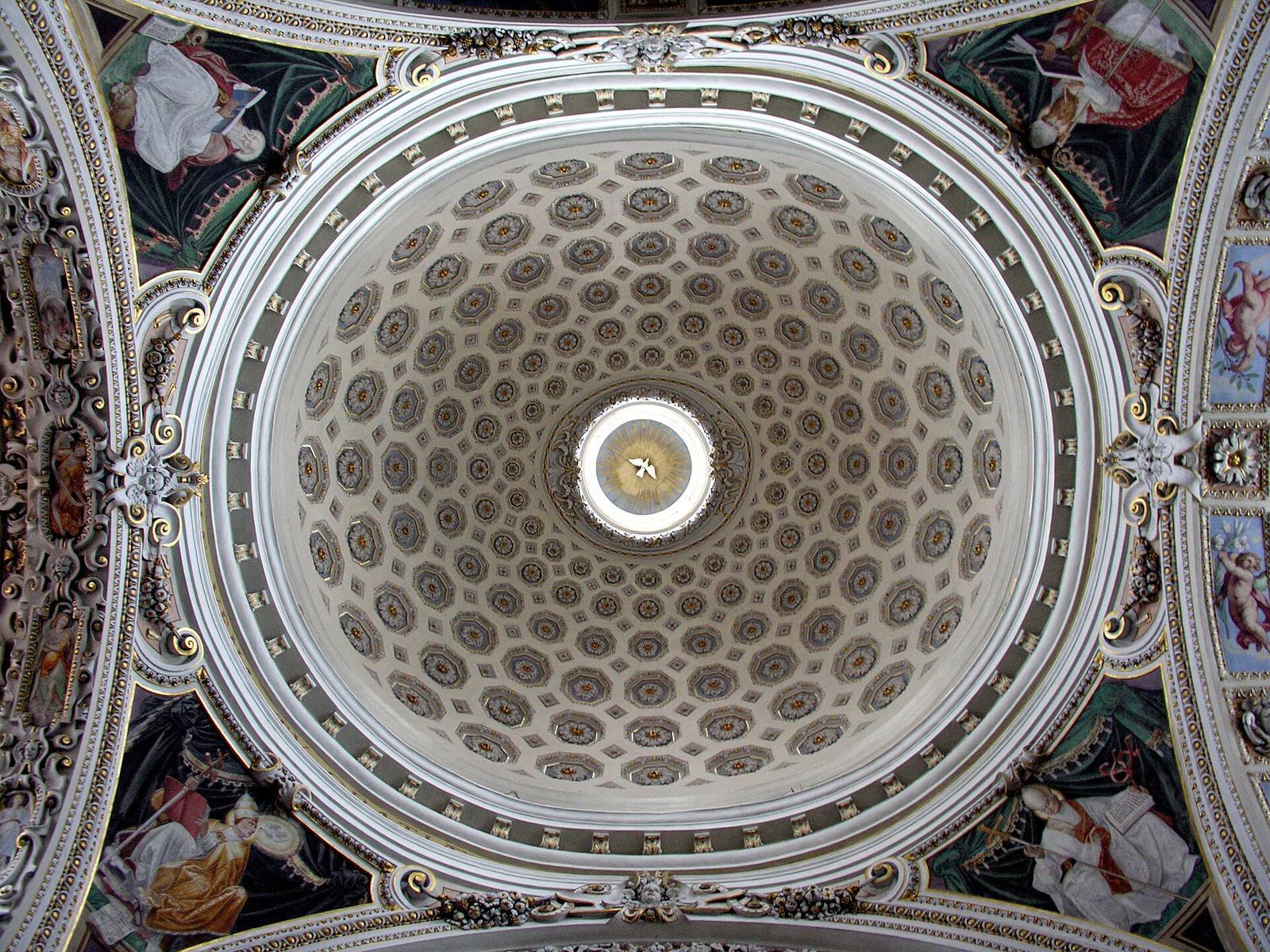
The interior has a single nave, the main central space of the church, and a short transept, the crosswise section that intersects it. An oval dome rises over the crossing. Four side chapels and a square presbytery, the area around the main altar, complete the plan.
Altars and chapels
High altar
Giuseppe Bottinelli made the multicolored marble high altar in 1770. Two columns with capitals frame an altarpiece by Filippo Abbiati showing the Nativity. Sculptures beside the altar depict Saint George with the dragon on the left and Saint Roch with a dog on the right; raised carvings above repeat the subjects of both saints.
Marian chapel
The second chapel on the left, within the transept, contains a fifteenth-century fresco of Mary nursing the infant Jesus, known as the Madonna del latte. Tradition associates the image with the event that led to the sanctuary’s foundation. It is set into a seventeenth-century altar decorated with painted medallions by Isidoro Bianchi. The altar is attributed to Francesco Silva the Elder.
Other chapels
The first chapel on the left was made in 1649 by Pietro Silva and contains a large painting of Saints Peter and Paul, to whom it is dedicated. The first chapel on the right has a painting of Saint Charles Borromeo, a sixteenth-century Catholic archbishop and reformer; the word meaning “humility” appears on its vault. The chapel in the right arm of the transept has a seventeenth-century altar and paintings by Giuseppe Antonio Petrini. Other chapels are dedicated to Saint Joseph and the Virgin Mary.
Interior decoration and organ
Paintings and stucco
Agostino Silva produced the stucco decoration in 1668–69. Frescoes dated 1671 and attributed to Carlo Gaffuri include the Assumption of Mary and angels playing musical instruments. Other painted scenes show Noah’s Ark, the meeting of Mary and Elizabeth, and the Annunciation. Paintings on the left side depict Mary’s Presentation in the Temple, while those on the right portray the Savior.
Stained glass and votive chapel
A large window with a curved upper section, set high in the rear wall of the presbytery, contains an early twentieth-century stained-glass scene of the event associated with the sanctuary’s foundation and the girls’ healing. Behind the church, a small chapel dedicated to the Madonna provides a place for pilgrims’ votive offerings.
Choir gallery and organ
Rizzi designed the wooden choir gallery on the entrance wall in 2001. It houses the Mascioni pipe organ, opus 1157, built that year. The instrument has 23 stops, which select sets of pipes, two hand keyboards, called manuals, and a pedal keyboard played with the feet. The keyboards operate mechanically, while the stops and combinations are electrically controlled. The smaller positive division, a separate group of pipes, corresponds to the first manual and extends over the gallery railing. The Great Organ, linked to the second manual, and the Pedal occupy cases at the gallery’s inner corners.
An earlier electrically operated organ, made in the 1950s by the La Fonica firm of Padua, incorporated pipes from the Venetian school of the seventeenth and eighteenth centuries. It was dismantled in 2000 to make room for the present instrument.