San Tommaso in Formis: A Trinitarian Church and Former Hospital in Rome
Site at a Glance
- Popularity
- Medium
- Country
- Italy
- Primary era
- Early Modern
- Eras represented
- Medieval, Early Modern, Modern
- Civilizations
- Italian, Papal States
- Site type
- Religious
- Remains
- Church
On this page12 sections
History
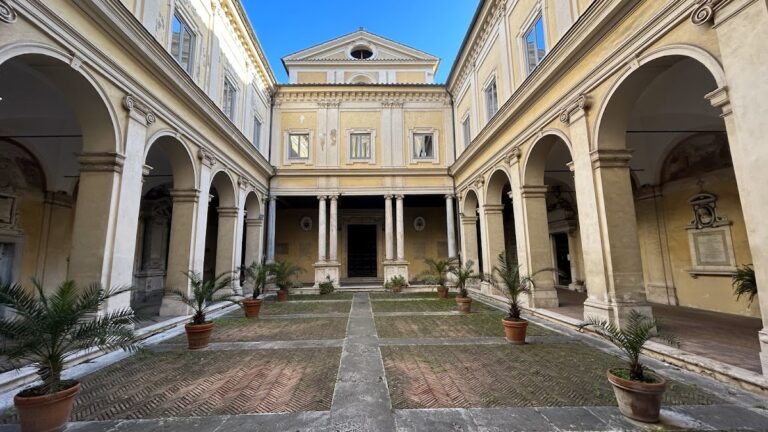
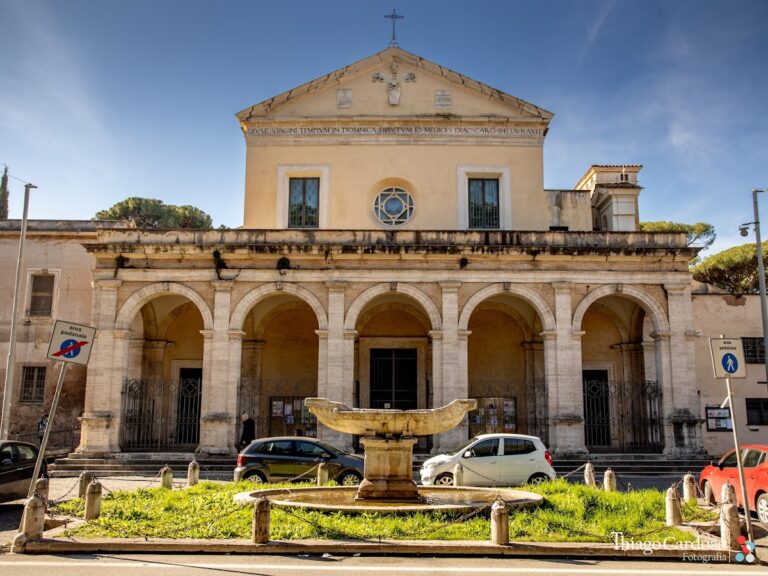
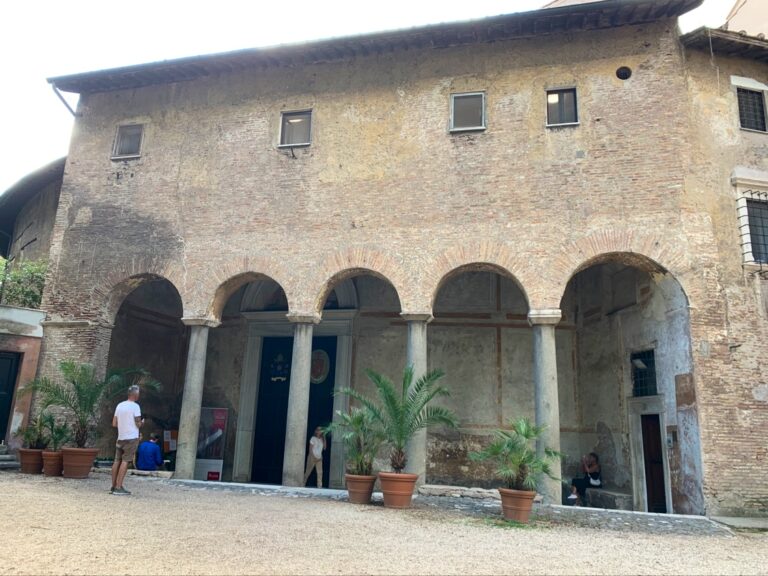
San Tommaso in Formis is a Catholic church dedicated to Saint Thomas the Apostle on Rome’s Caelian Hill, in Italy. Thought to date to around the tenth century, it may have begun as a Benedictine monastery; its earliest securely recorded history begins in 1209. The rear and earliest fabric are Romanesque, a medieval architectural style, while the present façade and interior are Baroque, an early-modern style. The complex became the Roman headquarters of the Trinitarian Order and included a hospital for people in need.
Origins and Trinitarian foundation
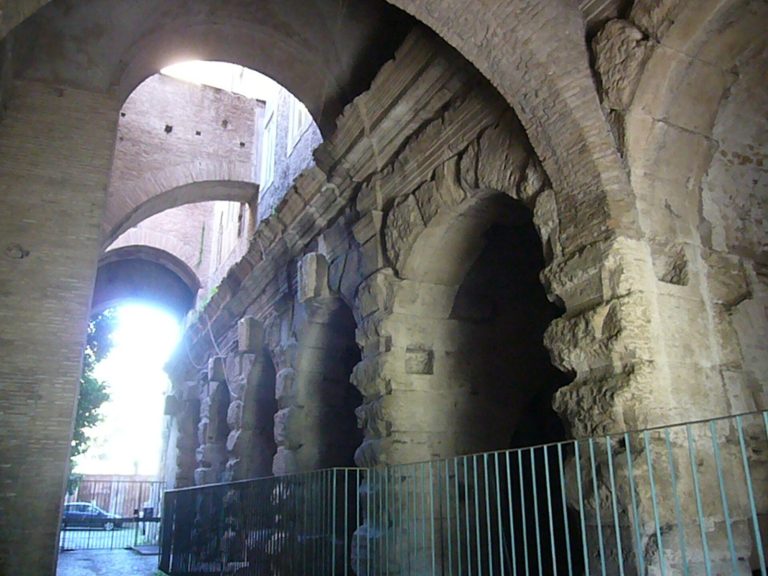
In 1209, Pope Innocent III gave the church and adjoining monastery to the Order of the Most Holy Trinity and of the Captives, commonly called the Trinitarians. Founded by John of Matha, the order worked to ransom Christians held captive. John established the complex as the order’s headquarters and his own residence, adapting part of the monastery, including passages linked to an ancient water cistern, into a hospital. It served poor people, the sick, pilgrims, and enslaved people freed from Muslim captors.
John of Matha died on 17 December 1213 and was buried in the church. His remains were solemnly moved to Spain in the seventeenth century. In 1217, Pope Honorius III granted property in Rome and its surroundings to the church, then referred to as Saint Thomas and Saint Michael the Archangel of Formis.
A tradition says that John welcomed Francis of Assisi, founder of the Franciscan movement, at the church in 1209, while Francis waited outside the Lateran to meet Innocent III. The nearby hospital’s service to pilgrims provides indirect support for this account. Francis is also said to have stayed at the monastery on later occasions.
Decline and changing use
In the late fourteenth century, the Trinitarians were forced to leave Rome, and the complex passed to the Chapter of Saint Peter, the clergy body that administered the basilica’s property and affairs. The hospital closed and the site entered a long period of decline. The reason for the expulsion is uncertain. It may have been connected with Trinitarian leaders’ support for the Avignon pope during the Western Schism, a division in the Western Church when rival popes were based in Rome and Avignon.
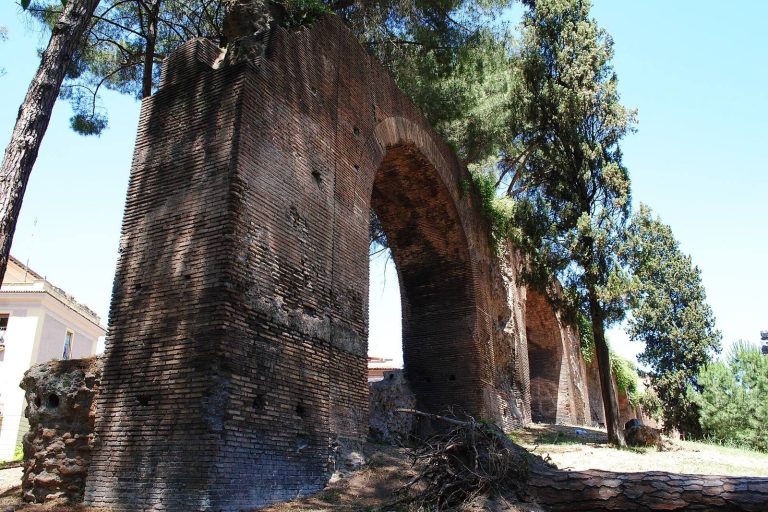
The Chapter leased the complex to private tenants in 1504. During the plague of 1522–1527, the hospital served as a lazaretto, a place for isolating and caring for people during an epidemic. At other times, its buildings were used as a barn, storehouse, and cellar. The Chapter began restoring the church in 1532, using material taken from the hospital roof. In 1562, a tenant made further improvements, including work on monastery rooms beside the aqueduct arches.
Ownership and reconstruction
In the early 1570s, Pope Pius V returned the church, hospital, and monastery to the Trinitarians. After his death, they lost the complex again. Legal proceedings ultimately confirmed the Chapter of Saint Peter’s ownership in 1616. The Chapter leased the church, monastery, hospital, and adjoining garden to the Mattei family in 1634. The family had owned Villa Mattei since 1570. The church was completely reconstructed in 1663, taking the form it has today. In 1781, Giuseppe Mattei became the holder of a long-term lease that granted extensive use rights while ownership remained with the Chapter.
In 1813, the Chapter sold the monastery, hospital, and garden to Emanuele Godoy, Prince of Bassano, a Spanish statesman who acquired the former Villa Mattei that year. In 1825, Godoy ceded to the Chapter two small rooms between the aqueduct arches where John of Matha had died.
Twentieth-century changes
Perpetual use of the church and adjoining premises was recorded as granted in 1898 and formally established on 27 March 1920. The Chapter retained ownership. The hospital became state property in 1921 and was largely demolished by 1925. By that year, the church and part of the convent had returned to Trinitarian use. Construction of Rome’s Experimental Chemical-Agricultural Station in 1934 further altered the former complex. Trinitarian friars serve the church, which is a subsidiary church of the parish of Santa Maria in Domnica alla Navicella.
Remains
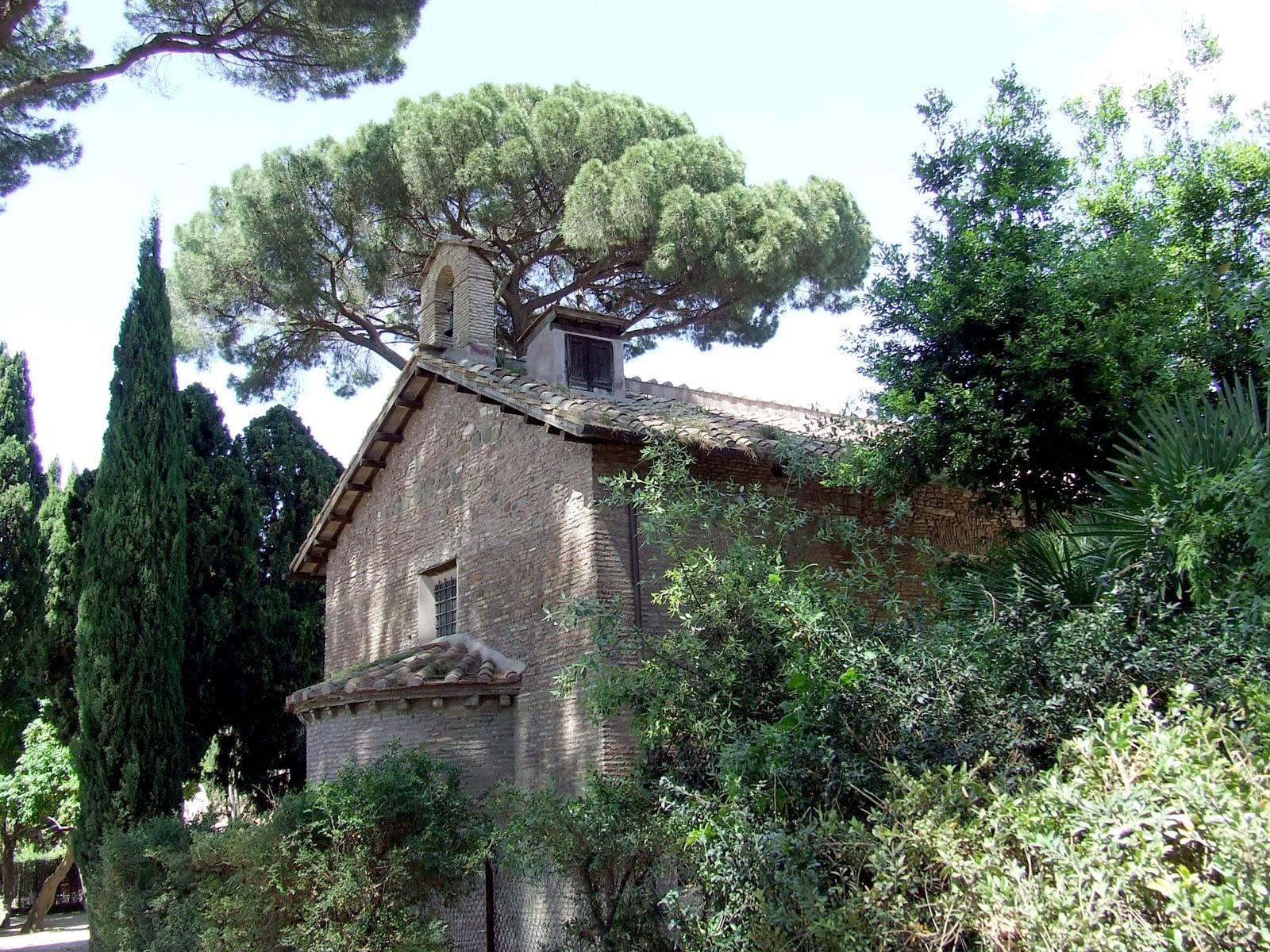
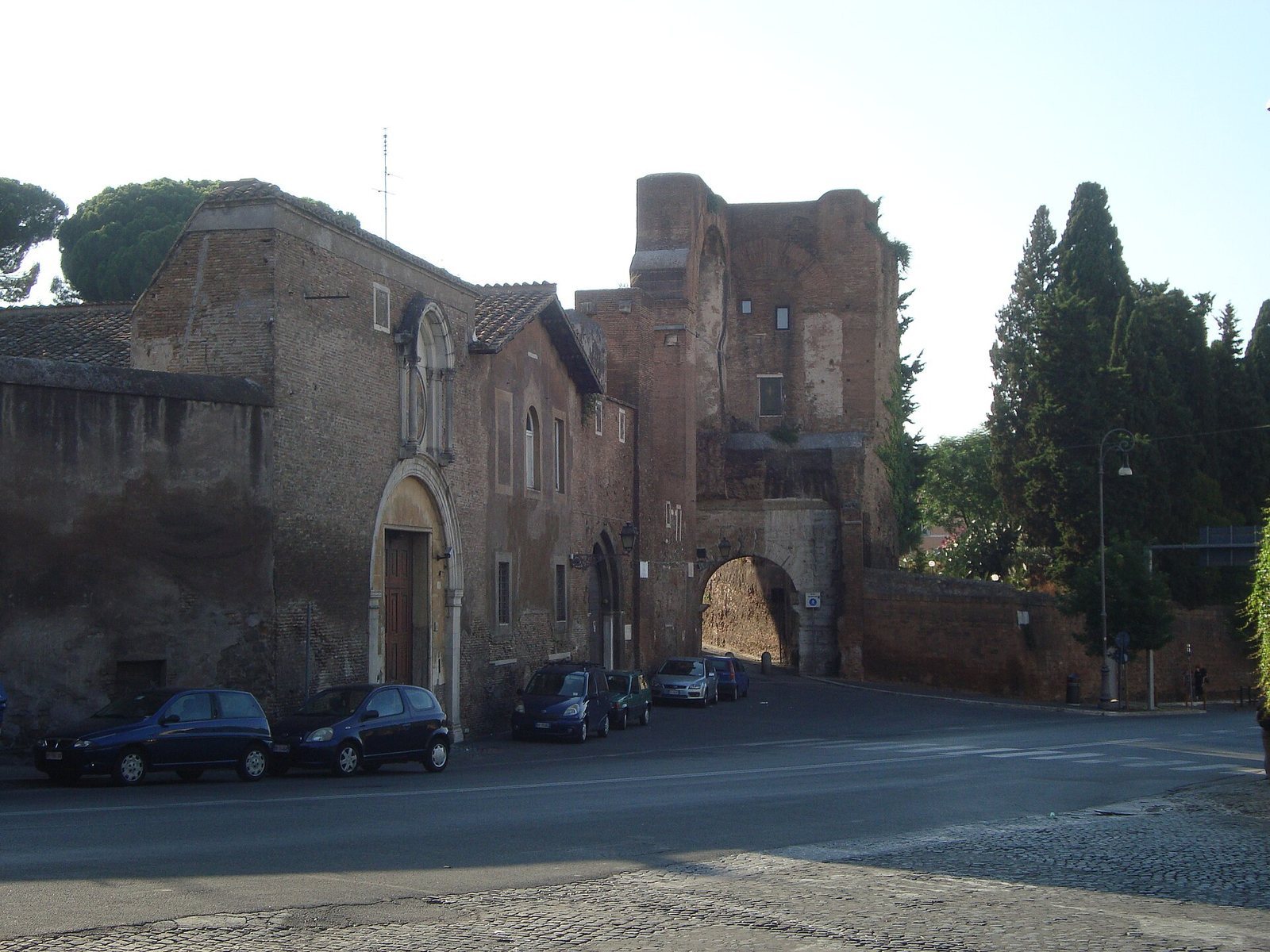
The church stands at the edge of Villa Celimontana, beside the Arch of Dolabella, and is built into the side of the Claudian Aqueduct. Its name refers to the aqueduct, whose Latin name was Forma Claudia. The nearby arch is identified as a gate in the original Servian Wall, an ancient defensive wall around Rome. The church’s rear and earliest surviving fabric are Romanesque, while its façade and single-nave interior reflect the Baroque reconstruction.
Former monastery and hospital
Hospital entrance and mosaic
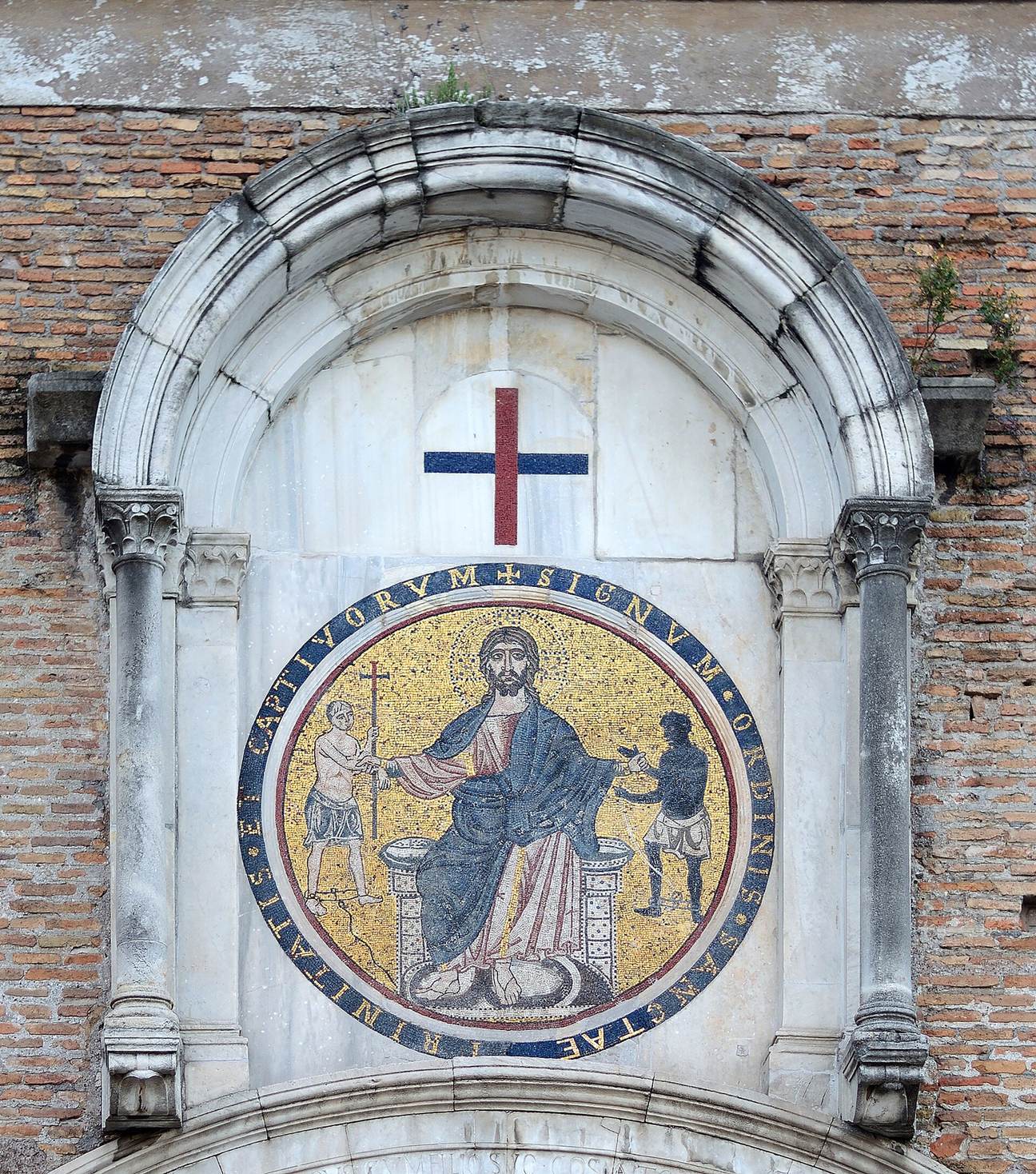
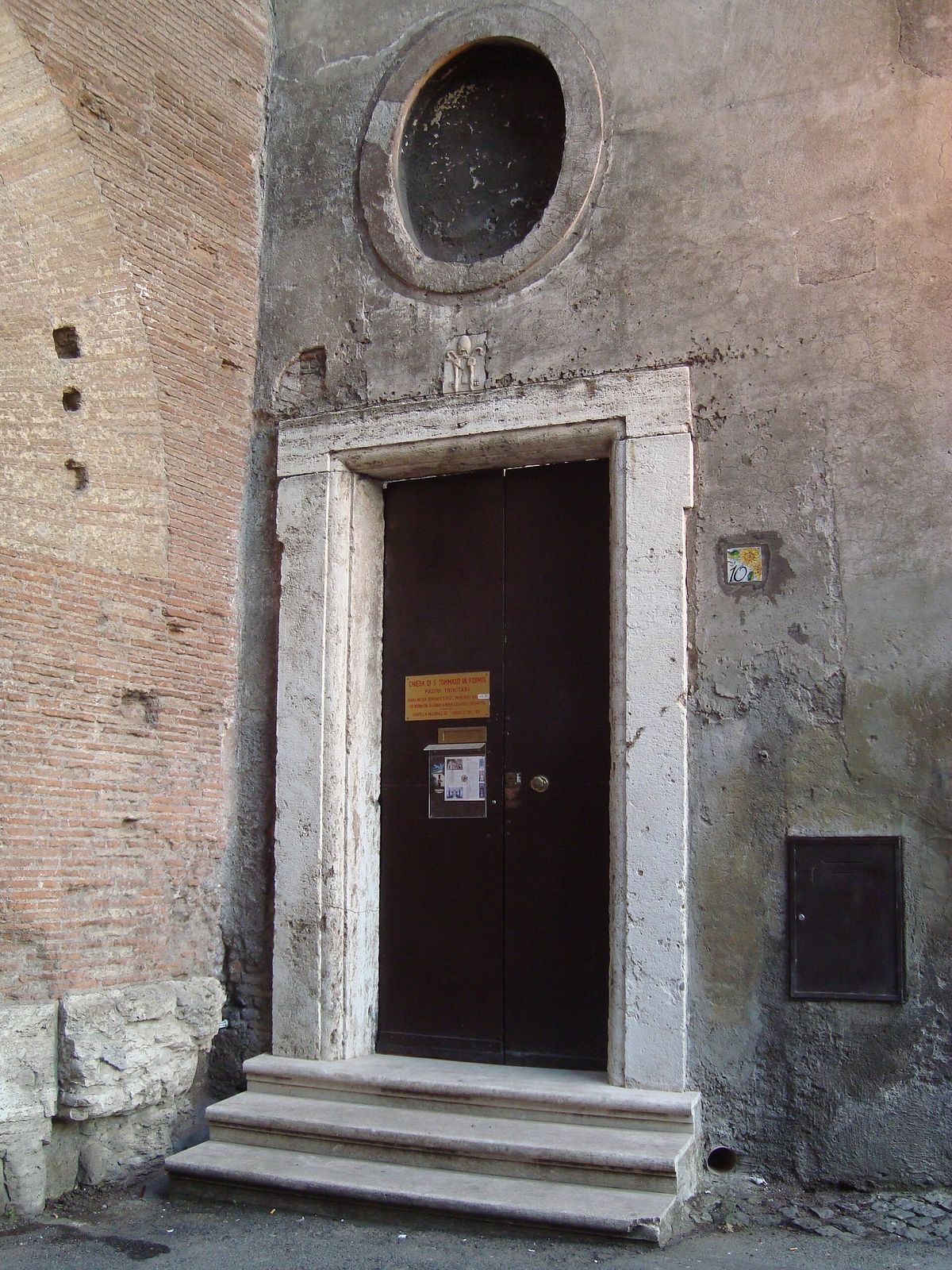
On the northeast side of the former complex, the hospital entrance faces Largo della Sanità Militare. Its thirteenth-century Romanesque portal bears a Cosmatesque mosaic, made with patterned inlays of stone and colored materials, dated to 1210. The image shows Christ freeing two enslaved people and includes the Trinitarian Order’s seal. The portal and mosaic are the principal surviving remains associated with the hospital.
Aqueduct-side traces
A projecting fragment of the former hospital survives, as does a portal beside the hospital entrance that belonged to the monastery. Windows remain visible along a surviving perimeter wall. The two rooms between the aqueduct arches where John of Matha died were still identifiable in the nineteenth century.
Church interior
Altars and paintings
The high altar is dedicated to the Most Holy Trinity and has a modern painting by Aronne del Vecchio showing Jesus sending John of Matha. The left side altar is dedicated to Saint Thomas the Apostle, and the right to John of Matha. A painting by Siciolante da Sermoneta, positioned to the left of the entrance, depicts the Virgin, Saint Boniface the martyr, Francis of Assisi, and Pope Boniface IX. It has been cited in connection with the tradition of Francis’s later stays at the monastery.
Stained-glass windows
Seven stained-glass windows by Samuele Pulcini were installed for the Great Jubilee of 2000. They depict John of Matha and Felix of Valois, regarded in Trinitarian tradition as co-founders, as well as John Baptist of the Conception, a Trinitarian reformer. The remaining windows portray Teresa Cucchiari, Giuseppe Di Donna, Anna Maria Taigi, and Elizabeth Canori Mora, religious figures associated with Trinitarian history.