Frienisberg Abbey: A Former Cistercian Monastery in Switzerland
Site at a Glance
- Popularity
- Low
- Country
- Switzerland
- Primary era
- Early Modern
- Eras represented
- Medieval, Early Modern, Modern
- Civilizations
- Holy Roman Empire, Swiss
- Site type
- Religious
- Remains
- Monastery
On this page12 sections
History
Frienisberg Abbey was a Cistercian monastery in its namesake village, within Seedorf in Switzerland’s Canton of Bern. Its foundation is dated to 1131, when Count Udelhard of Saugern granted land there to Lützel Abbey; settlers sent from Lützel established the new community in 1138. The abbey was originally called Aurora. The Cistercians were a Catholic monastic order whose houses formed formal affiliations between mother and daughter abbeys. Frienisberg was a daughter house of Lützel, which had been founded from Bellevaux, and belonged to the order’s line of affiliation associated with Morimond. Its church followed Cistercian building customs and a Bernardine plan, a layout associated with Cistercian architecture.
Foundation and expansion
Frienisberg extended its influence by establishing other religious houses. It founded Tennenbach Abbey around 1160, then established the nunneries of Fraubrunnen, Steinen, and Tedlingen, also known as Detlingen, during the 13th century.
The abbey’s early income came mainly from rents and produce from its farms and estates. Holdings listed in 1233 included land at Frienisberg, Allenwil, Ried, Tedlingen, Niederwiler, Werd, Gäserz bei Ins, and Montils bei Nugerol. At its height, about 300 farmers worked 5,000 Juchart, a historical land measure equal to approximately 1,800 hectares in this case, across 45 villages west of Bern. The abbey also owned vineyards on the shores of Lake Biel, where 282 men worked.
Economic change and ties to Bern
From the middle of the 13th century, the abbey’s income gradually shifted away from land rents and toward tithes and offerings. It held patronage rights, including the appointment of parish priests, in Rapperswil, Seedorf, Nieder-Lyss, Bargen, Schüpfen, and Grossaffoltern.
In 1318, Heinrich Füry donated a landholding to the abbey. In 1386, the community accepted Bernese citizenship for its monks and farmers, strengthening its ties to the city.
Dissolution and later use
Bern’s adoption of the Protestant Reformation, a 16th-century religious movement that led governments to dissolve Catholic institutions and take over their property, ended the abbey in 1528. The city council dissolved it, and its last abbot, Urs Hirsinger, fled to Hauterive in the Canton of Fribourg rather than remain in Bern. The abbey church was demolished in 1534.
From 1533, Bern used the former monastic buildings as the seat of a bailiwick, an administrative territory or office governed by a bailiff. This role continued until 1798, and some buildings also served as a hospital. An institution for deaf people was established at the site in 1834. From 1889, the buildings served as a residential and nursing home, a role they continue to have.
Remains
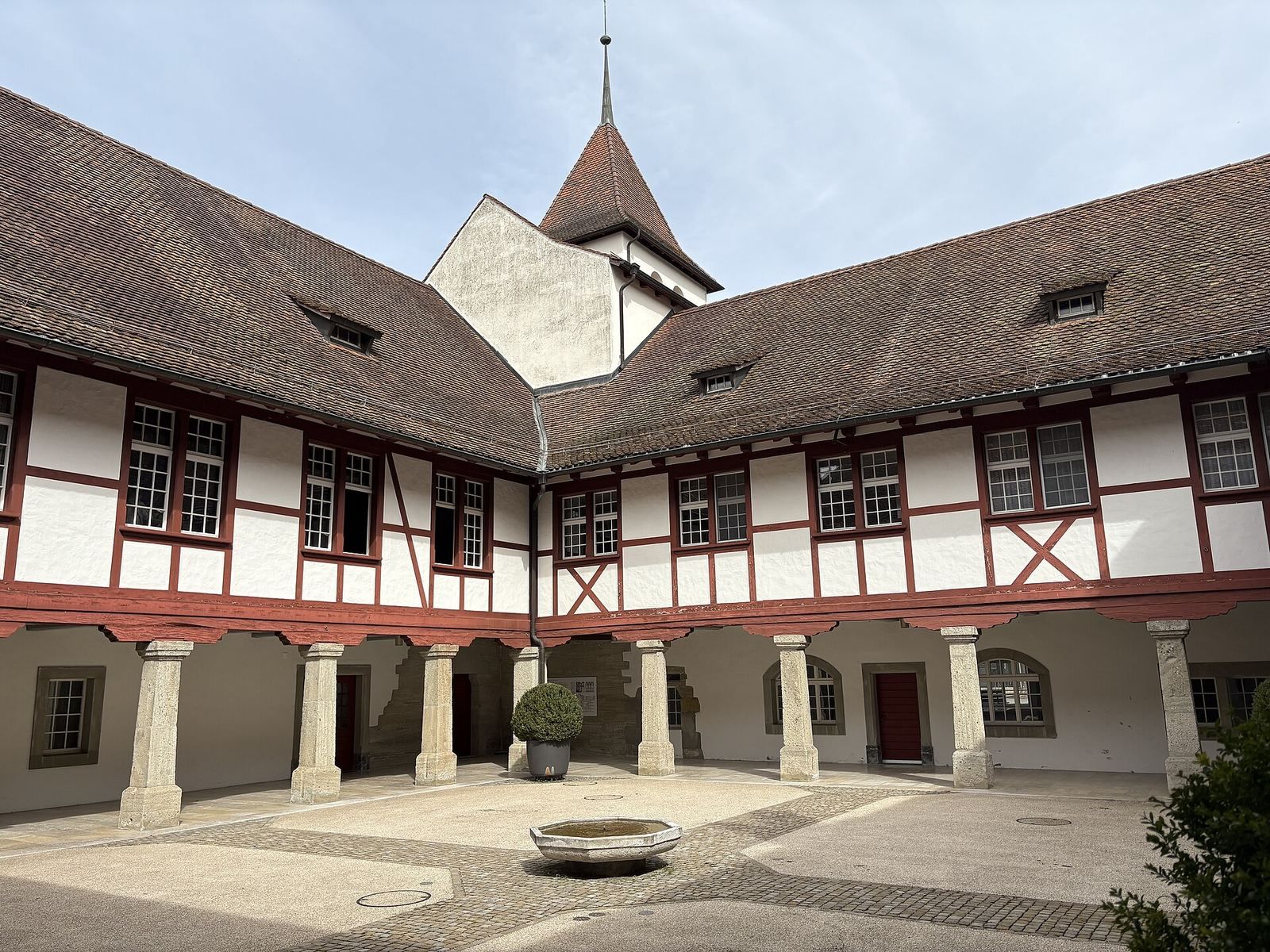
The surviving complex brings together fragments of the abbey church and buildings from later phases of monastic and institutional use. Its remains are distributed among the wings and cloister, preserving parts of the church alongside features added or altered over the following centuries.
Abbey church
Church fabric
The church had five bays and was unvaulted, with a choir that was probably straight-ended. The north wing, built in 1974-75, incorporates the church’s south clerestory wall, the upper wall with windows, and its west wall, along with remains of the south aisle wall.
South transept
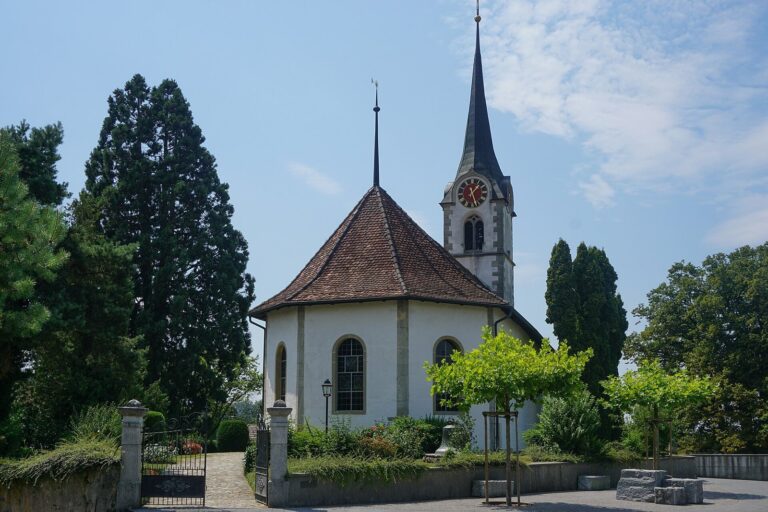
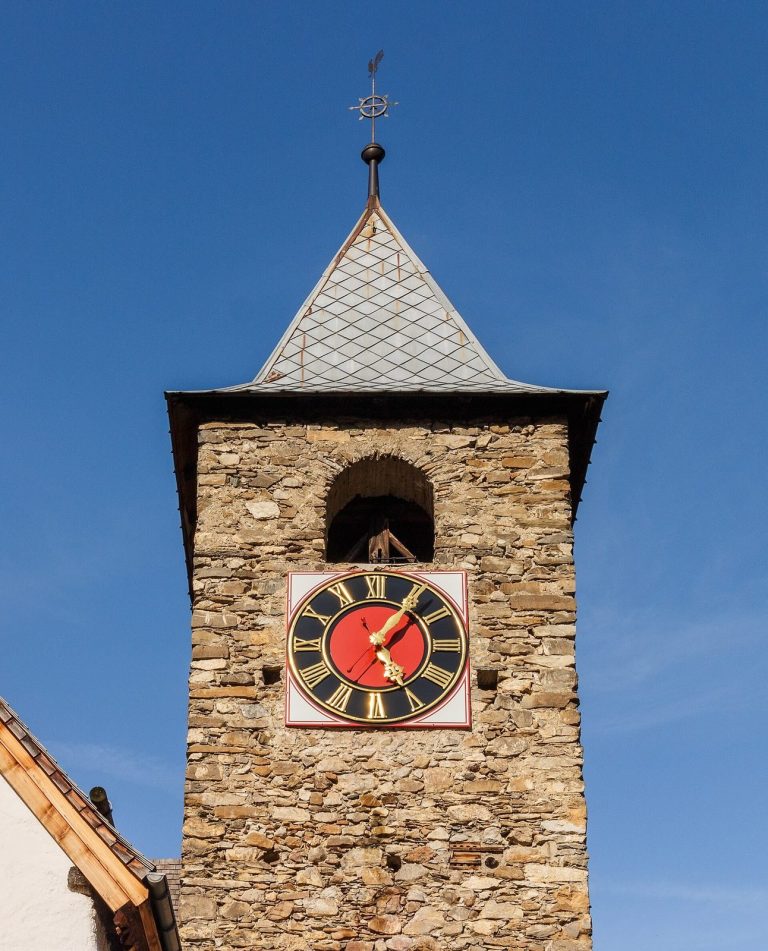
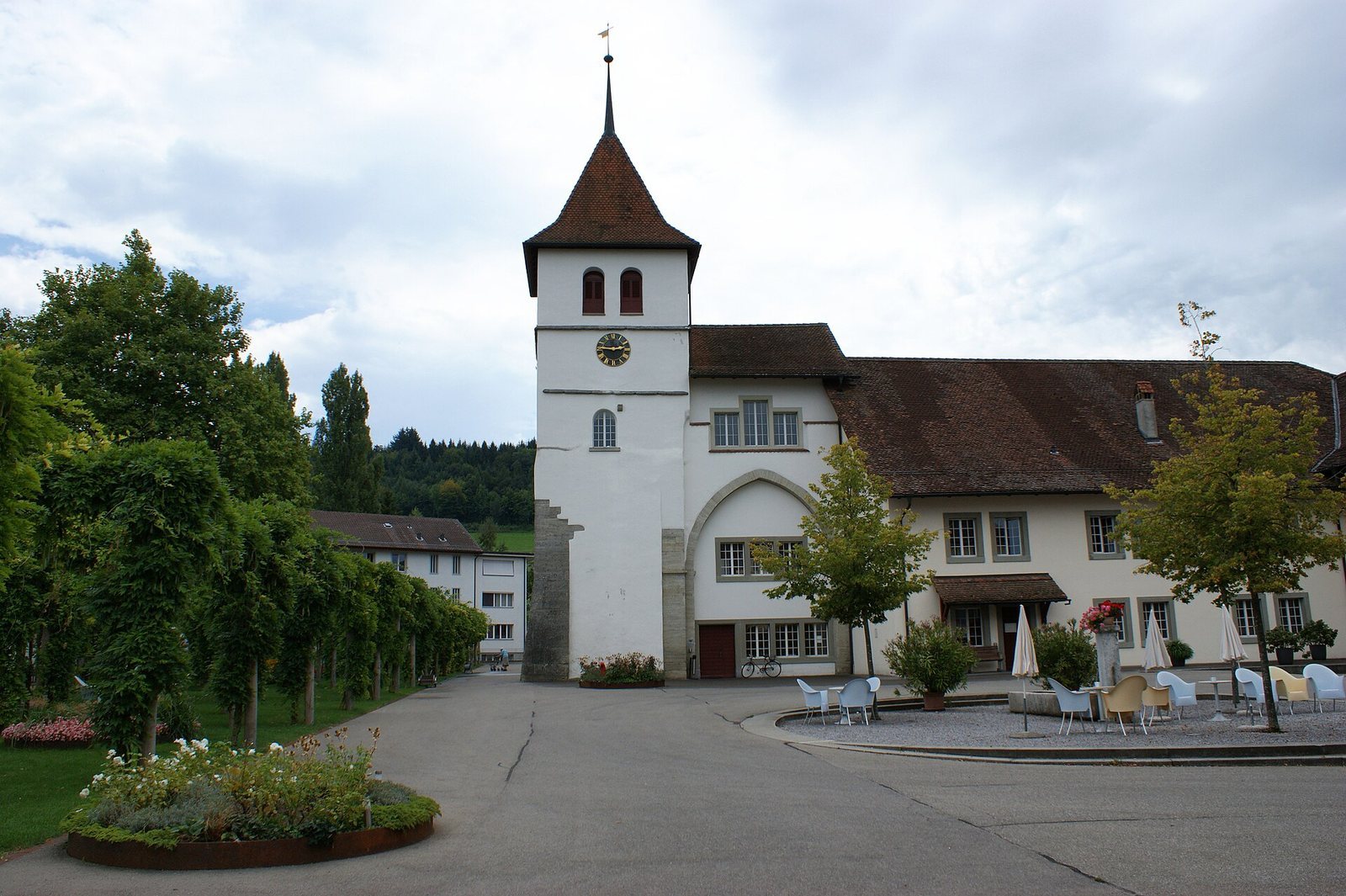
The south transept survives and was raised in 1518. It was originally covered by a pointed barrel vault, a continuous ceiling with a pointed arch profile. In 1573, a bell tower was built above the transept’s north chapel.
Later monastic buildings
Cloister
The cloister was built around 1656 and restored in 1975.
East wing
A former monastic conversation room survives in the east wing.
West wing
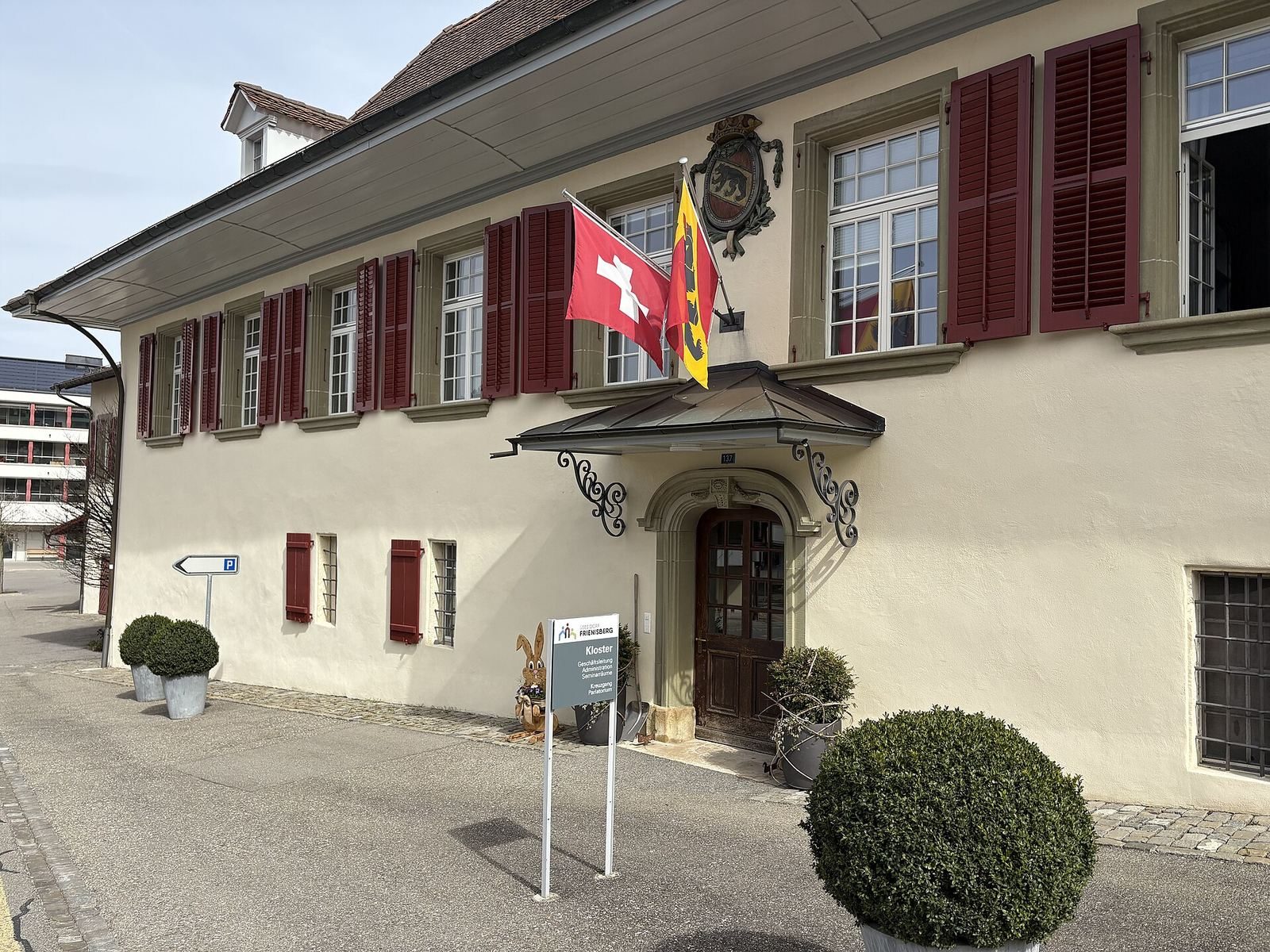
The west wing was renovated in 1784 in the late Baroque style.