Palazzo Comunale, Senigallia: A Late Baroque Town Hall
Site at a Glance
- Popularity
- Low
- Country
- Italy
- Primary era
- Early Modern
- Eras represented
- Classical, Early Modern
- Civilizations
- Duchy of Urbino, Papal States, Roman
- Site type
- Civic
- Remains
- Fountain
On this page7 sections
History
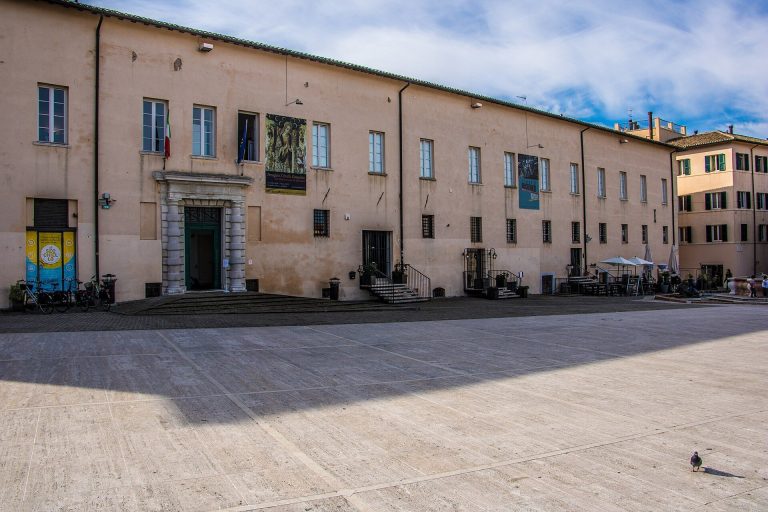
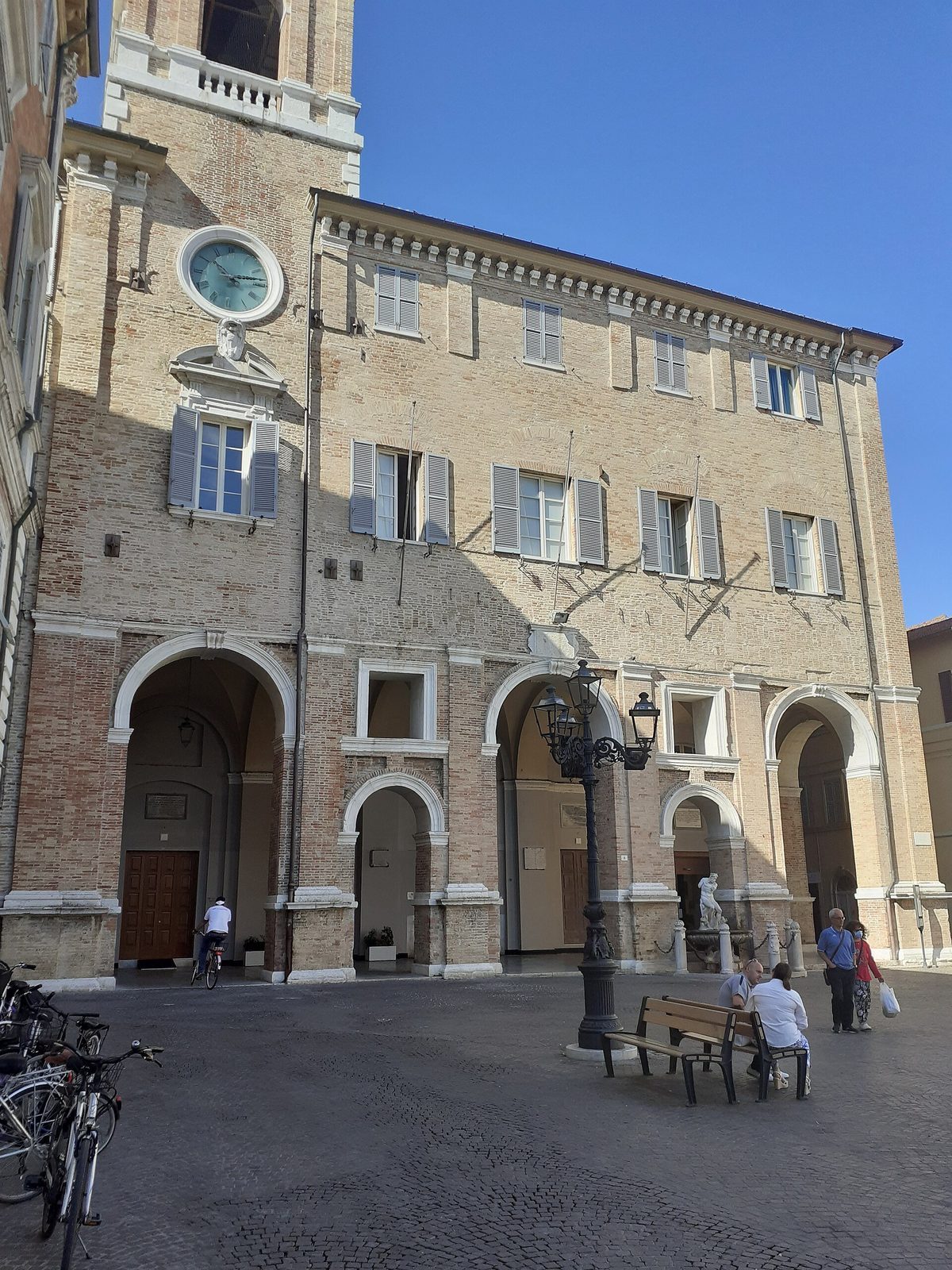
The Palazzo Comunale is a government palace in the late phase of Baroque architecture in Senigallia, Italy. Francesco Maria II della Rovere, Duke of Urbino, commissioned it in 1609; the della Rovere family was the duchy’s ruling house. Construction began that year under architect Muzio Oddi and was completed in 1644. The building serves as Senigallia’s town hall and is also called the Palace of Government (Palazzo del Governo).
The square, once known as Government Square, passed through Roman and della Rovere rule and later came under papal authority, meaning the power of the pope and the Papal States. Plaques inside and outside the palace commemorate these successive powers.
The Neptune Fountain
Master craftsman Angelo Calafà placed the statue of Neptune in its present position in 1616. Its origin is uncertain: it has been proposed as a Roman work or as a piece associated with the artistic circle of Giambologna, a Flemish-born sculptor active in Italy. An attribution to that circle does not necessarily mean Giambologna made it himself. The statue’s body has also been considered Roman, perhaps recovered in an archaeological find. In 1669, Felice Micheli Romano was paid to remake its head. Local tradition attributes damage to the statue’s arms, trident, nose, and horns to the Turks.
Remains
The Palace
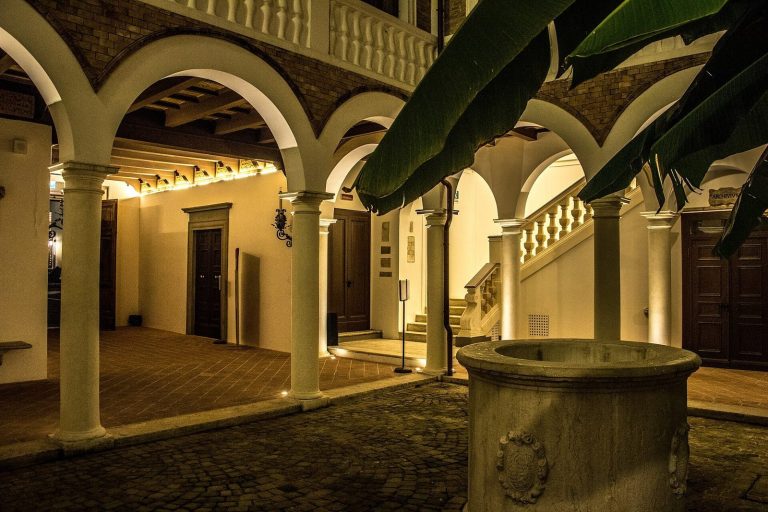
The late Baroque palace stands on central Piazza Roma, and its clock tower dates to 1640. Numerous inscribed plaques are located within and outside the building. Inside, a chandelier made of Bohemian crystal, decorative glass associated with the historic region of Bohemia in Central Europe, comes from the former La Fenice Theatre.
The Neptune Fountain
The Statue
The fountain stands opposite the palace. Its bearded figure represents Neptune, the Roman god of the sea. A crown is set into his mass of wavy hair; fine wrinkles cross his forehead, and his gaze turns slightly down and to the left. His muscular torso balances above the tails of two sirens, mythological figures associated with the sea and their song.
Basins and Enclosure
The statue stands above a shell-shaped basin of reddish stone supported by three dolphins. A lower basin collects the overflow, and three jets continually feed the water. A heavy chain studded with nails encloses the fountain, carried by five small columns topped with floral ornaments. Around 11 a.m., sunlight passes through a gap between the extensive walls of Palazzo Fagnani and the town hall’s bell tower, falling across the statue at a low angle.