Hardeck Castle: An Imperial Castle and Abbey Residence in Germany
Site at a Glance
- Popularity
- Low
- Country
- Germany
- Primary era
- Medieval
- Eras represented
- Medieval, Early Modern
- Civilizations
- Holy Roman Empire
- Site type
- Domestic
- Remains
- Castle
On this page6 sections
History
Imperial Castle and Early Lords
Hardeck Castle is a medieval fortress in Germany, first mentioned in 1238 as an imperial castle within the Hohenstaufen network around Eger, now Cheb in the Czech Republic. The Hohenstaufen were a medieval dynasty associated with the Holy Roman Empire. Eger was an imperial city, directly subject to the emperor. The castle may have housed a member of the service nobility, who served a ruler or institution, and may also have served as a strongpoint in the Nordgau, a medieval region in what is now northeastern Bavaria. It stood near the edge of the settlement area of the West Slavic Choden.
The lords of Liebenstein were among Hardeck’s owners, followed by the lords of Falkenberg from 1309 and the rulers of Leuchtenberg. An Albrecht von Hardeck appears among the attendants at a 1289 meeting between Rudolf I of Habsburg, King of the Romans, and Wenceslaus II of Bohemia. He probably came from Hardegg in Lower Austria, rather than from this castle.
Transfer to Waldsassen Abbey
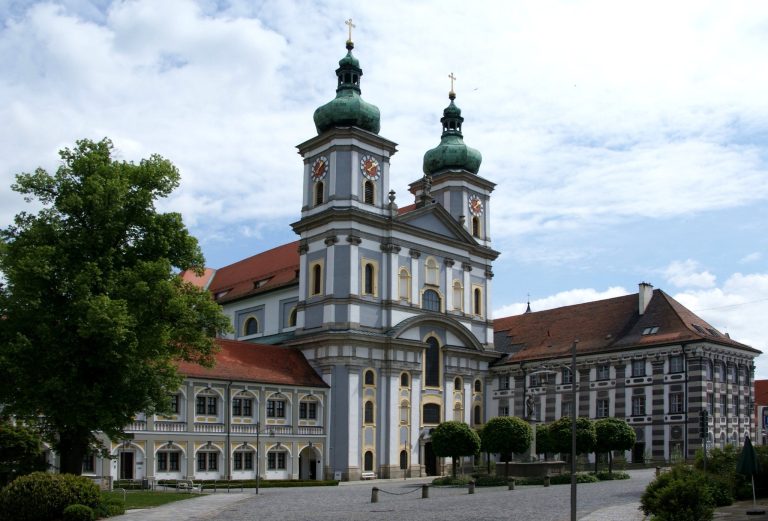
In 1298, Waldsassen Abbey, a Cistercian monastery, acquired Liebenstein Castle and the Liebenstein family’s holdings at Waldsassen and between Hardeck and Liebenstein. These lands became part of the abbey’s territory. In 1316, the Leuchtenberg rulers sold Hardeck Castle and its associated villages to the abbey. The villagers were hereditary subjects, and revenues in the Frais, a historical border district in the Upper Palatinate, came from compulsory labor and other obligations. The sale was intended to preserve the close friendship between Ulrich I of Leuchtenberg, a territorial prince, and Abbot Johann III of Waldsassen.
Abbey Administration and Residence
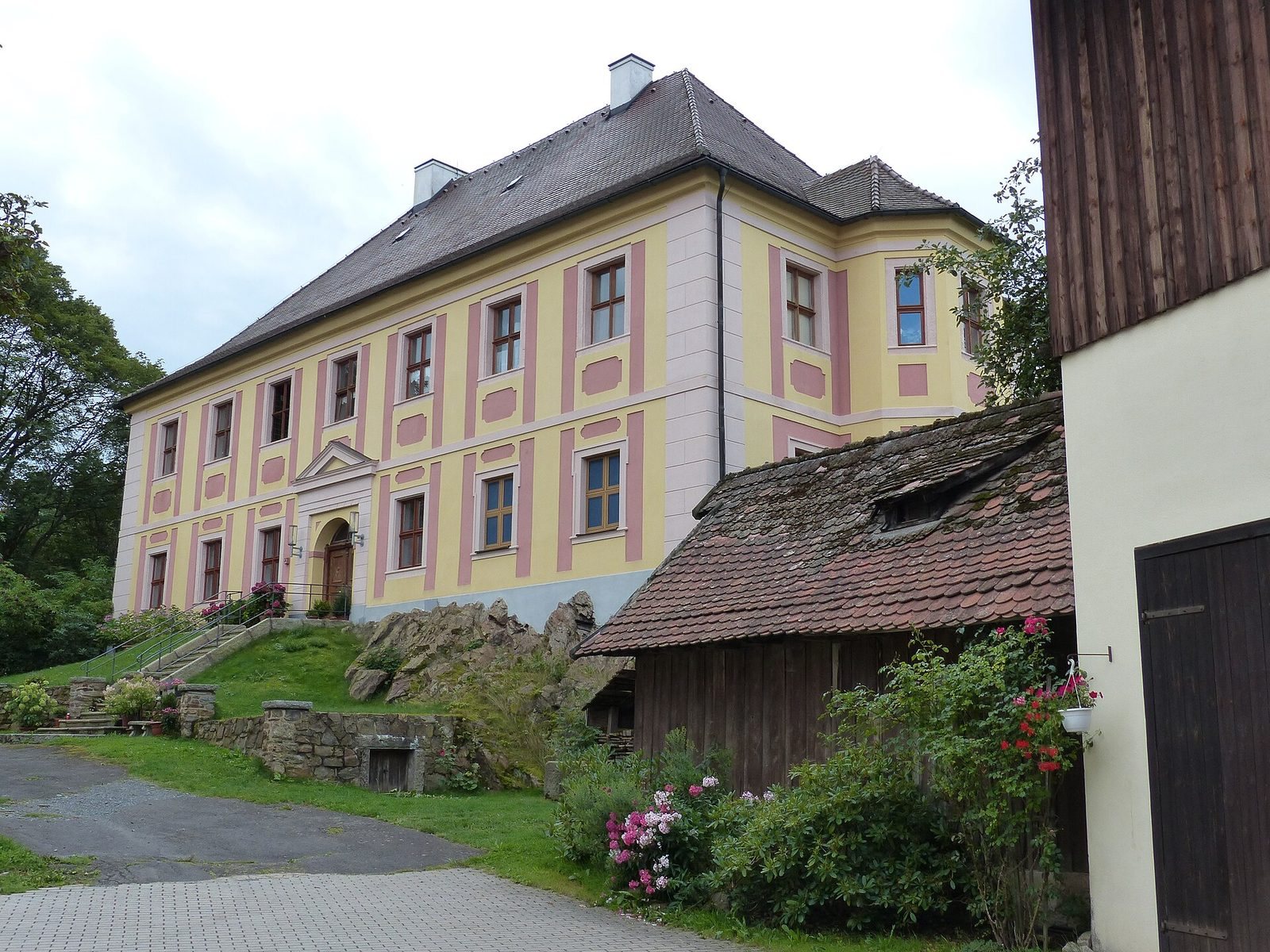
Hardeck served as the seat of the court and administrative office in the Frais until the 18th century. It was also a summer and hunting residence for the abbots of Waldsassen. The medieval castle was remodeled into a small palace. Abbot Johann III von Elbogen, the head of the abbey, spent his final years at Hardeck and died in 1329.
Secularization and Private Use
After Bavaria’s secularization in 1803, which transferred church property to secular authority, the castle used as the administrative seat was put up for sale. No buyer came forward, so it was rented until 1848. That year, master dyer Johann Ruderer purchased the building and established a dye works there. His descendants own it today.
Remains
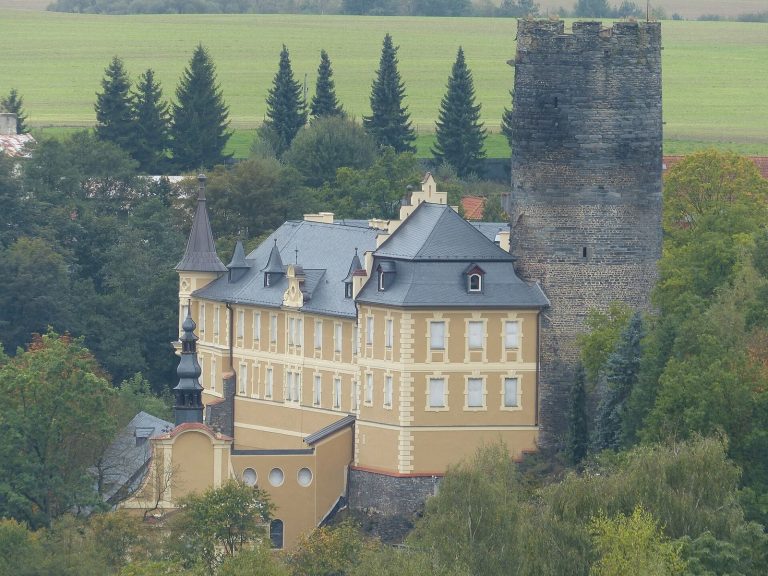
The castle occupies a steep granite-schist rock promontory that rises 15 metres. Its footprint measures 24 by 12 metres. Park-like grounds surround the building, and farmsteads in Hardeck village cluster around the castle.
A chapel dedicated to St. James stood beside a residence suited to Abbot Johann III’s rank. Medieval and early-modern archaeological evidence occurs in the area of the former palace, on the site of the earlier medieval castle.