Palais Schwarzenberg: A Baroque Palace and Garden Complex in Vienna
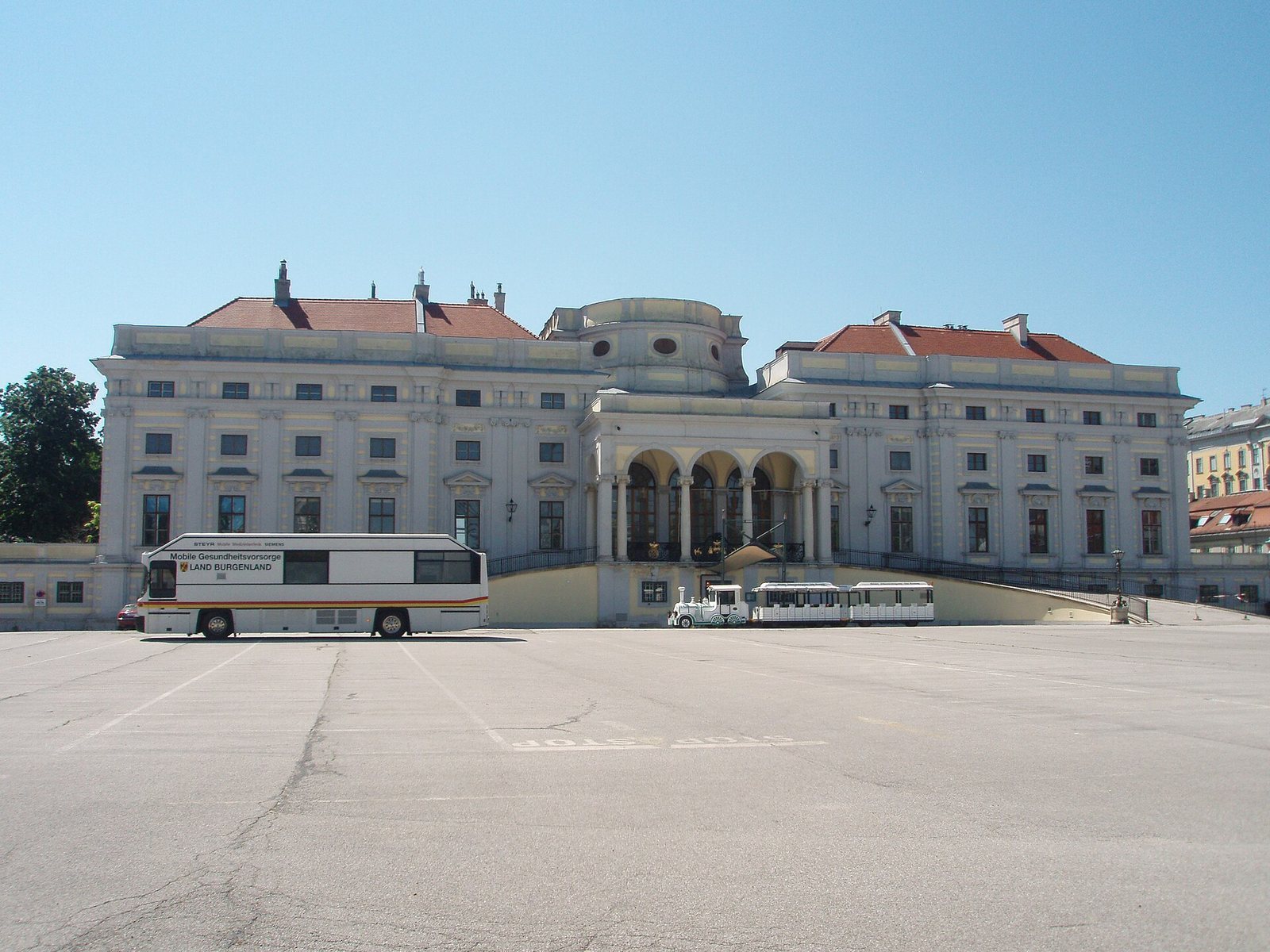
Site at a Glance
- Popularity
- High
- Country
- Austria
- Primary era
- Early Modern
- Eras represented
- Early Modern, Modern
- Civilizations
- Habsburg, Holy Roman Empire
- Site type
- Domestic
- Remains
- Palace
On this page11 sections
History
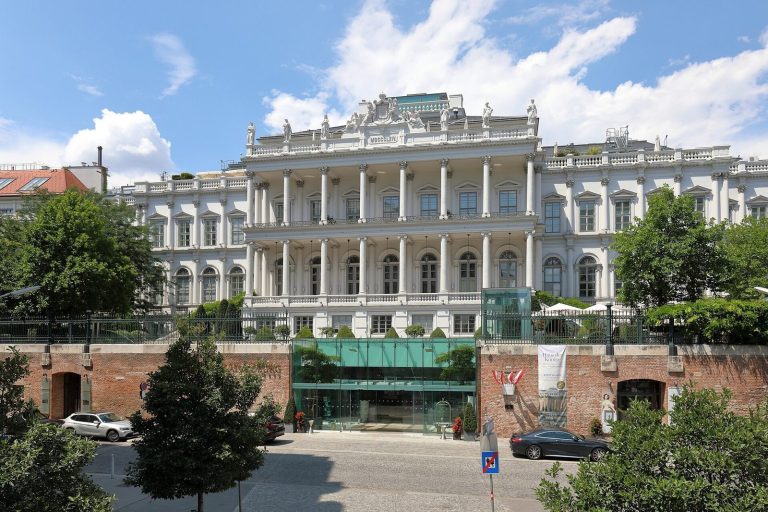
Palais Schwarzenberg is a Baroque palace in Vienna, Austria, commissioned in 1697 as Palais Mansfeld-Fondi. Baroque was an elaborate European style of art and architecture that flourished especially in the seventeenth and eighteenth centuries. Heinrich Franz, Count of Mansfeld and Prince of Fondi, planned the building to rival Prince Eugene of Savoy’s nearby Belvedere, then under construction by Johann Lukas von Hildebrandt.
Ottoman forces ravaged the area during the 1683 siege of Vienna, an attack in the Ottoman-Habsburg conflicts. The land remained uncultivated afterward and could be acquired inexpensively. Work began under Hildebrandt, with Anton Erhard Martinelli supervising construction. The palace shell was complete by 1704, but Mansfeld died before the project was finished. His heirs sold the unfinished property, which passed to Adam Franz Karl, Prince of Schwarzenberg, around 1715–16.
The Schwarzenberg family, originally from Bohemia, sought to shift its center of power to Vienna after military and political successes. With the family’s financial backing, Johann Bernhard Fischer von Erlach and Joseph Emanuel Fischer von Erlach revised and completed the palace in 1728.
Aristocratic use and garden development
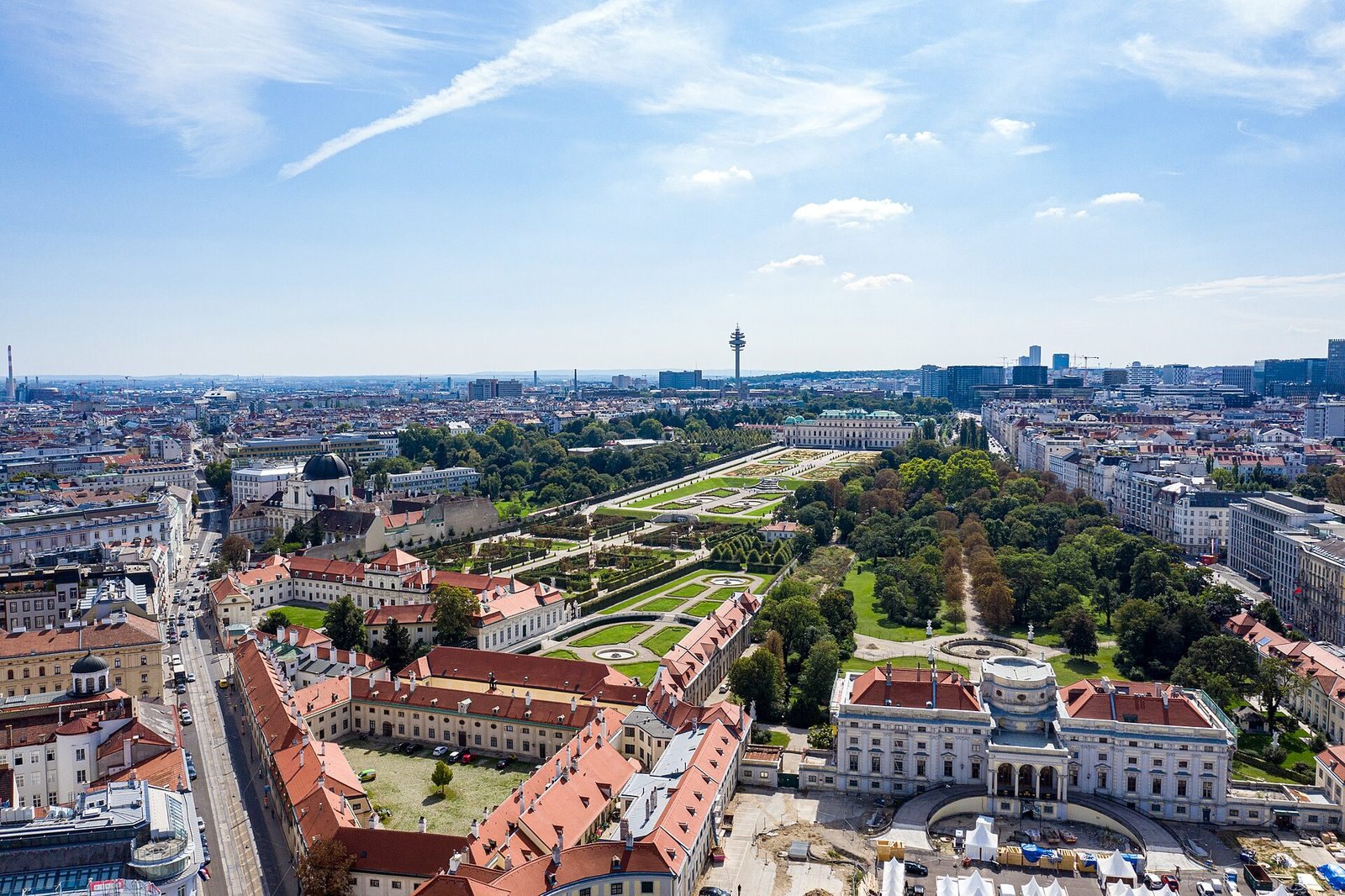
The Schwarzenberggarten began in 1697 as an Italian-French terraced Baroque garden, shaped by Hildebrandt and the Fischer von Erlach architects. Its design echoed that of the neighboring Belvedere garden. During the eighteenth century, the palace became a favored destination for Vienna’s aristocracy. Much of its valuable furnishings and painting collection came from the family’s former winter palace at Neuer Markt. That building was demolished in 1894 and replaced by apartment buildings.
Engineer Andrea Altomonte’s riding school was added east of the palace in 1751–52. An orangery, a winter shelter for citrus and other delicate plants, was also built in 1751. During the nineteenth century, much of the garden was changed to create an English-style landscape, less formal than the earlier ordered terraces. A conduit carrying water from the Styrian Alps to Vienna was connected to the palace, and a large fountain was built in front. In 1873, when Vienna’s first mountain-spring water pipeline was completed, a small park was laid out around the fountain on land that had not originally belonged to the palace.
War damage and modern use
Bombing during the Second World War heavily damaged both the palace and the park. The palace was completely rebuilt after the war. Soviet forces occupying Vienna after the fall of the Nazi regime erected a memorial near the palace to Russian soldiers killed in the conflicts to liberate Austria.
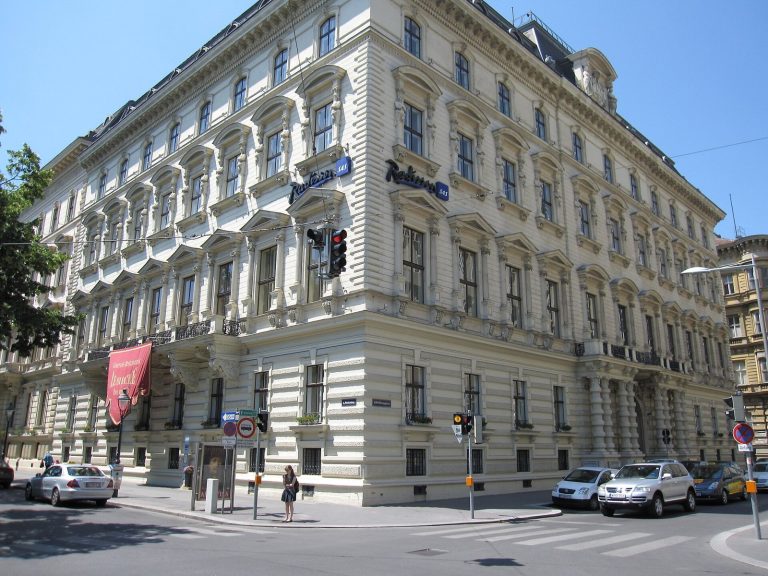
Between 1982 and 1984, a floor of the main building was converted for restaurant use. The palace remains owned by the Schwarzenberg family foundation. Part of it served as a five-star hotel and restaurant until January 2006. The Schwarzenberggarten is protected as a historic monument and listed as a complete ensemble; it is regarded as one of Austria’s significant historic garden monuments. In 1959, a giant sequoia on the grounds was designated a natural monument, a legally protected individual natural feature.
Remains
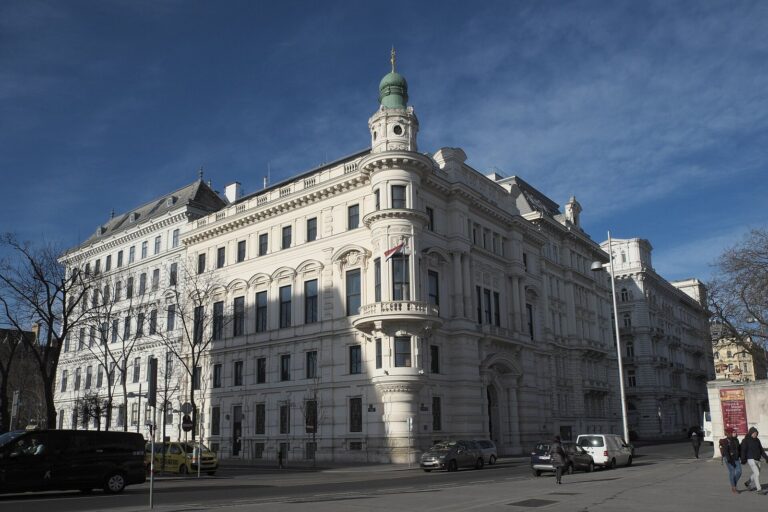
The complex combines a Baroque main building and grounds with a separate small park in front. The palace faces Schwarzenbergplatz and directly adjoins the Belvedere. Its surviving features include the formal garden’s central axis and fountains, decorated palace interiors, and later landscape elements.
Palace buildings and interiors
Main building and facades
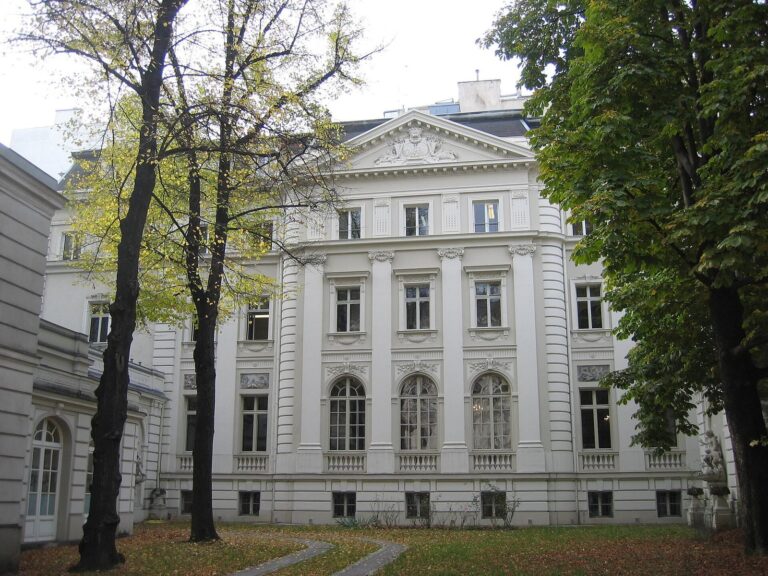
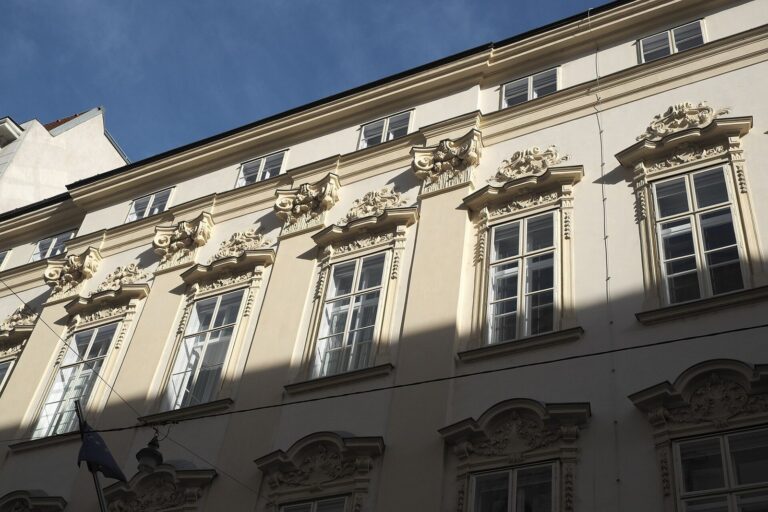
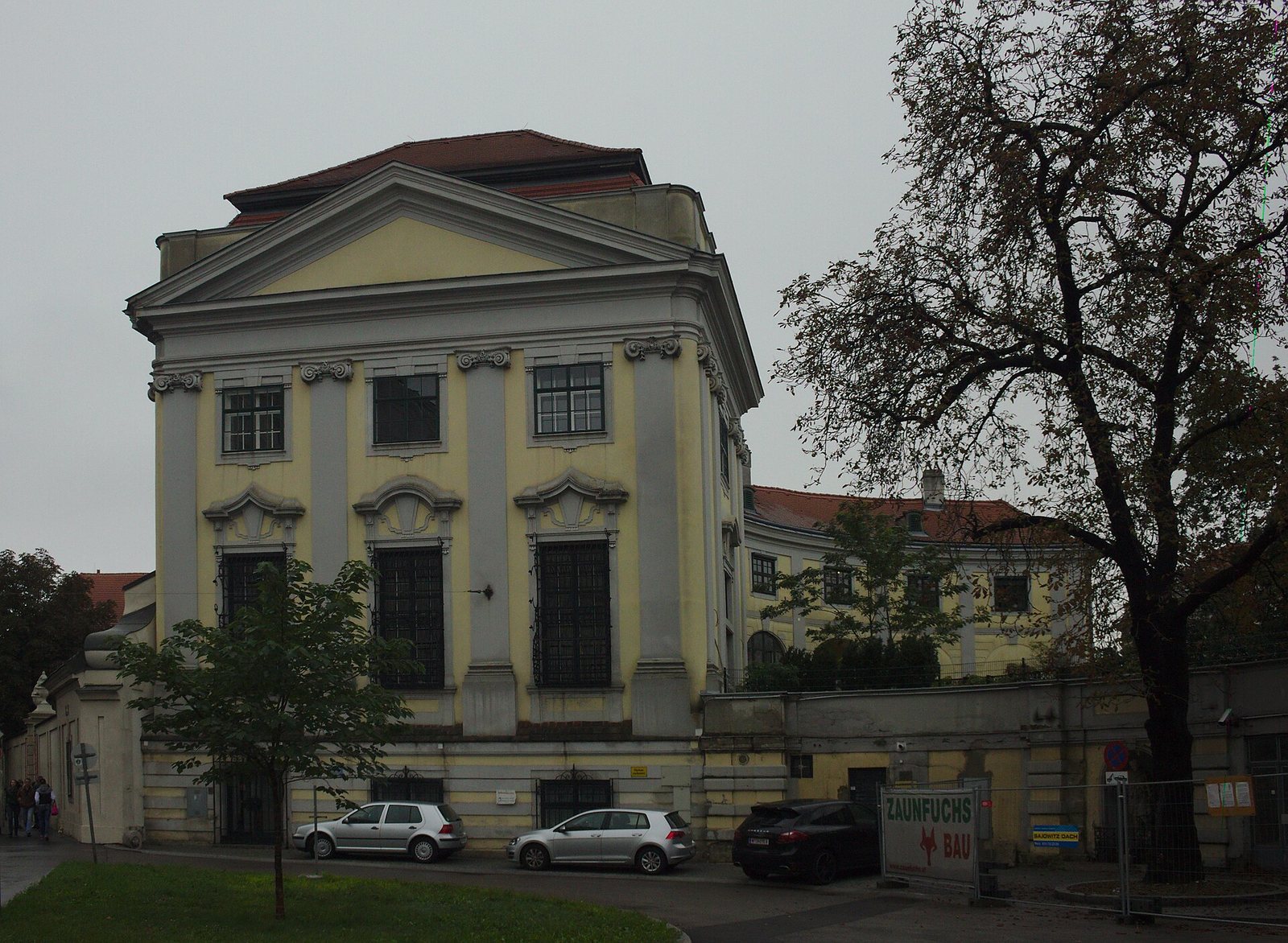
The main building has side wings facing Rennweg, including a wing visible from the garden. A relief is set into the garden façade, while a niche facing Rennweg contains a statue of St. John of Nepomuk.
Riding-school wing
The former riding-school wing stands on Prinz-Eugen-Straße and houses the Swiss Embassy and its consular section.
Decorated rooms
The Marble Gallery is one of the palace’s richly decorated rooms. Daniel Gran painted the Great Hall’s ceiling, the dome fresco and several paintings above doorways in 1726.
Garden and park
Formal garden
Much of the garden’s original arrangement has changed, but its central axis, round fountains and parts of its garden inventory survive. A hydraulic pumping system supplied the fountains. Joseph Emanuel Fischer von Erlach’s pumping machine powered the garden’s water displays and was considered Vienna’s leading technical attraction in the eighteenth century. The surviving sculpture groups include Raptus, a title referring to an abduction, and the Four Seasons, both by Lorenzo Matielli and dating to after 1712. Garden vases by J. B. von Erlach also remain, as does a giant sequoia (Sequoiadendron giganteum).
Park and fountain
The separate park in front of the palace surrounds the Hochstrahlbrunnen, a large fountain associated with Vienna’s mountain-spring water supply. After wartime damage, the park was renewed with French-style features along its principal axes. It also contains a fine stand of trees.